



SIP trunk pricing can look simple at first: a monthly fee per channel, a few cents per minute, maybe a set-up charge. But the real cost depends on how many calls your business handles, how providers bill for usage, which fees are included, and what infrastructure you already have in place.
This guide breaks down the main SIP trunk pricing models, typical cost ranges, hidden fees, and simple ways to estimate your monthly bill so you can compare quotes with confidence and decide whether SIP trunking is the right fit for your business.
How Much Does SIP Trunking Cost?
Session initiation protocol (SIP) trunking is the technology for establishing and managing voice calls over the internet and is a digital replacement for your traditional copper lines and PRI lines.
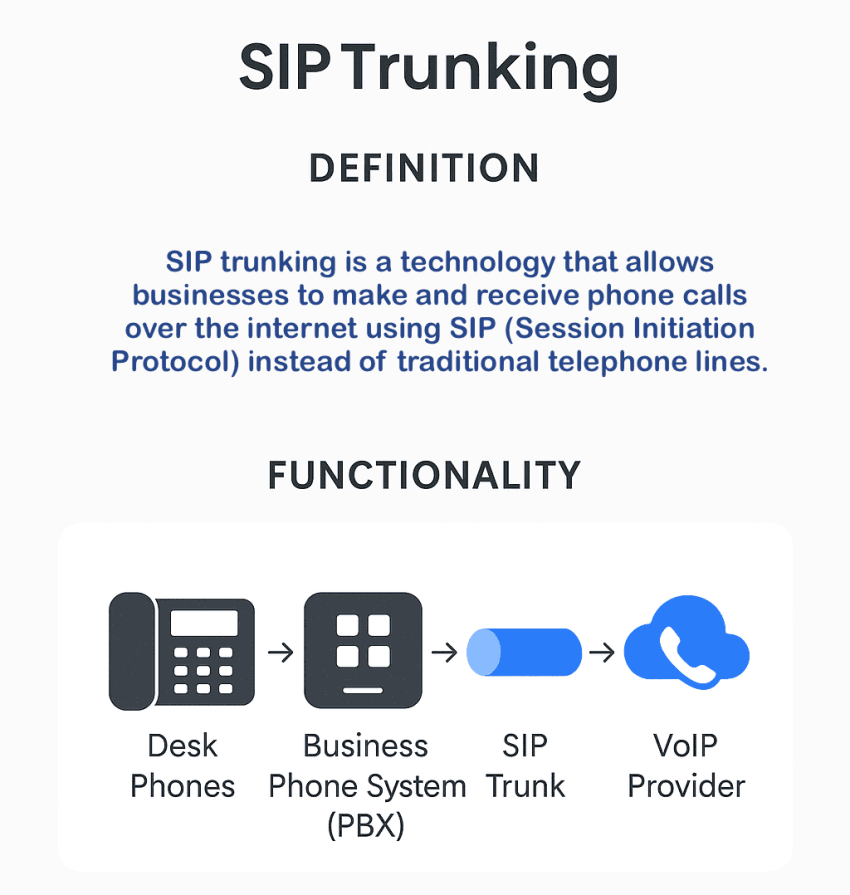
SIP trunking typically costs $15 to $30 per channel per month for unlimited calling plans, or roughly $0.005 to $0.02 per minute for metered/pay-as-you-go pricing.
While cheap providers advertise rates as low as $0.004/min, the real cost hides in set-up fees, expensive add-ons for E911 ($1.50/number), and porting charges (more on that below).
SIP trunk pricing at a glance
For the most accurate comparison, look at the total monthly cost, not just the base per-channel or per-minute rate. Here are some general SIP trunking cost factors plus typical price range:
- Per-channel plan: $8–$30 per channel/month
- Metered plan: $0.005–$0.02 per minute
- Unlimited plan:$15–$30 per channel/month
- Phone number/DID:$1–$3 per number/month
- Set-up fee: $0–$150, sometimes waived
- E911/regulatory fee:$0.75–$3 per number or location/month
- Toll-free/international usage:Varies by provider and destination
Example monthly SIP trunking costs by business size
The table below gives rough monthly estimates using common SIP trunk pricing ranges. Your actual cost may be higher or lower depending on usage, call destinations, add-ons, and provider fees.
| Business size | Example setup | Estimated monthly cost |
|---|---|---|
| Small office | 5–10 channels, a few DIDs, mostly domestic calls | $100–$350/month |
| Growing team | 20–30 channels, multiple DIDs, moderate call volume | $400–$1,000/month |
| Contact center | 50+ channels, high call volume, toll-free/international usage, failover needs | Custom/usage-based |
How SIP Trunk Pricing Works
Your SIP trunking bill is determined by the pricing model you choose, how many concurrent calls you need, and which features or add-ons are included in your plan. SIP trunking pricing plans are usually either metered or unmetered, though some providers also offer bundled or custom pricing for larger businesses with higher call volumes.
SIP trunks vs. SIP channels: what you actually pay for
A SIP trunk is the virtual connection between your business phone system and the public telephone network.
A SIP channel is the part of that trunk that supports one active call at a time.
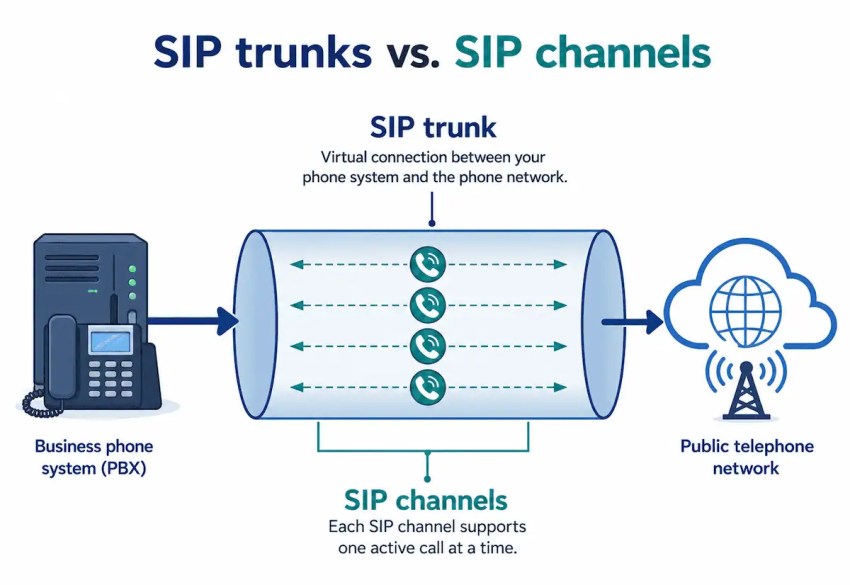
In most pricing models, you’re not really paying for “a trunk” as a single item. You’re paying for:
- SIP channels, or the number of simultaneous calls your business can handle
- Calling usage, especially on metered plans
- Phone numbers/DIDs
- E911 and regulatory fees
- Add-ons, such as toll free numbers, call recording, failover, or managed support
For example, a business with 20 employees may not need 20 SIP channels. If only five people are usually on the phone at the same time, the business may only need five to eight channels, depending on peak call traffic.
Per-channel pricing
With per-channel pricing, you pay a monthly fee for each SIP channel. Since each channel supports one active call at a time, your cost depends on how many simultaneous calls your business needs. For example, if you pay $20 per channel per month and need 10 channels, your base cost is $200 per month, before DIDs, taxes, fees, and add-ons.
Per-channel pricing is often a good fit for businesses that want predictable capacity and know how many concurrent calls they need.
Metered/pay-as-you-go pricing
With metered SIP trunk pricing, you’re billed based on actual usage, usually by the minute for inbound and/or outbound calls. Nextiva offers metered SIP trunking plans for businesses that prefer usage-based pricing. This model can help lower costs if your call volume is light, seasonal, or inconsistent. The tradeoff is that monthly bills can rise quickly when call volume spikes.
Metered pricing is often a good fit for businesses with low or variable call volume that don’t want to pay for unused capacity.
Unlimited SIP trunk pricing
With unlimited SIP trunk pricing, you pay a fixed monthly rate per channel for unlimited or unmetered calling, usually within a defined region such as the U.S. and Canada. Nextiva also offers unlimited SIP trunking plans for businesses that want more predictable monthly costs. This model is easier to budget for, but toll-free, international, premium-rate, and add-on charges may still apply.
Unlimited pricing is often a good fit for businesses with steady or high domestic call volume that want predictable monthly billing.
Bundled or custom enterprise pricing
With bundled or custom pricing, your quote may combine channels, call volume, DIDs, failover, support, implementation, and contract-based discounts. This is common for larger businesses, multi-location organizations, contact centers, and companies with more complex calling needs.
Bundled or custom pricing is often a good fit for larger businesses, multi-location teams, and high-volume organizations with more complex SIP trunking needs.
What is wholesale SIP trunking?
You may also come across the term wholesale SIP trunking. This is a high-volume, low-margin service with volume discounts designed for IT providers, resellers, carriers, and large enterprises that manage their own telecommunications infrastructure.
For most businesses, standard SIP trunking plans from a business VoIP provider are the better fit because they typically include more support, easier setup, and less telecom management on your side.
Tip: Don’t trade call quality for a lower rate
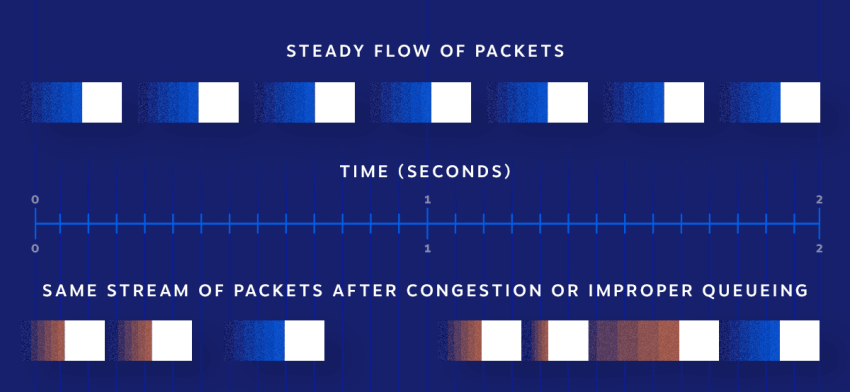
A common trap in low-cost SIP pricing is the use of compressed codecs like G.729) that save the provider bandwidth but can make your voice sound thin or robotic and affect customer experience. Make sure your SIP provider supports high-definition G.711 voice quality and that your provider supports G.711. Ask about latency, jitter, and packet loss guarantees if the price seems unusually low (significantly less than $15/channel).
What Affects SIP Trunking Costs?
SIP trunk pricing depends on your calling capacity, usage patterns, phone numbers, destinations, set-up needs, and contract terms. These factors explain why one business might pay a few hundred dollars per month while another needs a custom enterprise quote.
Several factors can change your final monthly bill:
- Number of SIP channels: The more concurrent calls you need, the more channels you’ll pay for. This is the main factor in your base cost.
- Direct telephone numbers: Each direct inward dialing number (DID) and local number can cost between $1 and $2 per month. A one-time fee may apply to porting your existing numbers.
- Toll-free numbers: Incoming calls to a toll-free number usually have their own per-message charges, even with unlimited plans. Some providers require toll-free verification for certain services.
- Long-distance and call destination: With metered plans, international calls are billed at different rates depending on the country. Unlimited plans typically only cover calls within the US and Canada.
- Important add-ons: Beware of per-message charges for important services. Some providers charge extra for E911 service (legally required), caller ID (CNAM) transmission, call recording and analytics, call routing features, and fax services for existing fax systems.
- Set-up fees: Some trunking providers charge a one-time setup fee to activate your account or connect your PBX through their web portal.
- Regulatory fees: These may be charged per number or per location.
- Contract length and volume discounts: Longer commitments and larger accounts may reduce per-channel pricing.
Hidden SIP Trunking Costs to Watch For
The cheapest headline price is not always the lowest total cost. Ask providers what is included and what appears as a separate line item.
Set-up and implementation fees
Some providers charge one-time fees to activate your account, configure your SIP trunk, or connect your PBX. Ask whether onboarding, PBX configuration, testing, and account setup are included or billed separately.
Porting fees
Porting, or moving, existing phone numbers to a new provider may come with one-time porting charges. These fees can add up if you’re transferring many local numbers, department lines, toll-free numbers, or campaign tracking numbers.
CNAM and caller ID fees
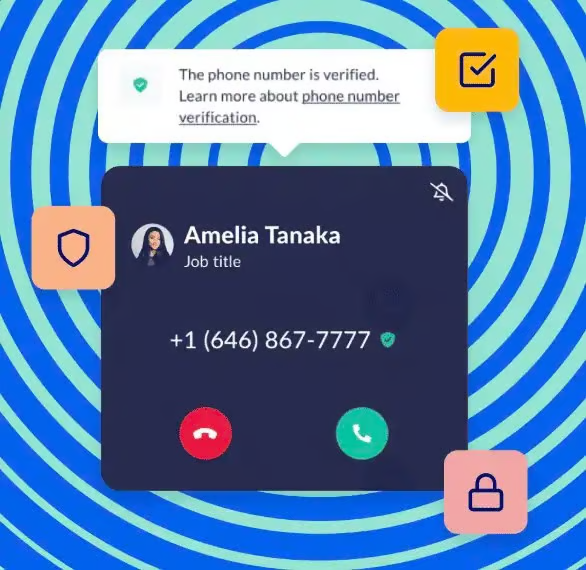
Some providers charge separately for CNAM, or caller ID name lookup and display. These charges may be small—a fraction of a cent every time your phone receives a call with a name attached—but they can add up with high inbound call volume. Also ask whether outbound caller ID setup and caller ID authentication are included.
E911 line-item charges
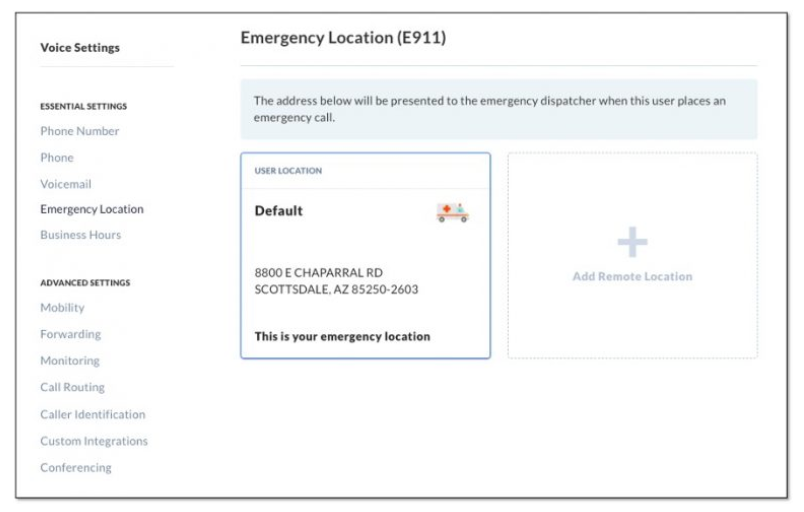
E911 is legally required for registered business locations so that emergency responders know where to send help when someone dials 911 from a SIP/VoIP phone, but it may appear as a separate monthly fee (usually about $1.50–$3.00 per DID). Confirm whether E911 is charged per number, per location, or per account, especially if your business has multiple offices or remote work locations.
Fair-use limits on unlimited plans
“Unlimited” SIP trunking may still come with fair-use policies, usage caps (around 2,500 or 3,000 minutes per channel), or overage charges. If you run a call center or high-volume sales/support team, ask whether unlimited calling includes your expected usage or whether you’ll be billed extra after a certain number of minutes.
International calling and fraud protection
International calls are usually billed separately, with rates that vary by country. Some providers also charge extra for fraud controls, such as blocking high-risk destinations, setting spending limits, or restricting international dialing so hackers can’t run up expensive charges on your SIP trunking account. Ask whether these protections are included, especially if your SIP trunk can place outbound international calls.
Toll-free usage charges
Toll-free numbers often include both monthly number fees and per-minute inbound usage charges. If your business receives a high volume of toll-free calls, this can become one of the biggest add-ons to your monthly SIP trunking bill.
Support or managed service fees
Some providers charge extra for advanced support, managed configuration, monitoring, failover setup, or after-hours help. For business-critical phone systems, don’t compare only the per-channel rate. A slightly higher monthly price may be worth it if it includes setup, porting, support, call quality, and reliability safeguards.
STIR/SHAKEN and call authentication
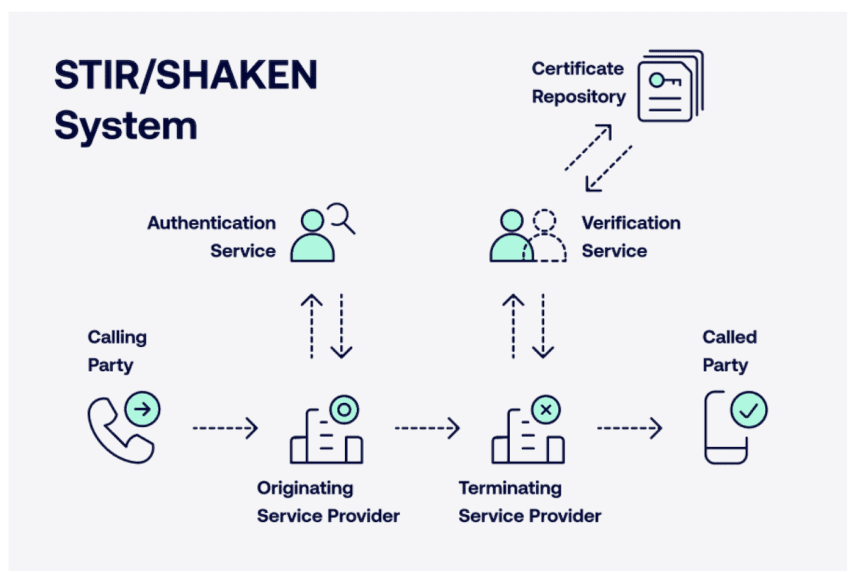
The cheapest SIP trunking can become expensive if your outbound calls are flagged as spam or blocked. Ask whether your provider includes STIR/SHAKEN call authentication in the base service. Without proper caller ID authentication, calls may be more likely to show as “Scam Likely,” which can hurt answer rates and cost more in lost leads than you save on monthly fees.
How to Estimate Your Monthly Bill
You don’t need a complex tool to get a reliable cost estimate. Follow these simple steps.
1. Estimate your peak number of concurrent calls
The most important factor is the maximum number of concurrent calls.
Rule of thumb: A good starting point is one channel per 3-4 employees. For an office with 30 employees, you’ll likely need 8-10 SIP channels. Better yet, check your current phone provider’s bill for your peak number of simultaneous calls and actual usage patterns.
2. Choose your pricing model
Look at your calling patterns and billing cycle preferences:
- Choose “metered” if your call volume is low (e.g., less than 1,000 minutes/month) and you rarely make long-distance calls.
- Choose “unmetered” if you have medium to high call volume and want predictable billing with unlimited calling.
3. Add up all the costs
List all the extras you’ll need through your web portal. How many individual phone numbers? Do you need toll-free numbers? Will you need call recording or fax services for incoming faxes and outbound faxes? And any other add-ons.
Example estimate
For a 40-person office that needs 12 channels and 40 phone numbers, choosing a typical unmetered plan:
- 12 Channels on Unmetered Plan (@ $24.95/channel): $299.40/month
- 40 Phone Numbers (DIDs) (@ $1/number): $40.00/month
- E911 Service (@ $1.50/number): $60.00/month
Estimated monthly total: $399.40
SIP Trunk vs. Traditional Systems
Many businesses are moving from older primary rate interface (PRI) phone lines, PSTN, and traditional TDM circuits to SIP trunks because SIP is more flexible and easier to scale.
| Feature | SIP Trunking | Traditional PRI |
|---|---|---|
| Technology | IP-based | Physical circuits |
| Cost | Low per-channel cost | High fixed cost per line block |
| Scalability | Highly flexible (add channels as needed) | Rigid (must buy in fixed blocks) |
| Reliability | High, with easy call routing | Reliable, but less adaptable |
| Flexibility | Works over any internet connection | Tied to a physical location |
SIP trunking is often a better fit for businesses that want to reduce telecom costs without replacing an existing PBX. Traditional systems may still be reliable, but they are usually less flexible and harder to scale.
Questions to Ask Before Choosing a SIP Trunk Provider
Before contacting sales or signing a contract, use this checklist to get clear answers and avoid hidden fees.
Pricing and fees
- What is the total cost per channel per month?
- Are setup, activation, or hidden fees included?
- Are number porting fees included or billed separately?
- Is E911 included in the channel price or billed separately per number?
Included minutes and usage limits
- How many minutes are included in each plan?
- Are calls unlimited, metered, or a mix of both?
- What happens if we exceed our monthly usage allowance?
- Do you offer pooled minutes across channels or locations?
Number porting and setup
- How long does number porting usually take?
- What information or documents do you need to start the porting process?
- Are there any porting fees?
- Will we experience any downtime during the transition?
Reliability, uptime, and failover
- What network uptime guarantee or SLA do you provide?
- What failover options are available if a trunk or route goes down?
- How do you handle call routing during outages?
- What tools do you provide for reporting or troubleshooting call issues?
Support and implementation help
- Is support available 24/7 by phone, email, or chat?
- Do you offer onboarding or implementation assistance?
- Will we have access to a dedicated account manager or technical contact?
- Do you provide help with PBX configuration or SIP compatibility checks?
Contracts, cancellation, and scalability
- What are the contract terms and cancellation terms?
- How quickly can we add or remove SIP channels?
- Can we scale up temporarily during busy periods?
- Do you offer pay-as-you-go flexibility?
Emergency calling and compliance
- How does E911 work for each number and location?
- How do you support remote users and hybrid teams for emergency calling?
- Do you comply with the regulations relevant to our business or industry?
- What fraud prevention and security controls do you offer?
Is SIP Trunking Right for Your Business?
Although both systems use VoIP, SIP trunking differs from a hosted, all-in-one business phone system.
SIP trunking is designed for businesses that already own and manage an on-premises PBX. It’s a technical solution connecting existing hardware to the cloud while maintaining your current setup for handling concurrent calls.
Hosted PBX or hosted VoIP is an all-in-one solution where the provider manages everything in the cloud. It’s ideal for businesses without their own PBX that want a simple, fully managed phone system.
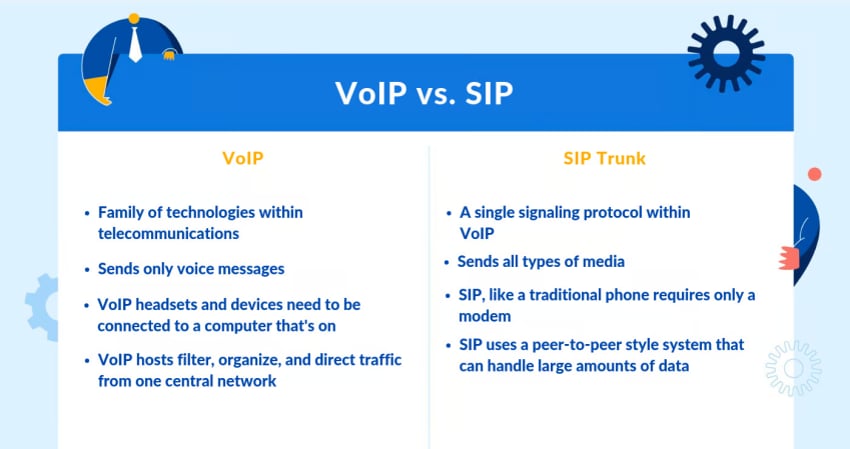
While SIP trunking has a lower monthly per-channel fee, the total cost of ownership (TCO) includes the maintenance of your physical PBX hardware, server electricity, and the salary of the IT staff required to manage it.
Choose SIP trunking if you have a significant investment in a modern PBX and want to maximize that asset’s life.
Choose hosted VoIP if you want to eliminate hardware maintenance and move to an OpEx model where the provider handles all security and software updates.
If you’re considering hosted PBX and SIP trunking, here are the key differences and comparisons you should keep in mind:
| Feature | SIP trunking | Hosted VoIP (cloud PBX) |
|---|---|---|
| Ideal for | Businesses with an existing on-premises PBX | Startups or businesses without hardware |
| Initial cost | High (if buying hardware); Low (if reusing) | Very low (OpEx model) |
| Maintenance | Managed by your internal IT team | Managed entirely by the provider |
| Scalability | Add channels to your physical capacity | Add users instantly with a click |
| Reliability | Depends on local power and hardware | Geographically redundant cloud servers |
| Control | Full control over hardware/configuration | Configuration via a web-based dashboard |
SIP trunking typically requires that businesses be technical, and it can become complicated relatively quickly. It may also lack customer support that IT managers (and users!) need, though this depends on the provider.
It’s worth considering that the cloud phone system by Nextiva can offer all the advanced features, call uptime, customer support, and ease of use that growing businesses need.
How to get the best SIP trunk pricing
Researching providers is half the battle. Follow these best practices to choose the right provider and get optimal rates:
- Choose the right plan: Don’t overpay for unlimited calling if your usage is low, and don’t risk high bills with pay-as-you-go if your usage is consistently high.
- Bundle services: Many VoIP service providers offer volume discounts if you bundle SIP with other services, such as video conferencing or contact center solutions.
- Negotiate contracts: When you contact sales, you may get better deals for longer-term contracts or by foregoing features you don’t need.
- Review actual usage: Monitor your billing cycle usage quarterly. If you regularly use fewer SIP channels than you pay for, ask your provider to adjust your plan through their web portal.
- Consider volume pricing: Larger businesses can negotiate better rates based on their concurrent call requirements and overall account message quantity.
Simplify Business Calling With Nextiva SIP Trunking
The best SIP trunking isn’t necessarily the cheapest one. It’s the one that delivers call continuity, regulatory compliance, and crystal-clear audio. Focus on the TCO and make sure your SIP trunk provider supports the latest security standards to protect your business from the hidden costs of missed leads and poor call quality.
Nextiva provides a transparent, all-in-one SIP solution that bridges the gap between your existing hardware and the modern cloud.
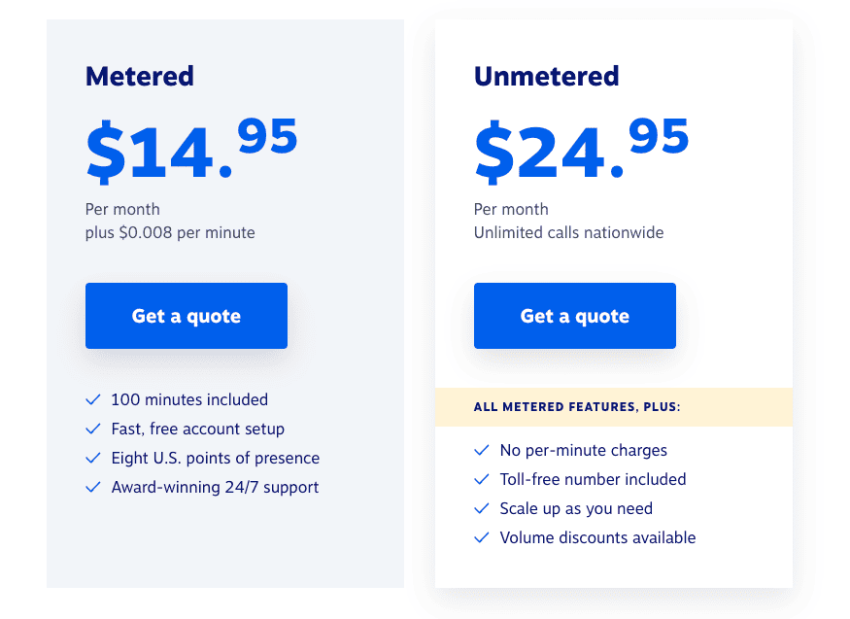
With full STIR/SHAKEN compliance and 24/7 expert support, we keep your business connected without the billing surprises.
Bring your PBX to the cloud—the easy way.
SIP trunking providers aren’t the same. Nextiva’s business voice network is built for reliability. There’s no new equipment needed.
SIP Trunk Pricing FAQs
Most reputable providers allow for an interoperability test. You should check for latency (below 150ms), jitter (below 30ms), and packet loss (below 1%). Additionally, your provider should support the G.711 codec for high-definition voice quality.
SIP Trunk is the bridge connecting your office to the phone network. The SIP channels are the number of individual lanes inside that bridge. Each channel represents one concurrent call. If you need 10 employees to be on the phone at the same time, you need 10 channels.
There are no truly free SIP trunks for small business use. Infrastructure, security, and E911 compliance require significant investment. While some offer free trials for developers, a business-grade connection always involves a monthly fee or per-minute cost.
Yes. Most providers offer tiered pricing. For example, if you move from 10 channels to 50 or 100 channels, the per-channel rate can drop by 15–20%. Always ask your sales representative for a volume discount if you have high concurrent call requirements.
Set-up fees range from $0 to several hundred dollars. Many providers waive these fees for longer contracts or higher-volume accounts. Always ask about setup fees when comparing total costs in your trunk pricing comparison.
This varies. Many providers, including Nextiva, will port your existing business numbers for free as part of your initial setup. However, some budget providers may charge between $5 and $15 per number to move them onto their network.
Businesses choose SIP trunking for several key advantages:
– Allows companies to use existing hardware and phone systems
– Offers cost-effective voice service and scalability compared to traditional copper lines
– Handles multiple concurrent calls with multi-channel trunks
– Straightforward setup and maintenance with qualified IT support
– Attractive domestic and long-distance rates across the United States, Canada, and the UK
– Advanced call routing and call recording capabilities
– Integration with existing fax systems for both incoming faxes and outbound faxes
Set up a SIP trunk with these steps:
– Access your PBX software settings as an administrator
– Add credentials from your SIP trunking service provider, including username, password, phone numbers, and host/domain
– Configure call routing settings for inbound calls and outbound calls
– Test with a few calls in and out from a known working phone
– Access your provider’s web portal to monitor usage and manage your account
Most providers, like Nextiva, offer pre-configured setups to simplify the process and ensure the proper handling of concurrent calls from day one.
Business SIP pricing typically costs $15 to $30 per month per channel for unlimited calling. Alternatively, you can opt for pay-as-you-go metered plans that charge $0.005 to $0.03 per minute. The overall cost depends on the pricing model, your required channels (concurrent calls), and add-on fees.
