



Ninety minutes on the water, and you are in France. No security trays, no departure gates, no overhead locker battles. You drive onto a ship in Kent and off it in Calais, with the whole of mainland Europe spread out ahead. For anyone planning an overland trip — south toward Paris, east into Belgium, deeper into Germany, or on toward the Netherlands — this is the moment the journey starts to feel real.
The Dover–Calais ferry crossing is the most-used sea route between the UK and Europe: around 35 sailings a day, year-round, operated by DFDS Seaways, P&O Ferries, and Irish Ferries. But it is more than a logistical connector. There is something specific about watching the White Cliffs of Dover pull away from the stern, and watching the French coast come into focus from the bow, that a tunnel journey — fast and underground — simply does not offer.
This guide covers everything you need to know before you go.
Ferry or Tunnel? How to Choose
Both get your vehicle from Kent to northern France. The Eurotunnel crossing takes 35 minutes and the process is frictionless. The ferry takes 90 minutes and the process is human-scale. The choice usually comes down to what kind of traveler you are and what you are bringing.
The ferry suits people who are carrying a lot. A roof box, a bike rack, a board bag, a campervan roof — none of this is a problem. You drive onto the car deck, park, and walk upstairs. There are no size anxiety moments.
It works better with pets. Dogs travel in the vehicle rather than in a separate hold. Some operators allow pets out of the car on deck — check current operator policy before traveling, as rules vary by vessel.
It removes every element of the airport routine. No security trays, no liquids rules, no body scanners, no sprinting to a gate. Check in, drive to your lane, wait. The crossing becomes part of the journey rather than an interruption to it.
And there is the crossing itself. On a clear day, you can see France from the upper deck of a Dover-departing ferry before you reach it — a low, flat stretch of northern coast that looks entirely different from the chalk cliffs receding behind you. That transition has its own appeal.
How the Dover–Calais Route Works
Three operators run the route: DFDS Seaways, P&O Ferries, and Irish Ferries. Between them, they run approximately 35 sailings per day, spread from the early hours through to late evening, with departures often available every 30–60 minutes during peak summer periods.
Crossing time is approximately 90 minutes, with some variation by operator — DFDS quotes around 100 minutes, Irish Ferries around 90. The route runs year-round with no seasonal gaps.
For current timetables, live prices, and availability across all three operators on a single page, Ferryhopper’s Dover–Calais route page is a useful starting point.
Arriving at Dover Port: What to Expect
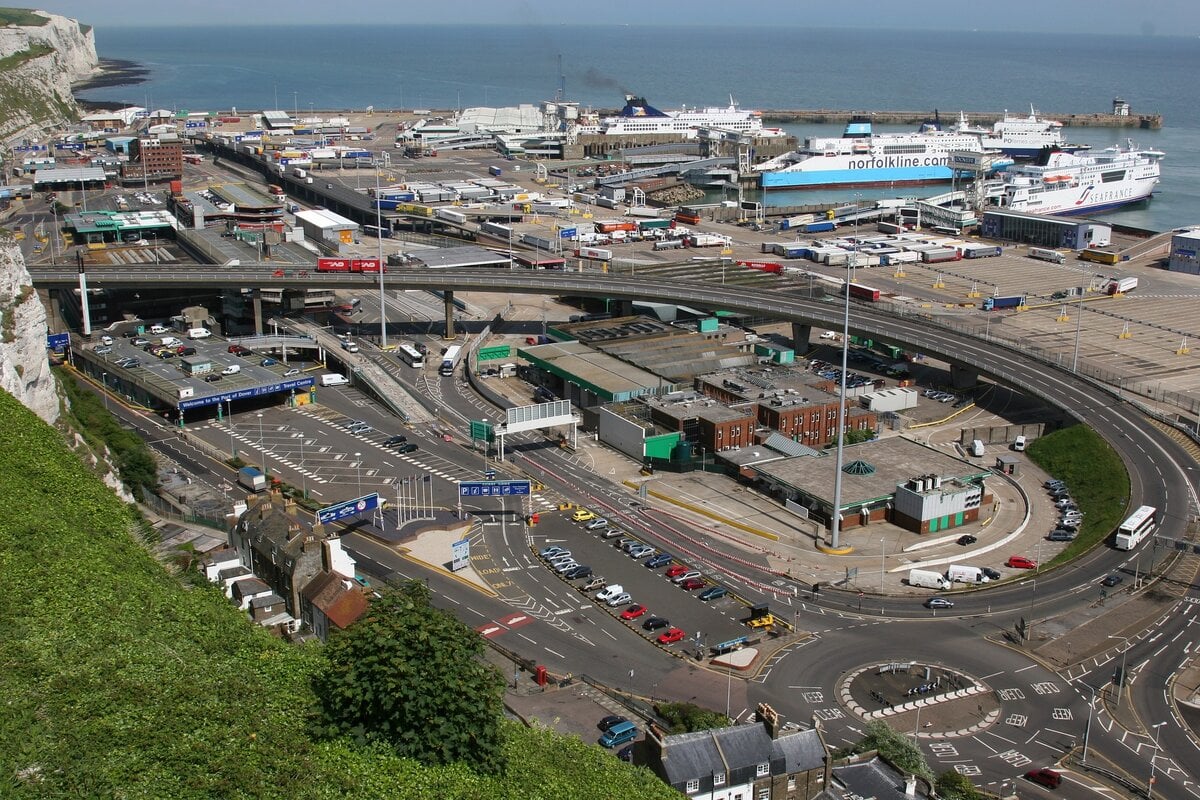
Dover Eastern Docks handles all cross-Channel ferry traffic. It is well signposted from the A20 approaching from the west and the A2 from the north. The process is drive-in, check in, and join your departure lane — there is no general car parking at the terminal itself.
Arrive at check-in at least 60 minutes before your departure. Coaches require two hours. During UK school holidays, bank holiday weekends, and summer Fridays, the approach roads around Dover — particularly the M20 and A20 — can slow considerably. A live traffic check before you leave home is worth doing.
All passengers need a valid passport. French border authorities operate juxtaposed controls at Dover, which means the French passport checks happen on the UK side before you board. You clear passport control before you get on the ferry, not after you arrive in France.
EU Entry/Exit System (EES): What to Expect in 2026
The EU’s Entry/Exit System — a digital biometric border system requiring non-EU travelers to register fingerprints and a facial photograph when entering the Schengen area — began phasing in at Dover from October 2025. As of early 2026, the rollout for private car passengers is ongoing in a phased introduction coordinated between the Port of Dover and French border authorities.
First-time registration adds several minutes per traveler. Once enrolled, future crossings process more quickly. Until the system is fully embedded, build in an extra 30–45 minutes beyond the standard check-in window — particularly for a first crossing under the new system. Check the Port of Dover’s current EES guidance before traveling, as procedures continue to be updated.
The Crossing: What Happens Onboard
Vehicles park on the car deck. Once the ferry is underway, passengers move upstairs to the main public areas — you cannot stay in your vehicle during the crossing.
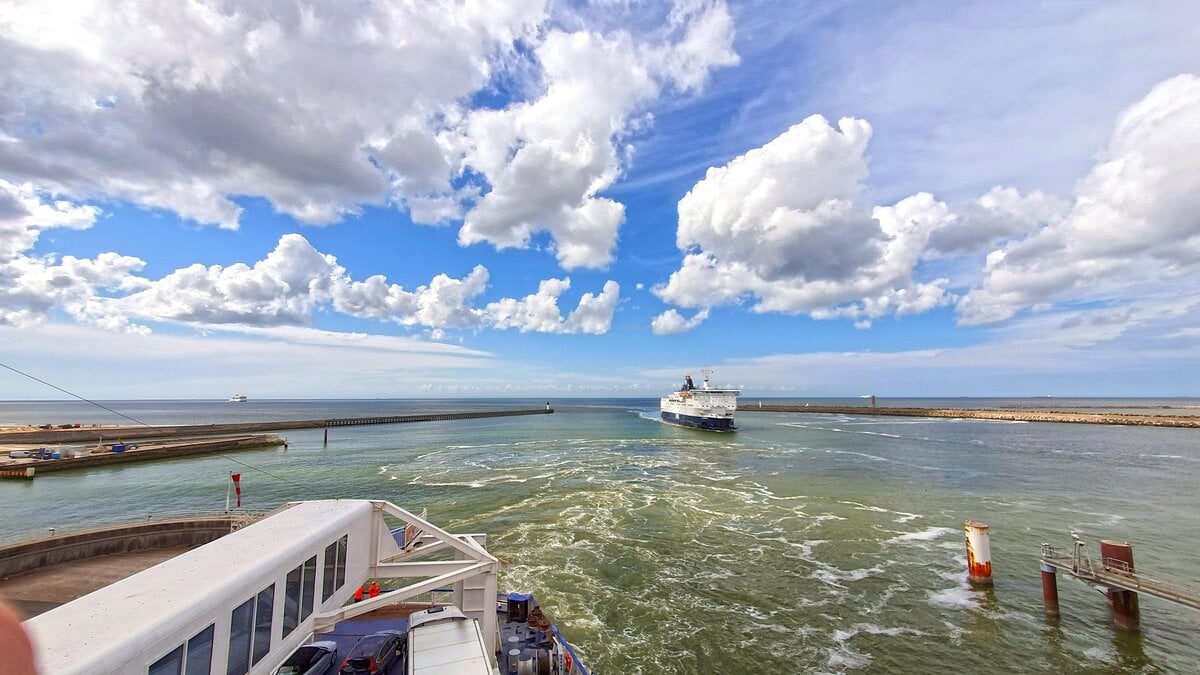
Most vessels have outdoor deck access. Leaving Dover, the White Cliffs are visible as the ship clears the harbor. The scale of them from the water is different from any road view. On the French side, the approach into Calais is lower and flatter — the contrast in landscape is part of what makes the crossing feel like a genuine transition.
On DFDS vessels, the 7 Seas Restaurant is open 24 hours a day with panoramic windows, serving hot meals including fish and chips, cooked breakfasts, and vegetarian options. The Lighthouse Café covers coffee, snacks, and lighter bites. The Horizon restaurant operates seasonally with made-to-order pizza, pasta, and salads.
P&O’s newer vessels, including the P&O Pioneer, have received positive notices from passengers for their onboard facilities.
Duty-free shopping is available onboard — fragrances, alcohol, and confectionery at prices below UK high street rates. Post-Brexit duty-free allowances have been restored for UK travelers heading to France, so wine, spirits, and cigarettes purchased onboard for personal use can be brought back within the current allowances.
WiFi is available on DFDS vessels. Confirm current connectivity on P&O and Irish Ferries directly before travel.
Foot passengers: P&O Ferries accepts foot passengers on Dover–Calais. DFDS operates this route as vehicle-only — you need a car, motorcycle, or other vehicle to travel with DFDS on this specific crossing.
Leaving Calais: Where the Road Takes You
Calais sits at the junction of several major European motorway corridors, which is what makes it useful as a road-trip gateway rather than just a port.
South to Paris: The most-driven route from Calais follows the A26 and A1 motorways south via Arras. The distance is around 293km and the drive takes approximately 3 hours under normal traffic conditions. Tolls apply — approximately €22–€25 for the Calais–Paris stretch. An alternative via the A16 passes through coastal towns such as Boulogne-sur-Mer and Abbeville, adding time but offering a more varied drive.
East into Belgium: Bruges is reachable in under two hours from Calais, and the Belgian motorway network is toll-free for cars. Ghent and Brussels follow the same basic corridor east.
Further into the Netherlands and Germany: From Belgium, the onward drives to the Netherlands (Rotterdam, Amsterdam) or Germany are straightforward via the E40 and connecting motorways. Calais to the German border via Brussels is a drive of roughly 3.5–4 hours depending on destination.
Northern France coastal driving: The Côte d’Opale — the coastline running south from Calais toward Boulogne and Le Touquet — is a short detour that gives a different picture of northern France than the standard motorway corridor. The D940 follows the coast with views over the Channel, and Le Touquet has been a weekend destination for travelers from both sides since the early 20th century.
The Mont Saint-Michel is about a five-hour drive away. If you are heading there, and it’s worth it, read our guide: Visit Mont Saint Michel: A Small UNESCO World Heritage Island in the Normandy
Practical Tips for a Smoother Crossing
- Book early for peak periods. July and August, UK school half-term weeks, Easter, and bank holiday weekends see the heaviest demand. Prices rise and departures sell out on preferred timings.
- Consider a flexible ticket. DFDS offers the option to travel up to four hours before or after your booked crossing, subject to availability. This can reduce pressure on travel days with unpredictable traffic.
- Allow extra time for border processing. With EES biometric checks phasing in for car passengers through 2026, first-time registrations add time at the border. Build in at least 30–45 minutes extra buffer beyond the standard check-in window during this transition period.
- Travel off-peak for quieter ports. Midweek sailings and early morning or late evening crossings generally see lighter traffic at the port.
- The approach roads matter. The M20 and A20 leading to Dover can back up significantly on busy Fridays and Saturdays in summer. Live traffic checks before leaving home save significant time.
- Duty-free is post-Brexit again. Since Brexit, duty-free allowances have been restored for UK travelers heading to France. Wine, spirits, and cigarettes can be purchased onboard at reduced prices for personal use.
Practical Information
| Crossing time | ~90 minutes (varies by operator and conditions) |
| Operators | DFDS Seaways, P&O Ferries, Irish Ferries |
| Daily frequency | ~35 sailings (combined), year-round |
| Check-in (vehicles) | At least 60 minutes before departure |
| Foot passengers | P&O only on this route (not DFDS) |
| Pets | Permitted in vehicle; check operator policy |
| Passport | Required; French border controls at Dover |
| EES status (2026) | Phased introduction ongoing — allow extra time |
Frequently Asked Questions
How long does the Dover to Calais ferry crossing take?
The crossing takes approximately 90–100 minutes depending on the operator and sea conditions. DFDS quotes around 100 minutes; Irish Ferries operates at closer to 90. Either way, it is enough time for a hot meal and a walk on the deck. Rough weather in autumn and winter can affect the feel of the crossing — modern ferries on this route are large vessels, which reduces but does not eliminate movement.
How much does the Dover to Calais ferry cost?
Prices vary significantly by operator, travel date, and how far in advance you book. Peak summer departures and bank holiday weekends cost considerably more than midweek off-season crossings. Booking early is the most reliable way to reduce the cost. For a current price comparison across operators, check Ferryhopper’s Dover–Calais page which consolidates live availability and pricing.
Do I need a passport for the Dover to Calais ferry?
Yes. All travelers — including children — need a valid passport. French border authorities operate juxtaposed controls at Dover, meaning the passport check takes place on the UK side before you board the ferry. UK nationals are entering the Schengen area and are subject to the EU’s Entry/Exit System, which began phasing in at Dover from October 2025.
Can I travel as a foot passenger on the Dover–Calais ferry?
P&O Ferries accepts foot passengers on Dover–Calais. DFDS operates the route as vehicle-only — you need a car, motorcycle, campervan, or other vehicle to travel with them on this crossing. If you are traveling without a vehicle, confirm current foot passenger options with P&O or Irish Ferries directly.
What is the EU Entry/Exit System (EES) and how does it affect my crossing?
EES is a digital biometric border system requiring non-EU travelers — including British passport holders — to register fingerprints and a facial photograph when entering the Schengen area. It began phasing in at Dover from October 2025. First-time registration adds several minutes per traveler at the border. Once registered, future crossings are faster. Through 2026, allow an extra 30–45 minutes buffer beyond the standard check-in window for your first crossing. Check the Port of Dover’s website for the latest guidance before you travel.
Is the English Channel rough? Could I get seasick?
The Channel is variable. On calm days the crossing is smooth and the 90 minutes pass easily. In rougher weather — more common in autumn and winter — the crossing is noticeably bumpy. If you are susceptible to motion sickness, staying on the open deck in fresh air or choosing a seat mid-ship helps. Bring motion sickness tablets if in doubt — the ferry crossing can catch people off guard, particularly in brisker conditions.
Is it better to book the ferry or the Eurotunnel for a road trip to Europe?
The Eurotunnel is faster (35 minutes) and predictable but underground. The ferry takes 90 minutes and gives you space to move around, eat a proper meal, and experience the channel crossing as part of the journey. For longer road trips with luggage, bikes, or a campervan, the ferry tends to suit the spirit of the trip better. For a quick dash to France and back, the tunnel wins on speed. Many regular UK-Europe drivers use both depending on the trip.
Related articles:

