



Planning to build a modern, feature-rich, and secure software in 2026?
Well, that’s the reason you have landed right here, looking for custom software development services to bring operational efficiency and deliver an enhanced customer experience.
Did you know?
The global custom software development market size is anticipated to reach USD 146.18 billion by 2030.
Now, ask yourself!
Do you want to encounter operational inefficiencies, manual errors, or security issues?
You’ve the answer in your mind, and therefore, it’s no secret that businesses are going crazy over building custom software that could yield abundant benefits.
Therefore, building custom software has become inevitable.
While incorporating the right ideas, research, design, and development, businesses often overlook a crucial aspect of their software development lifecycle, i.e., “trending technologies in software development”.
With the market flooded with abundant tech options, choosing the correct set of technologies is essential to growing your business.
In this blog post, we’ll discuss the top trending technologies to incorporate in your custom software development project.
1. AI-Driven Software Engineering & Generative Coding
In 2026, artificial intelligence not only supports developers but also collaborates with them at every stage of the software development lifecycle. When you ask the team to use generative AI, they can easily write code snippets, auto-complete functions, catch bugs early, and even suggest architecture improvements based on best practices. Therefore, it eliminates recurring, boilerplate tasks, allowing developers to focus more on software innovation.
For example, large firms like JPMorgan Chase have used AI coding assistants that increase the productivity of their engineers by as much as 20%, enabling them to ship code more quickly and to reallocate developer time to more strategic work.
Real startups are also gaining ground in AI engineering platforms. Lovable built an AI-driven development experience that helped it to generate over $100M in annual recurring revenue in less than a year, allowing non-technical users to build web and app components.
As AI-driven software engineering develops, companies that adopt these tools enjoy a significant competitive advantage, delivering scalable software faster, at lower cost, and with greater innovation capacity than traditional development models.
- Speeds process and delivery processes.
- Improves code quality and simplifies maintenance.
- Reducing human error.
- Helps developers concentrate on business logic.
2. Low-Code / No-Code Platforms for Rapid App Development
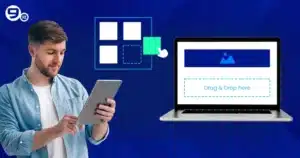
Low-code and no-code platforms help build software solutions using a visual interface, drag-and-drop components, and pre-built logic. Such platforms help product teams, analysts, and even business users quickly write and publish apps without a developer interface. Furthermore, the latest tools, such as OutSystems and Mendix, have enabled companies to cut development time by over 50% while maintaining scalability and management.
Developers are still in demand, but they have now moved toward more complex integrations, performance optimization, and architecture design than simple UI tasks. Teams can quickly create dashboards, workflow automations, approval systems, and customer portals, and iterate on them in real time based on user feedback.
This shift is crucial for developers. Their function has transformed. Instead of spending time on tasks that require little experience, they are now building the more complex integrations, business logic, and back-end of the application. Therefore, it helps in optimizing performance, enforcing security, designing systems, and so on.
- Rapid MVP and app delivery.
- Lowered development and maintenance costs.
- Non-technical members of the team can easily access.
- Easy iteration and experimentation.
3. Cloud-Native & Edge Computing for Distributed Applications
Cloud-native applications are one of the most trending technologies in software development. It is an important part of the software development life cycle that is executed in micro services, container and orchestrators like Kubernetes.
Edge computing is a way to bring data closer to the people and devices that interact with it. Even better, these edge systems run on devices or local servers, not the central cloud. This, in turn, further reduces latency, which is important for real-time applications such as IoT dashboards, healthcare monitoring, and autonomous systems.
Together, cloud-native and edge computing architectures allow businesses to deliver fast, reliable, and globally distributed applications. Businesses can run core services in the cloud and process time-sensitive data on the edge, at speed, reliability, and global reach. Such a hybrid approach allows organizations to deliver consistent user experiences across regions while maintaining control, performance, and scalability in an increasingly connected world.
- Better performance and responsiveness.
- Real-time processing close to data sources.
- Resilient and scalable architectures.
- Multiple deployment models.
4. Serverless Architectures for Scalable Deployments
Serverless computing is one of the trending technologies in software development that simplifies infrastructure management by separating servers from developers. This practice is widely applied with APIs, workflows, and background processing tasks. Developers write focused coding functions, while cloud providers handle everything else, including scaling, availability, and maintenance.
This model allows businesses to respond instantly to traffic spikes without overproviding resources. Serverless systems are cost-effective and flexible, yet automatically scale and only charge for the actual execution time.
Serverless architectures are typically used by companies such as Coca-Cola and iRobot to run high-traffic applications at low operational costs. The model works well for both startups and enterprises because it is serverless, ensuring performance and reliability without the need to build large infrastructure teams.
- Automatic scaling during traffic spikes.
- Pricing is pay-only-for-use.
- There is no need to manage infrastructure.
- Faster deployment and regular updates.
5. Cybersecurity-First Development & Zero-Trust Software
In 2026 Security starts at design, not deployment. Security-first development means that threat modeling, secure coding, and continuous testing are done at each phase of software development. Teams are now receiving bugs and errors from within and outside the system. This is where the concept of a zero-trust architecture becomes essential, which requires ongoing verification of users, devices, and requests. Therefore, it ensures that no system component is automatically trusted; even internal services must authenticate and authorize each interaction.
Google’s BeyondCorp model is one of the best examples of zero-trust, enabling the company to access distributed systems without running into conventional network perimeters. Moving away from traditional network perimeters, Google provides secure access to distributed systems and supports a remote, cloud-first workforce.
- Better protection against breaches.
- Reduced attack surface.
- Improved regulatory compliance.
- Continuous monitoring and verification.
6. Web3 & Decentralized Identity Use Cases
Web3 has moved beyond hype cycles and speculative use cases. Now it is a trust-based solution practical for businesses that value data ownership, transparency, and verification. This change is known as decentralized identity (DID).
Decentralized identity allows users to own and control their digital identities rather than entrusting them to centralized platforms. Organizations need to verify credentials rather than store sensitive data on company servers. This means fewer data breaches and fewer cases of identity theft. It is a huge privacy win for users, since they share proof rather than raw data.
Smart contracts also encourage Web3. If these conditions are met, then they automatically enter into agreements. The firms eliminate manual processing, reduce disputes, and speed transactions without intermediaries.
Such automation creates true operational value for industries that demand trust among multiple parties.
Walmart is one such example that uses blockchain technology to trace food products across its supply chain. This system lets users better trace contaminants, discover sources more quickly, recycle less, and build trust with consumers.
- Users control their identities and data.
- Transparent, tamper-proof transaction records.
- Smart contracts for faster and automated trust.
- No longer rely on intermediaries by third parties.
7. Spatial Computing, AR/VR & Mixed Reality Experiences
Spatial computing is one of the trending technologies in software development that combines digital content with the physical world to change how humans interact with software. In 2026, AR, VR, and mixed reality are no longer experimental; these technologies have real-world business outcomes in training, design, sales, and collaboration.
The trends require new paradigms in front of UI, UX, and how applications are built. Game developers design interactive 3D worlds, spatial interfaces, and real-time rendering programs that are more user-friendly than flat screens and static processes. These technologies empower software teams to develop learning spaces that can accommodate a certain kind of user; these users, rather than reading documentation, learn by doing. It’s a good model for knowledge retention, speeding up onboarding, and attempting not to make the same expensive real-world mistakes.
Customer-facing software, for example, uses AR to showcase products in their own space before making decisions. Retail and eCommerce solutions integrate AR into their mobile and web experiences, improving user confidence and boosting return on investment. VR also allows engineers and product developers to collaborate on design, prototype testing, and problem-solving in virtual environments. Furthermore, these technologies make remote software development interactive and productive, especially for teams across different geographical locations.
- Longer retention of learning via immersion training.
- Better collaboration across the remote workforce.
- Detachable representations of complex systems.
- Interactive customer experiences.
8. Real-Time Data Streaming & Decision Intelligence

Real-time data processing and decision intelligence are other that will be a core component of software by 2026. Applications cannot continue to adopt delayed or batch-based insights because outdated data can, in many cases, create missed opportunities and potentially incur losses. Modern software systems are designed to ingest, process, and act on generated data.
A development paradigm for real-time data streaming proposes event-driven architectures that handle continuous flows of data from applications, connected devices, and user interactions. Pipelines are built to determine anomalies, trends, and immediate response. These streams are most ideal for making profitable business decisions, which help AI models to recommend or automate actions without human intervention.
Financial software developers use streaming technology to notify users of suspicious transactions as soon as they occur, preempting fraud immediately. In their real-time pipelines, retailers prioritize pricing, inventory, and recommendations based on live demand. Operating systems use live alerts to notify teams of performance problems before they can cause a power failure or service interruption.
- Live data to enable decision-making in real time.
- Mass customization of user experiences.
- Early warning of risks and anomalies.
- Immediate insights and live responses.
9. Digital Twins Across Industries
By 2026, digital twins will be a crucial part of complex operations and infrastructure industries. A digital twin is a virtual version of a live system that is kept up to date through real-time data.
Manufacturers also employ digital twins to simulate entire production lines, test new configurations, and anticipate equipment failures. It reduces downtime, increases efficiency, and lowers maintenance costs. Twins of traffic and infrastructure are also robust predictors of congestion, urban planning, and safer transportation in smart cities. Also, hospitals can digitize patient workflows to improve resource allocation, patient care, and care outcomes.
The main benefit of digital twins for exploring the “what if” scenario is that they do not disrupt actual operations. It is the same sense of “safe space” digitally that enables team experimentation and the capacity to anticipate failure and act on performance improvements. They also convert ambiguity into certainty and conjecture into planning as systems grow into increasingly complex systems.
- Experimentation without consequences.
- Reduce downtime and operational failures.
- Feedback on the performance of the system.
- Improved prediction and planning.
10. Sustainable & Green Software Engineering
In 2026, sustainability is not merely a hardware or infrastructure problem, but also a software problem. Applications consume energy due to poor code, excessive data processing, and underutilized cloud resources. Green software engineering provides a solution to this problem without slowing down performance.
Effectiveness is now the primary focus of application design. Development teams implement optimized algorithms, reduce redundancy, and minimize data transfer. They also make better infrastructure decisions, choosing energy-efficient cloud regions and scaling down resources only when needed. Also, carbon-aware computing is vital. It helps reduce emissions while remaining reliable for firms by time-shifting workloads to lower-carbon-intensity periods.
Green software engineering adds environmental and business value. Without costly applications, organizations can reduce the cost of the cloud, increase the efficiency of systems, and meet new regulatory and customer needs for sustainability. As digital services become more widely available, responsible software design becomes a longer-term competitive advantage rather than a compliance mandate.
- Lower energy consumption and cloud costs.
- No impact on the environment.
- Smarter and more efficient infrastructure use.
- Stronger brand trust and reputation.
Conclusion
In 2026, software development will no longer just mean writing code; it will mean making intelligent decisions, thinking about the future, and having a deep understanding of how technology actually impacts businesses’ bottom lines. The trending technologies in software development in this blog present an unavoidable context for enabling speed, security, and scalability, as well as long-term growth. Those companies connecting these innovations to clear purposes will be and stay ahead of, rather than simply being led by change.
The NineHertz is a dedicated custom software development company that has been delivering software solutions for more than 15 years to boost efficiency, automate routine tasks, and enhance user experiences. The company provides custom software development services to startups, SMEs, and established corporations to build software solutions using trending technologies in 2026 and beyond.
Frequently Asked Questions
1. What are the top technology trends for 2026?
The Top 5 trending technologies in software development for 2026 include: AI-driven software engineering, low code/ no code, cloud native and edge computing, serverless, cyber security by design, web3/ decentralized identity, spatial computing (AR/VR), real-time data streaming, digital twins, and green software engineering. Together, these technologies make it possible to create secure and future-proof software for companies.
2. How is AI changing software development in 2026?
AI is revolutionizing software development by engaging developers throughout their entire lifecycle. Teams use AI tools to write and review code, detect bugs early, improve code quality, and speed up testing. AI reduces repetitive work and enables teams to focus on problem-solving, system design, and innovation rather than replacing developers. Therefore, it means faster delivery, fewer errors, and more reliable software.
3. Why is low-code/no-code gaining popularity in 2026?
Low-code and no-code platforms are trending technologies in software development as companies seek to build and deploy applications in less time. These tools give non-technical users the ability to ‘build workflows, dashboards, and internal tools without lengthy development cycles. This will allow the developers to focus on the more important issues, such as building stronger teams and reducing overall development costs.
4. Which technologies are expected to grow beyond 2026?
Some long-term trending technologies in software development are AI-driven development, real-time data intelligence, cloud-native and edge computing, cybersecurity-first architectures, digital twins, and sustainable software engineering. They can be adjusted to the most basic business requirements, automation, scalability, security, and efficiency.
