



If you’ve ever run a profitable scalper on a home setup and then moved it to a VPS expecting instant improvement, you may have been surprised—or disappointed. Many traders assume that a “fast” VPS automatically means better trades, but that’s only part of the equation. The real difference lies in how latency stacks up across multiple network layers between your EA and your broker’s server. That’s where performance can quietly erode even on hardware that looks impressive on paper.
It’s no coincidence that traders using a fast forex vps service see lower slippage not just because of CPU or RAM specs, but because of optimized routing and data center proximity. Speed in forex trading isn’t just about how quickly your VPS executes a command—it’s about how quickly that command reaches your broker’s matching engine and returns confirmation. And that’s where most traders miscalculate.
Where Latency Actually Lives (and Why It’s Not All the Same)
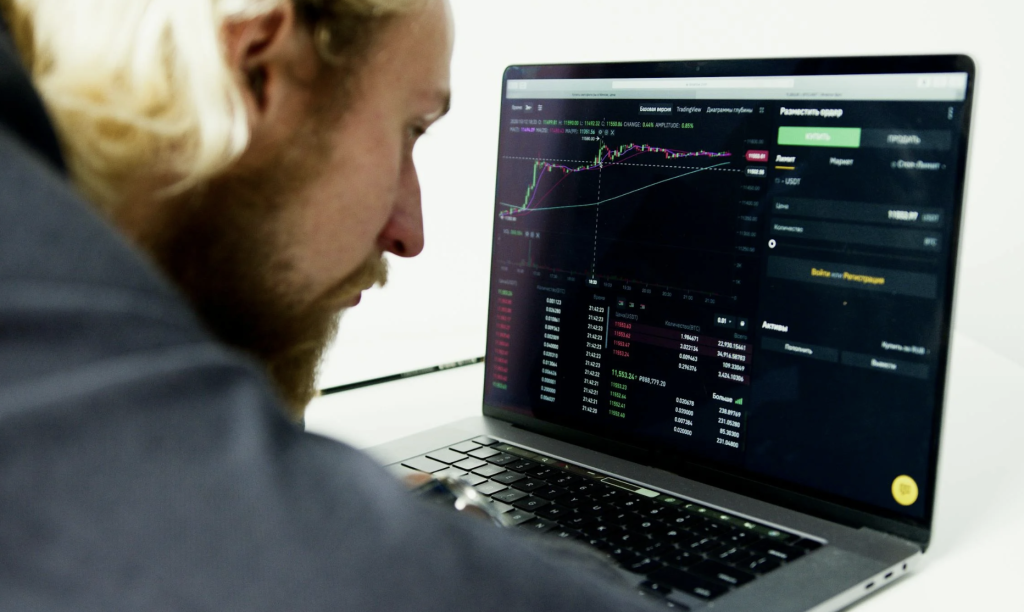
Latency is often advertised as a single number, such as 2 ms or 5 ms to a broker’s server. In practice, there are multiple latency tiers that stack together—VPS internal latency, network routing latency, broker-side congestion, and execution latency on the matching engine. For context, a VPS near an LD4 (London) broker hub might show 1.3 ms ping, but the *end-to-end trade execution* might still take 10–12 ms depending on your broker’s liquidity routing architecture.
From a trading performance standpoint, every millisecond counts differently depending on your strategy. Scalpers running 5–10 trades per minute may see the difference between 1 ms and 5 ms latency translate to a measurable 0.5–0.8 pips of slippage over hundreds of trades weekly. Grid or swing traders, on the other hand, will barely notice that difference but still benefit from uptime and stability of the VPS. The mistake many traders make is optimizing the wrong kind of latency for their strategy type.
The Routing Trap: How “Local” Servers Aren’t Always Local
Here’s a story I’ve seen repeated for years: a trader chooses a VPS claiming to be “in London” because their broker is also “in London,” only to discover the VPS is actually hosted in Slough or Maidenhead—physically close, but network hops away from the LD4/LD5 data centers. Those extra hops can add 2–3 ms of round-trip time, nullifying the whole advantage of a London-based build.
One of my clients once tested this with a latency monitor inside MT4, comparing a VPS claiming 1 ms to his broker and another from a provider like NewYorkCityServers showing 0.7 ms consistent latency. Over three months, the second setup improved slippage by about 0.3 pips per order on EURUSD during volatile hours. That’s a quantifiable edge, but more importantly, it’s an edge grounded in routing efficiency—not raw compute speed.
When you evaluate VPS hosts, don’t just look for regional claims; request traceroutes or test its actual latency to your broker’s IP. A host can have a blazing-fast CPU and NVMe storage but still underperform if their network backbone routes traffic inefficiently.
CPU Power Is Often Overrated—Until It Isn’t
For most EAs, especially those coded efficiently in MQL4/5, CPU power isn’t the main bottleneck. MetaTrader itself runs single-threaded, so a VPS with an Intel Xeon core at 3.5 GHz will often outperform a cheaper, high-core-count setup with weaker single-thread performance. However, once you run multiple instances or backtest in parallel, CPU and RAM overhead begin to matter.
In one benchmarking scenario I ran, two identical EAs performing tick-based calculations showed nearly a 40% faster response on a VPS using modern NVMe storage and a 3.4 GHz Xeon Gold CPU compared with a lower-end AMD EPYC setup running at 2.3 GHz. That difference became critical when both accounts were exposed during high volatility—execution was technically within milliseconds, but order queuing under CPU stress delayed final confirmations.
The insight here is to size your VPS according to operational load, not just your broker latency. A VPS tuned for execution but under-spec’d for computation becomes unstable at the exact moment you need it most—when the market moves sharply.
The Broker-VPS Distance: The Hidden Multiplier in Execution Quality
Brokers co-located in specific data centers—like LD4 (London), NY4 (New York), and TY3 (Tokyo)—offer traders the shortest possible route if their VPS is inside the same facility. But even if your VPS is only 20 miles away, physical distance isn’t the full story. Network peering agreements between data centers can dwarf mere geography. Two servers 10 miles apart can route through multiple intermediary networks, adding invisible delay.
Companies such as NewYorkCityServers often provide clarity about where their servers sit relative to major broker hubs, making it easier to align locations with your brokers’ data centers. For instance, if your ECN broker routes through NY4, choosing a VPS actually inside or directly peered to that facility yields tangible benefits. Traders who ignore those alignments often end up overpaying for “low latency” hardware that never connects optimally to the actual trading infrastructure.
What Experienced Traders Won’t Tell You About Slippage
There’s a misconception that tight spreads automatically equal fast execution. In reality, spread and execution latency are largely independent, particularly for ECN accounts. During volatile periods—like central bank announcements—the quality of your network path dictates how quickly you can hit or remove liquidity before spread widening occurs. A VPS cutting latency by even 3 ms can mean your limit order hits before slippage expands by a pip.
I recall one scalper running EURUSD and GBPUSD EAs who reduced latency from 8 ms to below 2 ms. While it seemed small, over six weeks, his execution logs recorded an average 15% improvement in trade fill price versus expected entry. That’s the type of statistical improvement that pays for VPS cost multiple times over.
Slippage isn’t eliminated by a better VPS, but it’s minimized through synergies—hardware efficiency, proper MT4/MT5 configuration, and a physically optimal route to your broker. Those combined factors form what I call the “latency triangle”: server performance, network locality, and broker execution policy. Remove one side, and consistency vanishes.
Sustainability Over Speed: What to Watch for When Scaling
As traders grow their portfolios and start running multiple EAs across accounts, sustainability becomes the next factor. Many VPS users underestimate how critical consistent uptime is compared to raw latency. An uptime of 99.9% sounds great until you realize it translates to about 40 minutes of downtime monthly—more than enough to interrupt trailing stops or open-session execution.
Choosing a host with redundant backbone routing, active hardware monitoring, and failover support is crucial for maintaining uninterrupted trading sessions. While latency drives entry quality, uptime ensures continuity—and it’s the combination that produces reliability over time. Providers like NewYorkCityServers emphasize SLA-backed uptime of 99.99%, which brings downtime below five minutes monthly. That difference might sound minor, but for high-frequency strategies, it’s substantial.
Bringing It All Together
“Fast” is relative. A fast forex vps service should not only execute quickly but also maintain consistent network paths, high single-core performance, and verified proximity to your broker’s data center. For traders running automated strategies, that combination—proper sizing, optimal routing, and fail-safe uptime—makes the measurable difference between theoretical speed and actual trade quality.
Experienced traders often say, “Buy speed once, and buy it right.” It’s not about chasing the lowest ping, but securing the most stable environment where every millisecond consistently counts in your favor. When you understand where those milliseconds hide—in routing tables, CPU clocks, and data center peering—you move beyond marketing terms and into the realm of real performance. That’s when your VPS stops being a cost and starts acting as a trading edge.
