



IoT has been the talk of the town, whether it’s wearable fitness trackers or autonomous vehicles, it connects devices to track real-time data relating to pressure, temperature, sensors, or locations. As the industry is moving rapidly, top giants like Microsoft are implementing Azure IoT, Google Cloud IoT is focusing on data ingestion, and Cisco has been working on developing network-centric intelligence. As per the report of Statista, the global tech sector will be setting around 39 million estimated IoT-connected devices based on diverse use cases.
IoT data analytics refers to extracting data from connected devices to address business challenges effectively. The revolution of IoT is no less than an innovation milestone, connecting millions of data points across various systems. As a leading IoT software development company, we explore how IoT data analytics is establishing its use cases across different industries, driving smarter decisions and enhanced efficiency. Let’s take a deep dive into these applications in the blog ahead.
What is IoT in Data Analytics?
The Internet of Things in data analytics simply reflects the process of analysing vast datasets to extract valuable insights from unstructured data that helps businesses make the right decisions. Using IoT analytics, the system can identify patterns through real-time and historical data while making adjustments with future predictions.
Companies are applying advanced techniques of Machine learning and predictive modelling to uncover insights from different datasets that improve productivity. Based on the target insights, it is further divided into various forms, including diagnostic, descriptive, prescriptive, and predictive analytics. Most IoT data analytics tools focus on checking device status and monitoring automated devices, such as smart thermostats or automated lighting. In industries like logistics or manufacturing, the key data that is communicated is the geographical location of the device.
Some popular IoT analytics platforms are Splunk, QlikView, Microsoft Power BI, IBM Watson, SAS Advantage Analytics, AWS Kinesis, and Apache Kafka.
Benefits of IoT in Data Analytics
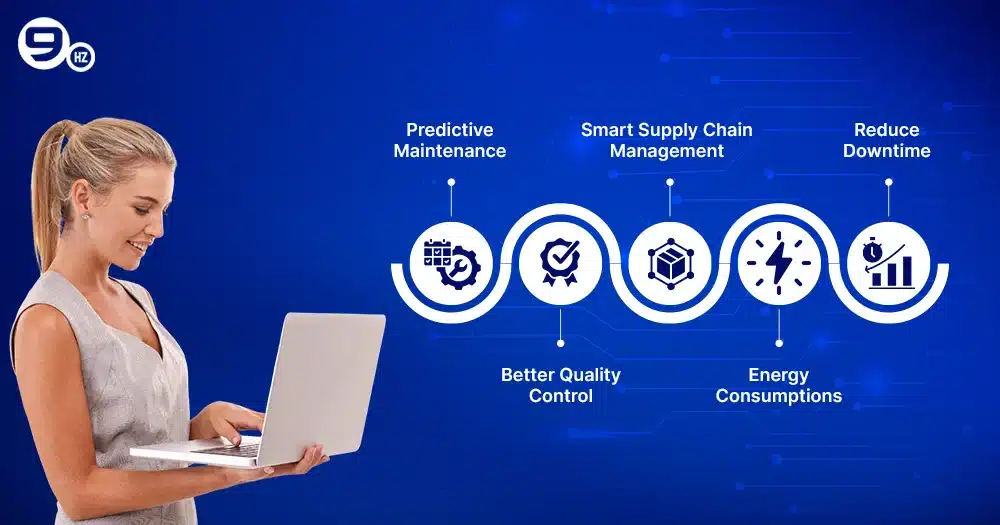
IoT in data analytics is creating significant improvements in gathering valuable insights. However, it serves other major benefits for businesses to grow with automation, access control, and standardisation. Here are the following benefits it provides:
Cost Efficiency
IoT implementation can result in reduced energy consumption, better resource utilisation, and less investment for expensive failures. It makes it a cost-effective alternative that saves more through predictive maintenance in comparison to manual inspections. IoT sensors backed by a mechanism that automatically turns off unused equipment for low utility bills.
Operational Productivity
IoT in data analytics eliminates repetitive tasks through automated data collection and systematic monitoring. Real-time IoT sensors improve workflow optimisation without any delays or bottlenecks. It directly increases productivity through automatically adjusting for speed and demand. Like an IoT irrigation system that signals to sprinkle water based on the soil to promote better soil growth with minimal labor. It provides the best output results, faster operations, and high efficiencies.
Safety Controls
IoT-powered devices are trained to automatically send alerts for early detection of hazards to prevent breakdowns and hazards. Some key areas for smart systems can detect gas leaks, equipment failures, or structural weakness before the situation escalates. IoT in data analytics integrates safety measures that support businesses in complying with regulations to protect the workforce, balance uninterrupted operations, and reduce operational burden.
Fast Decision-making
Manual systems take maximum time to derive insights from a vast amount of data collection, which helps in making informed decisions. For areas like logistics, it automates decision-making through GPS tracking, data transfer, and updates for delays. Integrating IoT in data analytics includes an advanced dashboard, quick results, and developing agility from competitive advantage through standard business practices.
Real-time Data Analysis
Through IoT, businesses can establish a structured flow through connected devices towards the analytics platforms. Real-time data analysis helps to reduce bias in equipment observation and metrics that support making operations more proactive and responsive.
Better Scalability
The manufacturing and logistics sector involves high-scale operations and production, and IoT systems add more scalability to cover the entire infrastructure. Cloud-based IoT implementation in data analytics for handling a high volume of data across multiple analytical platforms. As the business expands, it aligns with business data insights without any proportional increase in cost.
Common Use Cases of IoT in Data Analytics
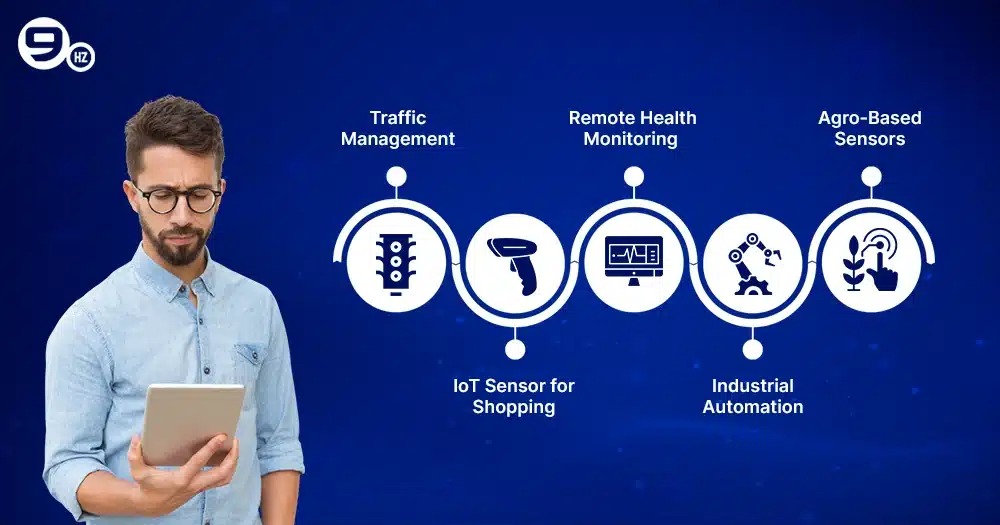
From predictive maintenance to smart traffic management, IoT use cases for data analytics are constantly helping businesses to improve operations and personalize customer experience. Every industry works on core data and its requirements to derive updated insights for intelligent decision-making. Here are the following use cases of IoT in data analytics:
Traffic Management
Busy cities across the country are becoming alarmed about creating demand for smart traffic management systems. With the nations focusing on urban mobility, it is implementing automation in various areas, including traffic flow optimisation, monitoring for high emission areas, safety enhancement, and optimising real-time driver-centric data.
IoT Sensor for Shopping
Across the retail industry, IoT in data analytics complements personalised shopping experiences through tracking customer behaviour insights. IoT sensors track product movement with automated inventory levels. Major use cases for shopping comprise RFID tags, smart shelves for reducing stockout, better layout planning, and personalized deals.
Remote Health Monitoring
In the healthcare sector, IoT in data analytics has applications relating to tracking patients remotely for improving treatment and reducing hospital visits. This system provides real-time data to healthcare providers with consistent tracking and automates medication schedules. It directly sends alerts in case of an emergency crisis and performs deep analysis for customised treatment plans.
Industrial Automation
For safe production and controlled equipment usage, IoT sensors can track performance, energy use, and temperature for insights. AI-based analytics support factories with high productivity, low operational costs, remote monitoring, and reduced downtime. Automation enhances speed and efficiency through an adaptive industrial environment.
Agro-Based Sensors
Most farmers struggle to check for soil moisture, weather conditions, irrigation, and nutrient levels through manual methods. IoT-based tools and devices predict pest risks, irrigation, forecast weather predictions, and reduce water waste. It supports improving labor productivity and timely decision-making.
Challenges in IoT Implementation
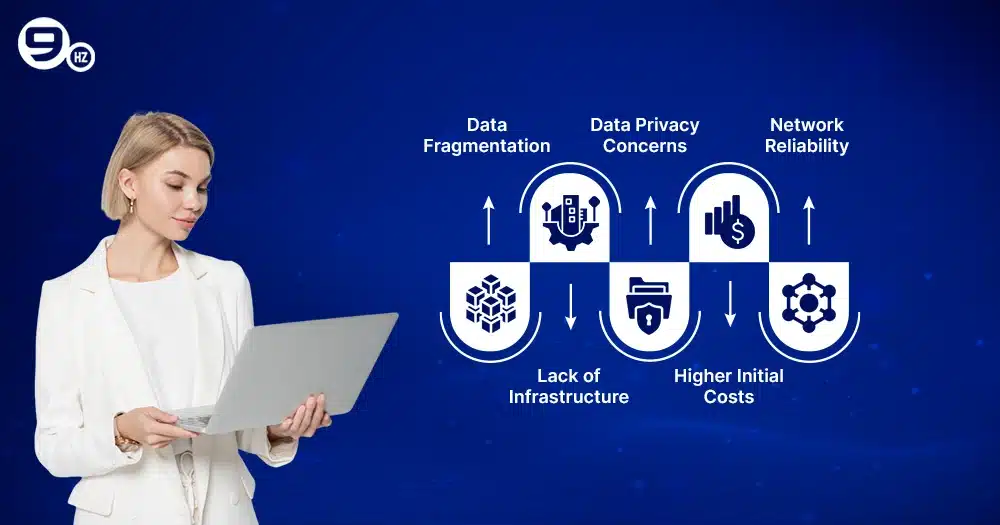
IoT analytics focuses on collecting data from connected devices to extract valuable insights to support smarter decision-making. It covers the entire functions of data collection, integration, analysis, insight generation, automation, and control. However, selecting the right IoT data analytics platform alone doesn’t help; most enterprises face major challenges in IoT implementation. Let’s discuss them:
Data Fragmentation
With the rapid growth in the number of connected devices, organisations face major challenges in handling unstructured data based on volume and velocity. Mostly, these data are stored in NoSQL format, which makes it hard to retrieve valuable insights. However, the launch of data frameworks like Cassandra and Hadoop resolves these data complexities.
Lack of Infrastructure
Finding the right technology infrastructure with IoT implementation is difficult, as existing systems might not be compatible, and companies are following industrial standards. So, it creates additional investments to connect with service providers and technology availability through a range of devices, gateways, and applications.
Data Privacy Concerns
The IoT ecosystem involves a high volume of personal and sensitive data, so there is a constant risk of data privacy concerns. It can directly influence the quality of insights while transferring data and collecting real-time updates. These challenges comprise unauthorised access, cyberattacks, hacking, weak encryption, default passwords, and outdated firmware. Industry-specific regulation and additional security patches resolve these concerns.
Higher Initial Costs
For small-scale businesses and startups, high upfront investment can be a challenge to install connectivity solutions, devices, sensors, gateways, and create compatible infrastructure. Additionally, it creates more barriers through costs relating to software development, staff training, and cloud services. These challenges can be resolved through phased implementation, pilot projects, and the use of off-the-shelf software.
Network Reliability
IoT tools and sensors rely on stable and fast networks for smooth data exchange. However, for remote operations through less-developed production houses, poor connectivity and network congestion pose the biggest challenges. It might cause device downtime, data loss, and delays that can disrupt operations.
Future Trends of IoT in Data Analytics
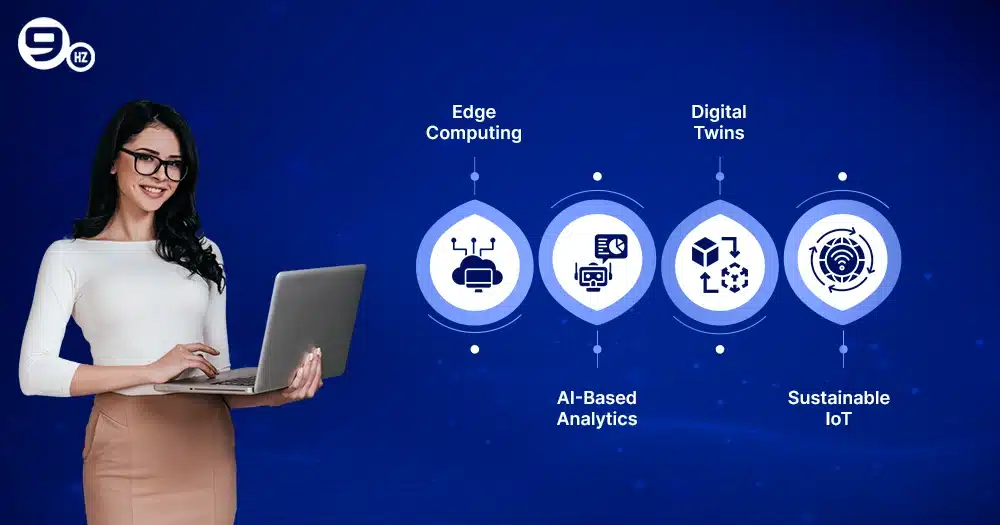
Every sector is constantly scaling through tech innovation and Industry 4.0, following major developments that widen the scope for IoT implementation in data analytics. Businesses are aiming for a faster, smarter, and secure system that scales for prescriptive and predictive insights from collected data. Here are a few future trends for IoT in data analytics that are expected to rise in the coming years.
Edge Computing
This accelerates data processing through IoT devices rather than diverting to cloud servers, which significantly reduces data latency. It improves real-time decision-making targeting industries like manufacturing, autonomous vehicles, and healthcare, where bandwidth usage demand is comparatively high.
AI-Based Analytics
Combining the AI and ML algorithms helps with predictive and prescriptive analytics to track hidden patterns, predict future outcomes, and suggest automatic actions. It would be a game-changer as this can minimise human intervention to improve accuracy. AI models create sophisticated systems to generate reporting with the best possible outcomes for efficient operations.
Digital Twins
This tech innovation creates a virtual replica of physical equipment that helps to update real-time IoT analytics data. Businesses will get benefits through developing a digital counterpart that simulates different scenarios to predict possible outcomes. It has an application for urban planning for energy utilisation and traffic patterns, transforming sectors for proactive management with low maintenance costs.
Sustainable IoT
By sustainability it focuses on balanced energy consumption and saving for environmental concerns that help companies to achieve their IoT-driven goals without extra wastage. Smart grids are optimising electricity and power outages, and IoT-powered agriculture tools measure the level of chemical inputs and water usage. Manufacturers are using materials insights through IoT that fasten their recycling process and comply with green compliance standards.
How to Get Started with IoT in Data Analytics?
To derive the best results from IoT implementations in data analytics, it is essential to follow the right approach and use the right tools. Every business faces its own challenges, such as inexperienced staff, equipment inefficiencies, or a lack of infrastructure. The process begins by carefully assessing your requirements and defining what you aim to achieve through IoT analytics, identifying the specific problem or purpose it will address. Next, analyze your existing infrastructure for compatibility with devices and tools, ensuring it can optimize current hardware, software, and platform integrity without requiring extensive modifications. Selecting a flexible and scalable platform is crucial, allowing growth alongside your business and accommodating the anticipated number of connected devices and data volume. Evaluate the platform’s features and IoT analytics efficiency to ensure it meets your business-specific needs, including analytical, machine learning, and advanced data processing capabilities, while also providing necessary staff training if required. Finally, address security controls by implementing measures to protect IoT systems, applying regular updates, security patches, and encryption to prevent cyberattacks and maintain data integrity.
Conclusion
IoT in data analytics enables businesses to achieve reliable systems with better connectivity, scalability, and advanced technology. As industry transforms, there will be a high number of connected devices with high demand for data security and integrations, IoT implementations will no longer be a choice, but its necessity. Also, the long-run benefits of IoT in data analytics attract more businesses to adopt the platform with the right compatibility. Top companies are improving their operational efficiencies. General Electric uses IoT sensors for faster data collection, John Deere utilises agro-sensors for early predictions, and Tesla implements sensors for improving their autopilot features.
Frequently asked Questions
What is the role of IoT in data analytics?
The major role of IoT is to generate useful insights using real-time data streaming through analytics systems and different connected devices.
How does IoT collect data for analytics purposes?
IoT collects data through embedded sensors and actuators installed on physical devices. These sensors track key data relating to motion, pressure, temperature, and humidity.
What are the benefits of integrating IoT with data analytics?
Some key benefits of IoT in data analytics include extracting real-time insights, operational efficiencies, predictive maintenance, cost reduction, improved customer experience, and improved scalability.
What types of data can IoT devices generate?
It can be real-time related to operations, locations, usage, health-focused data, and transactional data to serve multiple industries.
How is Real-time analytics used in IoT applications?
It processes data extracted through connected devices to allow systems to detect anomalies and identify trends to respond to changes. Through edge computing and faster communication protocols, IoT platforms handle high-volume data at once.
