



Key Takeaways
- AI reduce operational costs hvac contractors by automating system monitoring, finding inefficiencies, and optimizing performance.
- AI models can predict equipment failures at 92-95% accuracy and help contractors avoid costly emergency repairs and service interruptions by saving 25-30% of HVAC downtime.
- Predictive maintenance can help reduce the cost of costly breakdowns, such as eliminating equipment failure prior to repair, avoiding emergency repairs, and reducing downtime.
- Remote monitoring and automated diagnostics save technicians time and labor as they automate processes and improve service efficiency, thus allowing contractors to respond more quickly to service requests without burdening labor.
- Automated HVAC systems extend machinery life, prevent wear, and reduce maintenance.
Running an HVAC business today involves managing rising operating costs. Profits can quickly fall by the wayside due to energy bills, maintenance costs, and poor system performance. HVAC AI is starting to make a real difference here.
The power of artificial intelligence is changing how HVAC contractors work, maintain equipment, and save energy. Contractors no longer have to manually modify or do reactive maintenance, but can now make improvements with AI to improve performance, predict issues, and see better performance in real-time. In other words, AI makes HVAC systems run smarter, not harder.
This has a potentially huge impact.
Recent research indicates that AI-driven HVAC systems can reduce energy use by 15-20% in the case of residential buildings and up to 25-30% in the case of commercial buildings by optimizing the system’s performance and automatically setting the temperature in real time.
This change opens up new opportunities for HVAC contractors.
Companies make investments in intelligent controls, predictive maintenance, and HVAC energy efficiency that save money on service, improve system reliability, and better serve customers.
AI is changing the way HVAC companies see efficiency and profitability, whether it’s HVAC system optimization using AI, AI for energy optimization, or advanced analytics for building management.
This blog will show how AI for HVAC companies assists contractors with operating costs, maintenance, and access to smarter HVAC system optimization for energy management using AI.
Why AI-Driven HVAC Optimization Delivers the Highest ROI for Contractors in 2026?
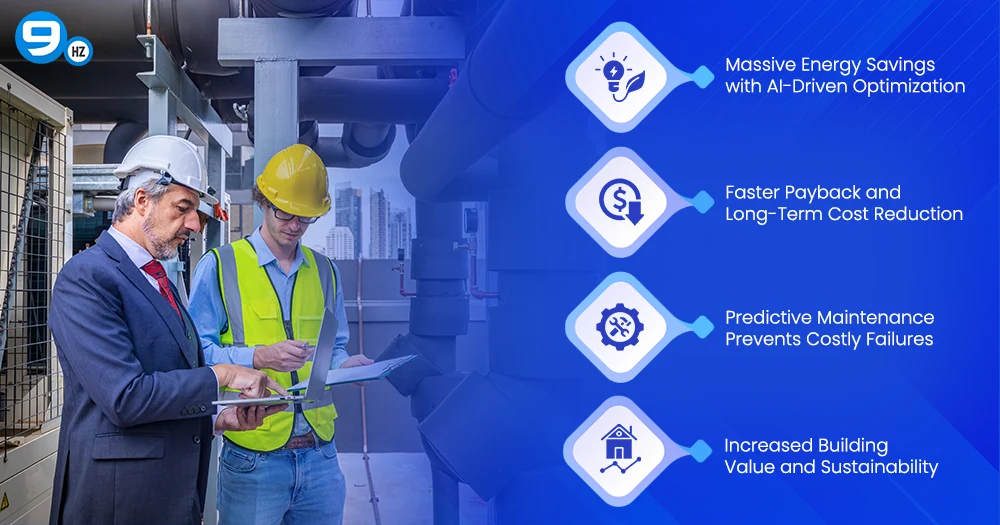
Ask facility managers or HVAC contractors where most building energy goes, and they almost always say HVAC systems. In fact, around 40% of the total energy consumed in commercial buildings is devoted to heating, ventilation, and air conditioning. In fact, AI-based HVAC system optimization is now one of the highest-ROI building upgrades in 2026.
1. Massive Energy Savings with AI-Driven Optimization
Heating and cooling systems consume a great share of building energy, so optimization is extremely important. AI-based HVAC energy optimization applies real-time information such as weather, occupancy, and usage to automatically improve operation. It also reduces waste of energy and improves efficiency. There are studies that show that AI-optimized HVAC systems can cut the energy use by 15-30%, making it a powerful AI for energy optimization solution.
2. Faster Payback and Long-Term Cost Reduction
Another major reason is that HVAC system optimization with AI has a good return on investment. The initial investment paid off with lower energy bills and system efficiency improvements. ROI can be seen over several years for many buildings. AI saves money over time because it runs HVAC equipment only when it needs to and always with the highest efficiency.
3. Predictive Maintenance Prevents Costly Failures
AI optimizes energy efficiency and monitors equipment health. AI provides predictive analytics for HVAC firms that can detect anomalies in performance data to identify trouble spots. Maintenance is planned to reduce the number of problems that can occur, so that the contractor is not left with costly breakdowns.
4. Increased Building Value and Sustainability
Buildings that use AI to improve their HVAC system for energy management tend to have higher energy performance and sustainability ratings. They also have lower operating costs, better comfort, and fewer carbon emissions, which make them more attractive to landlords and investors. AI-based HVAC optimization can help to prevent intrusions into the future while saving energy over time, whether smart buildings become a trend or not.
5 Key Areas Where AI Reduces Operational Costs for HVAC Contractors
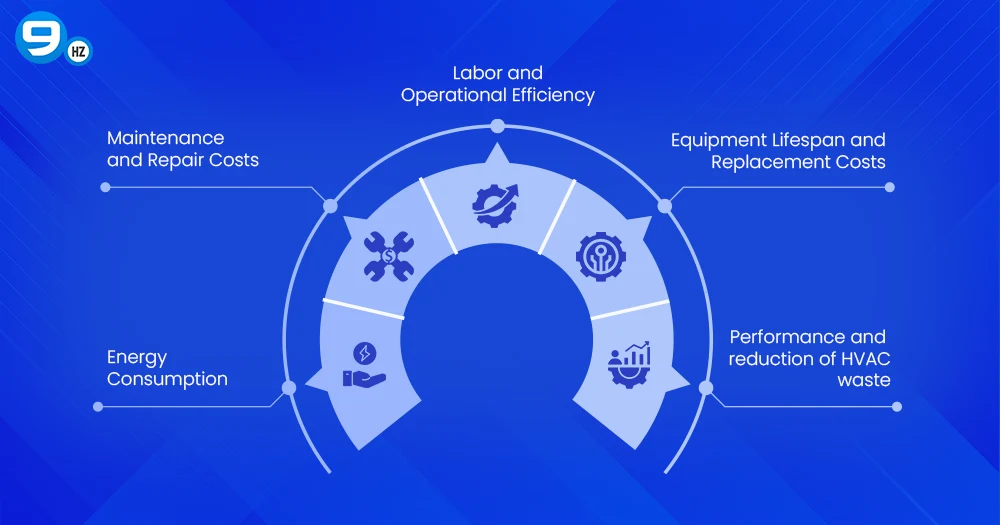
HVAC AI and intelligent automation can help businesses to improve efficiency, reduce waste, and improve system performance. Below are some key areas where AI for HVAC companies helps cut costs.
1. Energy Consumption.
HVAC systems are among the more expensive machines to run. AI energy optimization for HVAC is based on real-time data from occupancy, weather and equipment performance. It will be automatically adjusted to prevent unnecessary energy consumption. HVAC firms can successfully use AI to save electricity, improve indoor air quality, and thus save energy.
2. Maintenance and Repair Costs
Unexpected failures of equipment are often costly emergency repairs. AI for HVAC companies helps control system conditions and detect early warning signs of faults. This is important because contractors can find solutions before they become problems. This means that AI-based optimization of HVAC systems reduces repair costs, decreases downtime, and improves performance.
3. Labor and Operational Efficiency
AI also improves the daily functioning of HVAC firms. With AI-aided energy management optimization for HVAC systems, you can remotely monitor the performance of HVAC systems, alert contractors, and quickly diagnose problems. This reduces site visits and provides technicians with more time to do important tasks. The faster processes become efficient, resulting in the company doing more projects without incurring higher labor costs.
4. Equipment Lifespan and Replacement Costs
The failure of HVAC equipment damages crucial components. AI optimizes HVAC systems to ensure the proper functioning of systems as needed. AI simplifies machines and optimizes system cycles. This makes HVAC units longer lasting and lowers the overall replacement cost.
5. Performance and reduction of HVAC waste
Many HVAC systems lose energy due to improper calibration, a misaligned vent, or inadequate installation. HVAC AI continuously tests and corrects inefficiency. AI can save energy and enhance performance through improved airflow, temperature, and system coordination. The use of AI for HVAC firms is therefore an ideal solution for improving efficiency and lowering operating costs.
How AI in HVAC Cuts Operational Costs: 5 Strategies That Actually Work
AI is helping HVAC contractors run smarter and more efficient operations. HVAC AI will analyze system data, automate tasks, and improve performance, versus manual monitoring and reactive repairs. This technology helps companies save money and improve service quality. Here are some of the key ways AI for HVAC firms cuts operating costs.
1. Predictive Maintenance
One of the biggest benefits of AI-powered HVAC system optimization is predictive maintenance. AI also monitors system performance to detect early warning signs, such as unusual temperatures, pressures, or energy spikes. Contractors can respond to the problem before it becomes a failure. This means that the repair cost is lower, downtime is shorter, and expensive equipment is not damaged.
2. Smarter Energy Management
Contractors and building owners also incur higher operating costs due to energy inefficiency. In HVAC energy optimization with AI, systems improve temperature, airflow, and runtime automatically in real-time. AI processes weather data, occupancy, and energy demand to improve performance. This type of AI for energy optimization allows low utility costs and low energy consumption.
3. Remote Monitoring and Diagnostics
AI allows HVAC contractors to monitor multiple systems remotely. Technicians can use HVAC AI platforms to analyze system data from a dashboard, rather than visiting every site for inspections. Contractors are automatically alerted when performance issues occur. This means less travel time, less labor, and quicker response to real-world system problems.
4. Optimized System Performance
Many HVAC systems are inefficient either because of the wrong configuration or because of the wrong installation. AI optimizes HVAC systems for energy management and continuously checks system performance and adjusts for maximum efficiency. AI manages the system load, optimizes compressor cycles, and balances airflow. These improvements reduce energy consumption and improve system performance.
5. Better Service Scheduling
AI also improves HVAC contractor service visit planning. AI for HVAC companies uses equipment performance data to predict when to perform maintenance or inspections. This avoids unnecessary service calls and allows technicians to focus on what really matters. A better schedule reduces labor costs and improves overall service efficiency.
5 Real-World Examples of Artificial Intelligence in the HVAC Industry
AI in HVAC is not a new trend, as countless firms are already investing in it to reduce their energy consumption, improve system performance, and lower operating costs. HVAC AI has changed contractors and facility managers from smart buildings to large commercial structures. These are some real-world examples of how AI affects HVAC firms.
1. Data Center Cooling Optimization
One of the most famous is Google, which uses DeepMind‘s AI to improve cooling in its data centers. The AI detects thousands of sensors and automatically adjusts cooling equipment to optimal temperatures. AI enabled this model to reduce the energy consumption of HVAC by about 40%, of cooling, indicating the efficiency of AI’s power consumption.
2. AI-Powered Smart Buildings
BrainBox AI and others automate HVAC on large commercial buildings with artificial intelligence. They employ their platform to monitor weather, occupancy, and building behavior to predict heating and cooling needs. With AI, you can improve the HVAC system for energy management, reduce energy consumption by 25%, improve comfort, and eliminate manual adjustment of the HVAC system.
3. Predictive Maintenance in Commercial Facilities
Large facilities are also implementing AI to improve their HVAC systems so as to avoid costly failures. Johnson Controls solutions integrate AI into building management systems to monitor equipment performance. The system is able to detect patterns such as a drop in pressure or airflow, and alerts technicians before it fails. It’s cheaper for HVAC contractors to have emergency repairs and lower maintenance costs.
4. AI-Driven Building Automation
Companies such as 75F have created smart building platforms that connect sensors, analytics in the cloud, and automation to control HVAC systems in entire buildings. These platforms continuously adjust airflow, temperature, and system runtime based on real-time data. This level of AI for energy optimization helps building owners save on utility bills and provides AI for HVAC companies with greater visibility into system performance.
5. Multi-Site Energy Management
Those same retail chains, hotels, and office portfolios typically operate dozens or hundreds of HVAC systems. AI-powered platforms enable facility managers to view all locations on a single dashboard. HVAC AI can be used to provide centralized analytics and automation, find inefficient sites, measure energy use across properties, and ensure consistent HVAC energy optimization with AI at scale.
Top 3 Challenges of Adopting AI for HVAC Companies (And How to Overcome Them)
AI has a lot of benefits, but it isn’t always easy to adopt it in HVAC applications. Many contractors are having difficulty bringing new technologies into their existing systems and workflows. Understanding these limitations can help businesses better plan and implement HVAC AI solutions.
1. High Initial Investment
The initial investment cost of AI-based systems is one of the biggest challenges in implementing AI. In the beginning, it is a huge investment to install sensors, to upgrade building management systems, and to adopt AI platforms. AI optimization can often yield long-term benefits in terms of energy efficiency and maintenance savings, but some HVAC firms won’t, because it will be expensive upfront.
2. Integration with Existing Systems
Many buildings still use older HVAC equipment that was not specifically designed for AI integration. Technically, it is impossible to link these systems to modern AI platforms.HVAC firms will have to work properly to combat AI to work, so contractors may need new controls, smart sensors, or integrations with existing building management systems that improve HVAC energy efficiency by utilizing AI.
3. Skill Gaps and Training
Another problem is that many HVAC teams do not have AI expertise. Technicians and contractors are well-versed in mechanical systems but may not be familiar with AI-driven tools or analytics. Companies often need to invest in training and talent development in order to fully benefit from optimizing the HVAC system for energy management by AI.
How Much Can AI Save HVAC Contractors? Real Cost Reduction Estimates
HVAC AI is being tried by many HVAC contractors out of innovation, and in return. AI can reduce operating costs by reducing breakdowns, recharging, and maximising energy use. Though the actual savings will vary by size, type of building, and type of system, some studies from the industry show that AI for HVAC firms can save significantly in many ways.
Here are some typical cost-saving results of HVAC system optimization with AI:
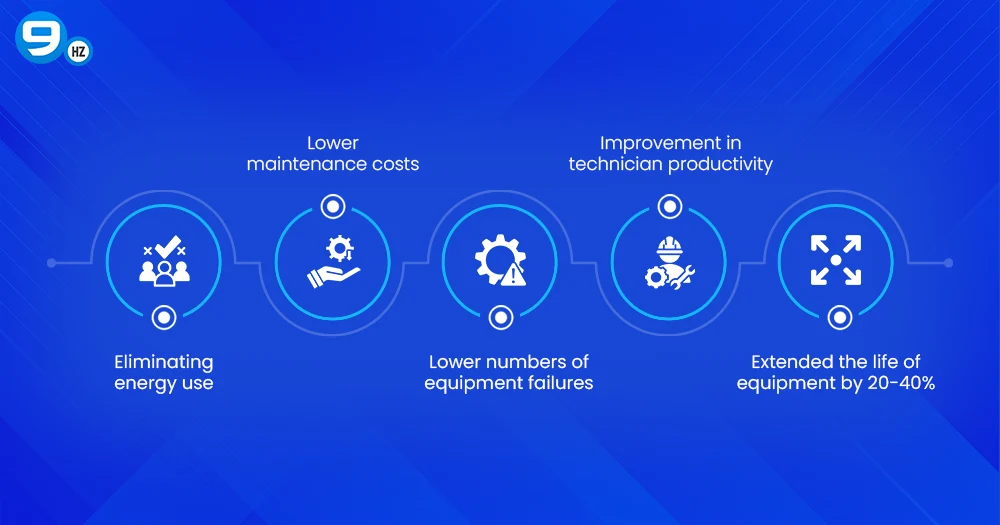
1. Eliminating energy use.
HVAC energy optimization by an AI controls system temperature, airflow, and runtime in real-time conditions such as occupancy and weather. This cuts energy consumption and makes buildings run more efficiently, resulting in lower utility bills.
2. Lower maintenance costs.
AI can anticipate equipment problems well before they occur, e.g., HVAC system optimization for energy management of major failures. Contractors can also do maintenance earlier, reducing system downtime and emergency repairs.
3. Lower numbers of equipment failures
AI tracks the performance of a system and alerts technicians if a component is starting to wear out. Helping HVAC contractors eliminates expensive breakdowns, service calls, and future damage to expensive equipment.
4. Improvement in technician productivity.
Remote monitoring and automated diagnostics can reduce site visits for HVAC firms. It allows companies to focus on more projects, without increasing labor costs, instead of routine inspections by performing important service work.
5. Extended the life of equipment by 20-40%.
Optimization of HVAC systems using AI helps maintain optimal performance, but reduces the strain on compressors and fans. This reduces the time it takes to replace or invest and increases the reliability of equipment.
How The NineHertz Helps HVAC Contractors Implement AI Solutions?
As a leading artificial intelligence development company, The NineHertz provides HVAC consulting services that unlock the full potential of HVAC AI to improve efficiency and reduce the costs of operation. Our engineers deliver intelligent AI products that combine the data collected in the process with real-time system monitoring to improve HVAC operation and comfort, and heat and cooling performance. We tailor services to your needs and existing HVAC infrastructure, such as AI, predictive maintenance, or smart building integrations to increase HVAC energy.
We also help HVAC firms integrate AI-powered HVAC system optimization for energy management, without disrupting their current workflows. Our engineers handle everything from AI planning and design to system installation and constant maintenance while also guiding you closer to more intelligent HVAC performance. The NineHertz offers powerful AI for energy optimization and scalable solutions specifically for AI for HVAC firms that allow contractors to perform better, reduce operational costs, and provide more value for their clients.
Conclusion
Artificial intelligence is quickly transforming the HVAC industry by helping contractors operate more efficiently and reduce unnecessary expenses. From HVAC energy optimization using AI to predictive maintenance and remote monitoring, AI-powered tools allow businesses to identify inefficiencies, prevent system failures, and make smarter operational decisions. HVAC contractors can thus save energy, reduce maintenance costs, and extend the life of their equipment.
HVAC AI will become a necessity as technology advances, which will mean that those companies that want to remain competitive and provide intelligent energy solutions will need to adopt it. HVAC businesses can improve HVAC systems using AI and advanced AI for energy optimization strategies to improve service quality and drastically reduce operating costs while significantly increasing service quality.
Frequently Asked Questions (FAQs)
How does AI help HVAC contractors save money?
AI helps HVAC contractors save money on operating expenses by increasing efficiency and automation of monitoring. HVAC AI can provide contractors the capability to view performance data in real-time to detect and correct system issues. The application of AI-based HVAC energy optimization helps to reduce energy consumption and prevent costly breakdowns.
Can AI reduce HVAC maintenance costs?
Yes, AI can dramatically lower maintenance costs by identifying problems before they become major failures. HVAC systems are optimized through AI to continuously monitor equipment performance and detect abnormalities such as unusual temperature changes or issues with airflow. This lets contractors plan maintenance early rather than react to sudden breakdowns, thereby reducing repair costs and downtime.
How does predictive maintenance work in HVAC systems?
HVAC firms use AI to learn about sensors and systems for predictive maintenance. The AI senses temperature, pressure, vibration, and energy consumption, and signs of wear or malfunction of the equipment. During energy management, contractors are notified when the component work is needed through AI-assisted HVAC system optimization.
