



Kia ora, ready to kick off your online biz journey the Kiwi way? Here’s what you need to know about eCommerce development cost in New Zealand
As digital commerce continues to expand in cities such as Auckland, Wellington and Christchurch, businesses of all sizes and types, ranging from tiny local stores to major worldwide chains, are embracing the concept of online storefronts. As reported by recent market stats, the eCommerce market revenues are likely to account for NZD dollar 8.5 billion and above in New Zealand by 2029 due to the growing use of smartphones and enhanced internet connectivity.
One of the most successful companies that is thriving nowadays is TheMarket (an eCommerce development company in New Zealand with the support of The Warehouse Group). This 360-degree service with personal shoppers, flexible local pick-ups, delivery, and omnichannel service proves the power of a well-designed personalised digital commerce experience. This underlines the importance of tailor-made eCommerce applications in the success of the venture in New Zealand.
It is essential for your digital strategy to have a solid understanding of the cost of developing an eCommerce platform in New Zealand, regardless of whether you are launching a new website for a small business or expanding an existing online store. We are going to discuss everything from rates to steps to gadgets and everything else.
What is eCommerce Development?
The process of developing an eCommerce website that is completely functioning and allows users to explore goods, add things to a shopping cart, make secure payments, and handle orders is referred to as eCommerce development. Integration of payment gateways, inventory management systems, server development, and web design are all examples of this.
The following are the steps that you go through while developing a website, regardless of whether it is a simple brochure website or one that has numerous features:
- UI/UX Design
- Custom coding or template-based layout
- CMS integration (like Shopify, Magento, WooCommerce)
- Database and hosting setup
- Security features
- Ongoing maintenance and website hosting
The need for a specialised eCommerce website in New Zealand has rapidly increased as a result of a growth in online sales and digital-first experiences. In the course of the development process, you could go through the following processes, irrespective of whether you go with open-source platforms like Magento or SaaS models like Shopify:
1. UI/UX Design and Custom Design
A user interface and user experience design that is well-functioning results in an e-commerce website that is not only aesthetically pleasing but also easy to use and suitable for a range of businesses. A pleasant shopping experience that improves confidence and sales for companies is provided by custom design, which helps businesses to differentiate their brand names and deliver a streamlined shopping experience. In addition, localised design ensures that your material is relevant to the people of New Zealand, which is a significant benefit.
2. Frontend and Backend Coding
Backend development is responsible for running the logic that underpins your online store, including the integration of payment methods, the administration of real-time orders, and product files. Websites that are versatile and entertaining are the result of front-end development. Your e commerce website’s technological structure is made up of several components, which together ensure the website’s efficiency, security, and usability.
3. Payment Systems Setup
Secure payment systems are going to be included in the business in order to guarantee that they will be able to win the confidence of their clients and increase their sales. Regardless of whether you are working on Klarna, PayPal, or Stripe, it is imperative that your development team ensures the seamless flow of transactions, maintains a safe environment, and abides by the laws. The user is more excited about the prospect of receiving the more local items that are available to him or her in New Zealand, and they will not abandon the merchandise in their shopping basket.
4. Mobile App or Progressive Web App Integration
To avoid falling behind in the manner in which people behave in the modern day, it is essential to include a mobile application or a progressive online application at the very least. These apps for shopping also make it possible for users to access online shopping using whatever device they want. The capabilities of mobile e-commerce, such as push notifications and offline access, make it even more enjoyable.
5. Inventory and Real-Time Tracking
Strong stocking systems that include real-time tracking guarantee that there is a steady supply of products, that shipment timings are accurate, and that there are fewer errors made in the organisation. There is the possibility of integrating enterprise resource planning (ERP) tools or third-party shipping systems with enterprises in order to increase their capacity for eCommerce. This would enable firms of any size to do business in an efficient and scalable manner.
6. Hosting, Analytics, and SEO
It is necessary to have dependable servers, to optimise your search engine ranking, and to do performance analytics in order to ensure that your e-commerce website continues to function once it has been developed. A further component of interest in drawing visitors to and tracking the development in the competitive online business environment in New Zealand is the fact that the services assist with page speed, uptime, and search engine visibility to visitors.
eCommerce Development Cost in New Zealand [An Overview]
When it comes to preparing your digital route, the first thing you should do is obtain a clear image of the typical expenses associated with developing an eCommerce website in New Zealand. Regardless of whether you want to have a straightforward solution or a more involved one that is tailored to your specific needs, the anticipated cost might vary greatly based on the tools and features that you choose, as well as the development teams that you choose.
The typical costs associated with developing an eCommerce platform in New Zealand are as follows, and they apply to businesses of varying sizes and types:
| Type of Development | Estimated Cost (NZD) | Estimated Cost (USD) | Timeline |
|---|---|---|---|
| Basic eCommerce Site (Small Business) | $3,500 – $8,500 | ~$2,135 – $5,185 | 2 – 4 Weeks |
| Custom eCommerce Website (Medium Business) | $9,000 – $22,000 | ~$5,490 – $13,420 | 1 – 3 Months |
| Enterprise-level eCommerce Website | $27,000 – $75,000+ | ~$16,470 – $45,750+ | 3 – 6 Months |
| eCommerce App Development (iOS/Android) | $17,000 – $55,000 | ~$10,370 – $33,550 | 2 – 5 Months |
| Monthly Maintenance Cost | $180 – $1,200+ | ~$110 – $730+ | Ongoing |
Note: The price of building an eCommerce application in New Zealand is based on who is designing the application, what the work will involve, all the functional features, and how a third-party application will be implemented.
The table below illustrates the average cost of developing various types of projects as well as the expected time frame within which they are to be completed. It would be a valuable tool for those enterprises that are strategising on their eCommerce sites in 2025.
Affordable eCommerce Development Services Tailored for Kiwi Businesses
Breakdown of eCommerce Development Cost in New Zealand [Various Stages]
It is possible that you will be able to allocate your website budget more effectively if you are aware of the expenditures that are incurred throughout each stage of development. When it comes to the success of your eCommerce website, each and every step, including the original design and upkeep, is essential. Since the digital economy in New Zealand is undergoing a fast transformation, it is imperative that firms take into consideration each of the phases of growth.
Additionally, businesses are able to keep ahead of the competition, lower their costs, and improve their operations with the assistance of an organised approach. The whole narrative is as follows:
| Development Stage | Activities Covered | Cost Estimate (NZD) |
|---|---|---|
| Planning & Research | Market analysis, requirement gathering | $600 – $2,500 |
| UI/UX Design | Prototyping, branding, design layouts | $1,200 – $6,000 |
| Frontend Development | HTML, CSS, JavaScript, responsive pages | $2,500 – $9,000 |
| Backend Development | Server-side scripting, database setup | $3,500 – $17,000 |
| Third-party Integrations | Payment gateway, shipping APIs | $1,200 – $4,500 |
| QA & Testing | Device compatibility, bug testing | $900 – $3,500 |
| Launch & Maintenance | Hosting, monitoring, updates | $200 – $1,200/month |
1. Planning & Research
Cost Estimate: $600 – $2,500 NZD
You should first do a market study, then decide the project strategy, then choose an ecommerce tool, and finally, throughout this time period, you should think about the features that are the most important. The strategy that you have developed for your website project serves as the basis for everything that follows it.
2. UI/UX Design
Cost Estimate: $1,200 – $6,000 NZD
A plan that is visually appealing, as well as the creation of prototypes and wireframes, and brand colour schemes, are all components of this phase. Good website design makes it simple for customers to make purchases and improves the whole experience for them, which ultimately results in a rise in sales.
3. Frontend Development
Cost Estimate: $2,500 – $9,000 NZD
In order to create the piece of your e-commerce site that is visible to the reader, you will need to acquire knowledge of HTML, CSS, and JavaScript. The installation of navigation, the guarantee that your website is responsive, the incorporation of advertisements that may be clicked on, and the guarantee that the website is capable of running on any device are all included in this process.
4. Backend Development
Cost Estimate: $3,500 – $17,000 NZD
Backend programming is responsible for the creation of essential e-commerce functionality, which includes user identification, product administration, checkout logic, and database management programmes. It is responsible for the rationale that customers see on the front end of the functionality.
row Your Online Sales with New Zealand’s eCommerce Experts
5. Third-party Integrations
Cost Estimate: $1,200 – $4,500 NZD
You have the option of incorporating third-party services into this sector. Some examples of such services are shipping firms, payment gateways, customer relationship management, and email marketing services. People and companies are able to operate more effectively as a result of the innovations.
6. QA & Testing
Cost Estimate: $900 – $3,500 NZD
During testing, the website is checked to ensure that it functions properly on all computers and devices. At this stage, flaws are identified, performance issues are resolved, compatibility is validated, and stress testing is carried out.
7. Launch & Maintenance
Cost Estimate: $200 – $1,200 NZD/month
After your website has been made available to the public, you are obligated to ensure that it is safe, then back it up, and last, check its performance on a regular basis. When you do maintenance, your investment will be protected in the long term.
Cost to Create an eCommerce Store in New Zealand [Various Types]
The cost of developing an e-commerce website in New Zealand is highly dependent on the nature of the product as well as the size of the business. Whether you want a simple online store, a completely tailored eCommerce platform, or a powerful mobile app, the pricing will vary depending on the features, design requirements, connections, and team expertise. Let us have a look at the respective prices of the various versions:
eCommerce website design Cost in New Zealand
A significant portion of ensuring that the shopping experience is streamlined and centred on conversions is the responsibility of the design team. There is a wide range of rates for website design in New Zealand, ranging from low-cost designs that make use of ready-made templates to bespoke site design packages that are built to the specifications of the corporate brand and the level of pleasure experienced by visitors. Gaining trust, retaining the attention of consumers, and increasing income are all things that may be accomplished with the assistance of a skilled web designer.
| Design Type | Estimated Cost (NZD) | Estimated Cost (USD) | Ideal For |
|---|---|---|---|
| Template-Based Design | NZD 850 – NZD 3,500 | USD 500 – USD 2,100 | Startups, small Kiwi businesses on a budget |
| Custom UI/UX Design | NZD 4,300 – NZD 13,800 | USD 2,500 – USD 8,000 | Medium to large New Zealand enterprises |
| Conversion-Focused Design | NZD 8,600 – NZD 20,000 | USD 5,000 – USD 11,800 | Businesses focused on boosting online sales |
Note: Estimates in US dollars are approximations and are derived from exchange rates in the middle of 2025, when one New Zealand dollar is about equivalent to 0.59 US dollars. The actual cost of developing an eCommerce website in New Zealand may differ from one service provider to another and from one scope to another.
eCommerce Website Development Cost in New Zealand
The complexity of the work to be done, the amount of development required on the server, and the criteria that need to be met, such as search engine optimisation, payment gateway, and multilingual development, all play a role in determining the cost of establishing an eCommerce website in New Zealand. E-commerce websites that are uncomplicated do not come with a high price tag; nevertheless, websites that include a multitude of functions or need an expansion in the number of functions are not only costly but also require a significant amount of time and ability.
| Website Type | Estimated Cost (NZD) | Estimated Cost (USD) | Development Time |
|---|---|---|---|
| Basic Online Store | NZD 5,000 – NZD 11,000 | USD 3,000 – USD 6,600 | 3–6 weeks |
| Medium Complexity Website | NZD 12,000 – NZD 30,000 | USD 7,200 – USD 18,000 | 6–12 weeks |
| Large-Scale eCommerce Platform | NZD 38,000 – NZD 100,000+ | USD 22,800 – USD 60,000+ | 3–6 months |
Note: The cost to develop an eCommerce app in New Zealand may vary based on the features, amount of customisation, third-party integrations, and the eCommerce development firm in New Zealand you collaborate with.
There are a number of elements that will contribute to an increase in your total cost, including back-end development, commerce capabilities, and the integration of payment systems. However, this does not indicate that you will have to exhaust all of your financial resources in order to locate a project manager of adequate quality to stick to your budget.
eCommerce App Development Cost in New Zealand
An e commerce app should be developed by companies that wish to engage with mobile customers. There is a difference in the cost of developing an eCommerce app in New Zealand depending on whether the software is native, cross-platform, or a progressive web app (PWA). When you add features that increase mobile sales, such as the ability to monitor orders in real time, customise feeds, and send push notifications, the costs associated with such capabilities increase.
| App Type | Estimated Cost (NZD) | Estimated Cost (USD) | Ideal For |
|---|---|---|---|
| Native App (iOS or Android) | NZD 25,000 – 60,000 | USD 15,000 – 36,000 | Large Kiwi retailers & enterprises |
| Cross-Platform App | NZD 30,000 – 70,000 | USD 18,000 – 42,000 | Medium-sized New Zealand businesses |
| Progressive Web App (PWA) | NZD 18,000 – 45,000 | USD 10,800 – 27,000 | Budget-conscious startups & SMEs |
Pro Tip: These are the typical development ranges for New Zealand in the year 2025, based on the current market rates and currency conversions (1 New Zealand dollar near-about equivalent to 60 United States dollars). The actual cost of developing an eCommerce website in New Zealand may vary depending on the features, the level of design complexity, and the level of competence of the developer.
Key Factors Affecting eCommerce Development Cost in New Zealand
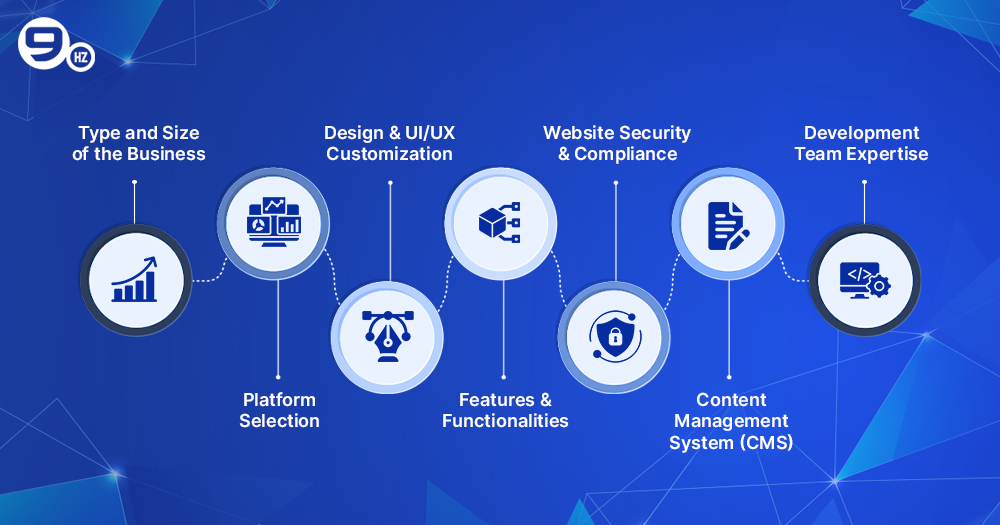
At the time of the establishment of the e-commerce website, it is important to be aware of the factors that might potentially affect the final costs. All of this will be determined by the specific requirements that you have, including the design and the backend connection. The majority of online stores are not the same. It is a good idea to take into consideration your business goals before choosing the development team for your website in New Zealand. This is because these factors are the primary factors that determine the total cost of the website.
1. Type and Size of the Business
If you want your business to grow, the functionality of your online store has to become more sophisticated. A platform for large companies with hundreds of goods and complex shipping is far more expensive than a small business website with a few pages and simple checkout options.
2. Platform Selection
You have a huge impact on the cost by selecting the e-commerce platform that you will use. For example, a Wix e-commerce website could be affordable to start with, but it might not be particularly customisable during the first stages. A Magento e-commerce website, on the other hand, will cost you more money but will provide you with more flexibility.
3. Design and UI/UX Customization
It is possible that the usage of themes may minimise your website design cost; nevertheless, it will not be original. It is possible for a talented web designer to create a custom design that will give you an experience that is unique to you; however, this may result in an increase in the overall web design cost.
4. Features and Functionalities
Additionally, subscription billing, incentive programmes, and international aid are examples of advanced bespoke features that contribute to a rise in the cost of development. The apps that are included with the content management system (CMS) might be used by simple e-commerce websites.
5. Website Security & Compliance
When it comes to matters of security, there is no room for negotiation. The prevention of scams is very important and requires additional expenditures to execute. In addition, the implementation of SSL security, compliance with GDPR, and PCI-DSS regulations is also required in order to win the confidence of consumers.
6. Content Management System (CMS)
If you choose to use a content management system such as WooCommerce or Shopify, the manner in which you may grow and maintain the functionality of your website will be determined by that system. If you want a website that is unique to your business, you may want further assistance from professionals.
7. Development Team Expertise
Using a professional web developer or web design business in your area will give you a more individualised service; nevertheless, the cost of doing so can be more than the cost of using freelancers or teams from other nations. However, it is helpful in preventing a negative experience for the user.
Conclusion
In New Zealand, launching an eCommerce website in 2025 is not only a prudent business option but is also essential for development. It is necessary for you, as a small business in Auckland or a start-up in Wellington, to make financial investments in the development of an e-commerce website just so you can attract a greater number of potential clients.
If you want to make sure the best job is done, you should avoid doing it alone and instead use the services of a well-established development business that is familiar with the laws of New Zealand, the trends of consumers, and the expectations of consumers. Your investment, if executed correctly, will result in the generation of star-level value, which will include specialist commerce capabilities and a seamless mobile experience.
FAQ’s
1. How much does it cost to develop an eCommerce website in New Zealand?
The average will approximate between NZD 10,000 and NZD 50,000, depending on the design, features and even a customized app or a template-based one.
2. What is the average cost to build an eCommerce app in New Zealand?
The cost of building an eCommerce app in New Zealand falls around NZD 25,000 to NZD 70,000 based on platform type, complexity, and integrations to be done.
3. What factors affect eCommerce development costs in New Zealand?
Other considerations are platform selection, custom options, design complexity, payment provider integration, rates charged by developers and whether you are working with a local or off-shore firm.
4. Is it cheaper to build an eCommerce website or an app in New Zealand?
Typically the cost of developing an eCommerce site is less per feature, compared to an app in New Zealand, as an app takes longer to develop, coding is specific to a platform and there is increased testing required.
5. How long does it take to develop an eCommerce platform in New Zealand?
Development can last 6 to 20 weeks, depending upon features and requirements, and whether it is a custom or template-based platform being developed.
6. What’s the cost difference between custom and template-based eCommerce websites in New Zealand?
Custom websites are 2-3 times more expensive than the ones based on templates, as they are tailored, the interface and the experience flow are designed, and the backend is scalable.
7. Do eCommerce development companies in New Zealand offer fixed pricing?
Some companies like to price standard packages, but most of the companies provide custom quotes depending on your special business needs and required features.
8. Can I build an eCommerce site in New Zealand with a limited budget?
A basic eCommerce site is possible to implement with Shopify or WooCommerce but you are looking at NZD 5,000 to NZD 10,000 to build the site.
9. What’s included in the total cost of eCommerce development in New Zealand?
The price generally would consist of the design, development, testing, CMS arrangements, hosting integration, payment gateways, SEO fundamentals and all-on-going assistance or maintenance.
10. Are there any hidden charges when hiring eCommerce developers in New Zealand?
Included costs can be third-party plugins, maintenance, hosting and after-launch support so, it is always good to clarify the scope of total costs in the proposal.
