




Matt Cassells is all too familiar with the Great Transfer of Stuff. A partner at Toronto-based real estate agency Walker Cassells, he has seen “ decades of memories, collections and furniture ” crammed into the homes of Canadian baby boomers .
It’s a challenge in his line of work, he says, because younger buyers are interested in space, favouring open-concept layouts, clean lines and minimalism over clutter. The process of emptying and preparing the home of a downsizing baby boomer for more modern tastes can be a months-long endeavour.
The boomers are currently in the process of passing down an estimated $1 trillion in wealth to their generation X and millennial heirs . But many of them are also leaving behind a dragon’s hoard of clothing, crockery and furniture, accumulated over decades. There’s only one problem: unlike their homes and their savings, younger Canadians are less interested in their belongings.
“(The kids) will typically keep some of the smaller heirlooms , art, certain jewelry, those types of things, but those older big china hutches and dining room tables, and things that are synonymous with the older generation, tend to not fit, both stylistically and just from a sheer size perspective,” Cassells said.
Cory Feinstein, director of operations at Sell My Stuff Canada, a content and estate sales marketplace, said tastes have drastically evolved over the years.
Demand for figurines, bone china and fine crystal has shrunk and furniture is the toughest selling category, Feinstein said.
“Younger generations are (in) a fast, casual economy, so companies like Wayfair, IKEA, their stuff is a lot more accessible,” he said. “This big, clunky furniture simply just doesn’t work there.”
It’s a challenge that may be unique to the baby boom generation, which came of age during a post-war boom that created tremendous wealth and saw the flourishing of consumer culture in North America.
“You saw a relatively unprecedented middle-class accumulation of stuff,” said June Cotte, a professor of marketing at the University of Western Ontario’s Ivey Business School.
Baby boomers owned bigger homes than the generations before them, providing them with the space to accumulate so much during their lifetimes, she said. Whereas younger Canadians are increasingly living in smaller homes amid rising cost-of-living issues or due to lifestyle differences, making it less feasible for them to continue the cycle.
“I don’t see the Big Transfer of Stuff happening again in the next few decades,” Cotte said.
Noreen Music, president of the Professional Organizers in Canada, estimates that more than 30 to 40 per cent of the business for organizers stems from helping seniors figure out what to do with their stuff when they downsize, or their kids when their parents die and leave behind so many items.
“Our senior clients have a little bit more difficulty letting go,” said Music, noting many of her older clients grew up during times of financial hardship. “The imprint on the older generation is that scarcity mentality.”
On the other hand, younger generations tend to be less attached to material items, Music said. This means that when baby boomers downsize (or die), their kids aren’t going to hold on to all of their things.
Music said organizers first try to find a home for the items, which can involve estate sales, consignment stores or even upcycling them for a different purpose, before donating to a charity or thrift store. The last option is to send these items to a landfill.
Cotte, herself a gen Xer , has seen this amassing of material items from baby boomer parents firsthand, and is actively choosing to de-clutter now to prevent her kids from going through the same exhausting process of sorting through stuff that she went through when her parents died.
“ I inherited the job … of getting rid of things ,” she said. Cotte recounted unearthing her mother’s high school athletic trophies and an assortment of items ranging from Led Zeppelin and The Beatles vinyl records to books, art and china.
“My sons, who are gen Z , love some of the vinyls,” she said. “But most people don’t have CD players anymore, (and) we ended up with probably hundreds of CDs from my parents.”
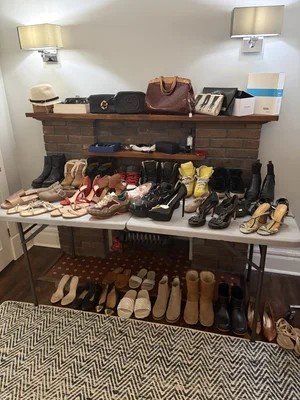
The biggest issue was the furniture. Cotte’s parents owned a custom-made glass dining room table and bedroom furniture made by her grandfather, but though the pieces held sentimental value, neither she nor her siblings had the space to keep them.
“It is an emotional thing to get rid of, and that’s probably why boomers hold on (to these items) for so long,” Cotte said, adding that the alternative some people choose is to rent a storage unit to hold onto stuff they cannot fit in their homes.
The supply of new self-storage space in Canada hit a record high of 2.3 million square feet last year, according to data from commercial real estate firm Avison Young (Canada) Inc. Demographic factors, such as Canada’s aging population downsizing from bigger spaces and affordability pressures leading to a trend toward renting over homeownership and smaller average apartment sizes in new builds, are keeping the development pipeline strong, said Antonio Balogh, Avison Young’s senior national analyst, in an email.
However, these units, depending on size and location, can cost hundreds of dollars a month to rent, which can become a significant financial commitment over the long term.
That said, there is a market for good-quality and smaller staple pieces. While older Canadians look for places to dispose of their belongings, younger generations grappling with cost of living concerns are turning to the thrift store and resale marketplace to purchase secondhand items at cheap prices.
April McInnes, a 26-year-old graduate student at Queen’s University, in Kingston, Ont., said “almost everything” in her apartment has been purchased secondhand off Facebook Marketplace, from her bedframe to her leather desk chair.
McInnes said she and many of her peers who thrift or buy items secondhand are mainly motivated by finances. “Most graduate students that I spend my days with are also on a limited budget, so they tend to reach toward discounted items, and we know for a fact that we can find that at the thrift store.”
But while she hunts for a variety of cheap secondhand goods, including books, blazers, home decor and puzzles, she isn’t snapping up something large such as a family-sized dining room table.
“Because I’m so limited by space in my apartment … I’m certainly not shopping for those bigger items,” McInnes said.
An April survey from non-profit Habitat for Humanity found more than half of Canadians aged 18 to 34 plan to thrift or buy pre-owned items this year, with top drivers including the need to save money (62 per cent), the thrill of the hunt (31 per cent) and do-it-yourself projects (26 per cent).
The DIY drive could give some items a new home, Ivey’s Cotte said, as thrifting can also appeal to a segment of younger Canadians interested in sustainability.
Lisa Voycey, director of Habitat for Humanity Canada’s ReStores, which serve as non-profit donation centres and stores for home goods, said she has seen some younger shoppers upcycle items for different purposes, such as transforming sewing tables into home office desks and octagonal side tables from the 1970s into pet beds.
Ivey’s Cotte expects the trend of younger people expressing interest in certain items from previous generations “will probably continue forever,” but there’s another factor at play that could make this transfer of goods more unique to the present moment and less appealing in future decades.
Most of today’s mass-produced items aren’t meant to last for a long time, Cotte said. “My parents had the same toaster for 30 years — I don’t think I have had a toaster last more than five.”
Realtor Cassells said he has seen some sellers try to dispose of their excess belongings on their own, such as listing them on Facebook Marketplace or other resale sites, though this can become a burdensome task. Some agencies, such as his, co-ordinate with professionals to deliver items to donation centres or arrange for estate and content sales.
Hillary Doukas, managing director of Toronto-based Le Grotté, which organizes estate sales at a commission rate of 35 to 50 per cent, said a fter the sale concludes, her company either donates or disposes of any items that remain. However, it can be “shockingly difficult” to find charities that accept large furniture, she added.
Just throwing things away can also cost money. Most municipalities charge dump fees, or tipping fees, for bringing loads to local waste facilities. Junk removal is another option, though these services can cost hundreds of dollars, depending on the scope of the cleanout.
The most challenging aspect of getting rid of these items, though, is addressing the emotional side of letting go, said Music. “It isn’t really about the stuff, it’s about helping people move forward.”
• Email: slouis@postmedia.com
