



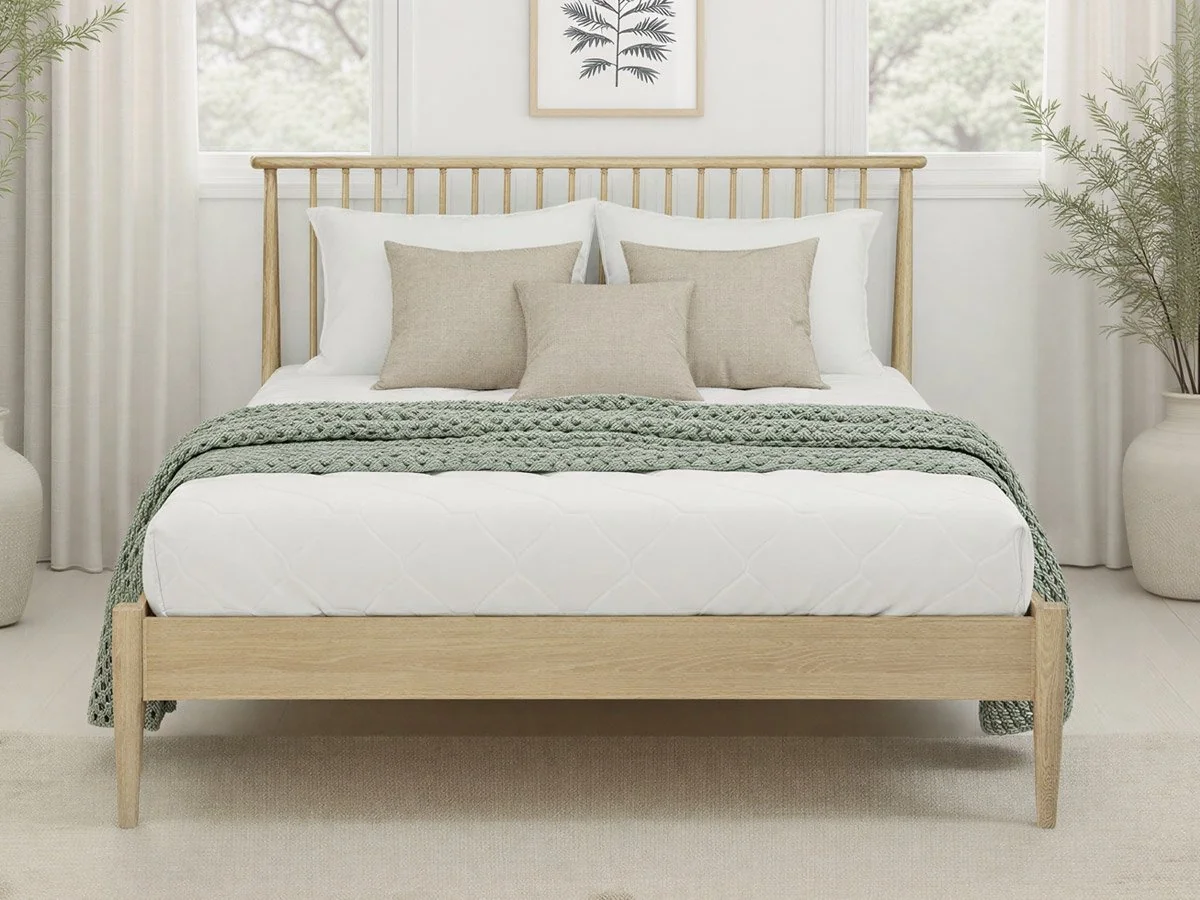
Your minimalist bedroom doesn’t have to feel cold, stark, or unwelcoming. When designed with intention, a minimalist bedroom feels warm, deeply personal, and quietly luxurious. It is no surprise that minimalist spaces have surged in popularity; they excel at bringing genuine calmness, serenity, and psychological relaxation to our fast-paced lives.
There is a common misconception that going minimalist means stripping your bedroom back to bare white walls, a single hanging bulb, and nothing else. True minimalism isn’t about structural deprivation — it’s about eliminating visual noise so your mind can completely rest.
This guide walks you through the essential minimal bedroom design principles — from choosing the right functional furniture to building a soothing, textured colour palette that transforms your bedroom into a personal sanctuary.
Understanding Minimalist Bedroom Design: The Core Philosophy
What Defines a Minimalist Bedroom
At its heart, minimalist bedroom design is about creating a space where every single element earns its place. It is a precise balance between form and function — aesthetic simplicity paired with real practicality. In a minimalist layout, each piece of furniture has room to “breathe,” and that open breathing room is exactly what gives the space its tranquil, zen-like atmosphere.
This philosophy is beautifully reflected in design traditions across the world:
- Lagom (Swedish): Translates to “just the right amount.” Not too little, not too much.
- Hodo-hodo (Japanese): Simply means “just enough.” It champions moderation and functional elegance.
By stripping away what isn’t essential and focusing on high-quality basics, you naturally foster a sense of peace.
The Psychology of “Less is More”
Our brains are constantly processing our environment. Too much visual stimuli — clothes piled on a chair, cluttered surfaces, frantic patterns — raises cortisol (stress hormone) levels and keeps the brain in a state of low-grade alertness.
Simplicity restores a sense of calm and order. Fewer distractions mean your bedroom decor actively supports focus, rapid decompression, and deeper sleep cycles.
The Foundation: Essential Furniture and Layout
Furniture selection forms the absolute backbone of a minimalist design room. Because you are using fewer pieces, the pieces you choose must be highly functional and visually grounded.
Selecting the Right Bed Frame
The bed is the architectural anchor of the room. Your choice of bed frame sets the design tone for the entire space.
| Bed Frame Style | Minimalist Design Benefit | Best Suited For |
| Low Bed Frames / Futon Styles | Keeps the visual plane low, making ceilings feel higher and rooms feel larger. | Authentic Zen or Japanese-inspired aesthetics; attic rooms. |
| Platform Beds (No Headboard) | Eliminates bulky vertical elements, allowing the wall behind to act as clean space. | Awkward spaces, loft conversions, or tight layouts. |
| Space-Saver Frames | Sits the mattress directly on top of the frame edge rather than inside it, reclaiming valuable floor inches. | Compact bedrooms where every centimetre counts. |
| Solid Wood or Metal Constructions | Delivers clean, sharp structural lines that outlast upholstered alternatives without fraying or aging. | Long-term durability and timeless, structural minimalism. |
Smart Storage Solutions That Hide Clutter
Pictured: Gemini 4FT 6 Double Ottoman Bed – Natural Cord, £499 (Bedstar).
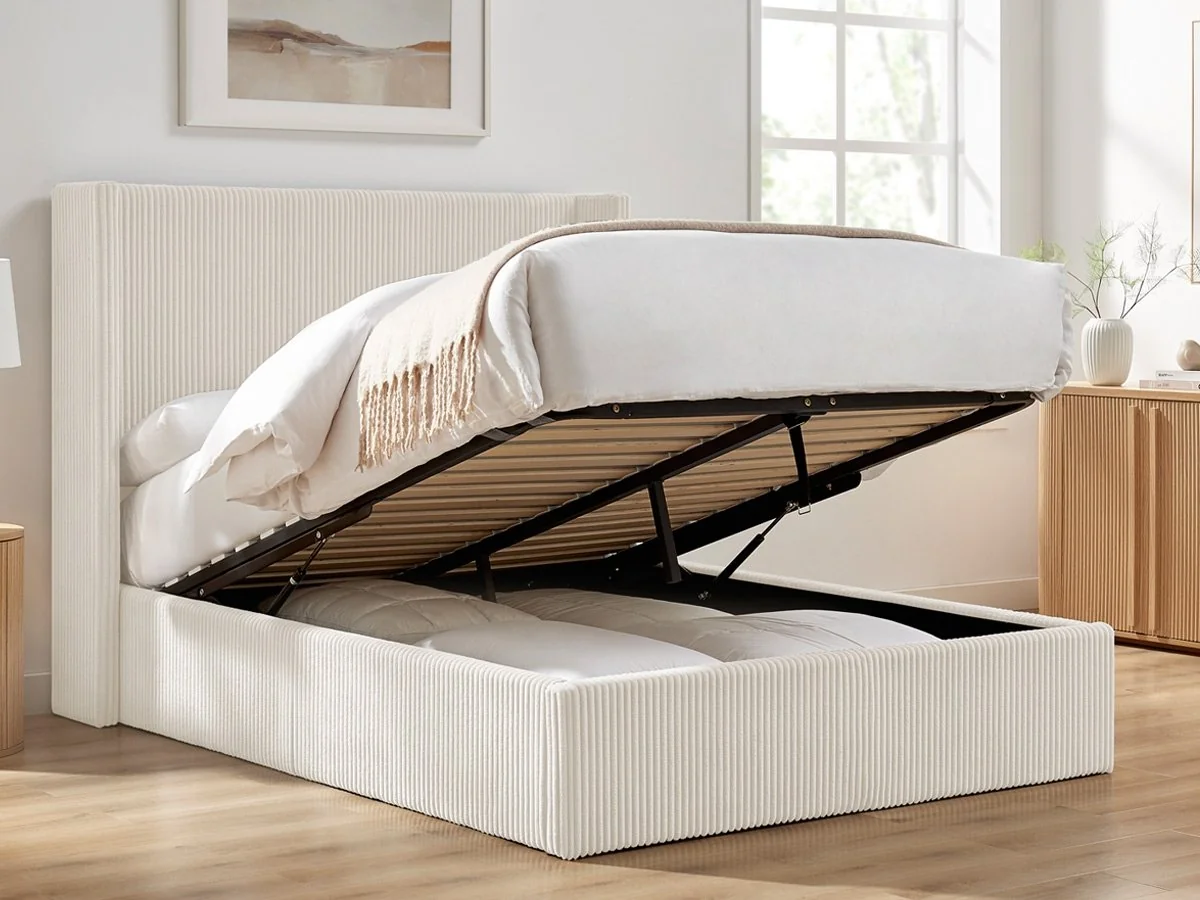
The real secret to an effortlessly clean bedroom is discreet, high-capacity storage that keeps daily clutter entirely out of sight.
1.Clear and Consolidate: The 50% Rule.
Don’t pull the entire room apart at once. Start small with a single surface or drawer. Clear it completely, then return only roughly half of what was originally there — keeping only the absolute essentials.
2.Mask the Visual Weight: Deploy Discreet Wardrobes.
Opt for floor-to-ceiling wardrobes with flat, handle-less white or neutral doors. When closed, they mimic bare walls, hiding massive amounts of clothing storage while preserving clean architectural lines.
3.Utilize Under-Bed and Under-Window Space: Maximize Hidden Cavities.
Incorporate multi-purpose furniture. Use the often-wasted spaces beneath windows for low, flat-fronted cabinets, or invest in a bed frame designed specifically to swallow clutter.
🛏️ Bedstar Product Spotlight: Storage & Ottoman Beds
When floor space is at a premium, your bed needs to pull double duty. Ottoman beds are the ultimate minimalist secret weapon: they combine a sleek, considered exterior profile with a powerful gas-lift mechanism that opens the entire footprint beneath the mattress.
It’s the perfect place to conceal extra bedding, seasonal clothes, and luggage without adding bulky chests of drawers to the room.
Building Visual Harmony: Colours, Textures, and Materials

Pictured: Textured stone-washed linen sheets, a chunky organic wool blanket, and the edge of a clean-lined wooden headboard.
Establishing a Warm Neutral Palette
To keep minimalism from feeling clinical or cold, skip stark, icy whites and lean heavily into warm neutrals.
Shades like cream, oatmeal, warm greige, soft taupe, and muted sage green create a cocooning atmosphere. If you want a seamless look, experiment with a monochromatic scheme — using variations of a single warm neutral colour across your walls, curtains, and large furniture. This reduces visual contrast, tricking the eye into perceiving a much larger, more cohesive room.
Adding Depth Through Texture
When you remove colour variety, you must introduce textural variety to prevent the room from looking flat. Layering different tactile elements adds instant warmth and quiet luxury:
The Layering Formula: Pair smooth, crisp cotton or stone-washed linen sheets with a heavy, chunky-knit wool throw across the foot of the bed. Ground the space with a plush, high-pile jute or wool rug underfoot.
Natural materials like solid oak, brushed stone, and matte ceramics bring an organic, grounding energy to the bedroom that synthetic materials simply cannot replicate.
The Finishing Touches: Lighting and Mindful Decor
The final layer is what decides whether a minimalist bedroom feels intentionally calm or accidentally empty.
Sculptural, Low-Glare Lighting
Lighting should set a deeply relaxing tone with quiet elegance. Replace harsh overhead fixtures with sculptural pendant lights or refined, wall-mounted reading lamps. Look for elevated raw materials like matte black steel, brushed brass, or hand-thrown ceramics.
Always use warm, dimmable bulbs (2,700K) or frosted glass fixtures that diffuse light softly across the room, mimicking the natural fading of twilight.
Mindful Nightstand Management
Surface clutter undoes a minimalist design faster than anything else. Keep your nightstand strictly intentional. It requires a functional lamp, your current read, and a glass of water. Everything else should be tucked into a deep drawer out of sight.
To maintain this balance over time, live by the one-in-one-out rule: whenever a new decorative object or book enters the space, an old one must leave.
