



If it feels like your team is handling more technical support calls than ever — and you’re unsure whether a standard phone system can keep up — you’re not alone. Every company reaches this point, where internal collaboration, client expectations, and growing volume begin to strain the tools they’ve outgrown.
Choosing between a business phone system and a call center platform isn’t just a technical decision. It’s a strategic move that directly impacts how customers perceive your brand, how your team operates, and how effectively you scale operations.
This guide walks through each option: what they do, where they shine, and how to align your communication stack with your business model. Whether you’re a team of five or 500, understanding these systems will help you make smarter, future-ready choices.
Differences Between Call Centers and Business Phone Systems
On the surface, these two systems are similar. Both help your team make and receive calls. But the way they operate — and the value they provide — can differ dramatically depending on your customer interaction model.
Business phone systems
A business phone system focuses on enabling voice communication across a team. It’s your digital replacement for legacy PBX systems, now powered by Voice over Internet Protocol (VoIP).
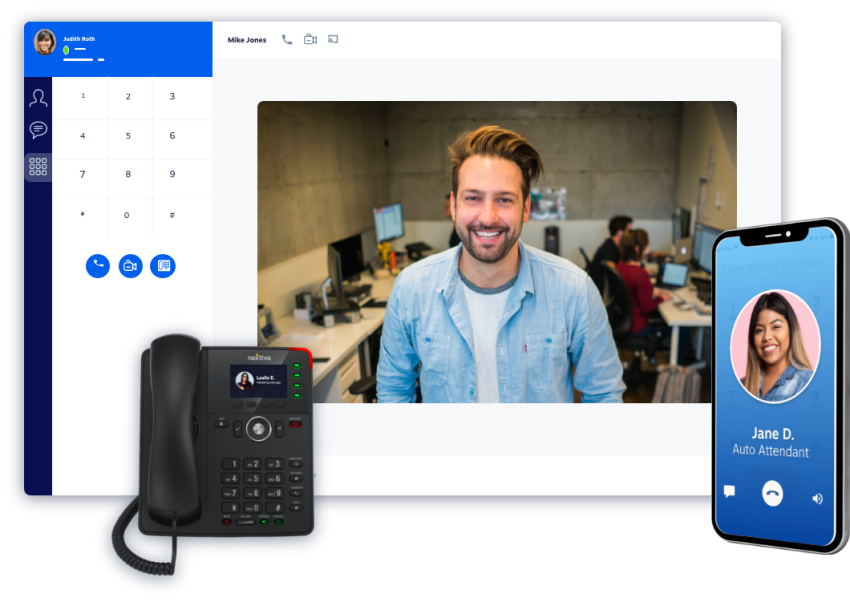
Key features include:
- Individual and shared numbers
- Call forwarding and transferring
- Voicemail and voicemail-to-email
- Auto-attendant for routing to the right department
Think of it as the modern dial tone for growing companies. Most startups and small offices use cloud-based business phone systems for their flexibility and cost savings. These systems are also highly cost-effective, offering robust telephony without the heavy infrastructure.
Call center software
Call center software is purpose-built for managing large volumes of external customer interactions. It’s not just about taking calls — it’s about routing them intelligently, measuring performance, and resolving issues efficiently.
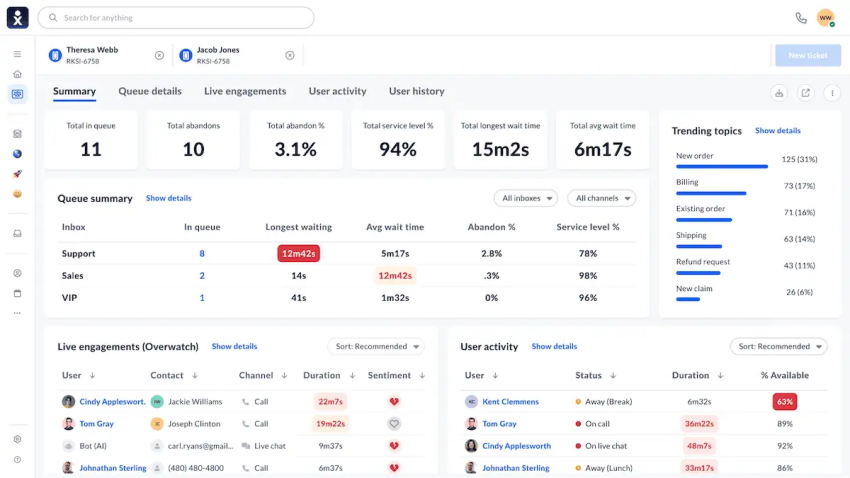
Call centers serve inbound support, outbound sales, appointment booking, order management, and more. Here’s how they differ:
- Smart call routing: Advanced tools like automatic call distribution (ACD) and interactive voice response (IVR) ensure the right call reaches the right agent.
- Agent experience: Call center agents can set availability, follow scripts, log dispositions, and access customer histories.
- Supervisor controls: Managers can monitor, coach, record, and analyze calls.
- Performance visibility: Dashboards show metrics like hold time, abandon rate, and service level in real time.
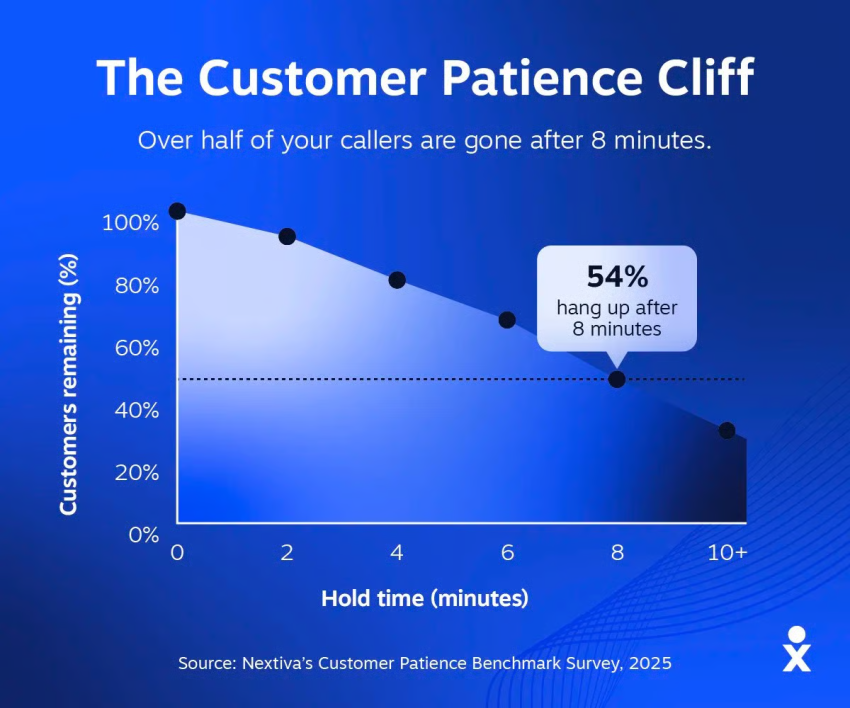
According to Nextiva’s 2025 Customer Patience Benchmark, 75% of customers expect a phone response within eight minutes. That kind of urgency requires technology that’s optimized for speed and scale — not just basic voice access.
Contact center software
A contact center is the next evolution of the traditional call center. It’s multichannel and omnichannel, handling not just phone calls but SMS, email, live chat, and even social media — all from one interface.
A modern contact center supports real-time, personalized service across all digital channels. These platforms also excel at managing customer expectations by unifying communication channels into a single view.
The software integrates with your CRM and help desk so agents can see previous interactions and serve customers holistically. You also gain automation tools like chatbots, self-service portals, and workflows that reduce manual tasks and handle common requests without a live agent ever picking up the phone.
Here’s a quick recap of what each system supports:
- Phone system: General business calling
- Call center: High-volume, performance-based voice communication
- Contact center: Multichannel customer experience engine
A cloud-based contact center platform is especially valuable for teams that rely on flexibility, distributed agents, and diverse touchpoints.
Key Differences at a Glance
Here’s how these systems stack up on core dimensions:
| Category | Business Phone System | Call Center / Contact Center |
|---|---|---|
| Primary Use | General business communication | Structured customer support and sales calls |
| Routing | Basic call forwarding | Skills-based ACD, intelligent call routing, and IVR |
| Channels | Voice only (optionally SMS) | Voice, SMS, email, chat, and social media |
| Analytics | Call logs | Real-time metrics and dashboards |
| Automation | Voicemail and auto-attendant | IVR, chatbots, and self-service workflows |
| Integrations | Light CRM integration | Full CRM, help desk, and customer data access |
| Scalability | Simple to add users | Built for high volume and queues |
| Deployment | Cloud or on-premise | Mostly cloud-based (CCaaS) with some on-premise options |
Business phone systems are designed to keep teams connected and professional. Call and contact center solutions are designed to make your customer experience measurable, repeatable, and scalable.
Which One Do You Need? Real-World Scenarios
To choose the right solution, you first need to understand which communication challenges you’re trying to solve. Here are four common use cases:
1. Small business, one location
You run a local business, law office, or creative agency. You have a handful of employees, and your primary need is to handle incoming calls professionally.
Solution: Business phone system. Look for features such as voicemail-to-email, auto-attendants, and mobile apps for remote access.
2. Multi-location or hybrid teams
Your business has grown. You now manage teams across different cities, or your staff is hybrid. Customers call shared numbers like “Sales” or “Billing.”
Solution: Cloud-based business phone system with ring groups, call forwarding, and admin tools for managing numbers and routing.
3. High-volume support or sales
You’ve hired dedicated contact center agents to handle 100+ calls per day. Customers expect quick answers, and leadership needs visibility into performance.
Solution: Call center software with agent queues, coaching tools, dashboards, and CRM integrations to manage customer communication at scale.
4. Omnichannel experience required
You’re a digital-first brand. Customers reach out over web chat, SMS, email, and social media. You need unified communication rather than channel silos.
It’s worth noting here that as many as 56.3% of customers will try another support channel if they don’t get a timely response. And 28% say they’ll stop using your product or service altogether if their expectations aren’t met.
Solution: An omnichannel contact center platform with automation, real-time routing, and context-rich customer data to manage every customer journey from start to finish.
Examining Scalability, Cost, and Workflow
Business phone system: Simple, affordable, and effective
You can:
- Spin up new lines in minutes
- Route calls to mobile devices
- Access simple usage logs
- Train staff in hours rather than weeks
The pricing is user-based, usually between $20 and $40 per user/month. Most VoIP systems charge add-ons for call recording, analytics, and SMS.
Best for:
- Companies with fewer than 50 seats
- Businesses with low call volume
- Organizations focused on internal communication
Business phone systems are also a cost-effective way to maintain consistent telephony across distributed or hybrid teams.
Call center or contact center: Built to optimize
Expect:
- Agent licenses with built-in call queue management
- Supervisor dashboards and quality assurance tools
- Advanced reporting: AHT, CSAT, customer satisfaction, and FCR
- Deep CRM and ticketing integration
These platforms cost more per seat, but they also improve efficiency and reduce the cost per resolved inquiry. According to Nextiva’s 2025 CX Trends report, 96% of CX leaders say their leadership team sees customer experience as a driver of business results — not just a support function.
Modern contact centers improve customer satisfaction and streamline customer support by allowing callers to choose between live agents or intelligent self-service options.
Choosing the Right Solution for Your Business
Business phone system wins when:
- You need voice calling without complexity
- Teams don’t manage live queues
- You want a quick setup and easy billing
- Internal communication matters most
Ideal for: Professional services, consultants, agencies, and local businesses.
Call center wins when:
- Call queues and wait times matter
- You need metrics to manage performance
- Supervisors need coaching and QA tools
- Customers demand fast, consistent service
Ideal for: Support desks, inside sales teams, appointment centers, inbound call centers, and outbound calls for telemarketing or follow-up.
Contact center wins when:
- Customers engage on multiple platforms
- You want to manage every contact channel in one app
- Agents need context-rich interaction history
- Automation and AI reduce manual work
- Leaders want omnichannel analytics
Ideal for: SaaS, retail, financial services, ecommerce, and DTC brands using multichannel contact center models.
The Importance of Customer Experience
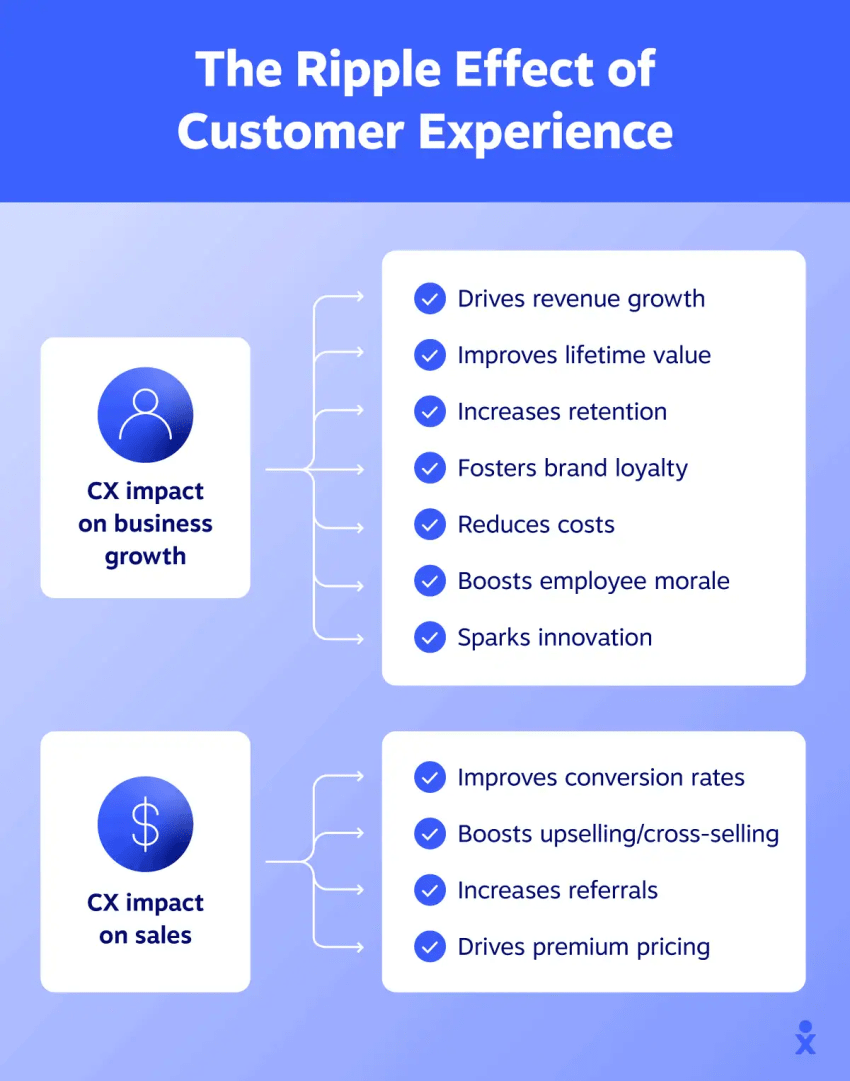
Your communication system is a customer experience platform in disguise. Every dropped call, misrouted inquiry, or missed SLA can affect satisfaction, retention, and revenue.
Most consumers (74.5%) try two to three times before giving up on a support issue. With the right system, you’re not just managing calls. You’re retaining customers, building loyalty, and protecting your brand’s customer relationship.
You don’t have to choose between systems overnight. Many businesses start with a cloud-based phone system and upgrade to a call center or contact center when:
- Call volume outpaces headcount
- You hire support or sales agents
- You need better visibility into performance
- You’re ready to expand communication channels
The best platforms, like Nextiva, let you layer on contact center solutions without switching providers. That means one system of record, one bill, and one point of support.
Wherever your team is today, invest in a communication system that grows with you.
Want to compare solutions? Attend a live demo of the platform and see which one is best for you. 👇
Experience the power of Nextiva’s unified platform.
Explore our on-demand demos to learn how you can create amazing customer experiences, grow revenue, and turn customers into evangelists.
Frequently Asked Questions
Yes. Most call centers use Voice over Internet Protocol (VoIP) as the foundation of their telephony infrastructure. VoIP enables cost-effective, internet-based calling that supports high call volumes and advanced features like call routing, IVR, and analytics. It’s also easier to scale than traditional landlines, making it ideal for cloud-based contact centers.
Call centers typically use specialized call center software or Contact Center as a Service (CCaaS) platforms that integrate voice calling with tools for queue management, performance tracking, and customer support. These systems often include features like ACD, IVR, CRM integration, and real-time reporting. While VoIP is the backbone, the phone system is purpose-built for contact center operations.
Call centers can be more complex and expensive to implement than standard phone systems. They require ongoing management, technical setup, and staff training to fully leverage features like call routing and analytics. Without proper planning, a poorly implemented call center can lead to inconsistent service, agent burnout, and a fragmented customer experience.
While business phone systems are easy to set up and cost-effective, they lack the advanced functionality needed for customer support at scale. They don’t offer intelligent routing, detailed metrics, or support for multichannel communication. This makes them less ideal for companies with growing customer bases or more complex communication needs.
