



Let’s face it, dealing with difficult customers is inevitable in a customer service role. Whether it’s an angry outburst, a rude comment, or endless indecisiveness, these situations can test your patience and professionalism.
But the good news is, with the right approach, you can not only de-escalate the situation but also find a solution that leaves the customer feeling heard and valued.
In this article, we’ll discuss different types of difficult customers you may come across, explore key strategies to deal with difficult customer situations and find a resolution that leaves everyone feeling good.
Quick Answer
To deal with a difficult customer, stay calm, listen without interrupting, acknowledge their concern, clarify what they need, and offer a solution or alternative. If the interaction becomes abusive or unresolvable, it’s appropriate to set firm boundaries and escalate. The goal is to help the customer feel heard while moving toward a resolution.
Example answers:
| Customer type | What to say | What not to say |
|---|---|---|
| Angry customer | “I can hear how frustrating this has been. Let me look into what happened and what we can do next.” | “Calm down.” “You’re overreacting.” |
| Demanding customer | “I can’t offer that exact refund, but I can walk you through the options available.” | “That’s against policy.” “There’s nothing I can do.” |
| Indecisive customer | “Based on what you’ve told me, option A seems like the better fit. Would you like to move forward with that?” | “You need to decide.” “I can’t help you if you don’t know what you want.” |
| Complainer | “I’ve documented your concerns and reviewed the available options. Here’s what we can do from here.” | “You already complained about this.” “We’ve done all we can.” |
| Price-sensitive customer | “I understand price is important. Let me show you the best-value option and explain what’s included.” | “That’s the price. Take it or leave it.” “If you can’t afford it, you should choose something else.” |
| Unresponsive customer | “I want to make sure we can keep this moving. Could you send the missing information by [date/time], or let me know the best way to reach you?” | “I can’t do anything until you respond.” “You’re holding up the process.” |
Is your CX falling short?
Assess and elevate your strategy with the Gartner® CX Maturity Model report.
Types of Difficult Customers
Before you can respond effectively, it helps to understand the most common types of difficult customers. Each situation calls for a different mix of empathy, patience, boundaries, and problem-solving.
1. The angry or rude customer
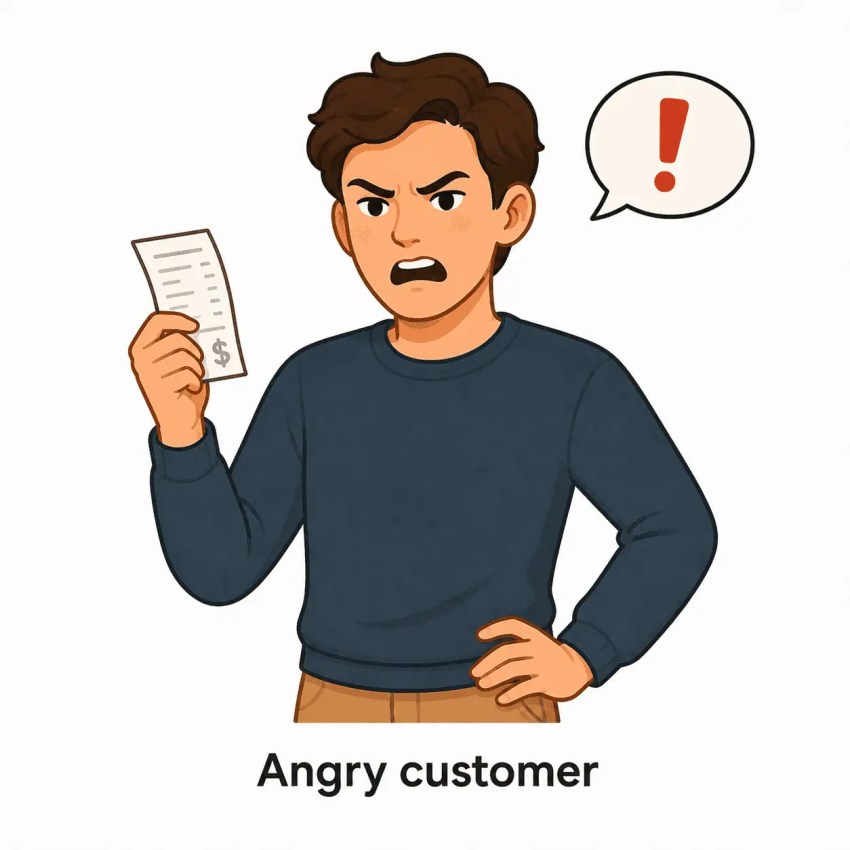
Angry customers are impatient, disrespectful, and prone to outbursts. They might yell, use abusive language, or make personal attacks when things don’t go their way, as is often the case with rude customers.
Example: A customer bouncing around in an IVR yells at the customer service agent about the slow service.
How to deal with angry or rude customers
- Remain calm: Don’t react defensively or take their anger personally. Take a moment before responding, take a deep breath, and project a calm demeanor.
- Acknowledge their feelings: Say something like, “I understand you’re frustrated about the wait. I apologize for the inconvenience.”
- Focus on conflict resolution: Shift the conversation toward problem-solving. “Is there anything I can do to help expedite this for you?”
- Set boundaries: If the abuse continues, politely but firmly excuse yourself and explain you’ll return when they can speak calmly.
What to say
“I can hear how frustrating this has been. Let me look into what happened and what we can do next.”
What not to say
“Calm down.”
2. The demanding customer

These customers have unrealistic expectations and make demands that exceed company policies. They might insist on special treatment or exceptions not offered to others.
Example: A customer demands a full refund for a slightly used item they bought a month ago, even though the store’s policy only allows returns within two weeks.
How to deal with demanding customers
- Be polite but firm: Explain company policies clearly and professionally, and set expectations while outlining what is and isn’t possible. “I understand your frustration, but unfortunately, our return policy only allows refunds within 14 days of purchase with a receipt.”
- Offer alternatives: See if there’s a solution within company policy. “Would you be interested in store credit instead?”
- De-escalate: If they persist, explain you need to follow company guidelines and offer to escalate the situation to a supervisor.
What to say
“I can’t offer that exact refund, but I can walk you through the options available.”
What not to say
“There’s nothing I can do.”
3. The indecisive customer

Indecisive customers struggle to make decisions or provide clear instructions. They might constantly change their mind or take a long time to choose.
Example: A customer browsing a clothing store keeps going back and forth between two different shirts, unsure of which one to buy.
How to deal with indecisive customers
- Be patient: Don’t rush them or seem annoyed.
- Ask clarifying questions: “What are you looking for in a shirt?”
- Offer product knowledge: Highlight features of each option based on their needs. “This shirt is wrinkle-resistant, while this one is more breathable.”
- Summarize options: “So, you seem to prefer the blue shirt for its color, but are unsure about the fit compared to the looser white one?”
- Confirm decision: Once they lean towards an option, confirm before proceeding. “Great, so the blue shirt in medium sounds perfect?”
What to say
“Based on what you’ve told me, option A seems like the better fit. Would you like to move forward with that?”
What not to say
“I can’t help you if you don’t know what you want.”
4. The complainer
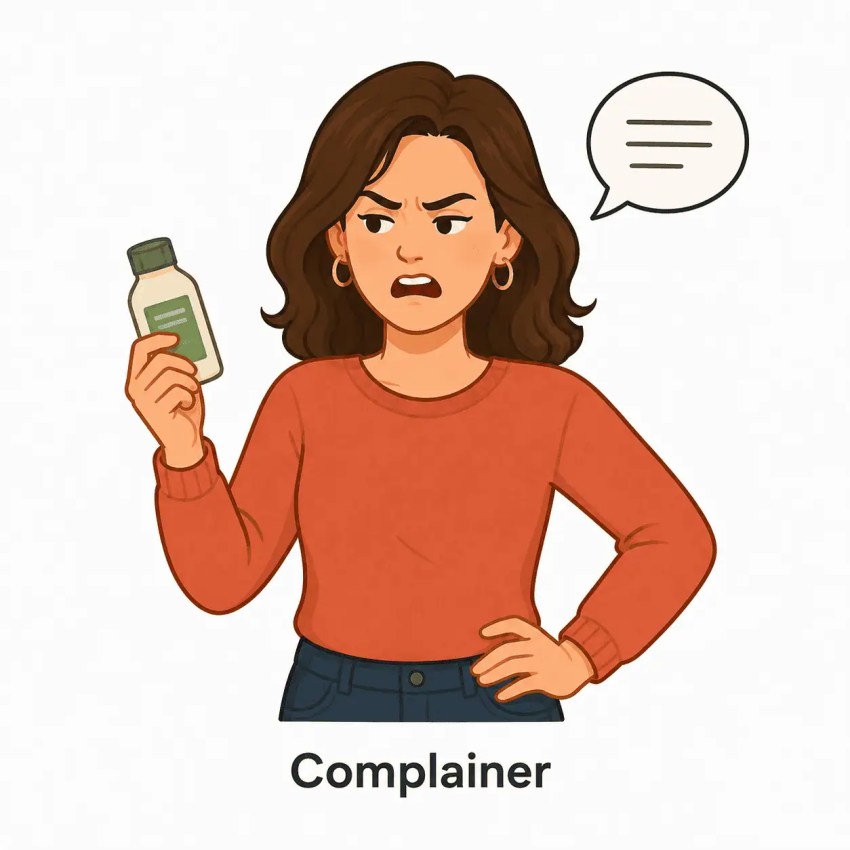
These customers frequently voice complaints, even after their issues have been addressed and resolved according to company policies. They may nitpick or find new things to complain about, making it challenging to fully satisfy them.
Example: A customer complains about a slight imperfection in their product, and after receiving a replacement, they complain about the packaging or shipping time.
How to deal with complainers
- Document everything: Keep detailed notes of each interaction.
- Follow procedures: Address their complaints according to company policy.
- Maintain professionalism: Be helpful and solution-oriented, but don’t engage in arguments.
- Set boundaries: For repeat, unfounded complaints, politely explain you’ve addressed their concerns and cannot offer further compensation.
What to say
“I’ve documented your concerns and reviewed the available options. Here’s what we can do from here.”
What not to say
“You already complained about this.”
5. The price-sensitive customer

These customers are primarily focused on getting the lowest possible price and may try to haggle or demand discounts beyond what is reasonable.
Example: A customer tries to negotiate a 50% discount on a new TV that’s already on sale.
How to deal with price-sensitive customers
- Know your limits: Be clear on what discounts you can offer.
- Highlight value: Explain the product’s features and benefits to justify the price.
- Offer alternatives: Suggest similar products with lower price points if available.
- Stick to your price: Politely decline unreasonable requests and explain the current price is the best you can offer.
What to say
“I understand price is important. Let me show you the best-value option and explain what’s included.”
What not to say
“If you can’t afford it, you should choose something else.”
6. The unresponsive customer
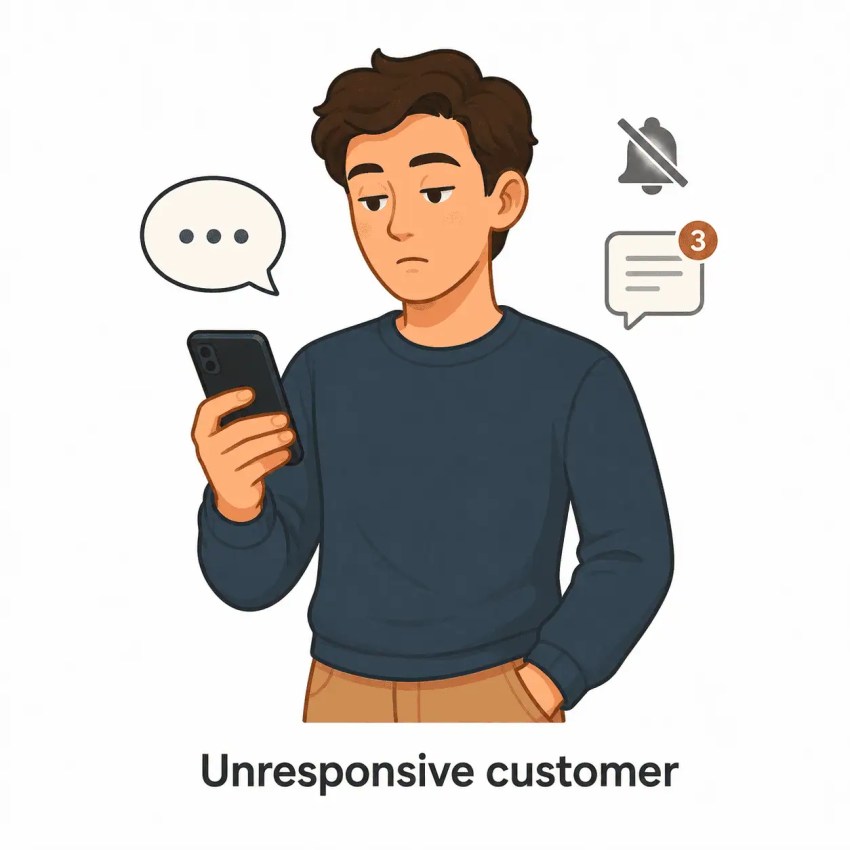
Unresponsive and uncommunicative customers fail to provide necessary information or respond to requests for clarification. This can significantly delay the service or resolution process.
Example: A customer doesn’t reply to emails requesting information needed to process their service request.
How to deal with unresponsive customers
- Multi-channel communication: Use a combination of communication methods like email, phone calls, and even text messages (if appropriate) to reach them, and use approved customer service email templates for follow-ups to save time.
- Set deadlines: Clearly communicate deadlines for responses and outline the consequences of non-communication (e.g., service suspension).
- Offer alternatives: Provide options for preferred communication channels if email isn’t their preferred method.
What to say
“I want to make sure we can keep this moving. Could you send the missing information by [date/time], or let me know the best way to reach you?”
What not to say
“You’re holding up the process.”
Understanding the Why Behind Difficult Behavior
A difficult customer usually isn’t difficult for no reason. In many cases, their frustration is the result of something that already went wrong before they reached you:
- a delayed order
- a billing issue
- a product that didn’t work as expected
- a long wait time
- having to repeat their inquiry or issue several times already
- a previous support interaction that left them feeling dismissed
By the time they contact your team, they may already feel like they’ve had to work too hard to get help. That frustration can come out as anger, impatience, repeated complaints, or unrealistic demands. While that doesn’t excuse rude or abusive behavior, understanding what may be driving it can help you respond more effectively.
For example:
- An angry customer may be worried about how a service outage is affecting their business.
- A demanding customer may feel they were promised something your company can’t actually deliver.
- An indecisive customer may be afraid of choosing the wrong option.
- An unresponsive customer may be overwhelmed, busy, or unclear on what information you need from them.
The key is to look past the behavior long enough to identify the real issue. Instead of reacting to the customer’s tone, focus on what they need, what went wrong, and what would help move the conversation forward. That might mean apologizing for a specific mistake, clarifying the next step, offering a realistic solution, or setting a firm boundary if the conversation becomes disrespectful.
Empathy doesn’t mean giving every customer exactly what they want. It means showing that you understand why the situation matters to them, while guiding the interaction toward a fair and practical resolution. When customers feel heard, they’re more likely to calm down, cooperate, and leave the interaction with more trust in your team.

9 Tips for How to Deal With Difficult Customer Situations
Knowing how to deal with difficult customer situations starts with having the right communication strategy. These tips can help customer service teams respond with empathy, stay in control of tense conversations, and resolve issues more effectively.
Tip 1: Embrace active listening
Sometimes, the best course of action is to simply let the customer vent. Listen attentively without interrupting, and focus on understanding the root cause so you can identify and determine the source of their frustration.
Steps for active listening:
- Let the customer speak without interruption.
- Paraphrase their issue to confirm your understanding. For example, say, “What I hear you say is…” followed by a summary of their problem.
- Repeat back the customer’s words and provide accurate information before moving to a solution.
- Pay close attention to tone and body language if speaking face to face.
Active listening is a powerful tool. It shows the customer you’re taking them seriously and helps build rapport
Tip 2: Maintain your calm
It’s easy to get flustered when faced with a customer’s anger. But remember, their frustration is likely directed at the situation, not you. Difficult interactions can happen in real time, and your job is to stay steady when they do. Don’t take it personally.
How to maintain your calm:
- Respond with confidence and calmness.
- Avoid phrases like “I’m sorry for the inconvenience” — these don’t address the core issue.
- Project a calm body language and maintain eye contact in a customer-facing situation.
- Focus on finding a solution instead of getting caught up in the emotions.
- Develop strong conflict resolution skills to navigate difficult situations and find mutually agreeable solutions.
The customer support team should be well-versed in various conflict resolution techniques to defuse tensions and ensure a positive outcome when dealing with challenging customer interactions. And calmness sits at the top.
Tip 3: Empower with options
Once you understand the problem, it’s time to explore solutions. Shifting the conversation from the problem to actionable steps helps resolve the issue.
Steps to empower with options:
- Confirm the customer’s ideal resolution.
- Offer a few choices for resolving their issue (e.g., replacement, refund, or store credit).
- Let them choose the solution that best suits their needs.
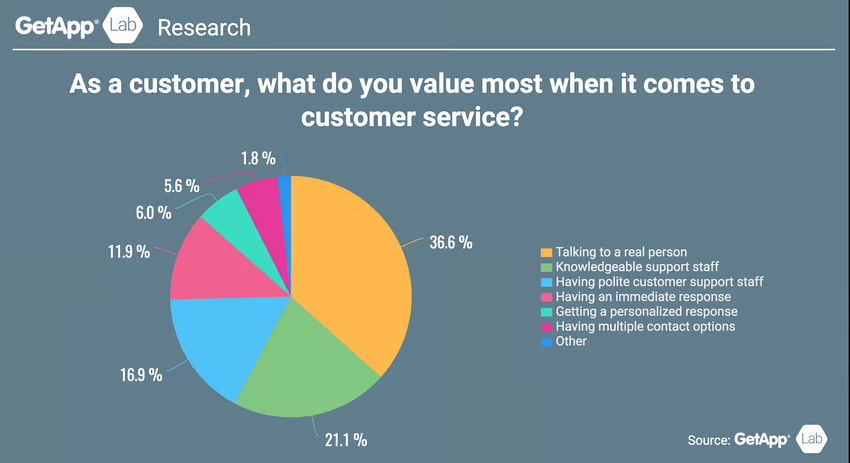
Remember, there’s almost always something you can do, even if it’s just taking detailed notes and sharing them with your product team or management. Often, frustrated customers simply want to feel heard and know their concerns are being addressed, along with the next steps.
Tip 4: Be genuine and show empathy
When faced with an irate customer, the first step is to carefully understand the customer’s problem from their point of view, which requires active listening and empathy — two key customer service skills when supporting customers and clients.
How to show empathy:
- Put yourself in the customer’s shoes and try to understand how they feel.
- Be sincere in your interactions, even when explaining limitations.
- Let them know their concerns are heard and explain how their feedback can help prevent similar situations in the future.
Empathy is a powerful tool for building customer loyalty and can help keep the client happy by making them feel heard. Loyal customers are responsible for 65% of a company’s revenue.
Tip 5: Use humor carefully
Humor can be a powerful tool for diffusing tense situations with customers, but it needs to be used carefully.
Tips for using humor:
- Only attempt humor if you’re comfortable with it and the situation seems appropriate.
- Keep any humor light and positive.
- Avoid sarcasm or jokes that could come across as offensive.
- Read the customer’s reaction. If they don’t seem receptive, drop the humor immediately.
When used correctly, a bit of levity can help put the customer at ease and make the interaction feel more positive overall. But use discretion — not every situation calls for jokes.
Tip 6: Maintain a consistent channel & automate
Imagine being halfway through explaining your problem on the phone, only to be told to switch to email or chat. Frustrating, right? Avoid switching communication channels (phone, email, chat) throughout the interaction.
How to maintain consistency and automate:
- Invest in a unified communications solution to support customers across different channels.
- Use self-service options and chatbots to answer regular customer queries.
- Implement a conversational IVR to connect customers easily to your contact center team.
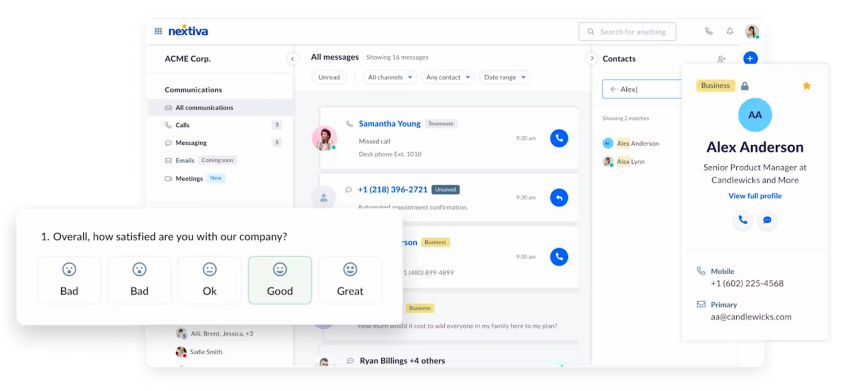
Automation saves your time and deals with everyday customer situations. When customers can easily connect with you or discover answers to their problems, they’re less likely to get frustrated or churn.
Tip 7: Use de-escalation techniques & conflict resolution skills
The situation might call for additional de-escalation techniques to calm a particularly upset customer:
- Mirroring: Briefly repeat back key phrases or words the customer uses to acknowledge their feelings. This can help validate their emotions and calm them down.
- Use “I” Statements: Instead of blaming the customer, use “I” statements to take ownership of the situation. For example, “I understand why you’re upset, and I apologize for the inconvenience.”
- Offer Apologies Sincerely: Even if the situation isn’t entirely your fault, a sincere apology can go a long way in de-escalating a situation.
Tip 8: Teamwork makes the dream work
If the situation gets complex or requires specialized knowledge, don’t hesitate to involve your support team or product experts.
How to leverage teamwork:
- Involve the customer in the process as much as possible, keeping them informed.
- Use chat tools to connect with team members or product experts while relaying information.
- Share knowledge base articles and explain their relevance.
- Use visuals like videos or annotated images to increase understanding and customer satisfaction.
Tip 9: Don’t forget self-care
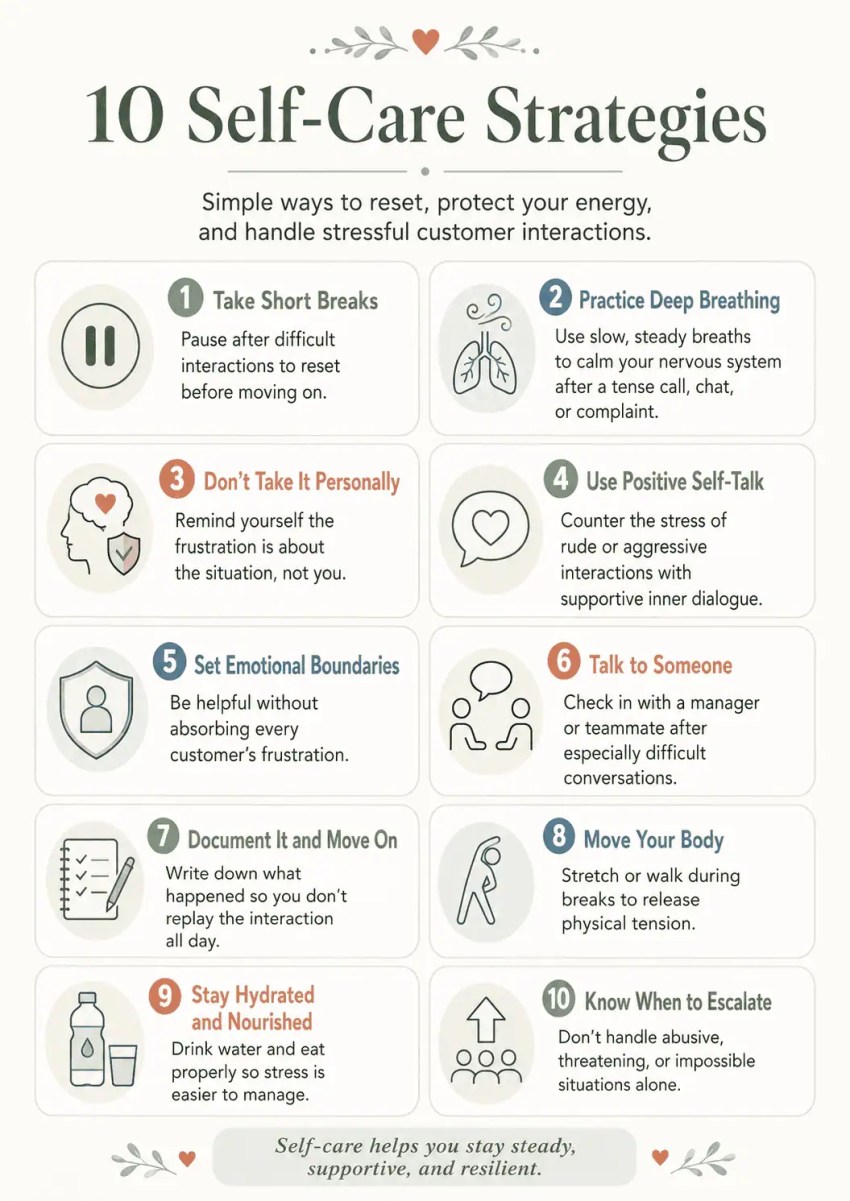
Dealing with difficult customers day in and day out can be mentally draining. That’s why it’s crucial to practice self-care techniques that help you de-stress and recharge.
Self-care tips:
- Schedule short breaks throughout your shift to step away from the phone after hard calls.
- Practice positive self-talk to counter any negativity from challenging situations.
- Develop healthy relaxation techniques like deep breathing or meditation to manage stress.
- Lean on your support system. Talk to colleagues or friends about particularly difficult customer encounters or bad days.
Example of a Customer Service Script to Use With Difficult Customers
Here’s an example of a stressful interaction and how to deal with difficult customers.
Type of difficult customer: The demanding customer
Scenario: A customer calls in demanding a full refund for a product they bought a month ago, claiming it arrived damaged. In this case, the customer asks for a refund, but the company’s policy only allows returns within two weeks for unopened items.
Customer: “I received this product a month ago and it’s completely damaged! I want a full refund now!”
Customer service representative (CSR): “I understand how frustrating that must be. Can I get your order number and some details about the damage?” (Calm and professional tone.)
Customer: “My order number is #12345. This thing is in pieces! You should have better packaging.”
CSR: “I apologize for the inconvenience. Our policy allows for returns of unopened items within two weeks of purchase. However, I can see if there are other options available. Would you be interested in a replacement or store credit?” (Acknowledge their frustration, explain the next steps, and offer solutions within policy.)
Check out some more script templates here.👇
Know When to Involve a Manager
There are times when it’s in everyone’s best interest to involve your manager or business owner, especially when legal or safety concerns are involved. Here are some key situations:
Threats or verbal abuse
- If a customer becomes threatening or verbally abusive toward you or others, don’t hesitate to step away and involve your supervisor.
- If the abuse continues no matter what you do, escalation is necessary. Your safety is paramount.
Safety concerns
- If a customer becomes disruptive or damages property, escalate the situation to your manager immediately.
Policy exceptions
- If a customer’s request requires a policy exception that you’re not authorized to make, explain the limitations of your role and involve your manager to discuss possible solutions.
Going in circles
- If you’ve reached an impasse and are unable to resolve the issue despite your best efforts, loop in your manager to provide a fresh perspective and potentially more authority to reach a solution.
Uncomfortable situations
- If an unhappy customer makes inappropriate comments or expresses discriminatory views, remove yourself from the situation and involve your manager to handle it appropriately.
How Customer Service Software Helps Teams Handle Difficult Customers
Instead of forcing customers to repeat themselves or leaving agents to manage difficult conversations with limited information, the right customer service software gives agents more context, better documentation, and faster ways to resolve tense interactions.
- Call recording for documentation: Call recordings give teams a reliable record of what was said during difficult conversations. Managers can review calls for quality assurance, confirm details after a dispute, and use real examples for agent coaching and training.
- Conversation history so customers don’t repeat themselves: A complete conversation history lets agents see previous calls, chats, emails, purchases, complaints, and open issues in one place. This helps customers feel recognized instead of forced to start over every time they contact support.
- Sentiment analysis and conversation intelligence: Conversation intelligence tools can identify signs of frustration, confusion, or escalating emotion during customer interactions. This helps teams spot at-risk conversations, coach agents, and understand common pain points across support channels.
- IVR routing to the right team: An intelligent IVR can route customers to the department, agent, or specialist best equipped to help them. This reduces unnecessary transfers, long wait times, and the frustration that builds when customers feel passed around.
- Internal notes and warm transfers: Internal notes help agents document key details, customer preferences, and next steps. When a transfer is needed, a warm handoff gives the next agent context before they join the conversation, so the customer doesn’t have to explain the issue again.
- Omnichannel support across phone, chat, SMS, and email: Omnichannel support keeps conversations connected across multiple channels. If a customer starts with chat, follows up by email, and later calls support, agents can still see the full interaction history and respond with the right context.
- AI summaries after difficult conversations: AI-generated summaries can capture the main issue, customer sentiment, resolution steps, and follow-up actions after a difficult interaction. This saves agents time, improves documentation, and makes it easier for managers or future agents to understand what happened.
The Power of Delightful Service With Nextiva
Great customer service requires equally great efforts and investment in your customer success.
Difficult customers can be an opportunity to shine. With excellent customer service and going the extra mile, you can turn a negative customer experience into a positive experience and even turn a casual buyer into a loyal customer. Remember, most customers simply want to get things done — they have goals and lives outside of interacting with you.
Focus on being genuinely helpful in every customer interaction. Your mission is to make their day a little bit better, even if it’s just replying to a follow-up email with a clear solution. Following these steps can deliver exceptional service and leave a lasting positive impression, and responding well to a negative review can help protect future loyalty, even on your most challenging days.
There’s no magic formula for dealing with difficult people, but there are ways to treat them respectfully and understand their needs.
Learn from a real-world example. See how Rack Attack is driving customer service excellence with Nextiva.

Your AI-Powered Contact Center
Create amazing customer experiences with AI-powered contact center software. Scalable contact center platform built for omnichannel customer conversations.
Difficult Customers FAQs
The best way to respond to a difficult customer is to stay calm, listen carefully, acknowledge their frustration, and focus on the next step. Instead of reacting to their tone, clarify the issue and offer realistic options for resolving it.
Let the customer explain what happened without interrupting, then acknowledge their frustration with a specific response like, “I understand why this is upsetting.” Keep your tone calm, avoid blame, and move the conversation toward what you can do to help.
Use calm, professional language that acknowledges the issue without accepting abuse. For example: “I want to help resolve this, but I need us to keep the conversation respectful so we can move forward.”
Explain the policy clearly, but don’t stop there. Acknowledge their disappointment, explain what you can do within the rules, and offer alternatives such as store credit, a replacement, escalation, or another available solution.
Escalate a difficult customer when the situation involves threats, abusive language, safety concerns, legal issues, repeated unresolved complaints, or a request that requires manager approval. Escalation is also appropriate when the agent has reached an impasse and needs additional support.
Set boundaries calmly and directly. For example: “I’m here to help, but I can’t continue the conversation if there is abusive language. If we can keep the conversation respectful, I’ll do my best to resolve this.”
Avoid phrases that sound dismissive, defensive, or blaming, such as “Calm down,” “That’s not my fault,” “You misunderstood,” “There’s nothing I can do,” or “That’s just our policy.” Instead, use language that validates the concern and points toward a solution.
