



Crossing off tasks feels great, but for most teams, using task management software isn’t really about the quick win — it’s about getting work done on time and with fewer surprises. When deadlines start slipping, handoffs break down, or priorities change halfway through a project, the tool you use can either bring order to the chaos or add to it.
The right platform becomes the place where work lives: leaders get visibility, owners know what they’re responsible for, and everyone can see what’s happening next without chasing updates in meetings or messages.
That’s why “Trello vs. Asana?” is a real business decision, not just a question of which one looks nicer or feels easier. Both tools can help you track tasks, but they’re built for different kinds of teams and different levels of complexity. If you’re deciding between the two, this breakdown will help you see which platform fits the way your team actually works.
Trello vs. Asana: Which should you choose?
Trello is the best choice for the fastest, simplest way to track tasks visually, especially for small teams and lightweight workflows. Asana is better suited for complex, multi-step projects that require dependencies, workload visibility, and stronger scalability. In short, choose Trello for simplicity and speed, and Asana for structure and scalability.
Trello vs. Asana: At a glance
See how Trello and Asana compare across key features like task management, automation, pricing, integrations, and scalability.
| Feature | Trello | Asana |
| G2 rating | 4.4/5 (13,950+ reviews) | 4.4/5 (13,070+ reviews) |
| Pricing |
Free plan: $0 (Free for up to 10 collaborators per workspace. Standard: $5/user/month Premium: $10/ user/month Enterprise: $17.50/user/month |
Personal: $0 (for one or two people managing personal projects) Starter: $10.99/user/month Advanced: $24.99/user/month Enterprise: Custom (contact sales team) |
| Ease of use/learning curve | Intuitive, easy to navigate, and clearly labeled, simple for new users who want to make new tasks or boards. | The dashboard has a slight learning curve due to advanced features, but creating projects and managing daily tasks is still straightforward. |
| Task management | Can create task cards with checklists and comments, enhanced by Power-ups, drag-and-drop, and automation. | Use tasks and sub-tasks with multiple views, plus milestones and multiple tracking to keep teams aligned. |
| Project views | Trello centers on a visual, intuitive Kanban board with multiple views available via Power-ups. | Asana offers real-time multi-project views and workload tracking, ideal for complex projects. |
| AI and automation capabilities | Automate card movement, add due dates, and use AI tools for summaries, brainstorming, and action items. | Brainstorm and draft tasks, generate summary reports, and recommend priorities. |
| Team collaboration | Trello supports real-time collaboration with shared boards, comments, and customizable workflows for fast team setup. | Teams collaborate in context with comments, @mentions, file sharing, dependencies, and milestones. |
| Templates | Ready-made templates, customizable boards, and the ability to star favourites for quick access. | Reusable templates with custom fields, rules, collaborators, and auto-adjusting schedules. |
| Onboarding experience | Streamline onboarding with guided setup, pre-built templates, and centralized workspaces | Supports guided onboarding with customizable setup, templates, relative scheduling, and HR system integration. |
| Reporting and progress insights | Visualize progress with card metrics, timelines, completion charts, and automation logs. | Offers a real-time dashboard, timelines, and advanced reporting and goal tracking to monitor progress. |
| Integrations and ecosystem | Integrates with tools like Slack, Jira, and Google Drive, plus automation and custom API integrations. | Integrates with Slack, Microsoft Teams, email, and file storage tools, automation platforms, and a robust API. |
| Scalability and performance | Scale across teams with high card volumes, unlimited boards, and enterprise-level controls. | Scale for small teams to enterprises, supporting complex portfolios with strong performance and enterprise complexity |
| Security, admin controls, and compliance | Delivers Atlassian Enterprise security software with SSO, SCIM, centralized admin controls, encryption, and compliance with SOC 2, ISO 27001, and GDPR. | Provide enterprise-grade security with SSO, SCIM, and centralized admin controls, encryption, and compliance with SOC 2, ISO 27001, and GDPR. |
Note: Pricing details mentioned here are based on monthly billing. Both Trello and Asana frequently roll out new updates. The details above reflect the most current capabilities as of March 2026, but may change over time.
Trello vs. Asana: What’s different and what’s not?
Before I get my hands dirty testing both tools firsthand, here’s a quick look at the core capabilities Trello and Asana are best known for, what they share, and where each one stands out. Let’s dive in.
Trello vs. Asana: What’s different?
While using these tools, I was surprised to find how distinct the task creation system was on each platform while still maintaining good navigation and user accessibility. That’s what allows any user to seamlessly get started on both platforms. Let’s look at some of those differences.
- Structured task hierarchy: In Trello, tasks are cards, and subtasks live as checklist items. Those checklist items can have owners and due dates, but they don’t behave like standalone tasks unless you turn them into cards. Asana is built for structure, with real task hierarchies where subtasks act like full tasks, rolling up into timelines, workload views, and reports, making it easier to manage complex, layered work.
- Automation limits: Trello’s Butler is excellent for board-based automation — moving cards, assigning members, and setting due dates when something happens on that board. Where it can feel limiting is cross-project work: while Butler can support some multi-board actions, it typically creates/copies separate cards in specific target boards/lists rather than keeping one “shared” work item synced across projects. Asana is better for more interconnected workflows because it supports dependencies (including shifting dependent dates via a review/confirm prompt) and multi-homing, where the same task can live in multiple projects without duplication, so updates stay aligned across projects
- User interface: Trello’s UI is simple and visual; everything happens on Kanban boards, where you drag and drop cards. It’s easy to understand and quick to start using. Asana’s UI is more detailed, with more fields and controls, which helps with complex planning but takes a bit more time to learn.
- Reporting and insights: Trello provides a lightweight reporting system. Users can use power-ups to add custom fields, get a detailed dashboard view, and use integrations for automation and get detailed insights via sheets and Power BI. Asana has built-in reporting capabilities within the platform; teams can track progress of projects in real time, get notifications on upcoming projects, and get visual data on the dashboard about the team’s progress
- Scalability for complex projects: Trello is more suited for smaller businesses, individuals, and startups due to its lean and lightweight interface, whereas Asana is meant for large teams and complex workflows.
Trello vs. Asana: What’s similar?
While task hierarchy and reporting differ between Trello and Asana, I still found many shared features making both tools relevant for project management, depending on your team’s use case.
- Task creation and project structure: Both Trello and Asana let teams create tasks, assign owners, add due dates, attach files, and comment in one place. In Trello, work is typically managed on boards (often used as projects), with cards representing tasks that move through workflow stages. In Asana, work is organized into projects, with tasks that can include subtasks, custom fields, and status tracking from start to finish.
- Collaboration features: Both platforms support real-time collaboration directly within tasks. Team members can comment, @mention others, attach files, and receive notifications for updates or changes. Activity logs make it easy to see who did what and when, helping teams stay connected without relying on external communication tools.
- Integration: Both Trello and Asana integrate with a diverse range of tools, including Slack, email, Google Drive, and Jira. These integrations allow teams to connect conversations, files, and updates directly to their work, reducing context switching and keeping workflows centralised.
- Security and compliance: Both tools offer enterprise-grade security, including data encryption in transit and at rest, role-based permissions, and administrative controls. They support single sign-on (SSO) and system for cross-domain identity management (SCIM) for identity management and meet key compliance standards such as Service Organization Control 2 (SOC 2) and the General Data Protection Regulation (GDPR), making them suitable for organizations with security and regulatory requirements.
How I compared Trello and Asana: My evaluation criteria
I tested Trello and Asana on the same features to see how they handled the same tasks. My use cases included:
- Task and project setup: Creating tasks, organizing work into projects, handling subtasks
- Customization: Ability to adapt workflows without making the tool feel cluttered or rigid
- Collaboration: Comments, @mentions, notifications, file attachments, and how easily teams stay aligned
- Automation: Rule creation for task movement, assignments, due dates, and reducing repetitive work
- Reporting and visibility: Dashboards, progress tracking, workload insights, and cross-project visibility
- Integrations: Connecting tools like Slack, email, file storage, and automation platforms
- Mobile optimization: How well the app supports real work on the go (not just viewing).
I evaluated each response on four key criteria:
- Usability and adoption: How easy is the tool to learn and use without overwhelming the team
- Scalability and flexibility: How well it grows with users, projects, and complexity
- Visibility and control: How clearly progress, ownership, and risks are shown
- Efficiency and impact: How much automation and integrations reduce manual work and boost productivity
I also cross-checked my findings with G2 reviews to see how other users experience these two project management tools.
Disclaimer: Project features and capabilities may vary over time. These results reflect the tools’ capabilities at the time of testing.
Trello vs. Asana: How they actually performed in my tests
For every task, I’ll break it down like this:
- What stood out? What felt intuitive, frustrating, or unexpectedly useful while managing work?
- Who did it better? Which tool handled the workflow more clearly and effectively?
- Final verdict: Which one I’d actually use, and why?
1. Task and project setup
I started with the most obvious test: project setup and task management, to see how intuitive the navigation and overall setup felt. I wanted to understand where friction showed up and how easy or frustrating the process really was.
To do this, I created a project, added multiple subtasks with a deadline, and collaborators to move the piece along through the pipeline to test the process (research → draft → review → final).
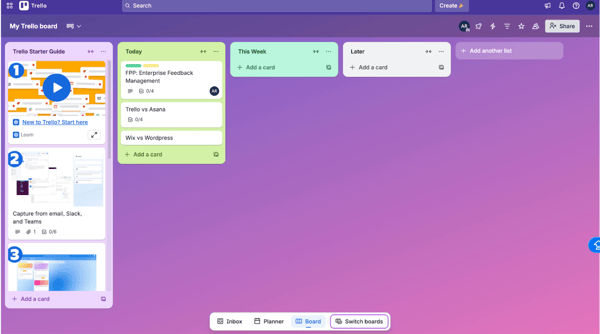
With Trello, everything felt clear and frictionless. Creating a new board was easy. I could add cards, checklists, collaborators, and due dates in seconds. Trello lets me assign individual due dates to checklist items, which was a nice bonus. Using lists and cards, I easily built a visual pipeline and tracked progress just by moving cards from one stage to the next. The lack of a learning curve for project setup really impressed me about Trello.
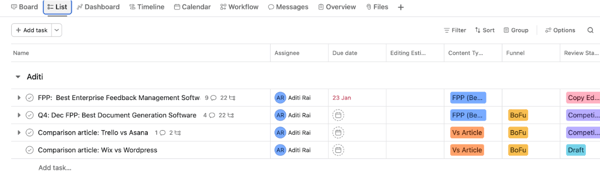
With Asana, it took a little time to figure out where to start because there are more options. But once the project was set up, everything felt organized. It was easy to assign owners, add due dates and subtasks, and switch views (list, board, calendar) to track work in the way that made the most sense. But the initial setup can feel too feature-rich for beginners, with features like calendar, reporting, portfolio, etc. You don’t know where to start.
However, the templates and built-in fields made it quicker to set up a project without building everything from scratch.
For that initial setup and ease of use with creating tasks, Trello is the winner for me. There’s no initial learning curve, your tasks remain organized, and it gets the job done. For more complex projects, though, Asana would be a better fit for teams that need more structure and oversight.
Winner: Trello
2. Customization
For this test, I evaluated how easily each tool adapts to a team’s evolving workflow. I added custom fields for priority and status, adjusted the workflow mid-project, and tested lightweight automations like auto-assigning collaborators and shifting due dates all within the same research → draft → review → final pipeline. I also explored visual customization, including labels, backgrounds, and layout adjustments.
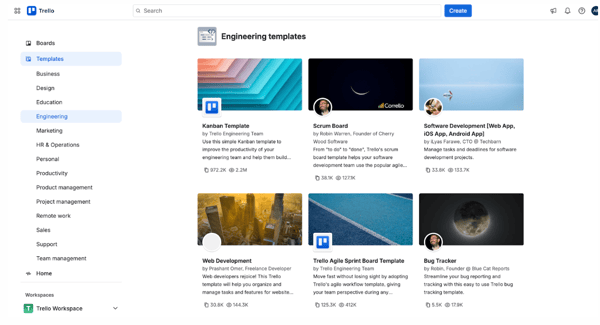
With Trello, I could add or remove custom fields, adjust labels, change backgrounds, and modify the workflow mid-project without disrupting anything. It encouraged experimentation, changes were easy to make and just as easy to reverse. This makes Trello particularly strong for fast-moving teams or evolving processes where flexibility matters more than strict standardization.
A cool feature about Trello was its pattern-based labels that improve accessibility for color-blind users, adding inclusivity without extra setup. Card covers and background themes also allow teams to visually differentiate projects, which can make boards feel more intuitive and engaging.
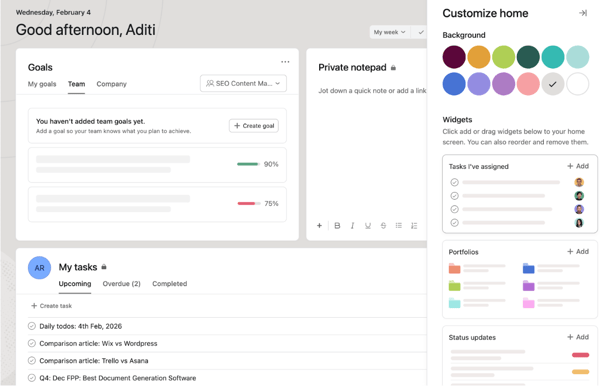
Asana’s customization is more structured in comparison. You can create custom fields for things like priority, status, budget, or effort, and those fields apply to the entire project. They connect directly to dashboards, reporting, workload views, and filtering. Teams can also build custom project templates with predefined fields and rules, which makes repeatable workflows easier to scale.
In larger organizations, admins can standardize fields across projects to maintain consistent reporting. That level of control is especially valuable when multiple teams rely on the same data.
But my favorite customization feature on Asana is their celebration creatures. These creatures, unicorn, narwhal, or phoenix, might fly across your screen every time you complete your task. They can be customized to your liking — something that excites the inner child in me.
Customization felt faster and more intuitive. I could experiment freely without worrying about affecting the entire system, which makes Trello better suited for teams that value flexibility over rigid structure.
Winner: Trello
3. Team collaboration
I used the same project (research → draft → review → final) and added 3-4 collaborators with different roles: a writer, reviewer, editor, and stakeholder to see how collaboration actually played out in each tool.
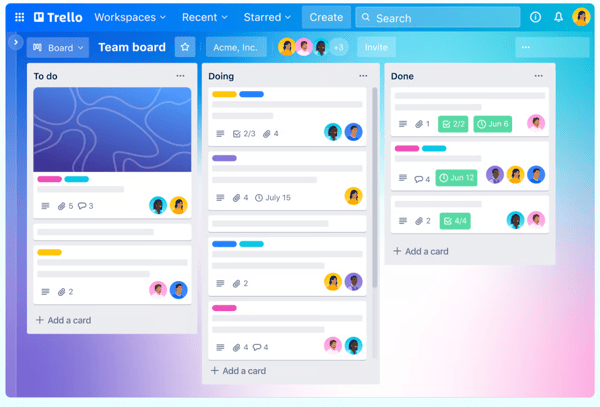
In Trello Premium, collaboration revolved around shared board visibility. Team members could comment, tag one another, and move cards between lists to signal progress. However, Trello depends heavily on team discipline. For larger teams, a shared system is required for how lists, labels, and custom fields represent status. If someone forgets to move a card or update a label, clarity can break down. The system works best when everyone consistently maintains it.
Asana felt more proactive. Status changes, comments, and completed tasks automatically appeared in dashboards and notifications. If something was blocked or falling behind, it surfaced without anyone needing to manually flag it. Rather than depending on teammates to update a board for visibility, the system continuously tracked progress on its own.
That approach reduces human error and communication gaps. Team members don’t have to remember to move a card or send an update for their work to be seen.
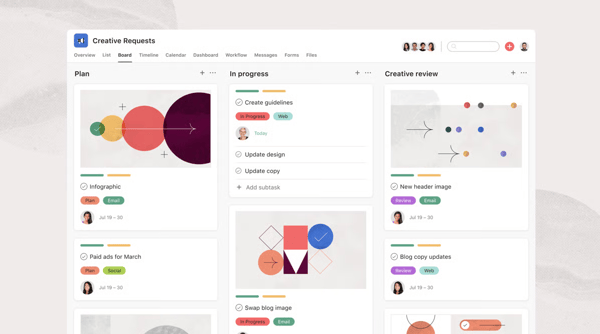
Overall, Trello Premium made collaboration feel fast and flexible when everyone was in the same place. Asana Premium made collaboration feel more intentional and scalable when multiple teams were involved, which is very important for larger teams or teams that plan to scale, so for this round, I give Asana the crown.
Winner: Asana
4. Automation
For the automation test, I used the same pipeline and set up a few repeatable rules to see which tool saved me more manual work. I automated assignments and due dates at each stage (eg, when a task moves to “Review,” assign the reviewer and set a new deadline), triggered reminders as deadlines approached, and added a rule to notify collaborators when work was ready for the next handoff.
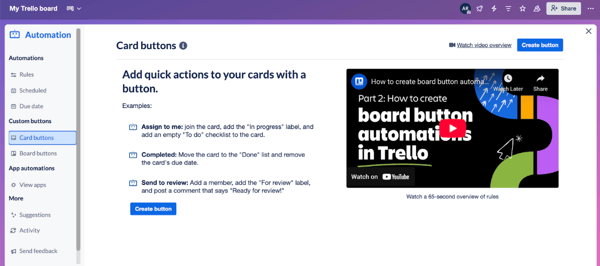
I used Trello’s built-in automation tool, Butler. I could trigger actions based on card movement, field changes, and date conditions. For example: When a card moved to “Review,” Butler automatically assigned the reviewer and updated the due date.
I created rules to send Slack or email notifications when a priority label was added. Recurring cards were generated each week automatically for standups or reports. For clear, list-driven workflows, Butler reduced manual steps without needing advanced logic.
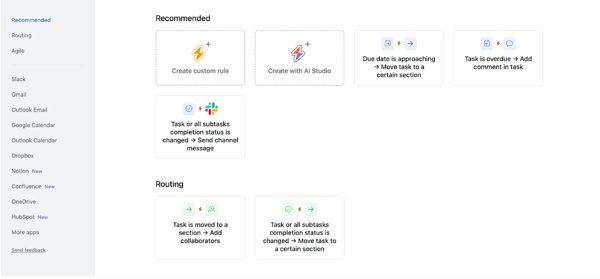
Asana Premium’s rules required more initial setup, but they offered deeper and broader automation tied into project intelligence.
For example, Rules could not only assign and date-shift tasks, but they could also update custom fields (like “Status: In Review”), trigger multiple actions in sequence, and automatically adjust work across views. You could trigger actions based on conditions (e.g., if priority = “High” AND due date is within 48 hours), and connect rules to approved integrations like Slack, Teams, and email.
In Asana, the rules didn’t just react to status changes; they also tied into reporting and visibility across the project. When a task moved to review, the reviewer was assigned, the due date shifted, and the status updated automatically in dashboards. It took a bit longer to set up, but once it was running, the automation reduced far more manual follow-up.
In the end, this test felt like a tie. Trello won on speed and simplicity, while Asana matched it with more depth and structure. Both reduced manual work effectively; it just came down to whether I wanted quick, lightweight automation or more controlled, rule-driven workflows.
Winner: Split; Trello for speed and simplicity, Asana for depth and structure
5. Reporting and Visibility
For reporting, I focused on how quickly I could understand the project status, what stage the work was in, what was overdue, and who was responsible. I also looked at how easily each tool looked at progress tracking without requiring manual tracking.
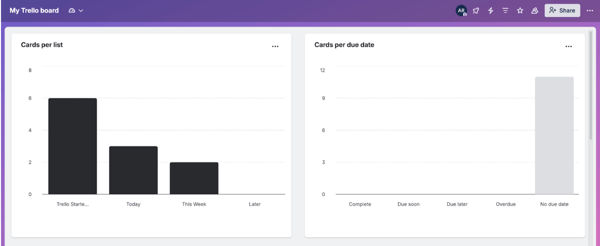
When I used Trello Premium, reporting felt more like visibility than analytics. I got a good view of my work through things like Table View, Calendar View, and the board dashboard. Table View is especially useful because I can see cards from multiple boards in a spreadsheet-style layout and sort or filter by labels, due dates, or custom fields. The board dashboard gives me simple charts like cards by list, label, or assignee, which is helpful for quick status checks.
With Asana Premium, I could build dashboards with charts that show progress, blocked work, overdue tasks, and how work is distributed across people or priorities. I could filter tasks across multiple projects using custom fields, assignees, due dates, and statuses, then save those searches as ongoing reports. It gave me more clarity when it came to the project my teammates were working on vs what I was working on through the report.
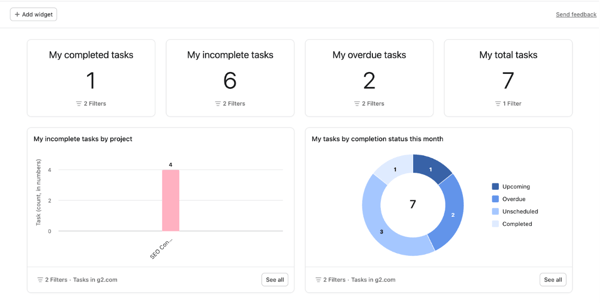
For this project, Asana’s analytics were better because, instead of just showing where work was, Asana helped me understand how the work was progressing and where attention was needed for long-term project tracking.
Winner: Split
6. Integrations
With integrations, I focused on how easily each tool connected with everyday apps like Slack, email, and file storage, and whether updates synced automatically. I also looked at how seamlessly those integrations fit into the workflow without creating extra noise or manual steps.
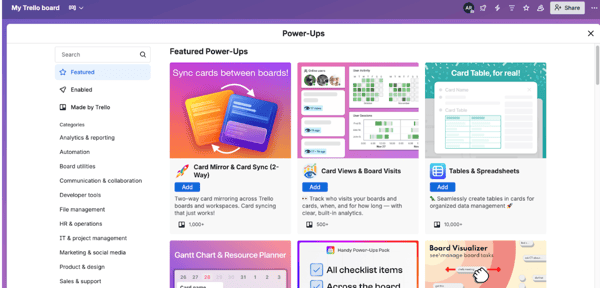
Everything is a Power-Up in Trello. I can turn them on board by board, which is honestly Trello’s superpower. If I only want Slack and Google Drive on one board, I can do exactly that without touching anything else. What’s especially interesting is how Power-Up sync works. Some power-Ups don’t just connect tools; they actively sync data back and forth. For example, a Trello card can stay in sync with a Google Sheet or CRM record, so when a field like status, owner, or due date changes in the source tool, that update automatically shows up on the card.
With Asana, integrations connect across the whole workspace. I’m not just getting notifications, I’m building workflows. Integrations can plug directly into Asana’s automation engine, so I can say things like: when a form is submitted, create tasks across multiple projects, set custom fields, and notify the right team, all without touching the project again. Trello can automate actions on a board, but Asana lets me automate processes that span teams, projects, and tools.
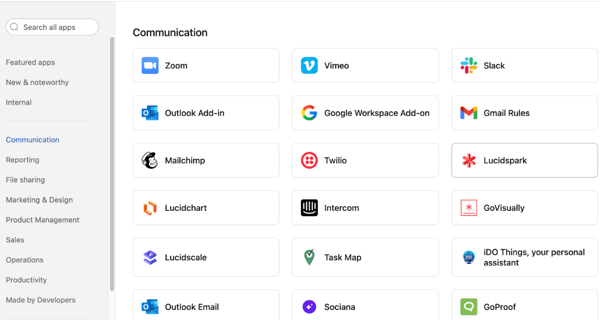
While both offer a wide range of integrations, Asana’s are more structured and workflow-aware, making them better suited for teams that rely on connected systems and long-term scalability.
Winner: Asana
7. Mobile optimization
To evaluate mobile performance, I tested both apps, focusing on task updates, notifications, commenting, file uploads, and dashboard visibility. For buyers, mobile isn’t just about convenience; it’s also about whether work can move forward without a laptop.
Trello Premium’s mobile app closely mirrors its board-based design. When I used it, moving cards between lists felt natural with drag-and-drop gestures, and I could easily comment, add checklists, attach files, and update due dates without friction. The visual simplicity translated well to a smaller screen, making it easy for me to scan progress at a glance. Push notifications in the app were reliable, and I could make quick edits in seconds. For teams primarily working within a single board, I found Trello’s mobile experience intuitive and fast.
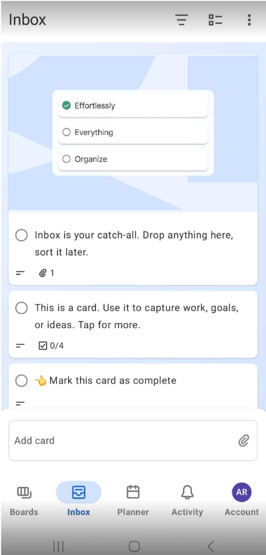
Asana Premium’s mobile app feels more operationally complete. Beyond task updates and comments, I could access multiple project views (List, Board, Calendar), review dashboards, and check workload distribution directly from my phone. Notifications were more context-rich, surfacing status changes, blockers, and dependencies in real time. For managers or cross-functional leads, the ability to monitor progress and rebalance priorities without opening a laptop makes a meaningful difference.
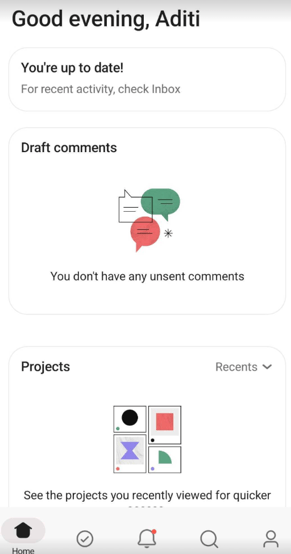
While Trello’s mobile app excels at simplicity and speed, Asana’s mobile app supports oversight and decision-making at scale.
Winner: Asana
Trello vs. Asana: My evaluation scorecard
Here are the winners of each of the six tests.
| Task | Winner | Why |
|
Task and project setup |
Trello🏆 | Trello offered a faster, more intuitive project setup than Asana, even though both tools ultimately supported the same task workflow. |
| Customization | Trello🏆 | Customization felt faster and more intuitive. Better suited for teams that value flexibility over rigid structure. |
|
Collaboration |
Asana🏆 | Provided structured ownership, clearer handoffs, and built-in progress tracking that scaled better as more collaborators and stages were added. |
| Automation | Split | Both reliably reduced manual work. Trello excelled at quick, simple rules, while Asana matched it with more structured, workflow-driven automation. |
| Reporting and visibility | Asana🏆 | Built-in analytics automatically turned task movement and status changes into clear, actionable insights without extra setup or add-ons. |
| Integration | Asana🏆 | Integrations are deeper and actually drive work forward by syncing data and triggering actions, rather than just layering notifications on top of tasks. |
| Mobile optimization | Asana🏆 | Its mobile app goes beyond task updates, giving me real-time visibility into dashboards, workloads, and project health |
Key insights on Trello vs. Asana from G2 Data
I took a look at G2 review data to see how users rate and use Asana and Trello. Here’s what I found:
Satisfaction ratings
- Trello showed a 91% rating for ease of use, 92% for ease of setup, and 90% for ease of doing business with.
- Asana ranked 89% for ease of use, 89% for ease of setup, and 90% for ease of doing business with.
Top industries represented
- Trello is leading in computer software, with 1531 users, followed by IT, 1409 users, and marketing and advertising, with 1148 users.
- Asana is dominating in the marketing and advertising space with 687 users, followed by IT with 495 users, and then computer software with 471 users.
Highest-rated features
- Trello’s drag and drop (94%), to-do list (92%), and creation and assignment (92%) are the top-rated features according to G2 users.
- Asana’s due dates (93%), creation and assignment (93%), and to-do list (92%) are the top-rated features according to G2 users.
Lowest-rated features
- Trello’s AI text generation (74%), AI text summarisation (75%), and dependencies (85%) are the lowest-rated features according to G2 user data.
- Asana’s AI text generation (73%), AI text summarisation (74%), and mass updates (83%) are the lowest-rated features according to G2 user data.
Customer represented by size
- Trello and Asana both have a larger customer base coming from small businesses, with Trello coming in at 55% and Asana at 58%.
User adoption and ROI
- For Asana, the user adoption rate is 67% with an ROI of 7 months.
Trello vs. Asana: Which to use when
Use Trello when you need to:
- Manage simple, visual workflows that are easy to scan and update.
- Stay organized with a clear view of what’s to do, in progress, and complete.
- Collaborate lightly through comments, mentions, and file sharing.
- Get started quickly without spending time on setup or configuration.
- Track straightforward projects for individuals or small teams.
Use Asana when you need to:
- Manage complex or multi-project work with dependencies and shared timelines.
- Gain visibility into progress, workloads, and potential risks.
- Plan work in detail using timelines, milestones, and task dependencies.
- Scale processes across teams with templates, automation rules, and portfolios.
- Support structured collaboration through goals, dashboards, and status updates.
Frequently asked questions on Trello vs. Asana
Have more questions? Find more answers below.
Q1. Which visual task board is better for startups?
For startups, I prefer Trello because it’s simple, visual, and easy to use from day one. It helps the team quickly see progress, update tasks, and collaborate without spending time on setup or complex workflows. I can drag and drop tasks, add comments, set due dates, and assign team members with almost no learning curve.
Q2. Which app is best for Agile project management methodologies?
Asana is generally better for Agile project management methodologies because it offers more structure, built-in agile-friendly features (like sprint planning, milestones, and reporting), and multiple views that help teams plan, track, and iterate work efficiently. Trello can be adapted for Agile, especially for simple Kanban boards, but it lacks deeper Agile capabilities like velocity tracking, dependencies, and advanced reporting.
Q3.Which project management tool offers better team collaboration features?
For smaller creative teams, Trello is a great tool for collaboration. You can add comments on teammates’ cards, track the activity of projects you were mentioned in, and work on multiple projects simultaneously. The workflow is simpler and easier to navigate.
If you are looking to work with your team on complex, process-driven projects, Asana might be the go-to tool for you. Get multi-project views, detailed analytics, and team milestones.
Q4. What’s the most popular project management software for consulting firms?
Asana is one of the most popular project management software for consulting firms, and is often preferred because it’s easy to present to clients, manage timelines, and collaborate across functions.
Q5. What are the best platforms for communication with clients and team members?
Asana is best for structured client and team communication. Provides project status updates, team conversations, and announcements for broader communication. Allows guest access for clients with granular permission controls. Best for mid-market and enterprise teams.
Q6. What’s the top Asana plan if I just want the most features for team collaboration?
Choose Asana if you need robust multi-project coordination, visibility across clients, timelines, dependencies, and reporting. Trello works if your client projects are straightforward and you prefer a simple, visual approach.
Q7. Which project management platform beats Asana on ease of use and clean interface?
Trello is often seen as a project management platform that beats Asana when it comes to ease of use and a clean interface. Its simple Kanban-style boards make work easy to understand at a glance — without layered menus, dense dashboards, or complex setup. That simplicity is reflected in G2 review data, where Trello earns 91% for ease of use and 92% for ease of setup (above the 90% average), reinforcing its reputation as a straightforward, accessible project management tool.
Q8. Asana vs. Trello, which is the stronger option for managing multiple client projects?
For managing multiple client projects, Asana is generally the stronger option because it’s built for structure and visibility across many workstreams. Asana lets you organize work into projects, tag clients, set dependencies, and view everything in list, board, timeline, or calendar formats. Its portfolios and dashboards give you a high-level view of all client work in one place, making it easier to track progress and balance workloads across teams.
Trello or Asana: My final verdict
There isn’t a single tool that wins in every scenario — Trello and Asana are built with very different users in mind. After testing both across multiple workflows, Asana clearly pulled ahead overall. It handled collaboration, automation, reporting, and integrations with more depth and consistency, especially in team-heavy and long-term projects.
Its structure made it easier to manage complexity, track progress, and keep everyone aligned as work scaled. At the same time, Trello proved why it’s still so widely loved. It’s quick to set up, easy to understand, and stays out of your way. For individual work, small teams, or projects that need flexibility rather than process, Trello often felt faster and more enjoyable to use.
Looking ahead, teams are increasingly prioritizing visibility and measurable outcomes, not just task completion. Tools that connect day-to-day work to goals, capacity, and reporting are becoming more valuable as organizations demand clearer insights into performance.
So the choice comes down to trajectory.
Choose Trello if you want simplicity and speed.
Choose Asana if you need structure, accountability, and long-term scalability.
Interested in what other tools we have tested at G2. Compare Asana vs. Jira to find out which is a better match for your team today.
