



The central section of Hadrian’s Wall Path crosses the Whin Sill escarpment in Northumberland — two days of Roman forts, empty ridgelines, and the kind of walking that stays with you.
The Whin Sill does not care about your schedule. This volcanic ridge, running across Northumberland like a cracked spine, holds the most dramatic stretch of Hadrian’s Wall — and the two-day walk along it is one of the finest short hikes in England. Between Chollerford and Gilsland, a distance of roughly 21 miles, the trail climbs over crags that drop sharply to the north, passes through the ruins of Roman forts where 800 soldiers once lived, and delivers the kind of silence that only comes when you are a long way from a road.
This is not a wilderness expedition. Villages with pubs appear at the right intervals. The AD122 bus connects you to train stations at either end. And yet there are stretches — particularly the section west of Housesteads — where the only company is the wall itself and the wind coming off the Pennines.
Quick Reference
Route: Hadrian’s Wall Path — Chollerford to Gilsland (central section)
Region: Northumberland / Cumbria, England
Distance: Approximately 21 miles (34 km) over 2 days
Difficulty: Moderate (rocky, undulating terrain on the crags)
Best season: May–September (trail open year-round; May and September recommended)
Getting there: Train to Hexham, then AD122 bus to Chollerford. Return from Haltwhistle by train.
Waymarking: National Trail acorn symbols throughout
Map: OS Explorer OL43 — Hadrian’s Wall
Here is everything you need to walk it.
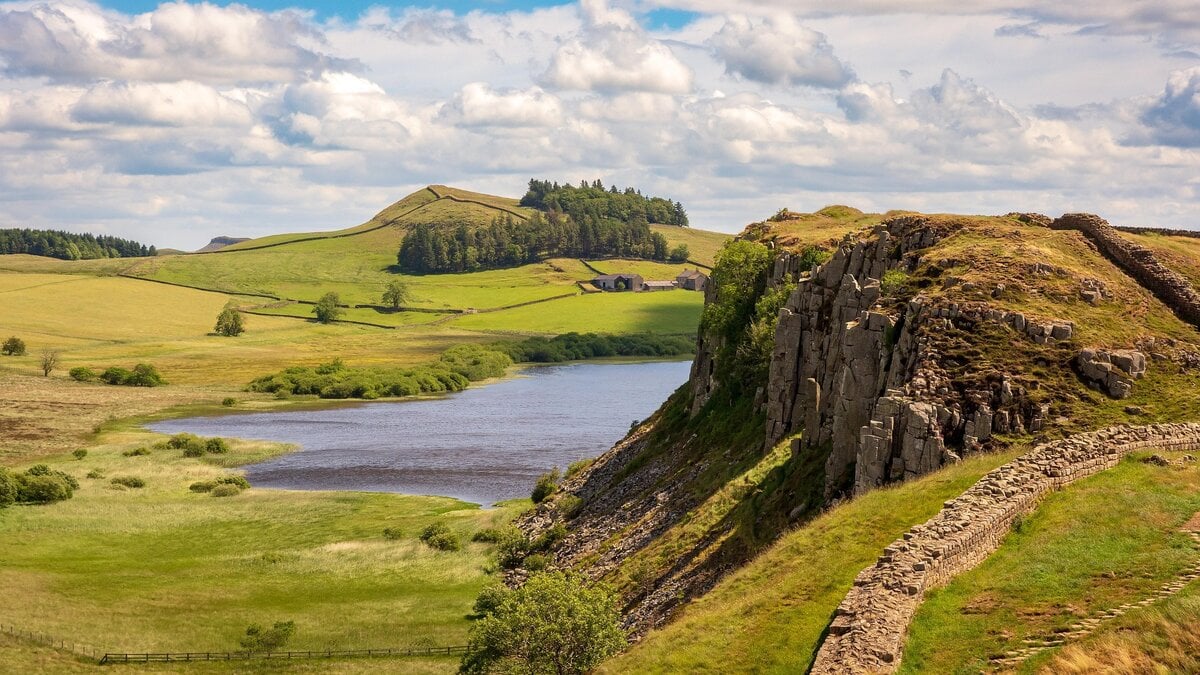
Why Walk This Section
Hadrian’s Wall Path runs 84 miles from Wallsend, near Newcastle, to Bowness-on-Solway on the Cumbrian coast. Most walkers take six to eight days. But the eastern and western thirds are relatively flat and, to be direct about it, less interesting — suburban paths give way to farmland tracks, and the wall itself is mostly buried underground.
The central section between Chollerford and Gilsland is where everything converges. The wall climbs onto the Whin Sill escarpment and suddenly you can see it snaking across ridgelines for miles in both directions. The ground underfoot turns from field paths to rocky crags. The forts — Chesters, Housesteads, Vindolanda, Birdoswald — are the best-preserved Roman military sites in Britain. And the landscape shifts into Northumberland National Park territory: big skies, rolling moorland, and very few people.
The undulating terrain between Steel Rigg and Housesteads is widely considered the single finest stretch of the entire National Trail. On a clear morning, when the light catches the wall’s stonework against the green crags, it is hard to argue with that assessment.
If you only have a weekend and want to understand why this path exists as a National Trail, this is the section to walk.
Route Overview: Two Days on the Wall
Day 1: Chollerford to Once Brewed (approximately 12 miles / 19 km)
Walking time: 5.5–7 hours, depending on fort visits
The day begins at Chollerford, a small village at a crossing point of the River North Tyne. Within the first mile, you pass Chesters Roman Fort — the best-preserved Roman cavalry fort in Britain, with a remarkably intact bathhouse on the riverbank. Allow 45 minutes if you stop.
From Chesters, the trail follows the Military Road (B6318) before climbing gradually onto higher ground. The terrain through this first stretch is gentle: farm tracks, stiles, and the occasional soggy field. The wall itself is mostly below ground here, but roadside information panels keep the history visible.
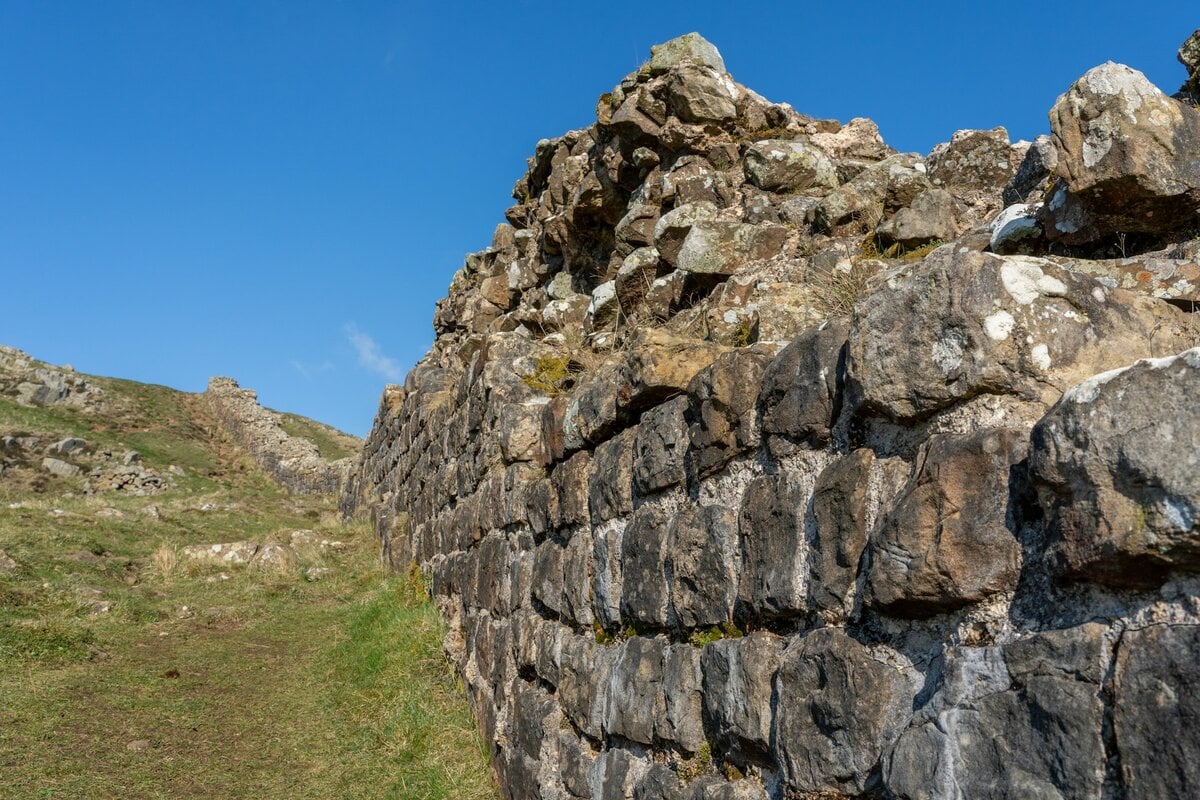
The character changes around Sewingshields Crags. The path climbs onto the Whin Sill and the views open dramatically. From here to Once Brewed, the trail undulates over a series of crags — short, steep climbs followed by equally steep descents. This is the section that tests your knees and rewards your eyes.
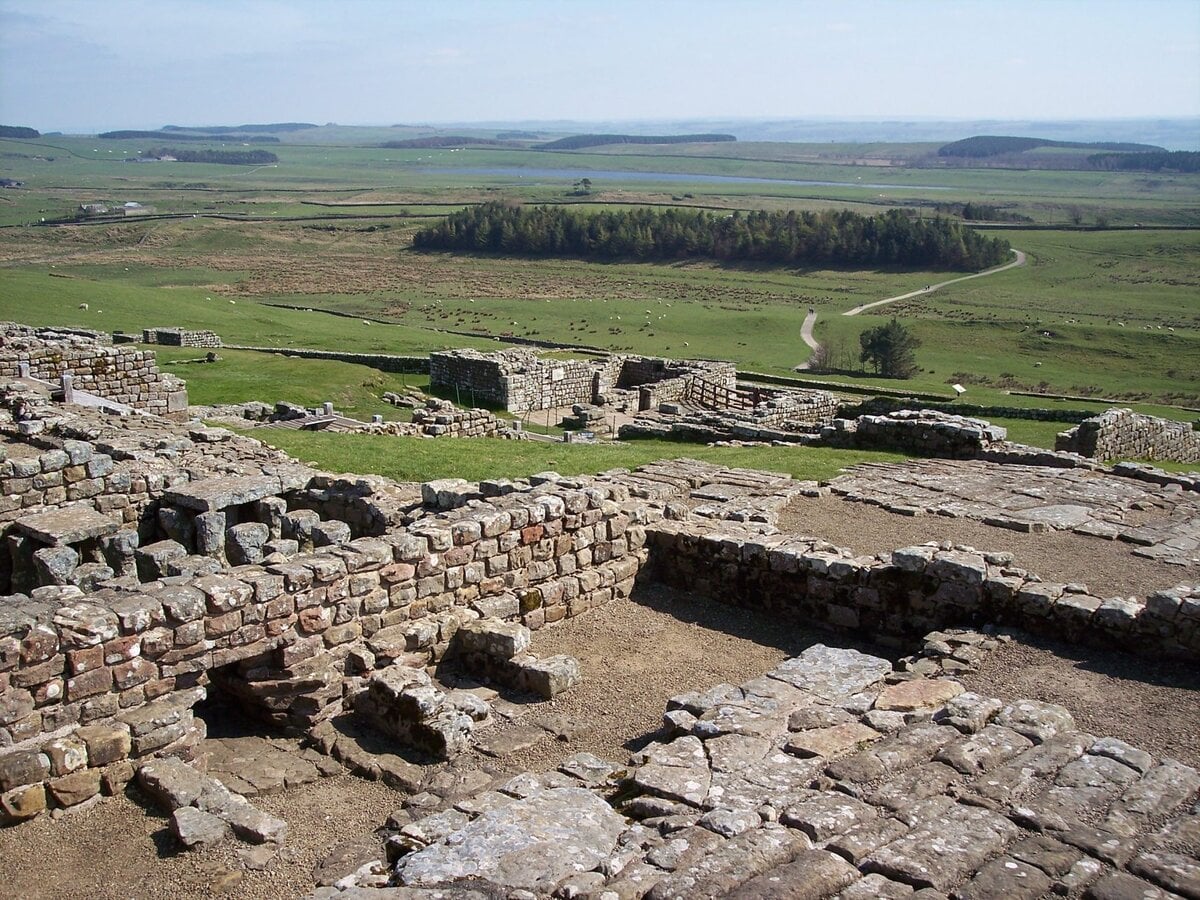
Housesteads Roman Fort sits roughly two-thirds into the day, perched on the escarpment with views in every direction. It is Britain’s most complete Roman fort: barracks, granaries, a hospital, a headquarters building, and the famous communal latrines. Budget at least 90 minutes. The museum is small but good, and the volunteer guides during school holidays know their material.
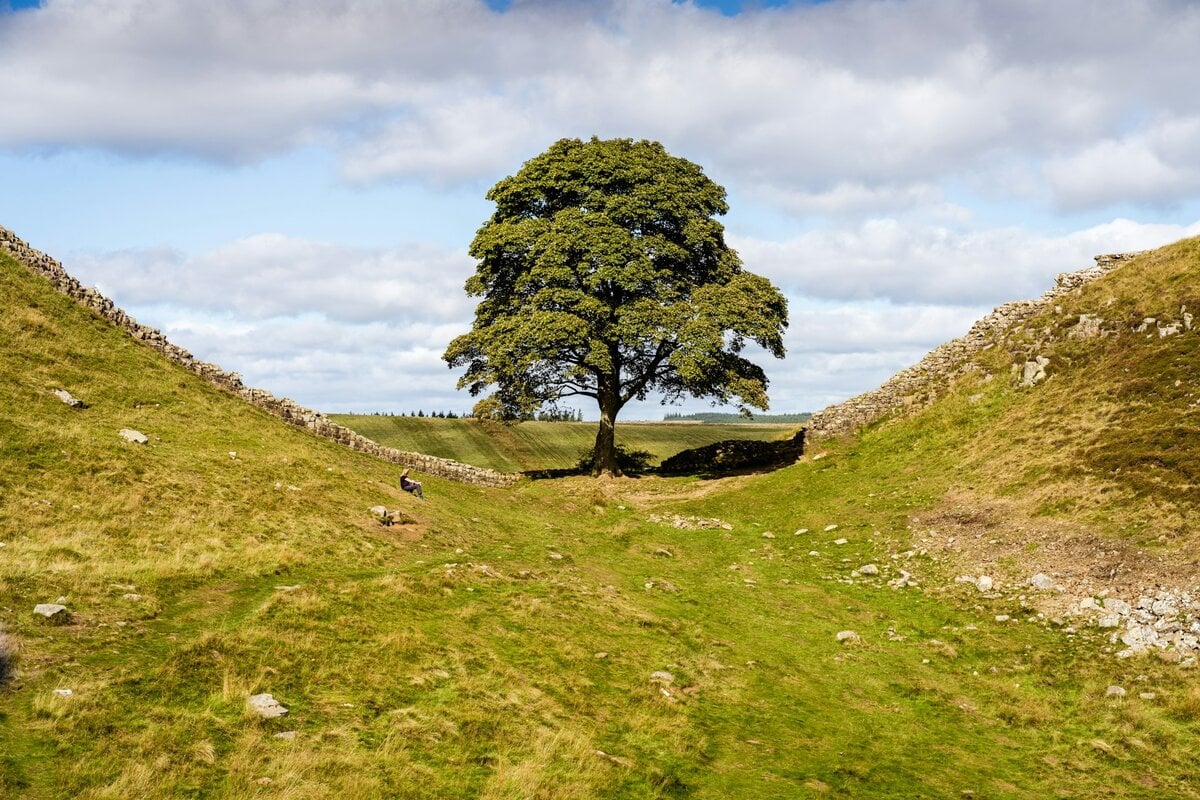
West of Housesteads, the path reaches its most photogenic stretch. The crags roll ahead of you, the wall riding their tops, with Crag Lough shining below to the south. You pass Sycamore Gap — still a striking dip in the ridgeline, though the iconic tree was felled by vandals in September 2023. The stump remains, and there is talk of regrowth.
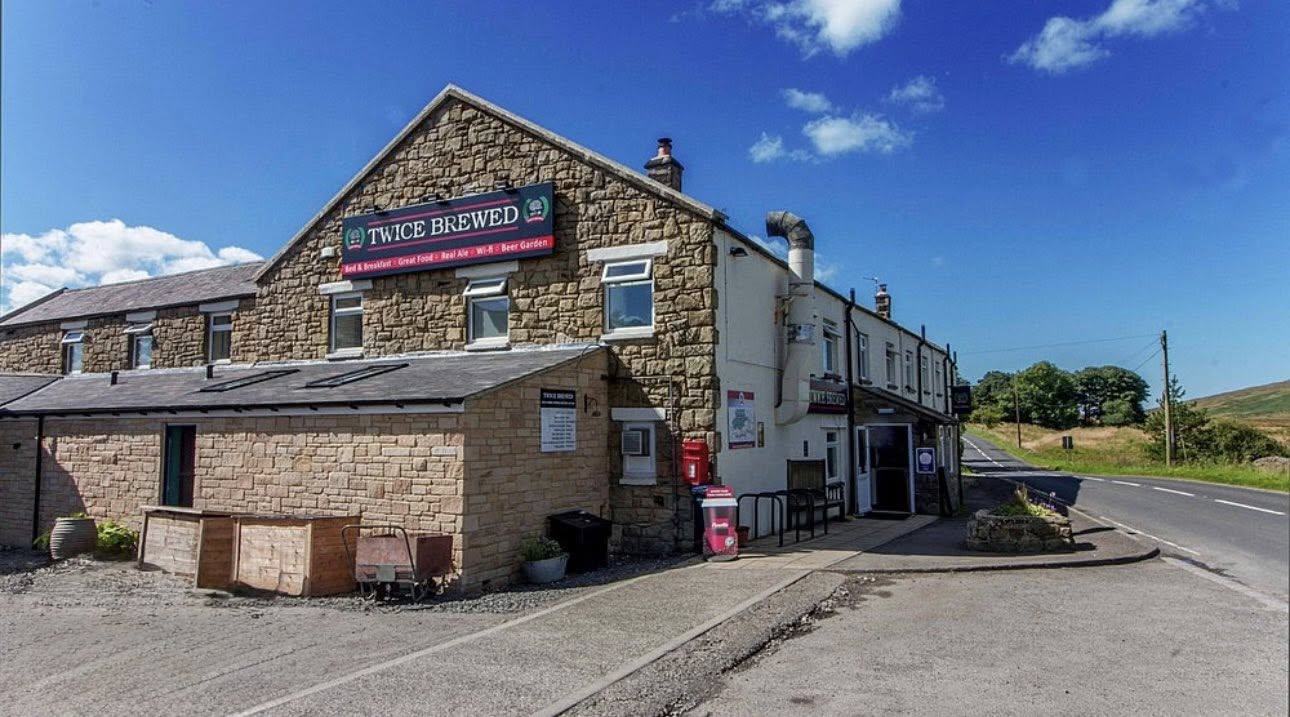
The day ends with a descent to Steel Rigg car park and a short walk to Once Brewed (also signed as Twice Brewed, depending on which direction you approach from). The Twice Brewed Inn is the obvious place for dinner and a pint of their Roman-themed ale. If the sky is clear, you are in the Northumberland International Dark Sky Park — the stars here are genuinely worth staying up for.
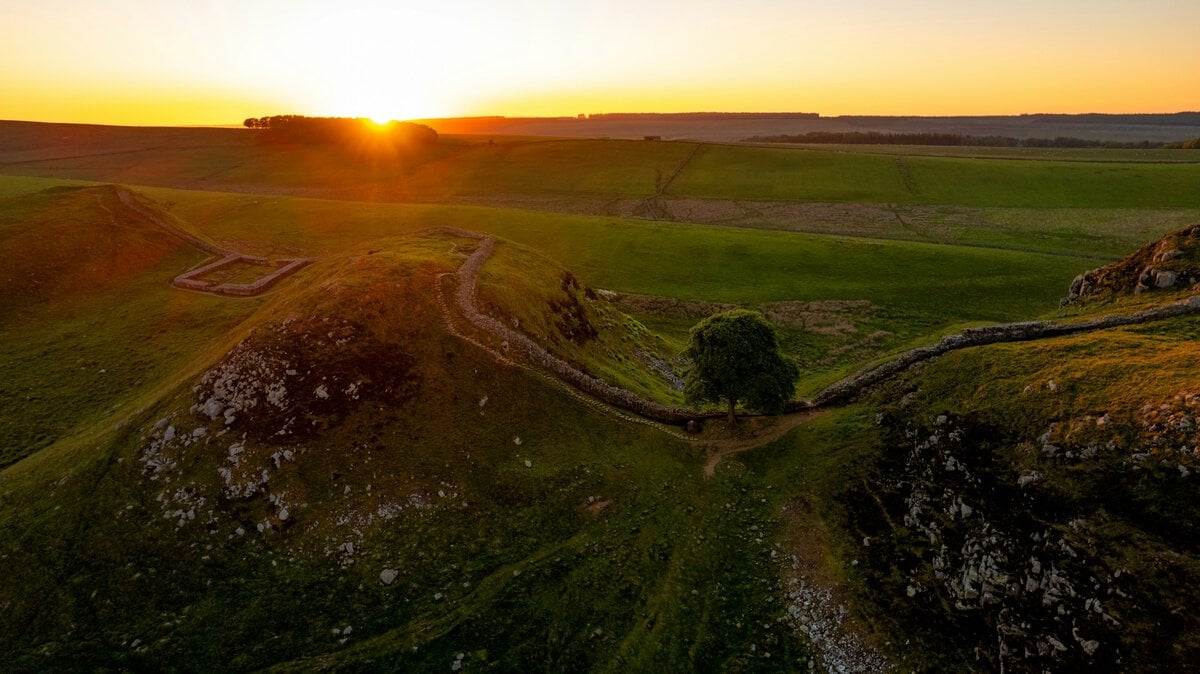
Sycamore Gap remains one of the most recognizable points on the trail — a dramatic dip in the ridgeline between two crags that has drawn walkers and photographers for decades. The roughly 200-year-old sycamore that once stood in this hollow was felled by chainsaw in September 2023, in a deliberate act of vandalism that caused national outrage.
Two men, Daniel Graham and Adam Carruthers, were found guilty and sentenced to over four years in prison each in July 2025. The National Trust collected seeds and cuttings from the tree shortly after it was cut down, and around 49 saplings have since taken root — so the tree’s legacy is not entirely lost. The stump remains at the site.
The gap itself is still worth the pause: the landscape holds the same shape it always did, and on a quiet morning, you can understand why people kept coming back here long before the tree made it famous.
Day 2: Once Brewed to Gilsland (approximately 9 miles / 14.5 km)
Walking time: 4–5.5 hours
A shorter day, but it packs in some of the trail’s highest and most exposed walking. From Steel Rigg, the path climbs to Winshields Crags — at 345 meters, the highest point on the entire Hadrian’s Wall Path. On a clear day, the views extend across the Pennines to the south and deep into Scotland to the north.
The descent through Thorny Doors is steep and requires attention in wet conditions. The path continues over Cawfields Crags, where an old quarry has exposed the geological layers of the Whin Sill in cross-section — a useful reminder that you have been walking on solidified magma.
Past Walltown Crags, the terrain softens. You enter the gentler Cumbrian countryside, passing through Gilsland — a quiet village where the Samson Inn offers the kind of pub lunch that tastes better after 9 miles of walking. From Gilsland, Haltwhistle is 3 miles away by road, with a train station on the Tyne Valley Line.
If you have a third day, the walk from Gilsland to Birdoswald Roman Fort adds 4 miles and includes the longest continuous stretch of standing wall. Birdoswald’s exhibition on frontier life is excellent and less crowded than Housesteads.
Practical Hiking Tips
How to Get There and Away
The Tyne Valley Line runs from Newcastle to Carlisle, stopping at Hexham and Haltwhistle — both within bus distance of the trail. From Hexham, the AD122 Hadrian’s Wall Country Bus runs hourly to Chollerford, Housesteads, Once Brewed, and Haltwhistle. It operates daily, all year round. Tickets start at £3. A rover ticket lets you hop on and off all day.
From London, Newcastle is roughly 3 hours by train. From Edinburgh, about 1.5 hours. Hexham is a further 40 minutes from Newcastle on the Tyne Valley Line.
At the end of the walk, Haltwhistle station connects you back to Newcastle or Carlisle. The AD122 bus links Gilsland to Haltwhistle if you finish there.
Where to Stay Along the Trail
Accommodation along this section is adequate but books up fast, especially in summer. Reserve well ahead — a month before is often too late for peak weekends.
At Chollerford, options include the George Hotel and Riverside Campsite. At Once Brewed/Twice Brewed, the Twice Brewed Inn is the most popular choice among walkers for good reason: hot food, real ale, a drying room, and beds within half a mile of the wall. Vallum Lodge and several B&Bs also operate nearby. The Sill Youth Hostel (YHA), next door to the Twice Brewed, is a modern facility with good amenities.
Gilsland has limited options — the Samson Inn and a handful of B&Bs. If nothing is available, Haltwhistle has more variety.
Wild camping is not permitted along Hadrian’s Wall Path. The trail crosses a UNESCO World Heritage Site and Northumberland National Park, and both require that walkers use designated accommodation. Campsites are available at several points.
What to Pack
Waterproof boots with ankle support are essential. The crags are rocky and uneven, and the ground between them is frequently boggy, even in summer. Trail shoes are not enough for the central section.
A waterproof jacket and waterproof overtrousers are non-negotiable, regardless of the forecast. Northumberland weather shifts fast. Layers work better than a single heavy fleece — you will be warm on the climbs and cold on the exposed ridges within the same hour.
Trekking poles are worth the weight. The steep descents between crags are hard on knees, and the poles make a real difference by day two. Carry at least 2 liters of water — there are long stretches with no services between Housesteads and Gilsland. Pack lunch on day 2 unless you plan to detour to a pub.
Review of the Mammut Aenergy Mtn Mid GTX
I tested the Mammut Aenergy Mtn Mid GTX Men on several hikes – they felt more like cushioned trail runners than classic boots, just with extra ankle coverage.
I chose the higher-top version of the shoes because I prefer a secure fit, due to several past ligament tears.
The generous EVA midsole and rocker sole kept my knees and ankles feeling fresher during long descents. The Vibram Megagrip outsole provided excellent grip on wet rock and muddy forest paths. The fit is ideal for medium-width feet, offering a little extra toe room, and the flexible upper provides great freedom of movement. However, it offers slightly less lateral support when walking on steep sidehills.
The Gore-Tex lining kept my feet dry when crossing shallow streams and during all-day drizzle. I heard that some don’t like the minimalist lacing, but I have no problem with it. The adjustment is easy to achieve the correct tension.
Overall, these are lightweight, comfortable all-mountain hiking shoes that are perfect for fast hikes and moderate multi-day tours, as long as you don’t expect the rigidity of an alpine boot.


Weather and When to Go
The National Trail is best walked between May and October. The trail can become heavily waterlogged outside this period, and winter days are short — sunset arrives by 16:00 in December. The Whin Sill crags are exposed and dangerous in high winds or ice.
May and September are the sweet spot: longer daylight, fewer crowds at Housesteads, and the landscape at its most atmospheric. July and August bring tour buses and school groups to the major forts. Arrive at Housesteads before 10:00 in summer to have it relatively to yourself; by midday, it fills up.
Expect wind on the crags even on warm days. Rain is possible in any month. The upside: when low cloud lifts off the Whin Sill mid-morning, the views it reveals are worth every wet mile that came before.
Navigation and Safety
The Hadrian’s Wall Path is waymarked with acorn symbols throughout, and the central section is well-trodden enough that losing the path in clear weather is unlikely. In mist, the crags become more serious — carry an OS Explorer map (OL43: Hadrian’s Wall) or download the GPX file from the National Trails website.
The main safety concern is the terrain between Steel Rigg and Cawfields: steep, rocky scrambles that become slippery when wet. Take your time on the descents. There is no phone signal on parts of the crags, so let your accommodation know your expected arrival time.
Budget and On-Trail Costs
B&B accommodation along this stretch typically costs £40–£60 per person per night, breakfast included. Pub inns like the Twice Brewed run approximately £90–£130 for a double room. YHA hostels start around £25–£35 per person. Campsites are approximately £10–£20 per pitch.
Pub meals average £12–£18 for a main course. A pint runs about £4.50–£5.50. Self-catering with supplies from Hexham or Haltwhistle supermarkets can reduce daily food costs significantly.
Fort admissions: Housesteads is approximately £10.40 for adults (free for English Heritage and National Trust members, and 20% off with an AD122 bus ticket). Chesters and Birdoswald charge similar rates. An English Heritage membership or Overseas Visitor Pass pays for itself within two fort visits.
All prices are approximate and were checked in early 2026.
Who This Hike Is For (and Who It Is Not For)
This is a moderate hike suitable for anyone with reasonable fitness and some experience walking on uneven ground. You do not need to be a serious mountaineer, but you do need to be comfortable with sustained walking over hilly terrain for 5–7 hours in a day.
It works well for solo hikers, couples, and small groups. The trail is popular enough that you will meet other walkers, but quiet enough outside of July and August that it never feels crowded on the path itself.
It is less suitable for young children on the crag sections — the scrambles are steep, the drops to the north are real, and there is no way to shorten the walk once you are between Housesteads and Steel Rigg. Families with older children (10+) who are used to walking will do well. Dogs need to be on leads — livestock graze throughout, and many stiles are not dog-friendly for larger breeds.
For hikers who want to test the Hadrian’s Wall Path without committing to the full 84 miles, this is the section to start with. If you only have one day, the Steel Rigg to Housesteads return (roughly 8 miles as a circular route) captures the best of it.
The Walk That Stays With You
What makes this section of Hadrian’s Wall unusual is not just what you see, but what you start to feel. Somewhere on the crags west of Housesteads, when the path drops into a saddle and climbs again and the wall keeps going and the wind is in your face and there is nothing ahead except stone and grass and sky — you start to understand, physically, what it meant to build something like this at the edge of an empire. It is not a museum experience. It is a walking-and-thinking experience.
The tired legs, the unexpected rain, the moment where Crag Lough appears below you and you have to stop because the scale of it needs a few seconds to register — that is what you bring home.
If you are unsure, try just the one-day circular from Steel Rigg to Housesteads and back. It is enough to know whether you want the rest. Most people do.

