



Outbound teams operate across locations, time zones, and devices, yet they still need to meet the same call targets. When your dialing system slows them down, your pipeline loses momentum.
A cloud-based outbound dialer helps teams stay on track by giving them easy access, real-time visibility, and dependable performance from anywhere. This explains why many businesses now prefer hosted predictive dialer software over traditional systems.
If you want to scale outbound calling without adding complexity, a cloud-based predictive dialer offers a practical way forward. Let’s learn how it works, why it’s important, and how to choose the right one.

What Is a Hosted Predictive Dialer?
A hosted predictive dialer is outbound dialing software that automates outbound calls using algorithms that optimize dialing and connect available agents to live respondents.
It mimics the functionality and workflow of a traditional predictive dialing system you might have installed on-site, but adds extra features and cost efficiencies.
Predictive dialer runs in the cloud, so your team can launch campaigns, connect with more prospects, and track results without depending on on-premise hardware. It cuts setup time, reduces maintenance, and helps you stay compliant as rules change.
Key features
Auto-dialer software introduces the ability to make outbound calls without call center agents needing to dial numbers. By eliminating manual dialing, this reduces the potential for misdials and makes the outbound dialing process more efficient.
On top of basic dialing using phone numbers from call lists or databases, expect a hosted predictive dialer to have the following:
- Predictive dialing algorithms that maximize agent talk time using a pacing algorithm to maximize productivity
- Integration with CRMs (customer relationship management) for seamless data access
- Built-in compliance features like Do Not Call (DNC) lists and DNC list management
- Advanced compliance features to verify your caller ID and reduce the chances of being flagged as a scam.
- Reporting and analytics for campaign performance tracking with real-time call data
- Answering machine detection to stop calls from leaving blank messages
- Automatic caller ID for callbacks

How a Hosted Predictive Dialer Works
A hosted dialer runs on your service provider’s cloud infrastructure. Your agents access the dialer technology by logging into their contact center solution with a username and password over an internet connection.
The dialer then looks up phone numbers to be called from your contact list and uses call metrics (e.g., average call duration, abandonment rates, and dialing rate) to predict agent availability. The most suitable agent for your chosen criteria then gets a new call placed for them using automatic call distribution.
In the background, predictive dialing software places multiple calls simultaneously to maximize agent productivity and increase the chance of answered calls. While the technology makes multiple calls at once, a call only gets connected to agents when a live person answers, which helps connect agents faster and reduces agent idle time, and limits abandoned calls.
Here is the precise step-by-step workflow of a hosted predictive dialer, which replaces manual guesswork:
- Data ingestion: The system pulls contact lists directly from your integrated CRM or a pre-uploaded database.
- Metric analysis: The algorithm continuously crunches real-time data, including average handle time (AHT), historical answer rates, and the number of currently active agents.
- Availability prediction: Instead of waiting for an agent to hang up, the system uses those metrics to predict exactly when an agent will become free.
- Concurrent dialing: The dialer calculates a pacing ratio (e.g., dialing 5 numbers for every 1 agent) and places multiple calls simultaneously over the cloud.
- Automated filtering: In milliseconds, the system identifies and terminates unproductive connections, such as busy signals, disconnected lines, and no answers.
- Advanced answering machine detection (AMD): The software uses AI to distinguish between a human and a voicemail greeting. If it’s a machine, the system skips it or leaves a pre-recorded message without agent involvement.
- Instant connection: The moment a live human answers, the dialer uses ultra-low latency routing to connect the call to the next available agent. Ideally, the agent hears the prospect’s hello just as they finish their previous call’s wrap-up work.
- Compliance verification: Throughout the process, the system supports caller ID authentication frameworks like STIR/SHAKEN through carrier integrations.
- Continuous learning: After each call, the system feeds the result back into its algorithm to further refine its dialing pace for the next hour of the campaign.
Benefits of Hosted Predictive Dialers
Cloud-based dialing removes the limits of traditional phone systems and lets your business scale outreach as needed. Here’s how it improves your outbound operations using modern cloud dialers and advanced multiple dialing modes.
Advantages over on-premises systems
Scalability
Unlike an on-premises dialer, where you need to buy equipment and install it each time, you can easily scale up or down with a hosted dialer to match campaign size or seasonality.
There’s no need for hardware upgrades or maintenance, as everything gets taken care of in the cloud. Your service provider has a large supply of servers and kits managed across distributed data centers, ready for consumption and upgrades at the click of a button.
Cost efficiency
Thanks to the lack of on-site equipment, there are no up-front infrastructure costs associated with hosted dialers, which helps reduce long-term maintenance costs. What’s more, you benefit from pay-as-you-go pricing rather than having to meet monthly commitments to earn calling discounts.
In addition to the cost savings of a hosted dialer, you no longer need in-house IT teams to manage or maintain hardware.
Flexibility
In a traditional on-site dialer setup, staff are only useful when they’re in the office making phone calls.
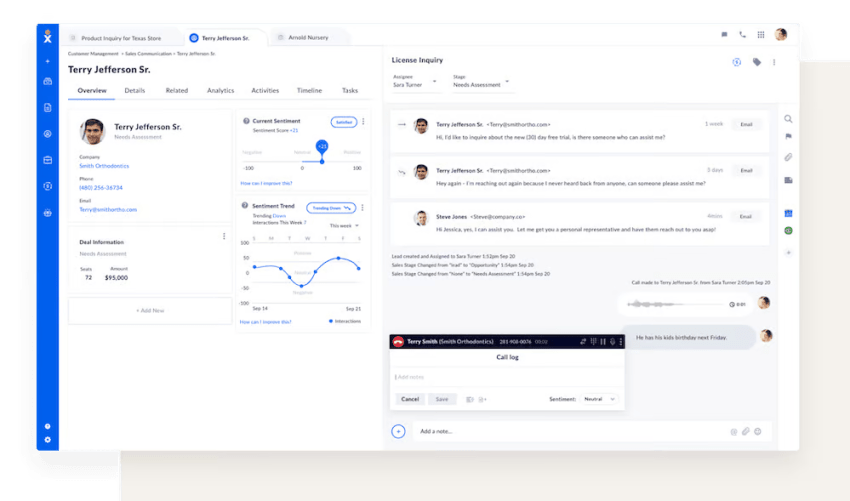
Hosted dialers allow your team to access the dialer and call center technology from anywhere with an internet connection. As a result, you can set up remote teams and hybrid work models without worrying about access to on-premises technology.
Regular updates
Arguably, the biggest benefit of any cloud-based technology is the speed in accessing software updates, new features, and security patches. Removing the reliance on admins and IT to test, run, and troubleshoot updates, cloud technology is always talking to its host servers and updating with the latest versions.
There’s no expended effort from your IT teams, and everyone is always on the most recent version available.
Faster time-to-value
Getting started with predictive dialing software means deployment within days (or even hours for small implementations) compared to months for on-premises systems.
As there’s minimal training and no shipping of kit, getting up and running is as simple as buying licenses and configuring users.
Enhanced compliance
One of the biggest drawbacks to using on-premises dialers is the risk of nonadherence to various regulations.
Hosted dialer technology often comes with automated adherence to regulations like TCPA, GDPR, and other industry-specific guidelines, reducing legal risks.

General benefits
Improved productivity
Agents spend more time talking to prospects rather than dialing numbers or handling voicemail. There’s no downtime when upgrading for new features or adding new members of staff. This also reduces wasted time and helps the sales team focus on conversations that lead to more sales.
Real-time insights
Campaign dashboards help managers monitor and optimize performance on the fly. You can make tweaks based on in-flight data as well as historical reporting and trends.
Multichannel capabilities
With best-in-class dialers, you can extend functionality to include inbound voice, SMS, email, and chat for more holistic outreach.
Drawbacks of a Hosted Predictive Dialer
Hosted systems improve efficiency, but some businesses may also find that cloud platforms offer less control over customization compared to a fully managed, on-premise setup.
Reliance on internet connectivity
When choosing a hosted dialer, performance is dependent on stable internet access. If your internet goes down, disruptions can halt operations. In the age of redundant internet connectivity and backups, this is rarely a problem.
Subscription costs
Long-term subscription fees may exceed the cost of owning on-premises hardware for some businesses. If you only make a small number of calls and already own an on-site dialer, it may be more beneficial to wait to replace it when it reaches the end of its life.
Customization limits
Some hosted solutions may not offer the level of customization possible with on-prem systems. If you’re used to a Cisco dialer, for example, you may have complex workflows that depend on Cisco-specific settings.
Data security concerns
Businesses must trust third-party providers with sensitive customer and business data. In some industries, this may violate data storage policies. Always check with your legal team before implementing a new dialer system.
Different Types of Dialers Comparison
Here are the types of dialers available on the market. When comparing auto dialers vs. predictive dialers, you’ll see each has its best use case and specific advantages and disadvantages.
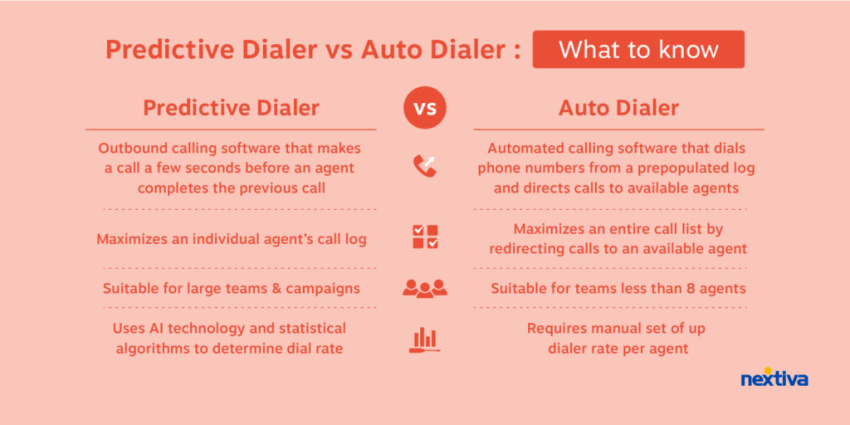
Find the right dialer for your call center using the table below.
| Type of Dialer | Description | Best For | Advantages | Disadvantages |
|---|---|---|---|---|
| Predictive Dialer | Predicts agent availability to minimize downtime and maximize talk time | High-volume campaigns | High efficiency and call volume | Dialing modes that may drop live calls if not tuned properly |
| Power Dialer | Calls one number at a time for each agent using power dialing | Personalized outreach | High call quality and no dropped calls | Slower than predictive dialers |
| Preview Dialer | Allows agents to view customer details before dialing | High-value or complex leads | Improved personalization and preparation | Slower dialing speed |
| Progressive Dialer | Waits for agent availability before dialing | Balanced outreach strategies | Reliable call connection | Moderate dialing speed |
Use Cases for Hosted Predictive Dialer Solutions
Hosted predictive dialers work best in fast-moving setups where timing is important. Let’s look at where they deliver the most value.
Sales campaigns
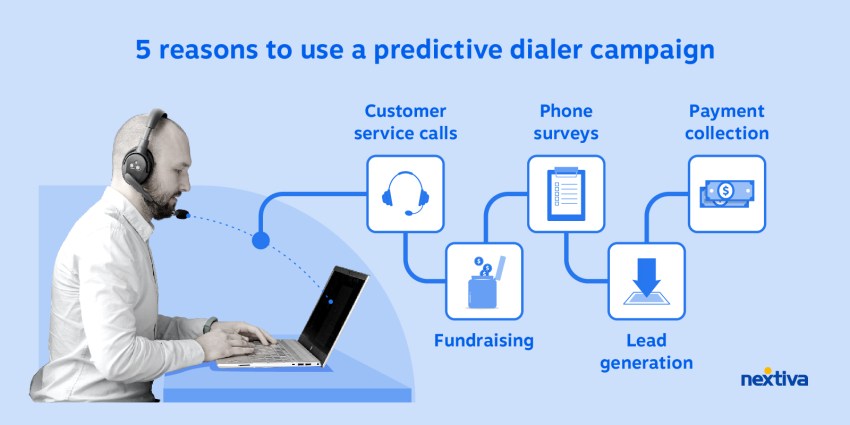
The most popular use case for any dialer is increasing outbound sales reach. Opting for a hosted predictive dialer boosts agent productivity during cold calling and lead nurturing.
Debt collection
When you rely on auto dialing for bill payment, you can automate follow-ups and even send messages to overdue payers. All the while, you’re ensuring compliance with legal regulations without the need for manual intervention.
Customer retention
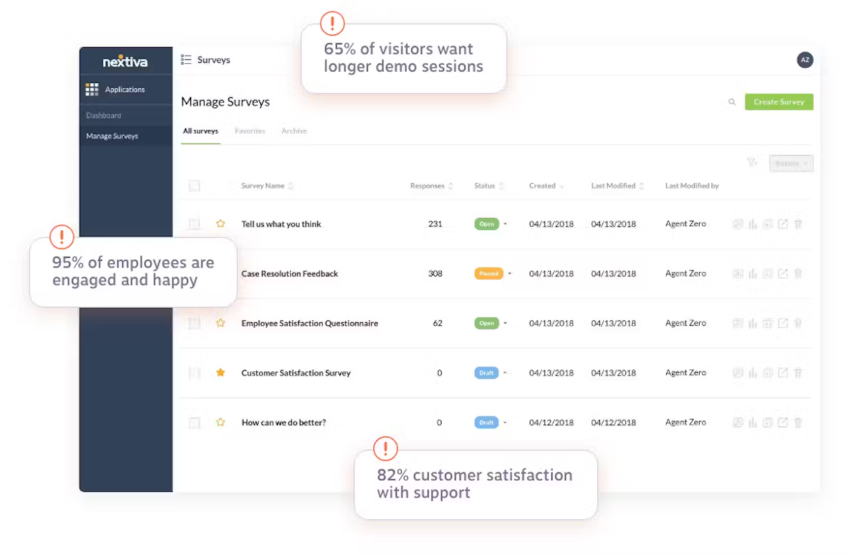
When a customer makes a purchase or uses your support team, they benefit from automated customer satisfaction surveys to monitor agent performance and customer experience.
Event promotions
If you’ve planned a large event, use your dialer to increase outreach to drive event registration. Once registered, automate follow-ups to remind attendees closer to the time of the event.
Political campaigns
A predictive dialer optimizes voter outreach and fundraising efforts by streamlining calls for canvassing, voter registration, and event promotion. Automate reminders to voters about key dates, like election day or fundraising deadlines, to ensure maximum engagement and compliance with regulations.
How to Choose a Hosted Predictive Dialer
The right dialer can improve agent output, increase connect rates, and keep your campaigns on track. The wrong one can slow your team down and limit results. To get the most value, focus on features that directly support your daily workflows and agent performance.
- Accurate dialing algorithms with pacing controls: Make sure the system adjusts dialing speed based on team size and lead quality so agents stay productive without dropped or delayed calls.
- CRM and workflow integrations: Choose a platform that connects easily with your existing tools to keep data in sync and remove manual updates.
- Built-in compliance management: Give preference to solutions that handle DNC scrubbing and support standards like STIR/SHAKEN to help protect your brand.
- Real-time reporting dashboards: Look for clear, live insights so managers can track performance and make quick adjustments.
- Multichannel communication support: Select a dialer that supports follow-ups through SMS or email to keep conversations moving without switching platforms.
Choose a solution that fits your campaign needs today and can grow with your team, backed by dependable support to keep your operations running smoothly.
How to Set Up a Hosted Predictive Dialer
Getting started with a hosted predictive dialer doesn’t require long deployment cycles or heavy IT involvement. Most teams move from purchase to live calling within days by following a structured setup process. Here’s how implementation typically works:
Upload and prepare contact lists
Start by importing your contact data using CSV files, CRM sync, or API integration. Clean your lists before uploading by removing duplicates, invalid numbers, and contacts that appear on Do Not Call (DNC) lists. High-quality data improves connection rates and reduces compliance risk.
Configure campaigns and call flows
Define the purpose of your campaign, whether it focuses on sales, follow-ups, or customer engagement. Set caller IDs, assign agent groups, and configure fallback options such as voicemail handling or call routing. This step ensures every call follows a consistent structure.
Set dialing pace and control rules
Adjust the dialing ratio based on the number of available agents and expected answer rates. A higher pacing level increases call volume, but it must stay balanced to avoid dropped calls. Fine-tuning this setting plays a critical role in both efficiency and compliance.
Integrate CRM and business tools
Connect your dialer with platforms like Salesforce or HubSpot so agents can access customer information in real time. This integration also ensures that call outcomes, notes, and dispositions automatically sync back into your system, keeping records accurate and up to date.
Test call flows and compliance settings
Before going live, run test campaigns to confirm that call routing, connection timing, and compliance features work as expected. Validate DNC filtering, time-zone restrictions, and call recording settings to avoid issues once you scale.
Train agents for real-time connections
Predictive dialing creates instant connections, so agents must respond without delay. Train your team to handle the first few seconds of each call with confidence, use scripts effectively, and manage back-to-back conversations without losing quality.
Launch and optimize continuously
Once live, monitor performance dashboards closely. Track connection rates, talk time, and abandonment levels, then adjust pacing and targeting to improve results. Successful teams treat setup as the starting point, not the final step.
Key Metrics That Improve With Predictive Dialing
By optimizing the dead time between conversations, these systems directly improve the KPIs that matter most to call center managers.
| Metric | Impact of Predictive Dialing | Strategic Benefit |
|---|---|---|
| Agent talk time | Increases significantly as agents spend less time dialing and waiting | More time spent on revenue-generating conversations |
| Idle time | Drops sharply due to automated dialing between calls | Better utilization of every agent hour |
| Connection rates | Improves by filtering out busy signals, voicemails, and invalid numbers | Agents connect with more live prospects |
| Cost per lead | Decreases as teams handle more calls within the same time frame | Lower acquisition costs without increasing headcount |
| Campaign efficiency | Improves as managers optimize campaigns using real-time data | Faster identification of high-performing segments |
| Abandonment rates | Stays within regulatory thresholds when pacing is configured correctly | Maintains compliance and protects brand reputation |
Nextiva: Moving Away From On-Prem
Hosted predictive dialers offer unmatched scalability, flexibility, and cost savings when compared to on-premises systems. They are particularly suited for businesses focused on improving efficiency and modernizing their operations.
When it comes to outbound call center software, Nextiva’s intelligent auto-dialer software is the top pick for businesses looking to scale outbound calling without incurring unnecessary expenses.
The software is included in our VoIP call center, meaning you also get a rich suite of tools to help you manage agent-customer interactions efficiently, all at a cost-effective price.
Top features include:
- Smart call routing
- Call recording and analytics
- CRM integration with Salesforce
- Enhanced call tracking
- Interactive voice response
Pricing starts at $75 per user per month (billed annually), and you can combine outbound calling with email, SMS, and chat in one platform.
Getting started is simple thanks to quick onboarding and an easy-to-use interface. There’s minimal training needed, and our award-winning 24/7 customer support team is on hand when you need them.
Once set up, you get real-time insights into call performance, agent productivity, and campaign ROI, ensuring you always perform to the best of your ability.
Ready to optimize your outbound calling? You need Nextiva Call Center.
Your Call Center Solution
Take more customer calls with fewer agents. Run your call center in the cloud today.
Frequently Asked Questions
Predictive dialers can become illegal if they are used to call numbers on the DNC list or without the necessary consent from the called party. You must comply with TCPA regulations, such as maintaining an abandonment rate under 3% over a 30-day period (in regions like the U.S.). Nextiva’s hosted dialer includes tools to help you stay compliant automatically.
By using local presence (DID), the dialer displays a local area code to the prospect, significantly increasing the likelihood they will pick up the phone.
An auto dialer simply dials numbers in a list. A predictive dialer uses an algorithm to dial multiple numbers simultaneously based on when it predicts an agent will be free, maximizing efficiency.
The cost of predictive dialer software generally ranges from $50 to $150 per month per user.
In many regions, including the U.S., predictive dialers must adhere to a less than 3% dropped calls rate per month to comply with regulations.
Predictive dialers are best suited for high-volume, transactional campaigns such as telemarketing and sales.
Progressive and preview dialers differ in control. A progressive dialer starts calls automatically when an agent is free, while a preview dialer lets agents review details before dialing.
Predictive and progressive dialers differ in pacing. A predictive dialer places multiple calls at once to increase volume, while a progressive dialer dials one call per available agent to reduce missed calls.
