



Can you imagine a new business missing out on the opportunity of tapping into one of Europe’s most digitally engaged audiences just because it didn’t act fast enough?
In Germany, the market for mobile apps is expanding. With approximately 3.1 billion downloads per year as of 2024, Germany is one of the top five European nations with the most app downloads. Businesses in a variety of industries, including healthcare, banking, logistics, and more, are driving the need for high-performing, user-centric mobile applications.
The catch is that, although creating an app in Germany might be very profitable, it also necessitates careful planning, particularly with regard to budgeting. And this is where knowing how much it costs to develop a mobile app in Germany becomes crucial.
More than 90% of German digital users, according to a recent Statista survey, depend on smartphone applications for daily activities like scheduling appointments and streaming media. Businesses that don’t offer a smooth mobile experience run the risk of slipping behind. What about the competition? It’s already mobile-first.
Nevertheless, the price of developing a mobile app in Germany varies greatly based on your company’s requirements, preferred technology, and development methodology. Pricing ranges from €20,000 to well over €200,000, depending on whether you’re launching a simple MVP or creating a feature-rich solution driven by AI and cloud infrastructure.
Everything you need to know is covered in this blog, from pricing breakdowns and cost influencers to practical use cases and advice on how to maximize your money.
If you’re planning to build a custom mobile app for your business in Germany, now is the time to make informed decisions that ensure profitability and performance.
What is Mobile App Development?
Mobile app development is the process of creating, developing, and managing apps for mobile platforms, such as smartphones and tablets. These applications might be cross-platform (using frameworks like Flutter or React Native), hybrid (a combination of web and native technologies), or native (made especially for Android or iOS).
Mobile app development in Germany provides a smart investment for businesses by effectively targeting a technology-savvy consumer base, optimizing day-to-day operational processes, or improving customer experience. The process typically involves:
- Market Research & Planning: Identifying the target audience, studying competitors, and determining the technical requirements.
- UI/UX Design: Designing user interfaces that are intuitive, responsive, and visually pleasing.
- Development: Coding the codebase to build the app, integrating APIs for data sets, or implementing required functions across the applicable platforms.
- Testing & QA: Finding and repairing bugs as well as ensuring performance, security, and functionality throughout the testing process.
- Deployment & Maintenance: Releasing the app in Google Play or the App Store, while providing updates as necessary.
Pro Tip: A mobile app isn’t just a digital product—it’s a long-term asset. Investing in a well-planned development strategy pays off in retention and ROI.
Mobile App Development Cost in Germany [An Overview]
It is essential to grasp the mobile app development cost in Germany to make accurate business decisions. Building a basic MVP with limited features is one thing, but an enterprise solution with multiple features will see a variation in cost depending on complexity, design, and the development process used.
The table below provides a guide to the roughly estimated mobile app development cost in Germany for all levels of app complexity.
| App Complexity | Estimated Cost (Euro) | Estimated Cost (USD) | Development Timeline |
|---|---|---|---|
| Simple/Baseline App | €20,000 – €40,000 | $22,000 – $44,000 | 2 – 4 months |
| Medium Complexity App | €40,000 – €90,000 | $44,000 – $99,000 | 2 – 4 months |
| Complex Enterprise App | €90,000 – €150,000 | $99,000 – $165,000 | 6 – 9+ months |
| Enterprise-Level App | €150,000 – €250,000+ | $165,000 – $275,000+ | 9 – 12+ months |
These are average cost estimates based on hourly rates of €50–€100 typically charged by mobile app developers in Germany.
Tip: If you’re testing an idea or entering a competitive market, start with a Minimum Viable Product (MVP) to validate your concept before scaling.
Key Factors Affecting Mobile App Development Cost
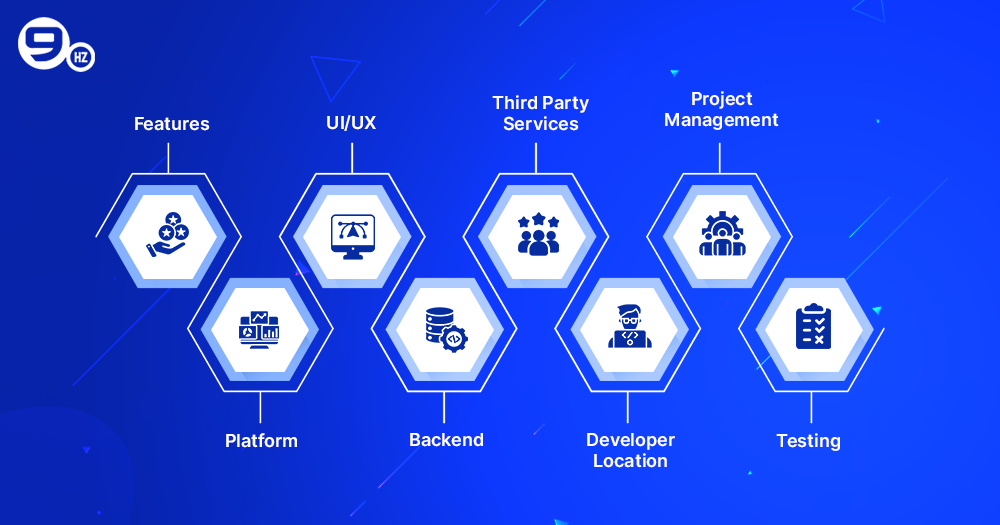
The cost of mobile app development in Germany varies according to several factors that may interact in different ways during the development process. Understanding the expenses of different features can aid in budgeting, regardless of whether you are creating an internal company app, a B2B app, or a consumer app.
The main elements influencing the cost of developing a mobile app in Germany are examined in further detail below:
1. Feature Set and Application Complexity
The set of features of an application and the complexity of each feature are one the main factors driving mobile application development costs. A basic mobile app, such as a static content app, a contact app, or a simple login, won’t break the bank; however, costs increase significantly when you start adding features like:
- Real-time messaging
- AI/ML algorithms
- GPS tracking
- Data analytics dashboards
- Video streaming
- Offline/online access
The list above will undoubtedly increase development hours, complexity of backend logic, and the amount and quality of testing done.
Tip: Start with the essential functionality and add more in subsequent versions based on user input.
2. Platform Decision: iOS, Android, or Cross-Platform
Another cost-determining issue is whether to use cross-platform or native development.
- Native apps for Android (Kotlin/Java) and iOS (Swift) are created independently. Although native apps require twice as much time and money to develop, they offer superior performance and user experience.
- Frameworks for cross-platform development, such as Flutter and React Native, allow developers to reuse some of their code across platforms. Even while these kinds of solutions help organizations save money, they will still have limitations when it comes to complicated animations or hardware interfaces.
Due to their high performance needs, many German companies prefer to create native apps; nonetheless, we are seeing more and more startups or MVPs introduce cross-platform solutions.
3. UI/UX Quality
The way people view the value of your application is greatly influenced by its user interface and overall experience. A neat, well-designed website increases user engagement and decreases attrition. High-quality design, however, is not inexpensive. Among them are:
- Maps of user journeys
- Using wireframes
- Engaging in interactive prototyping
- Personalized animations or drawings
The more you want to personalize the experience, the more expensive high-quality will end up becoming.
Tip: Invest in UX early—fixing usability issues post-launch is often more expensive than getting it right from the start.
4. Team Makeup and Location
The cost of mobile app development in Germany will depend on the team you choose to hire:
- Freelance will have lower costs but also inconsistent quality and less accountability.
- Agencies offer a full-stack team (design, development, QA, PM) with proven workflow and support at a premium.
- In-house gives long-term alignment, but a fixed cost base like salary, benefits and tools will be incurred.
It is expected that a German development team will charge between €60–150+/hour, depending on their experience. Offshore development teams (Eastern Europe, India) may market hourly rates lower than that of the German but are subject to communication delays resulting from language, time zone and deadlines.
5. Backend Development & API Integration
You will always need a back-end for server-side programs that store user data, manage real-time updates, and execute transactions. This will consist of:
- Database architecture
- APIs (such as third-party CRMs and payment gateways)
- Services (such as AWS and Firebase)
Although it always adds a significant amount of upfront and continuing cost, a well-structured back-end positions you to scale and perform successfully.
6. Security Requirements
You must adhere to strict data protection rules, such as GDPR compliance, if your app handles sensitive data, especially in the financial, medical, or e-commerce sectors. You might have to:
- Data storage that is encrypted
- Safe user authentication
- Carry out compliance audits
Including security in the process could increase the price and time needed for development, but it’s worth it to safeguard your brand against an expensive security breach.
7. Testing & Quality Assurance
It is important to be able to experience a bug-free app. Quality Assurance (QA) testing is often the least considered in relation to the budget, but the sooner you can find issues, the better! Normally, the other department won’t perform QA testing unless there is a major bug or issue to resolve. The following are the types of testing that should be conducted:
- Functional testing
- UI testing
- Load testing
- Device/browser compatibility testing
Your app is going to need more testing, the more functionality you have and the more platforms you on, so expect more intensive QA and testing, along with a rider to cost and time.
Tip: Using automated testing tools for repeating checks helps reduce manual testing time.
8. Post-launch Support and Maintenance
The cost of initial development is only one aspect of your budget to consider. All mobile apps, once launched, need:
- Regular updates for new versions of the operating system (where the mobile app desktop will be housed)
- Feature augmentation (the development team has already set aside time in the budget)
- Fix any glitches, bugs and errors in your app post-launch
- Server maintenance
Generally speaking, you should set aside 15–25% of your app’s original development cost each year for app maintenance and support. This is essential if you want to maintain user engagement and remain competitive.
Each of these factors affects the total cost of developing a mobile app in Germany. Keep in mind that you may manage quality and cost reductions by planning, setting reasonable expectations, and selecting the best development partner.
Breakdown Of Mobile App Development Cost in Germany [Various Stages]
There is more to comprehending the cost of mobile app development in Germany than just examining a single figure. Since each stage of mobile app development must be built upon the one before it, there are several interconnected stages. Resources, time, and skill are needed throughout the entire procedure. Getting a cost breakdown is crucial whether you’re developing a high-end enterprise-level platform or a basic informational app, especially when you’re budgeting your budget realistically and getting ready for long-term sustainable development.
A comprehensive guide to the differences in budgets for each level may be found here:
1. Discovery & Research (€2,000 – €6,000)
The majority of projects begin with discovery in the mobile app development process. The most crucial stage is discovery, which is also one of the most underappreciated. During the discovery phase, the development team will do market research, profile target consumers, record essential features, and engage with you to understand the rationale behind the app and the business outcomes. The process of discovery will also involve determining the best platform to develop the app on (iOS, Android, or both), doing feasibility studies, and analyzing competitors.
You should budget between €2,000 – €6,000 in Germany, depending on the project’s size and complexity.
Tip: Never skip the discovery phase. It saves costs in the long run by preventing rework and scope creep.
2. UI/UX Design (€3,000 – €12,000)
Following the determination of the requirements, the following step is to design the application’s appearance and feel, commonly known as UI/UX. Simple, user-friendly design that follows modern aesthetics and has intuitive interfaces is highly valued by German developers.
This step will include:
- Both sketches and wireframes
- Working prototypes
- High-quality user interface screens
- Verifying user navigation and flow
- Design (type, colors, and icons)
Expect to pay more towards the higher end of the estimate if you want the app to have light and dark settings or bespoke animations. In addition to the user experience, well-designed apps have an impact on user bounce rates and the quantity of support requests after they are made available to the general public.
Note: Design complexity (custom animations, dark mode, accessibility standards) can push the cost to the higher end.
3. Frontend and Backend Development (€10,000 – €35,000)
With front-end (client-side) and back-end (server-side) components to assemble, development is the most costly stage. The cost of the application varies greatly based on its platforms and level of sophistication.
For instance, the following elements influence the development phase:
- Front-end (Android/iOS) builds
- Cross-platform frameworks (Flutter, React Native)
- Databases and application programming interfaces are examples of backend architecture.
- Integrations with third parties (payment gateways, chat, maps)
As an example, a “fitness app” that has push alerts and geolocation might be in the upper lower range, whereas a “telemedicine app” that has prescription management, video consultation, and geolocation might be in the upper band.
Tip: Unless the application requires complete native performance, think about cross-platform development to save time and money.
4. Testing & Quality Assurance (€3,000 – €10,000)
Testing and quality assurance are highly valued by German development companies to ensure that the app works flawlessly across all devices, screen sizes, and operating systems. Testing is an ongoing component of the development process rather than just a final stage.
Types of testing include:
- Testing for functionality
- Compatibility testing
- Load and performance testing
- UI/UX testing
- Audits of Security
The size of the software, the number of user roles, and the features that need to be tested all affect the price. For efficiency, automated testing techniques might be employed, however for user interface and experience, manual testing is frequently required.
Tip: Don’t treat QA as optional. A flawless user experience builds trust and brand credibility.
5. Deployment and Launch (€1,000 – €3,000)
Deploying your app is the final phase. Your mobile app moves on to the deployment phase after it has undergone extensive testing and received approval. After that, developers will get everything ready for the app’s release on the current platforms (Google Play Store and Apple App Store). This will involve:
- Listings on the App Store
- Descriptions and screenshots
- Discoverability-enhancing metadata
- App permissions and GDPR compliance
- Versioning of apps
This will probably be included in the packages offered by German companies. Only when the app is more complicated—that is, when it contains in-app purchases or requirements based on regulatory body regulations—will you have to pay extra.
Tip: Keep your first version lean. You can roll out updates based on real user feedback.
6. Post-Launch Support & Maintenance (€6,000 – €10,000 per year)
Not many companies realize that apps aren’t “done” when they’re published. There will be requests for additional features, user input, and an evolution of mobile platforms. Updating frequently is consequently crucial for bug repairs, compatibility updates (to new operating systems), and performance improvements.
- Typical post-launch expenses include:
- Tracking crash logs and customer analytics
- Resolving user and app store concerns
- Updating security patches
- In-application features for your backend server application
Maintenance should account for 15–20% of the overall development budget each year.
Tip: Set aside a separate annual budget for post-launch assistance; this will guarantee sustained client satisfaction and app stability.
A well-structured breakdown makes long-term planning, scheduling, and priorities clear in addition to cost. The simplest approach to conceptualize the price of developing a mobile application in Germany is as an investment dispersed among several carefully thought-out procedures. When used correctly, this staged approach produces predictable costs, fewer delays, and a better end product.
Cost to Create a Mobile App in Germany [Various Types]
The mobile app development cost in Germany also varies depending on the type of app you want to build. The features, functionality, security requirements, and integrations change based on the use case. Below is a full breakdown of costs for some of the different types of apps that are commonly built in Germany.
A) Healthcare App Development Cost in Germany
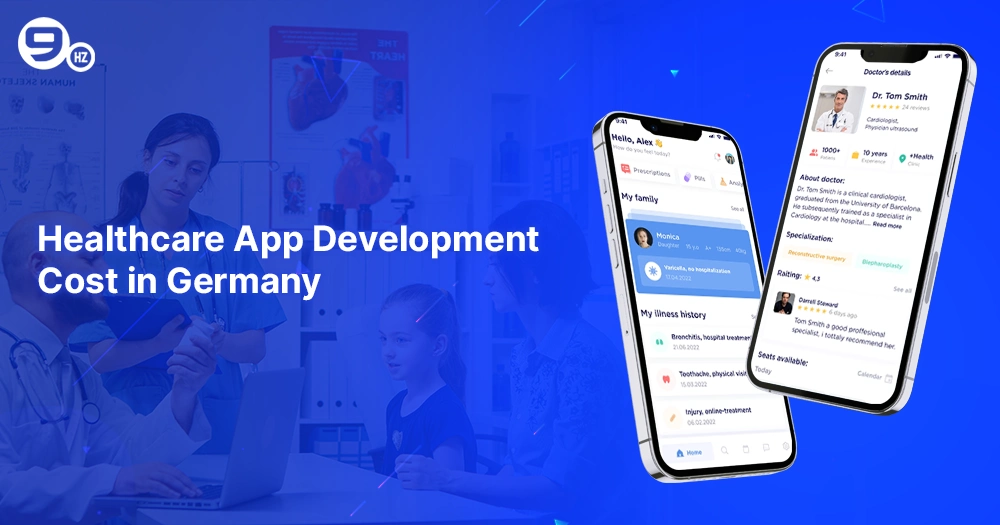
Healthcare apps in Germany are developed with strict compliance to GDPR and medical data protection laws like ISO 13485 or DiGA. These apps may include features such as e-prescriptions, appointment scheduling, teleconsultations, and EMR (Electronic Medical Records) integration. Here is a detailed guide on healthcare app development cost.
Cost Range: €45,000 – €120,000
Timeline: 4 – 8 months
Popular Examples: Ada Health, TK-App, Doctolib
Common Features:
- Secure user login
- Video consultations
- Prescription uploads
- Real-time health data syncing
- Integration with wearables
Tip: Make sure your app is DiGA-compliant if it’s intended for reimbursement by German health insurance providers.
B) Fitness App Development Cost in Germany
Fitness apps are highly popular in Germany, especially in urban cities like Berlin and Munich. These apps often offer AI-based training suggestions, wearable integration, progress tracking, and social features. Find a ultimate guide on fitness app development cost.
Cost Range: €30,000 – €80,000
Timeline: 3 – 6 months
Popular Examples: Freeletics, 8fit, Gymondo
Key Features:
- Workout libraries with video tutorials
- Daily fitness goals
- Wearable sync (Apple Watch, Fitbit)
- Social sharing and progress streaks
Tip: Gamification elements (e.g., leaderboards or badges) boost engagement and reduce app uninstalls.
C) Social Media App Development Cost in Germany
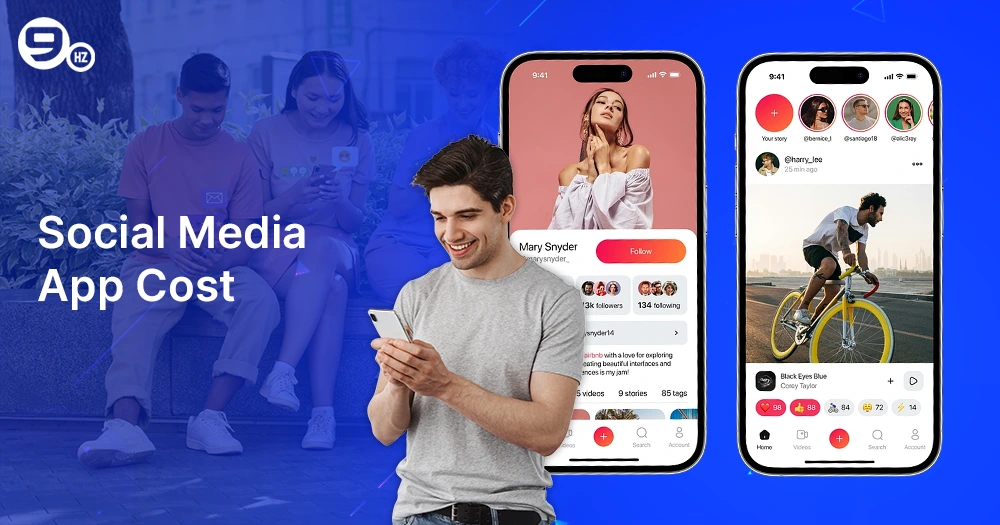
Developing a social media platform in Germany requires robust infrastructure, real-time messaging capabilities, and moderation features to ensure a safe digital space. Compliance with German content laws (e.g., NetzDG) is also important.
Cost Range: €60,000 – €150,000
Timeline: 6 – 10 months
Popular Examples: Jodel, Nebenan.de
Key Features:
- Real-time chat and group messaging
- Profile creation and customization
- Push notifications and newsfeed
- Media sharing (photos, videos, stories)
- Content filtering and reporting systems
Tip: Prioritize scalable backend architecture. Social apps can go viral and need to handle traffic surges.
D) OTT App Development Cost in Germany
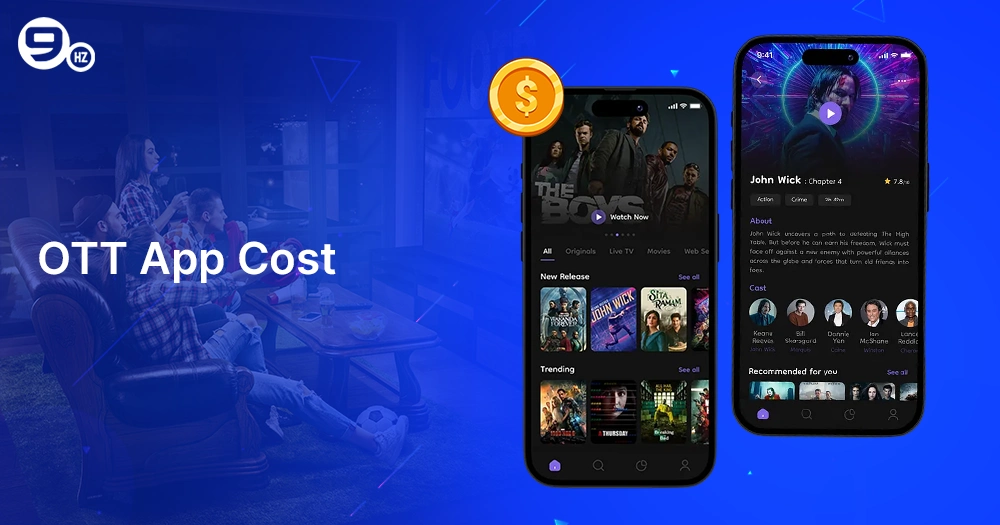
OTT platforms are increasingly popular in Germany for both local and international content. The cost depends on streaming quality (HD, 4K), licensing models, and CDN (Content Delivery Network) integration. You might be interested to read a detailed guide on cost to making an OTT app.
Cost Range: €70,000 – €200,000
Timeline: 5 – 9 months
Popular Examples: Joyn, Zattoo, RTL+
Key Features:
- User registration and profiles
- Subscription-based payment gateway
- Video-on-demand (VOD) and live streaming
- Download for offline viewing
- Multi-language support
Tip: Use adaptive bitrate streaming to optimize video quality based on users’ internet speeds.
E) Booking/Appointment App Development Cost
These apps are widely used by salons, clinics, fitness centers, and restaurants across Germany. They focus on calendar integrations, real-time availability, and automated reminders.
Cost Range: €25,000 – €60,000
Timeline: 2 – 4 months
Popular Examples: Treatwell, TerminApp, Booksy
Key Features:
- Service listings
- Time slot booking and rescheduling
- Calendar sync (Google, Apple)
- Email/SMS confirmations and reminders
- Ratings and feedback system
Tip: Enable two-way sync with calendars to avoid double bookings and improve user trust.
F) On-Demand Delivery App Development Cost
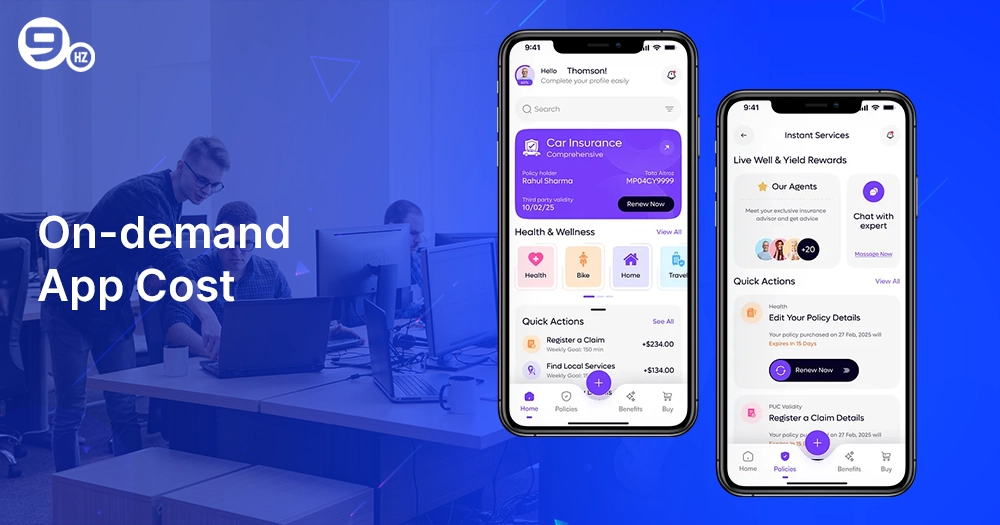
These apps have become integral to German consumers’ lifestyles—covering everything from food to groceries and even laundry services. Their development includes complex logistics, map integrations, and real-time tracking.
Cost Range: €50,000 – €140,000
Timeline: 4 – 7 months
Popular Examples: Lieferando, Gorillas, Flink
Key Features:
- GPS tracking and delivery route optimization
- Payment integration (SEPA, PayPal, Apple Pay)
- Inventory management
- Driver app for order pickup/delivery
- Push notifications and customer support chat
Tip: Build a separate dashboard for vendors, delivery partners, and users for easier operations
Conclusion
As a tech savvy player with a high standard for data compliance & approval, Germany could not be a better country to launch your mobile applications, however, this means competition will be high. But whether your next step is in healthcare, fitness, e-commerce or more, the next steps are understanding mobile app development cost in Germany and budgeting it accordingly in your planning.
Mobile app development cost in Germany will vary greatly for different types of applications, depending on functionality, visual design and possibly most importantly, compliance requirements. Working with an experienced mobile app development company in Germany, like The Ninehertz, will ensure you get an on-time app that adheres to all local regulations and beyond the expectations of users.
Tip: Always invest in MVP (Minimum Viable Product) first to reduce risks, gather feedback, and avoid unnecessary features in the initial phase.
Ready to bring your app idea to life? A well-planned roadmap and transparent budgeting can make your digital product a standout success in the German market.
Frequently Asked Questions
Let us discuss some of the commonly asked questions related to mobile app development cost in Germany in 2025:
Q1. How much does it cost to build a mobile app in Germany in 2025?
Depending on the features, platform (iOS/Android), and complexity of the app, the average cost of developing a mobile app in Germany is between €20,000 and €250,000.
Q2. Is Germany a good place to hire mobile app developers?
Yes. Germany is a dependable location for local development or outsourcing because of its strong data protection regulations (such as GDPR), high development standards, and talented workforce.
Q3. What factors increase the cost of mobile app development in Germany?
The cost of developing a mobile app in Germany can be considerably increased by custom features, backend infrastructure, sophisticated security procedures, native development, and legislative compliance (such as DiGA for healthcare apps).
Q4. Can I reduce app development costs in Germany without compromising quality?
Yes. To cut expenses without sacrificing app quality, choose cross-platform development, release an MVP first, outsource some of it, and use open-source technologies.
