



8–12 minutes
You spent hours and hundreds of dollars building a beautiful Shopify store. You invested in ads, optimized your product pages, and finally converted a visitor into a customer, spending $85 to make it happen. They bought once, left satisfied, and then… disappeared. Sound familiar?
Here’s the truth most Shopify merchants don’t want to face: 80% of your future profits will come from just 20% of your existing customers. Yet right now, seven out of ten customers who buy from you will never return. Customer acquisition costs are at all-time highs, while building effective ecommerce customer retention strategies demands time, effort, and overhead that most small teams don’t have. The gap killing profitability isn’t in your conversion funnel, it’s in what happens after the sale.
Most brands treat mobile apps as “just another sales channel” rather than what they actually are: relationship platforms. The difference matters. Improving your repeat customer rate by just 5% can boost profits by 25-95%, yet merchants keep pouring resources into acquisition while watching customers slip away after a single purchase.
Top ecommerce and direct-to-consumer brands understand something crucial: lasting success isn’t built on transactions—it’s built on relationships. And native mobile apps are their secret weapon for driving Shopify customer retention.
Why Shopify customer retention remains the biggest challenge for ecommerce
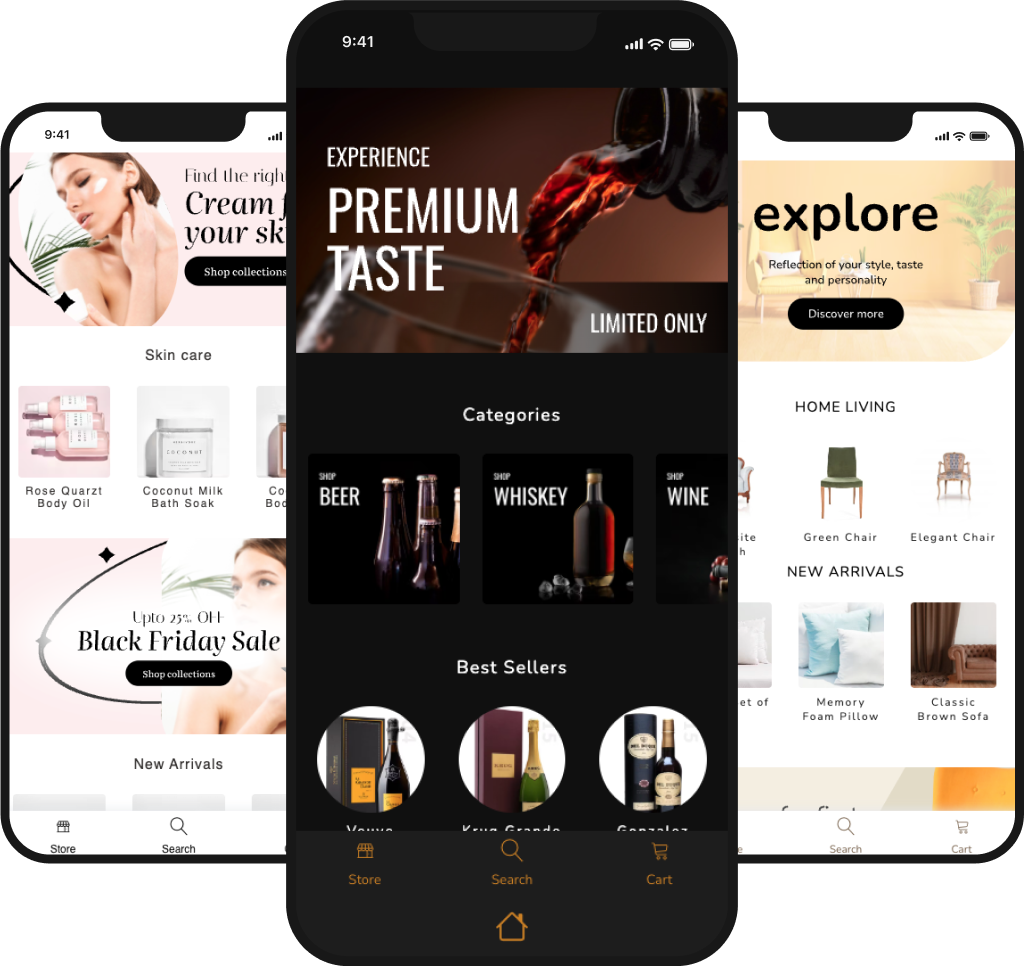
The numbers tell a story about ecommerce customer retention strategies that aren’t working. The average Shopify customer retention rate hovers between 27-31%. Fashion and apparel brands sit at about 19-26% retention, while food and beverage merchants fare slightly better at 23-45%.
After a first purchase, there’s only a 27% chance a customer returns. But, you know the saying “third time’s a charm”? After a third purchase, the likelihood of return jumps to 54%. The challenge lies in getting customers to that third purchase when most never come back after the first.
Meanwhile, mobile apps consistently drive retention rates five times higher than mobile websites. The gap between what works and what most merchants are doing has never been wider.
- Email is losing its power
Industry-wide open rates for email marketing have dropped below 20%, and they’re still falling. You’re crafting carefully segmented campaigns, writing compelling subject lines, and designing beautiful templates, but most of your messages end up buried in overcrowded inboxes. There’s no guarantee your customers even see them, let alone act on them. The channel that once drove reliable Shopify customer retention now feels like shouting into a void.
- Social media algorithms feel elusive
But wait! You’ve built a strong following on Instagram or Facebook! While that follower number may seem impressive, the all powerful algorithm feels like a moving target. Notice how you now have to invest more money into social ads to just reach your own customers? While social posts used to drive healthy traffic to your store, these platforms have shifted so that you’re essentially paying rent to access your own audience.
Building your entire retention strategy on rented land means you never truly own the relationship. One algorithm update can leave you needing to re-structure your whole social strategy, and that’s time better spent on your actual business.
- Mobile web doesn’t create habits
Mobile website visitors arrive, browse, maybe purchase, and then they’re gone. There’s no persistent presence on their device reminding them you exist. To get back to you, they either need to remember your URL, hunt through their inbox for an email from you, or have texted a link to your website to themselves. The friction adds up, and when they’re ready to buy again, they’re more likely to search the product category and land on a competitor’s site instead. Mobile web doesn’t create the habitual engagement that drives customer retention.
How top Shopify brands drive mobile app customer retention
While the landscape for customer retention may look grim, it’s not all doom and gloom. Top-performing Shopify brands fundamentally approach mobile app customer retention differently. They don’t just optimize for the sale—they prioritize the relationship. They understand that owning the platform means owning the customer experience long-term, and that changes everything about how they build and what they prioritize.
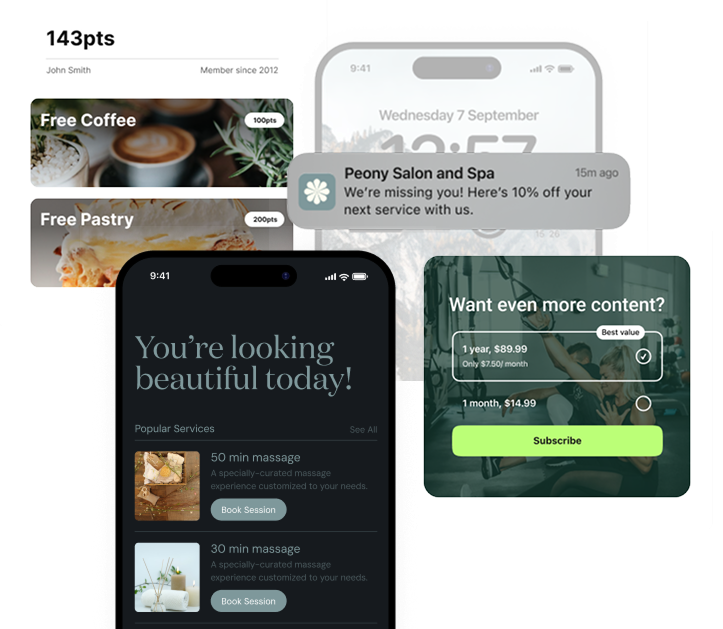
They build brand destinations, not just storefronts
Leading fashion brands launch mobile apps with exclusive member communities where customers share styling tips, post outfit photos, and discuss upcoming collections. Wellness brands use custom apps to deliver educational content about ingredients, health benefits, and lifestyle tips alongside their products, plus appointment booking systems for consultations. Subscription box companies build anticipation between deliveries with sneak peeks, member polls on upcoming products, and exclusive benefits that make subscribers feel like insiders.
The key insight driving all of this: give customers reasons to open your app even when they’re not buying. When your app only becomes useful at the moment of purchase, you’ve built a store. When it delivers value consistently, you’ve built a destination that customers want to come back to again and again.
They own the communication channel
Push notifications are the new email for mobile app customer retention, and the 88% open rates prove it. Mobile notifications delivered through native apps consistently achieve engagement rates significantly higher than email, often by double or triple. There’s no competing with inbox clutter, no subject line lottery determining whether you get opened. It’s a direct line to your customer’s pocket.
But here’s where strategy matters for ecommerce customer retention. While basic shopping apps allow push notification for announcements about sales, Buildfire apps give Shopify customers the ability to use app-based communication strategically for:
- Back-in-stock alerts for items
- VIP early access
- Personalized recommendations
- Milestone celebrations
- Community updates
They treat apps as business infrastructure
The brands winning with customer retention treat mobile apps as core business infrastructure, not as a nice-to-have marketing channel. This means integrating with their existing tech stack like email platforms or analytics tools, so customer data flows seamlessly and informs every interaction. It means using data to create genuinely personalized experiences rather than generic promotions. And it means building features that serve their specific business goals around loyalty, community, and content delivery, not just sales volume.
We’ve covered the ways Shopify brands are winning with native mobile apps. So let’s dive deeper into which features actually move the retention needle.
4 native app features that increase Shopify customer lifetime value
App-only perks that make customers feel like VIPs
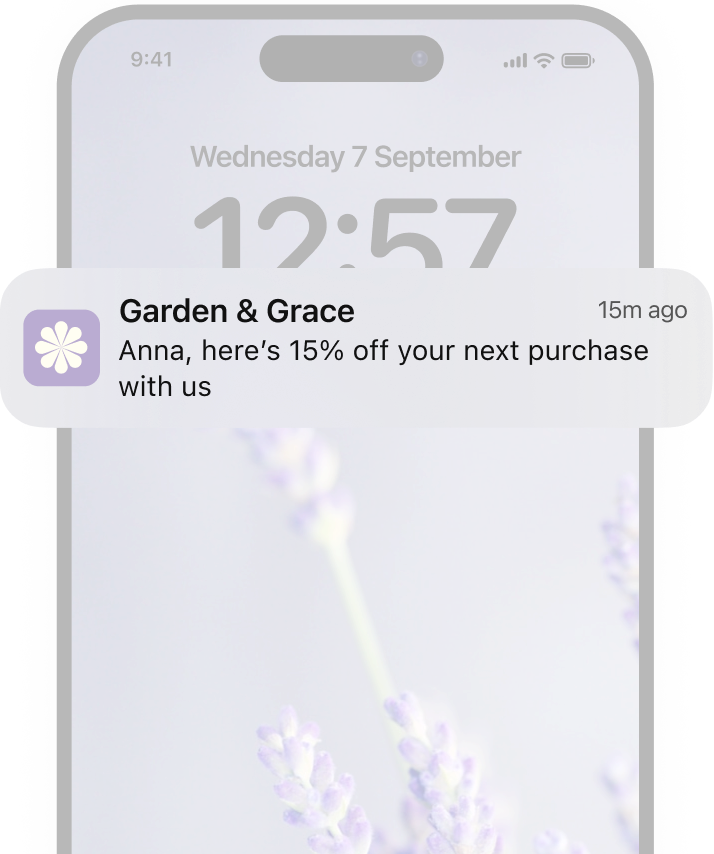
Exclusivity builds loyalty. When customers know they get better deals, early access to new products, or special perks through your app that aren’t available anywhere else, you give them a compelling reason to download and keep coming back. App-only flash sales create urgency. Early product drops make them feel like insiders. App-only pricing rewards their loyalty. These exclusive benefits transform your app from “another place to shop” into “the best place to shop.” A fashion brand might give app users 48-hour early access to new collections before they hit the website. A wellness brand could offer app-only bundle deals that save customers money while driving higher order values.
The result? Customers who feel valued, engaged, and motivated to return—because they know the best experience lives in your app.
Exclusive content to build emotional connection
If you have a well-oiled social strategy, it’s likely you already have behind-the-scenes, how-to guides, and educational resources. Or, maybe you’ve built out content that shares your founder story and deep dives into brand values. This can be repurposed (or created from scratch!) and featured on your app in different ways. Drip content like this gives customers reasons to engage between purchases, maintaining top-of-mind awareness without constantly asking them to buy.
Here’s an example to help you start thinking of what this could look like for your app: A children’s snack brand shares their supply chain transparency through short videos, factory tours showing safety protocols, and quarterly sustainability impact metrics. For parents who care deeply about what they’re feeding their kids, this content goes a long way to securing their trust and the transaction.
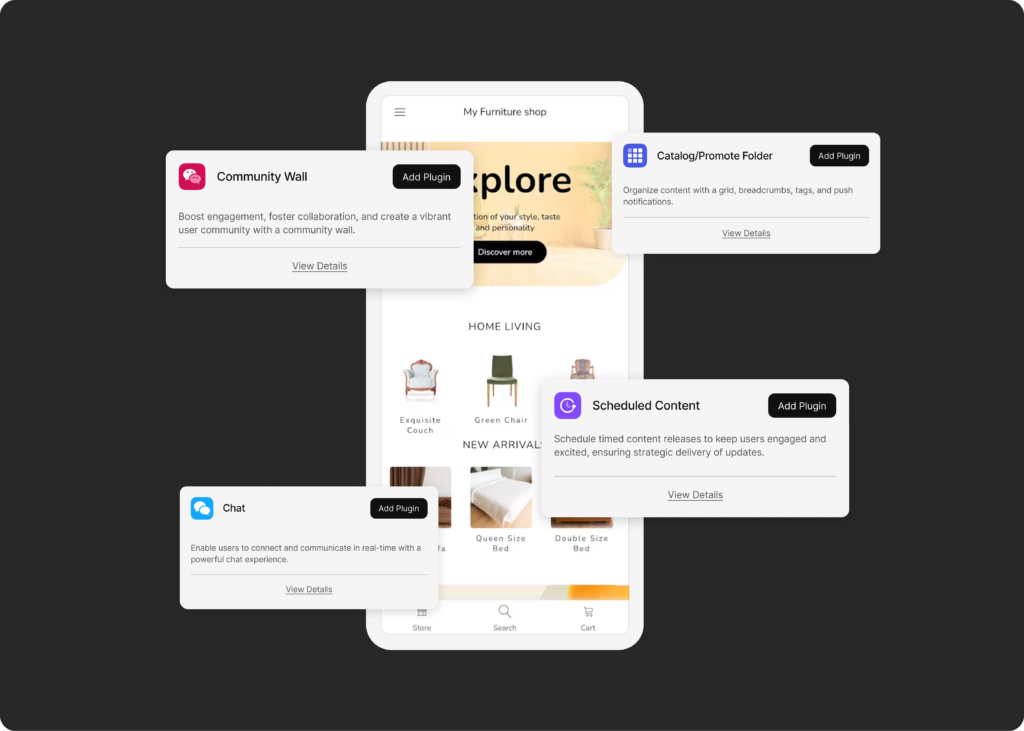
Community features to transform customers into advocates
In a world where posting a comment, reacting with an emoji, or leaving a review is second nature, harnessing the power of conversation is key to making customers feel like they’re no longer just buying from you, they’re part of a community.
Community walls, group chats, and shared photo galleries let customers connect with each other, ask questions, and share experiences. Product reviews with react buttons and comment threads create conversations rather than one-way feedback. In-app chat support gives customers direct access when they have questions that might make or break a purchase decision.
The power of peer-to-peer recommendations has become one of the most trusted form of marketing. Reddit has threads, Instagram has private channels, and Facebook has private groups, so why not create your own member-exclusive channel for these types of conversations in your own app?
Meet customer needs with service integration
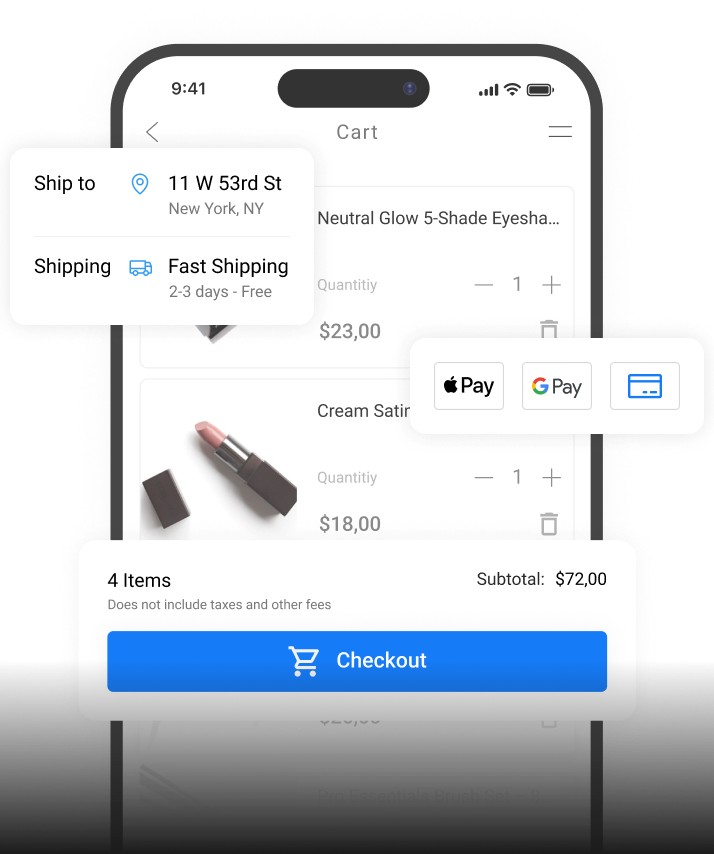
We all love a one-stop shop. Instead of customers having to juggle your website for shopping, use another website for order tracking, open email for support, checking Instagram for real-time updates, everything lives in one app. The reduced friction in the customer journey makes engagement effortless and means customers keep your app installed.
When customers can shop, track orders, access exclusive content, and connect with your community all in one app, they stop seeing it as a shopping tool and start seeing it as their go-to destination for everything related to your brand. This is how you maximize Shopify customer lifetime value.
The business case for improve Shopify customer lifetime value
The numbers for retention-focused mobile apps are impossible to ignore when you look at Shopify customer lifetime value. Repeat customers spend 67% more than new customers on average. If only 5% of customers come back to shop with you again it can boost profits by 25-95%. Where are you likely to get more return customers? Mobile apps. They specifically generate up to 7x more revenue per user compared to mobile web experiences.
Conclusion: the choice facing Shopify merchants
The retention crisis in ecommerce isn’t solved by getting more new customers, it’s solved by building better relationships with your existing customers. Native mobile apps provide the infrastructure to do exactly that. Not as a replacement for your Shopify store, but as a relationship layer that lives on your customers’ devices and keeps you connected between purchases.
You can continue treating mobile as just another sales channel, sending the same promotional emails to declining open rates, hoping customers remember you when they’re ready to buy again, and watching your customer acquisition costs climb while your repeat customer rate stays stagnant.
Or, you can build a platform customers actually want to engage with. One that lives on their device, delivers real value beyond products, and creates the kind of loyalty that transforms business economics.
If your Shopify store has high mobile traffic but low repeat customer rates, if your email engagement is declining quarter over quarter, if you’re spending more on acquisition every month just to maintain the same revenue, it’s time to think beyond mobile commerce and focus on true Shopify customer retention.
See how Buildfire helps Shopify merchants like you turn one-time buyers into lifetime customers. With Shopify-optimized layouts, 80+ proven engagement features, and white-glove app store publishing, we make it easy to build the mobile experience your customers deserve. Find Buildfire in the Shopify marketplace today.
