



Key Takeaways
- Unplanned downtime due to equipment failure costs 11% of their revenue for the world’s largest 500 companies.
- Predictive maintenance has helped them prevent machine failures and, at the same time, save costs on over-maintenance.
- With the help of IoT sensors, AI, and ML, predictive maintenance helps eliminate equipment failure by monitoring the asset condition.
- PdM platform sends you alerts and notifications with detailed analysis, enabling you to plan maintenance activities.
- A predictive maintenance software helps minimize unplanned downtime, increase equipment lifespan, and enhance productivity.
- It is useful in many industries like manufacturing, the oil and gas sector, and the food and beverages industries, enabling data-driven decision making.
Imagine having a technology that not only sends you alerts when something goes wrong but also enables condition monitoring and anomaly detection in real time. That is what predictive maintenance software brings to the table, increasing uptime and ROI per project.
The market size of predictive maintenance is expected to reach $63.64 billion by 2030, which was at $14.09 billion in 2025. In this blog, we will discuss how predictive maintenance software plays an important role in equipment lifecycle management and how your organization can benefit from this software.
What Is Predictive Maintenance Software?
Predictive maintenance software helps you foresee equipment failures and optimize maintenance schedules. IoT sensors, alarms, and dashboards work together to predict when a machine is about to break down, reducing unplanned downtime.
When the sensors work properly, they detect potential failures and trigger alerts to the teams who have to work on them. Predictive maintenance, or PdM, is the preferred management strategy for many organizations, as preventive and reactive maintenance strategies get costly in the long run.
Predictive vs Preventive vs Reactive Maintenance

Understanding Reactive Maintenance:
First, let us see what happens in reactive maintenance. When you are following this method, you conduct repairs only when the equipment breaks down or when it shows signs of failing. This is also called run-to-failure maintenance because you don’t care about equipment until it stops working.
Unlike preventive maintenance, which is proactive and scheduled, it is carried out only if a malfunction occurs. This approach is necessary when the cost of breakdown is less than the cost of preventive maintenance.
Its use cases are non-critical equipment whose failure doesn’t affect business operations and cheaper or older machines. Reactive maintenance works well in flexible environments where there are fewer complexities.
Pros of reactive maintenance:
- The initial costs in reactive maintenance are lower, as it doesn’t include planning.
- In this method, you don’t have to schedule maintenance as you can fix the machines as and when needed.
Cons of reactive maintenance:
- Reactive maintenance leads to increased downtime due to emergency repairs.
- Following this strategy reduces the lifespan of your equipment.
- The predictability is lower in a reactive maintenance strategy, as you will not be able to plan your budget and define your timelines.
Understanding Preventive Maintenance:
Preventive maintenance (PM) is when you perform checks or services at regular intervals before equipment failure occurs. In the past few years, global manufacturing firms have placed high importance on preventive maintenance strategies, as it reduces unplanned downtime and costly repairs. PM involves servicing, replacement of parts, and regular inspections.
Companies can save 12% to 18% by choosing preventive maintenance over reactive maintenance. It’s because following a preventive maintenance method leads to higher reliability and efficiency of your equipment. When the machines operate as planned, production schedules will also be on track, and you don’t have to worry about maintaining product quality.
There are two approaches to preventive maintenance. One is time-based maintenance, where maintenance is scheduled at regular intervals based on the manufacturer’s guidance or historical data.
The alternate approach is conditional maintenance or usage-based maintenance. In this approach, maintenance will be performed based on actual usage and performance of a machine, such as running hours or sensor data.
Activities such as lubricating bearings or gears and cleaning buildup from motors or fans at regular intervals are examples of preventive maintenance. You are also following preventive maintenance when you replace filters and keep an eye on KPIs like output quality and uptime.
Benefits of preventive maintenance:
- Regular servicing of equipment increases its lifespan. Thus, preventive maintenance helps improve the longevity of an asset
- When you prevent mishaps beforehand through preventive maintenance, workplace safety improves.
Limitations of preventive maintenance:
- You need higher initial costs, as preventive maintenance involves scheduled maintenance and investment in tools and labor.
- Equipment needs planned downtime, even when it appears to be working properly.
- In this strategy, you are making decisions based on past failure data instead of the actual working performance of machines.
Understanding Predictive Maintenance:
The predictive maintenance strategy depends on IoT sensors, data-driven analytics, and monitoring your assets in real-time. In this approach, management teams analyze the data collected from sensors and predict equipment breakdowns before they occur.
According to research, the Industrial Internet of Things is believed to generate $12.6 trillion by 2030. It is suitable in industries where equipment failures are expensive. You can implement predictive maintenance in regulated industries where unplanned downtime can lead to compliance issues.
Benefits of predictive maintenance:
- Implementing a predictive maintenance strategy allows management teams to predict early signs of equipment failures and help fix the issue in advance.
- While following preventive maintenance, you need not replace parts based on protocols and can make decisions based on asset condition.
- It improves cost efficiency and return on investment
Limitations of predictive maintenance:
- This strategy requires a high initial investment in tools and learning the technology.
- It involves complex interpretation and data management.
- This approach requires continuous monitoring, and it can be challenging to integrate the new devices and sensors with legacy systems.
| Factor | Reactive Maintenance Strategy | Preventive Maintenance | Predictive Maintenance Strategy |
|---|---|---|---|
| Expenses | Lower at first but increases with time | Medium initial investment and cost effective in long term | High upfront but very cost efficient than other strategies |
| Technology | No fancy tools or tech required | Needs basic software | Requires advanced tech and tools like IoT, AI, and ML |
| Downtime | High as it is unplanned downtime | Medium downtime as it is scheduled | Low and optimized downtime |
| Asset Health and Lifespan | Shorter as machines run to failure | Longer due to regular maintenance | Longest due to care based on data |
| Best Fit | Non-critical assets | Most factories that exist today | Applicable for high-value assets |
How predictive maintenance software works
Predictive maintenance software connects sensors and assets by continuously monitoring the condition and performance data of these assets. The data collected from sensors, such as vibration readings or temperature flows, is transmitted through IoT gateways that are connected to centralized platforms like Enterprise Asset Management (EAM) or computerized maintenance management systems (CMMS).
Machine learning models analyze current data and historical data to detect anomalies and identify potential failures before the equipment breaks down.
You can use techniques such as ultrasound analysis or vibration analysis to monitor an asset’s health and performance in real-time.
IoT sensors embedded in the assets collect and transmit data between devices and systems spread across the internet. Once the devices start communicating through data, analytics systems identify trends and set KPIs for performance. When the data exceeds or falls below these thresholds, the systems send alerts or notifications to maintenance teams indicating that the equipment is about to fail. Once your team addresses the issue, the monitoring and analysis process continues to verify if the fix worked or not.
The continuous process of monitoring the equipment, analyzing data collected from the sensors, predicting equipment failures using machine learning models, and triggering alerts forms a closed feedback loop. It allows predictive maintenance to improve over time and becomes a crucial part of the digital transformation process.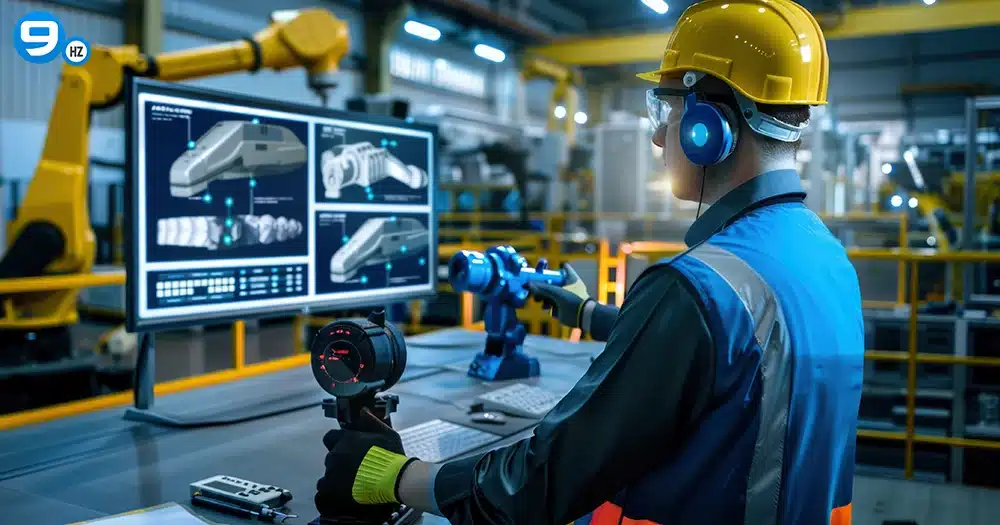
Why Do Equipment Failures Happen?
Equipment failure happens when machines or assets do not perform as expected. A faulty machine can affect production schedules, quality, and customer satisfaction.
During an equipment failure, the asset cannot meet its operational requirements, and business functions cannot take place for hours, days, or months. In such conditions, you will face costly downtime and safety implications.
A proper maintenance strategy can help reduce the frequency at which equipment fails.
The impact of equipment breakdown:
Apart from repair costs and the cost of replacing a failed part, you will also face many hidden costs due to a faulty machine.
Its impacts can be seen as revenue loss, increased labor costs, wastage of raw materials, and delayed shipments.
According to a report by the Deloitte Analytics Institute, the predictive maintenance approach can reduce 5% to 10% of an organization’s maintenance costs. This highlights why the predictive maintenance method is such an important tool to improve your equipment lifespan.
Root causes of equipment failure:
When you identify why equipment fails, you can save yourself from several risks and refine how you can approach maintenance strategies. These are the most frequent causes of failure:
- Repeated wear and tear: Friction and stress degrade parts of your critical assets with time. Imagine what will happen to seals, bearings, and belts if machines run every day until they break down. That’s why you need regular maintenance strategies to increase the longevity of equipment.
- Improper maintenance: When you skip inspections, ignore minor defects, or fail to lubricate the assets properly, your equipment will face major breakdowns. Predictive maintenance software can help you detect anomalies before an asset stops working.
- Improper assembly or installation: You will be surprised to know that a lack of proper installation issues, such as misalignment, assembly mistakes, or incorrect torque, can cause 12 to 18% of equipment failures. You need to fix issues that arise due to improper assembly to improve asset performance.
- Absence of PdM or predictive maintenance: Equipment failure leads to unexpected downtime, reduced customer satisfaction, and productivity. Data analysis and real-time monitoring detect exceptions early and increase business efficiency.
- Aging parts: Factors like corrosion and material degradation may deteriorate parts of a machine even with proper maintenance. A lifecycle management strategy that includes practices like regular assessments of equipment and replacement of worn-out components ensures smooth operations.
- Lack of qualified staff: If proper training is not given to operators or other personnel, they fail to identify and prevent errors. You need to provide ongoing certifications and training, implying a culture of continuous improvement.
- Harsh environments: Equipment is exposed to harsh conditions, such as grit, moisture, and caustic vapors. This can cause the parts to wear down and take a toll on the asset’s health over time. You have to frequently lubricate and clean machinery to improve its lifespan.
- Over-maintenance: The last point may sound contradictory to you, but being involved in too much maintenance can also be harmful to your assets. This is particularly true when you are following preventive maintenance. Over-maintenance can even disrupt the systems and make them less effective. It also takes up unnecessary time for technicians and may also cause premature wear of your machines.
How Predictive Maintenance Software Reduces Equipment Failures?
The Internet of Things made it possible for technicians to prevent equipment failure in the form of predictive maintenance (PdM) technology. Predictive maintenance is a subset of a preventive maintenance strategy. However, maintenance is scheduled based on performance data and only when needed to minimize unexpected downtime.
Teams can automate equipment maintenance using predictive maintenance software based on details such as the age of equipment, its usage, and other factors. Advanced predictive analysis can detect anomalies before any issues develop.
Real-time equipment monitoring:
Predictive maintenance software collects data from sensors, devices, and other systems. Once the data is integrated into the platform, the software then analyzes and processes it.
Early fault detection using AI & ML:
Using advanced analytics techniques such as statistical modeling and machine learning algorithms, predictive maintenance software can identify patterns by analyzing historical data.
If an asset exhibits signs of aging or wear and tear, the AI algorithms spot uncommon patterns without hu man intervention.
Data-driven maintenance scheduling:
Instead of scheduling maintenance tasks on fixed intervals, predictive maintenance software allows you to carry out maintenance based on the condition of equipment.
The system analyzes data driven from sensors and looks for degradation trends or checks for failure probabilities to determine the right time to plan service activities.
Using this approach, you can prioritize maintenance based on the asset condition rather than blindly following a fixed schedule.
Automated alerts & anomaly detection:
The software detects anomalies and deviations by continuously monitoring equipment performance and identifying patterns. Advanced analytics will compare real-time data against threshold values that are constantly updated with time.
When the predictive maintenance program identifies any abnormal behaviour, it sends alerts and notifications to maintenance teams. After that, they will take measures to tackle the issue before it escalates.
Root cause analysis & performance insights:
A problem doesn’t end when you just identify anomalies before they escalate. A mature predictive maintenance platform will correlate sensor data, look into historical trends, and find the root cause of an issue.
This analysis will help you distinguish between false positives and real issues that may result in emergency repairs. Predictive maintenance software provides performance insights to perform targeted maintenance tasks.
Technologies Behind Predictive Maintenance Software
Condition monitoring techniques, such as vibration analysis, thermal imaging, and fluid analysis, help you collect data and detect early signs of wear and tear. However, collecting real-time data is just one part of the process. Predictive maintenance software converts this data into actionable insights using the following technologies.
IoT network:
The IoT network refers to a collection of sensors that enables machines to send and receive data through cloud technology to centralized systems such as ERP.
IoT gateways:
An IoT gateway is a device attached to old machines or systems that cannot produce digital data or do not have internet. It allows older assets to collect and transmit real-time data.
Cloud:
Cloud technology enables you to store, analyze, and maintain the data collected from various devices and sensors. It provides a single unified platform to analyze data.
Modern database and ERP:
The predictive maintenance models produce big industrial data. Traditional databases are not capable of processing real-time data. That’s why modern databases and ERP are designed to quickly process data and provide actionable insights.
AI and Machine Learning:
Machine learning is a part of AI that uses algorithms to analyze historical and current data. It recognizes any deviations in the values and detects errors before they escalate.
Advanced analytics:
AI and machine learning facilitate advanced analytics that can provide you with insights on risk assessments and failure probability scores. Analytics systems can configure desired outcomes such as reduced downtime, increased asset lifespan, and more based on your goals.
Digital twins:
A digital twin is the virtual model of your physical asset. It enables engineers to visualize how a physical asset behaves in various scenarios and stressful conditions. Digital twins allow you to make scenario-based decision-making without risking the real-time equipment.
Key Benefits of Predictive Maintenance Software
The PdM software leverages machine learning and data analytics to transform your operations. This approach offers a wide range of benefits and allows you to take action when and where it is truly needed.
1. Minimizes unplanned downtime:
Predictive maintenance software helps you detect equipment failure in advance and prevent unplanned downtime that can impact your service delivery or production line.
This approach also allows you to plan maintenance tasks during non-productive hours, reducing emergency repairs.
2. Lowers maintenance costs:
When your teams address equipment issues before they escalate, you can reduce expensive emergency repairs. The software also helps you minimize the frequency of unnecessary maintenance tasks and reduce overall maintenance expenses.
3. Extends equipment lifespan:
Data-driven maintenance enables your business to identify and address minor defects before they escalate into major failures. This is how predictive maintenance software improves asset performance and longevity of your critical systems.
4. Improves operational efficiency:
The PdM software helps your equipment to operate with more reliability using real time data and AI analytics. This reduces operational bottlenecks and improves overall productivity.
5. Data-driven decision making:
The predictive maintenance approach enables you to make informed decisions about resource allocation, equipment performance, and lifecycle management. You can use detailed analysis and reports from AI-driven insights for better business outcomes.
Industries That Benefit the Most
The predictive maintenance software can be used in various industries, helping businesses optimize equipment health and overcome complex challenges.
Automotive industry:
Businesses in the automotive industry use predictive maintenance to monitor the performance of equipment such as conveyor belts and robotic arms to prevent unplanned downtime. It ensures that the asset performance is high while reducing maintenance costs.
Aerospace industry:
Aerospace manufacturers and airlines use PdM software to continuously monitor avionics, aircraft engines, and other systems. This approach maximizes aircraft safety and equipment reliability by identifying issues before they impact flight operations.
Oil and gas sector:
Implementing predictive maintenance strategies in the oil and gas sector will help you to forecast failures in compressors, pipelines, and pumps. Real time data and data-driven insights minimize unexpected breakdowns and also ensure operational safety.
Domestic appliance manufacturing:
Vibration analysis is one of the widely used predictive maintenance technologies to identify faulty units before they are assembled and shipped to customers. This strategy has reduced manufacturing defects by 33% and brought down customer maintenance costs by 27%.
How to Choose the Right Predictive Maintenance Software?
Choosing the right predictive maintenance software in 2026 involves looking for solutions that are easy to integrate with existing systems, have ease of use, and other features listed below.
Integration with existing systems:
The predictive maintenance solutions should be capable of connecting with your existing systems, like ERP, CMMS, and other IoT devices, such as PLCs and SCADA. This integration allows data to flow smoothly from machines to systems that enable your maintenance team to take action.
Sensor compatibility & scalability:
As your organization grows, your maintenance goals will also increase. That’s why you have to select a predictive maintenance solution that adjusts and adapts to your needs as your organization grows. The software should be adaptable across various sites and locations.
AI accuracy and reporting features:
Do you think that predictive maintenance software is working accurately just because it generates alerts? Not necessarily. The platform should also give insights into why a machine might fail soon. Is the machine going to fail because of temperature changes or changes in vibration patterns? The answer must be clear.
If you don’t have clarity about why a machine may stop working, you cannot pause your operations just because an algorithm suggests doing so. The right PdM solution will provide supporting evidence to justify the reason behind an alert. In addition, it should generate reports and trends based on the historical data and current values.
Ease of use & customization:
Predictive maintenance software relies on accurate data input by its users, such as work orders and sensor mappings. Even sophisticated software fails to work if the front-end team struggles to use it.
It should be easily adapted by different teams like engineers, managers, and other technicians. Look for a PdM software that also offers customizable dashboards and configurable alerts.
Security & compliance:
As your systems are connected to cloud services and IoT networks, they become an easy target for cybercriminals. When you’re choosing a predictive maintenance platform, look for one that has built-in enterprise-grade security controls.
The software should also have features like role-based access, MFA, and data encryption to protect sensitive data. In addition, look for a PdM model that aligns with compliance standards set for your industry.
Why Choose NineHertz for Predictive Maintenance Software Solutions?
The bigger issue with implementing predictive maintenance strategies in your enterprise is that it brings various changes to your operations and comes with a lot of unfamiliar systems and workflows.
That’s why it is important to choose a partner like The NineHertz, a leading provider of predictive maintenance software, who will help you adopt the software and get the most out of it.
So, you can count on the NineHertz company if you are looking for trusted developers who can develop a predictive maintenance software that is both efficient and cost-effective.
Conclusion:
By the end of this blog, we can say that predictive maintenance has changed the face of industrial asset management and maintenance. On the surface level, it might look like prolonging the lifespan of an asset and minimizing unplanned downtime are the only benefits of Predictive maintenance software. However, this maintenance strategy offers other benefits such as better customer experiences and a stronger market presence. Working with a leading software development company like the NineHertz, can help you realize the true potential of predictive maintenance that fits your needs.
FAQs
1. What is predictive maintenance software?
Predictive maintenance software is a management tool that uses IoT sensors, AI, and machine learning to forecast equipment failure. Instead of depending on fixed maintenance schedules, it continuously monitors data to detect anomalies.
2. How is predictive maintenance software different from preventive maintenance?
Both preventive and predictive maintenance strategies are part of a proactive maintenance strategy, and they aim at preventing equipment failures.
Preventive maintenance follows a predefined schedule, leading to unnecessary replacement. On the other hand, predictive maintenance programs overcome this issue by real-time condition monitoring. It facilitates teams to perform maintenance tasks only when there are signs of potential issues.
3. What industries benefit from predictive maintenance solutions?
Answer- There are many industries that need predictive maintenance platforms to function properly. Some of them are the energy sector, the oil and gas sector, the food and beverages industry, the manufacturing industry, aviation, and airlines.
