



Odoo MRP is frequently described by G2 reviewers as one of the most flexible and customizable manufacturing resource planning tools available, particularly for small businesses that want a system that grows alongside them. According to G2 Data, 79% of its users come from small businesses, and the platform earns an 88% ease-of-use score and an 89% ease-of-setup score, reflecting how accessible it is for teams that don’t have dedicated IT resources managing their PLM infrastructure.
What stands out most from what I saw in G2 reviews is Odoo MRP’s customizability. Reviewers frequently mention being able to create unique features and workflows that match their specific business processes, either through Odoo’s native modules or third-party extensions. I found that many users view this flexibility as a key differentiator, especially compared to more rigid out-of-the-box systems.
Another strength I noticed in reviews is the integration across the Odoo ecosystem. Because Odoo MRP connects with inventory, purchasing, accounting, and sales modules, users can manage product and manufacturing data without juggling multiple disconnected platforms. Reviewers often say this reduces manual data entry and was a major reason they chose Odoo over standalone alternatives.
I also found that users appreciate Odoo MRP’s product and component management capabilities. Reviewers describe it as a reliable system for managing BOMs, tracking quantities and assemblies, and maintaining accurate product records. The platform’s 93% traceability score reflects how consistently users find it effective for keeping manufacturing data organized and auditable.
The cloud-based architecture is another area I saw praised repeatedly in reviews. Users value being able to access the platform from anywhere without managing on-premises infrastructure, and many appreciate that new features are introduced regularly as the Odoo ecosystem evolves.
I also noticed that reviewers generally find the learning curve manageable. While Odoo MRP offers a broad set of features, many users say onboarding becomes much easier with a thoughtful setup. Once teams become familiar with the platform, reviewers note that it feels intuitive, and the ability to add new functionality over time helps keep it adaptable as business needs change.
Support for scaling operations is a theme that comes through in reviews as well. Reviewers describe how the system grows alongside their business, adapting as production complexity increases without requiring a wholesale platform change. For small manufacturers planning for growth, this adaptability is frequently cited as a major reason to invest in Odoo MRP over simpler tools that may need replacing as the business scales.
Database performance for large-scale implementations is an area where G2 reviewers note some limitations. Users managing very large databases report that standard ORM methods don’t always behave as expected at scale, and that backup processes can require custom workarounds. For small businesses at typical data volumes, this is unlikely to be a concern, but teams anticipating significant data growth should factor it into their infrastructure planning when evaluating the platform.
Odoo MRP is a strong fit for small manufacturers looking for a highly customizable, integrated system that can handle both product and business operations within a single platform, without the cost or complexity of an enterprise PLM deployment.
“For a large database, using ORM methods does not work as expected. Also, taking backups from the Odoo default way does not work properly on large databases. I think this part needs improvement, most people use custom ways, or queries and commands can be provided within Odoo.”
– Odoo MRP review, Hamza I.
Explore cutting-edge 3D modeling tools that transform your design process and bring your ideas to life.
4. SAP Integrated Product Development: Best for SAP-native product development
SAP Integrated Product Development (SAP IPD) is a cloud-based PLM platform designed to connect product design, engineering, procurement, production, and compliance within a single SAP-native environment. According to G2 Data, 41% of its users come from enterprise organizations and 36% from mid-market companies, a distribution that reflects its strength in structured, multi-team product development environments. Its 93% “product going in the right direction” score is among the highest in this category, indicating strong reviewer confidence in its trajectory.
The most prominent theme I found across G2 reviews is SAP IPD’s ability to bring the entire product lifecycle onto a single platform. Reviewers describe how having product data, engineering processes, requirements, specifications, and change requests in one place eliminates the need to juggle disconnected systems. From what I observed, this single-source-of-truth approach improves accuracy, reduces duplicated work, and gives stakeholders access to the latest product information without extra coordination.
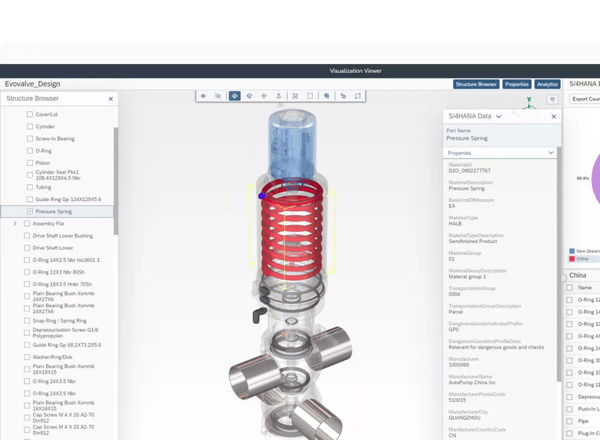
Another consistent highlight I noticed is cross-functional collaboration. G2 users describe how SAP IPD helps engineering, operations, and business teams work together more effectively with real-time visibility into product data and ongoing changes. I found that reviewers often connect this to better coordination, faster decision-making, and stronger alignment across R&D, supply chain, and production teams.
SAP ecosystem integration is another major strength I saw reviewers emphasize. Because SAP IPD sits within the broader SAP suite, it keeps workflows and data synced across materials management, procurement, manufacturing, and finance without relying heavily on custom integrations or middleware. For organizations already using SAP, reviewers say this native connectivity helps close the gap between product development and business operations, and G2 Data shows an estimated 14-month ROI payback period.
I also found that reviewers consistently praise SAP IPD’s traceability and structured compliance workflows. G2 users describe built-in traceability across the product lifecycle as helpful for tracking product changes, investigating issues, and demonstrating compliance, especially in regulated industries. Reviewers also note that change management, document control, and audit trail functionality work together within a clear governance framework.
Customization is another area where I saw SAP IPD receive strong marks. Reviewers highlight that the platform can be configured for the specific demands of different industries, with integrations tailored to unique workflow requirements. I also noticed users mention secure third-party connections as a way to add flexibility without sacrificing governance.
Finally, I found that reviewers often connect SAP IPD to faster time-to-market. By reducing manual work, removing data silos, and keeping cross-functional teams aligned, G2 users say the platform helps move products from concept to market faster than their previous toolsets. This benefit appears closely tied to the platform’s integration depth and structured development workflows.
The most common limitation I found in G2 reviews is SAP IPD’s learning curve. Users frequently describe the platform as complex for new users, especially those without prior SAP experience, and note that onboarding and training are essential for successful adoption. While reviewers say the payoff in functionality and integration depth is substantial, teams should expect a meaningful ramp-up period.
I also noticed recurring concerns around implementation costs and the need for specialized SAP expertise. Reviewers mention that configuration, customization, and integrations often require SAP-certified consultants or experienced implementation partners, which can increase both upfront and ongoing costs. As a result, SAP IPD appears to be a stronger fit for organizations already invested in the SAP ecosystem.
SAP Integrated Product Development is best suited for enterprises and mid-market organizations already embedded in the SAP ecosystem that need a compliant, deeply integrated platform to manage the full product development lifecycle from a single environment.
What I like about SAP Integrated Product Development:
- I’ve found that G2 reviewers consistently value how SAP IPD brings product data, engineering processes, and cross-functional collaboration onto one platform, eliminating the coordination overhead of managing multiple disconnected systems.
- Reviewers highlight the platform’s deep traceability and structured compliance workflows as standout capabilities, noting that change management and audit trail functionality come together in a way that supports even the most regulated development environments.
What G2 users like about SAP Integrated Product Development:
“I like SAP Integrated Product Development’s ability to keep product information centralized and accessible. It helps teams collaborate more effectively and makes it easier to track changes throughout the product development process. Additionally, it helps teams keep product information organized in one place, improves collaboration between departments, and manages product changes more efficiently. It also reduces errors, improves visibility into the development process, and ensures everyone is working with the latest product data.”
– SAP Integrated Product Development review, Praveen Kumar D.
What I dislike about SAP Integrated Product Development:
- SAP IPD’s breadth is also its biggest adoption challenge; reviewers consistently note that the platform’s interface can feel complex for new users and that meaningful training and change management investment are required before teams can use it effectively. Organizations that plan for this upfront consistently report strong outcomes.
- Implementation and ongoing customization require specialized SAP expertise, which adds cost and resource overhead that can be significant. Reviewers note this is particularly relevant for organizations without existing SAP infrastructure or implementation support, and it’s an important factor to weigh during evaluation.
What G2 users dislike about SAP Integrated Product Development:
“It has some demerits, like cost solutions that are not as affordable for small-scale companies. Additionally, it is complex for freshers, making it challenging for them to understand. There are also some slow variations that could be improved, and it seems more complex with some heavy parts.”
– SAP Integrated Product Development review, Anubhav D.
5. Onshape: Best for real-time cloud CAD and PLM collaboration
Onshape is a cloud-native CAD and PLM platform that has built a strong reputation for making professional design work accessible, collaborative, and version-controlled without the overhead of traditional desktop software. According to G2 Data, Onshape has a 95% user adoption rate and delivers an estimated 7-month ROI payback period, both standout numbers in this category that reflect how quickly teams integrate it into their daily workflows. Its 93% likelihood-to-recommend score is the highest among the tools reviewed here.
A common theme I noticed in G2 reviews is Onshape’s cloud-based architecture and modern interface. Many users highlight how it eliminates the need for heavy software installations and file version conflicts, making it easy to access and work on designs from anywhere. From what I observed, reviewers particularly appreciate the collaborative environment that enables teams to share and edit designs in real time.
One feature that consistently stood out to me in reviews is Onshape’s built-in version and change control system. Many users praise this functionality for eliminating the need for separate PDM systems and manual backups. I found that reviewers value the automatic tracking of edits, branches, and merges, saying it improves collaboration, reduces errors, and streamlines product development workflows.
Another strength I saw repeatedly mentioned is Onshape’s frequent updates. Reviewers often highlight how the platform evolves quickly, with meaningful enhancements delivered every few weeks. Users seem to appreciate that these updates regularly introduce new features and improvements rather than focusing solely on bug fixes, helping Onshape maintain its reputation as an innovative CAD platform.
Real-time collaboration is another area where I found overwhelmingly positive feedback. G2 users describe working on the same model simultaneously with teammates, often comparing the experience to editing a Google Doc. For teams accustomed to traditional CAD systems with rigid file-locking, reviewers frequently describe this capability as transformative. Onshape’s 96% ease-of-doing-business score from G2 Data further reinforces how well its collaboration-first approach aligns with the needs of modern engineering teams.
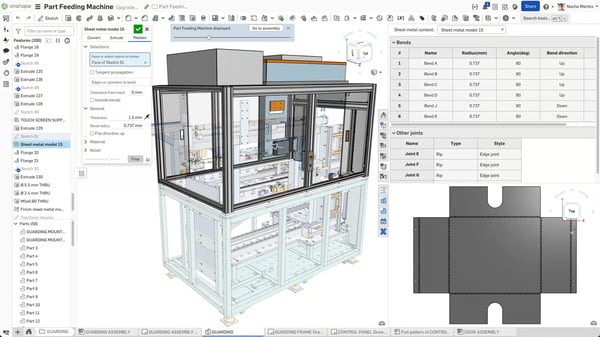
However, I’ve also noticed that G2 reviewers sometimes mention limitations in sheet metal modeling and documentation. Compared to more mature CAD platforms, some users feel that Onshape lacks the advanced features required for handling complex sheet metal projects. As a result, many users have mentioned using workarounds or exporting designs to other tools for final processing, which disrupts their workflows.
In addition, several G2 users have expressed frustration with applying partial surface details like labels, stickers, or logos within assemblies. Reviews point out that there’s no straightforward way to place these details directly on partial surfaces. Users often have to resort to imprints or the Render Studio, which may not be ideal for quick visualizations. This limitation has left some users wishing for more flexible options, especially when working on presentations or visual demos for stakeholders.
Onshape is an excellent fit for design teams, product companies, and engineering organizations of all sizes that want a modern, cloud-native CAD and PLM platform built for real-time collaboration, rapid iteration, and straightforward version management.
What I like about Onshape:
- I’ve noticed that G2 users appreciate Onshape’s cloud-based architecture, which allows easy access to designs from anywhere and eliminates file version conflicts.
- Based on user feedback, Onshape’s built-in version control system is widely praised for improving collaboration by automatically tracking every edit, branch, and merge.
What G2 users like about Onshape:
“I use Onshape for my research and development projects, and I really appreciate its cloud-based capabilities. It solves the dependency on a dedicated high configuration PC by running smoothly in any browser, allowing me to work from almost anywhere, even on an Android tablet. I like its ability to create complex models and handle complex assemblies without any performance issues. The initial setup was also very easy and swift, which was a big plus for me.”
– Onshape review, Prashant D.
What I dislike about Onshape:
- Onshape’s cloud foundation is its greatest strength, but it means the platform is entirely dependent on a stable internet connection. Reviewers note that slow or unreliable connectivity directly impacts performance, and there’s no offline mode to fall back on, which is worth factoring in for teams working in constrained network environments.
- Performance with very large or complex assemblies can be a limitation, with reviewers noting browser lag and increased resource consumption on particularly heavy projects. Teams working primarily with smaller-to-mid-scale assemblies are unlikely to encounter this, but it’s worth testing at scale if your workload involves large, complex models.
What G2 users dislike about Onshape:
“3D Sketch is an area that needs more development. There are several 3D Sketch functions in Onshape, and a more refined approach would be helpful.”
– Onshape review, Nicholas W.
6. SAP PLM: Best for enterprise-grade document and change management
SAP PLM is a long-established product lifecycle management platform with a strong foothold in large enterprise organizations. According to G2 Data, 72% of its users come from enterprise companies, making it one of the most enterprise-concentrated tools in this category. With an 87% product approval rating and an 84% cost-estimating score in the G2 Grid Report, it performs particularly well in the structured governance and financial planning capabilities that large organizations prioritize.
Reviewers frequently highlight SAP PLM’s document management system as one of its core strengths. Users describe how the platform allows teams to register and organize all product-related files, CAD drawings, design models, specifications, project manuals, and MRO documentation in one accessible location. The ability to track and retrieve information across the full product record, with associated transactions visible in a single view, is something G2 users describe as essential to their day-to-day workflows.
Change management capabilities earn consistent praise in reviews. G2 users note that the recent transition of Change Record functionality to Fiori, SAP’s modern UI framework, has added meaningful flexibility to how teams manage engineering changes, with the shift described as smooth and quick. Reviewers appreciate how the document management system and change management workflows work together to create a coherent audit trail across product modifications.
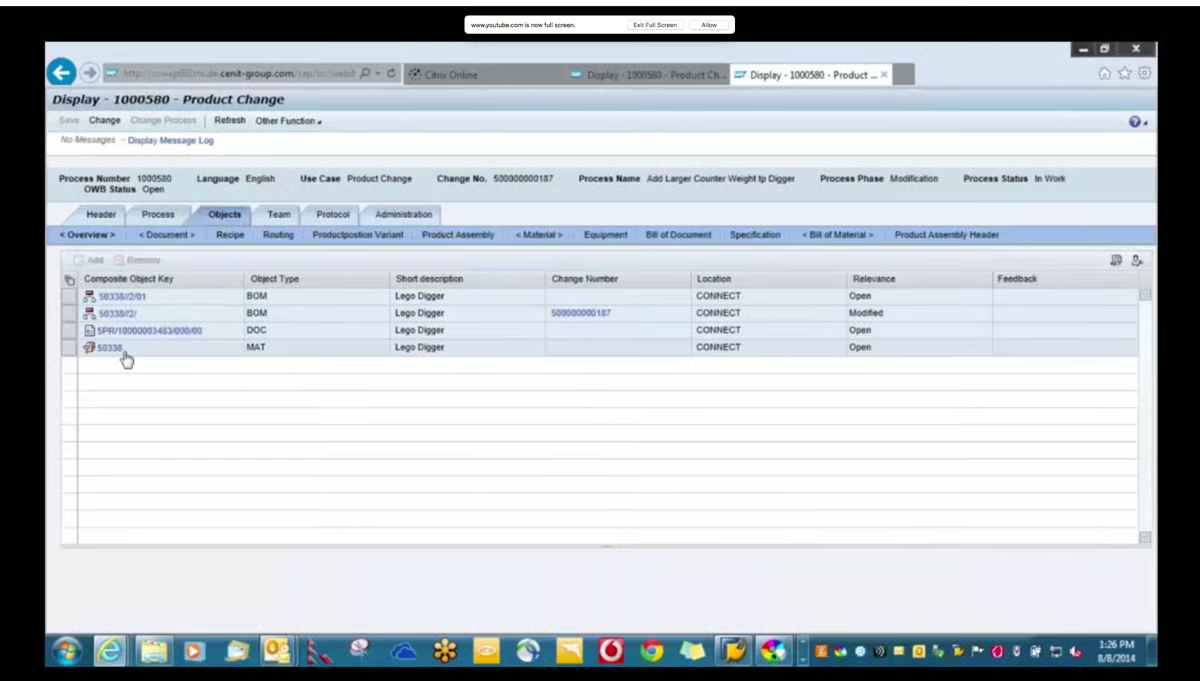
Product data organization across the full lifecycle is another theme that surfaces consistently in reviews. G2 users describe how SAP PLM maintains structured records through every stage, from 3D models and drawings to BOMs, inventory states, and revision histories. The ability to view a complete change history for any product at any time is a critical capability reviewers call out for organizations managing complex, long-lived products with strict documentation requirements.
SAP ecosystem integration is a natural strength for organizations already operating within an SAP environment. Reviewers describe SAP PLM as enabling tight data consistency across procurement, manufacturing, and service workflows without requiring significant integration overhead, an advantage that reviewers say becomes especially valuable as product data needs to flow across functional boundaries within a large organization.
Lifecycle traceability and revision management are areas where SAP PLM earns steady marks from enterprise reviewers. The platform’s ability to track product revisions, link design changes to downstream processes, and maintain structured documentation throughout the product’s entire history is what users describe as making it viable for highly regulated industries where audit readiness is non-negotiable.
For organizations managing products with complex cost structures, SAP PLM’s cost estimating and BOM-linked financial tracking capabilities are also mentioned positively. The 84% cost estimating score from G2 Data reflects how reviewers rate its ability to support product cost management as an integrated part of the PLM workflow, something standalone PLM tools often lack without custom integration work.
The user interface is an area where G2 reviewers consistently note that SAP PLM hasn’t fully kept pace with more modern platforms. Users describe the GUI-based interface as less intuitive than newer cloud-native tools, and note that navigating the system efficiently requires familiarity that takes time to develop. The ongoing Fiori rollout is a meaningful step forward. Reviewers who have worked with the updated Change Record functionality note the improvement, but the full UI modernization is still in progress, and teams evaluating the platform should expect to invest in user training to achieve effective adoption.
SAP PLM also requires trained personnel to operate effectively. Reviewers note that the platform’s depth and transaction-based architecture mean that new users need structured onboarding before they can navigate it confidently. For enterprise organizations with dedicated training programs and support resources, this is typically a manageable consideration, but it’s an important factor for teams expecting self-guided adoption or planning to onboard users quickly.
SAP PLM is a strong choice for large enterprises already in the SAP ecosystem that need a mature, compliant platform to manage product documentation, engineering changes, and full-lifecycle product data at scale.
What I like about SAP PLM:
- I’ve found that G2 reviewers in enterprise environments appreciate SAP PLM’s document management capabilities. The ability to organize CAD files, BOMs, drawings, and regulatory documents into a single structured system with full revision history is something users describe as integral to their daily operations.
- Reviewers highlight how the Fiori-based Change Record functionality has brought meaningful flexibility to change management workflows.
What G2 users like about SAP PLM:
“You can register and find all the information that you might need for your process. Ranging from CAD drawings and design models to actual MROs and product information. There are many useful transactions that you are able to register, which help implement other relevant transactions on one page. This is a daily software that is used at work.”
– SAP PLM review, Edgar M.
What I dislike about SAP PLM:
- SAP PLM’s enterprise depth comes with an interface that users note hasn’t fully caught up with more modern platforms, the UI can feel less intuitive than newer cloud-native tools, and reviewers say that achieving efficient navigation requires familiarity built over time, making structured user training an important part of any rollout, organizations with dedicated SAP support resources are generally well-positioned to manage this.
- The platform requires trained personnel to operate effectively, and reviewers note that new users face a meaningful knowledge investment before they can work confidently, a realistic expectation to set during planning, and one that organizations with strong SAP support resources are generally well-equipped to manage.
What G2 users dislike about SAP PLM:
“Users find the user interface less intuitive compared to newer, more modern platforms, which can impact ease of use and adoption.”
– SAP PLM review, Verified User
PLM software: Frequently asked questions (FAQs)
Got more questions? We have the answers.
Q1. Which is the top PLM Software for companies with distributed design and production teams effectively?
Onshape and Siemens Teamcenter are the top PLM software options for companies with distributed design and production teams. Onshape’s cloud-native architecture allows teams to collaborate on 3D CAD models in real time from any device or location, eliminating file version conflicts. Siemens Teamcenter enables cross-department collaboration across engineering, manufacturing, and operations from a centralized product data hub, making it effective for large distributed organizations.
Q2. Which PLM Software manages product data across engineering, supply chain, and manufacturing?
Siemens Teamcenter and SAP Integrated Product Development manage product data across engineering, supply chain, and manufacturing. Teamcenter serves as a single source of truth for CAD files, BOMs, and change orders. SAP Integrated Product Development connects product design, procurement, and production within one SAP-native platform.
Q3. What are the best PLM Software platforms for manufacturing companies with 500+ employees?
Siemens Teamcenter, SAP Integrated Product Development, and SAP PLM are the best PLM platforms for manufacturing companies with 500 or more employees. Teamcenter has 52% enterprise adoption on G2. SAP IPD serves 41% enterprise users. SAP PLM has a 72% enterprise user base.
Q4. Which PLM Software reduces product data retrieval time to seconds for your specific needs?
Arena PLM & QMS and Siemens Teamcenter reduce product data retrieval time most effectively. Arena’s structured item records allow fast access to parts, documents, and change orders. Teamcenter’s centralized repository with advanced search gives teams rapid access to CAD files, BOMs, and revision histories.
Q5. Which PLM Software provides real-time bill of materials accuracy across revisions for your specific needs?
Siemens Teamcenter, Arena PLM & QMS, and Odoo MRP provide real-time BOM accuracy across revisions. Teamcenter’s BOM Manager tracks multi-level product structures with full revision control. Arena links every BOM update to an approved change record. Odoo MRP earns a 93% traceability score on G2.
Q6. Which PLM Software integrates seamlessly with CAD tools like CATIA and NX?
Siemens Teamcenter integrates most seamlessly with CAD tools like CATIA and NX. As a Siemens product, it has native NX integration and broad compatibility with CATIA, SolidWorks, and AutoCAD. SAP Integrated Product Development also supports CAD connectivity within the SAP ecosystem.
Q7. What is the most reliable PLM Software based on reviews from automotive manufacturers across organizations?
Siemens Teamcenter is the most reliable PLM software for automotive manufacturers. It is widely adopted in automotive and industrial engineering for managing complex product structures and supplier data at scale. It earns an 87% likelihood-to-recommend score and a 90% traceability rating on G2.
Q8. Which PLM Software implementations maintain accuracy during format migrations?
Siemens Teamcenter and SAP PLM maintain accuracy during format migrations. Teamcenter’s version control ensures product records and BOM structures retain integrity across format changes. SAP PLM’s document management system preserves revision accuracy during interface transitions, including its smooth GUI-to-Fiori migration noted by G2 reviewers.
Q9. What is the highest rated PLM Software for accelerating time-to-market in manufacturing?
Onshape is the highest rated PLM software for accelerating time-to-market, with a 95% user adoption rate and a 7-month ROI payback period on G2. SAP Integrated Product Development also ranks highly, earning an 81% time-to-market feature score and a 93% product going in the right direction rating on G2.
Q10. What is the most trusted PLM Software by large manufacturers based on user reviews?
Siemens Teamcenter is the most trusted PLM software by large manufacturers. It has 52% enterprise and 34% mid-market adoption on G2, with an 87% likelihood-to-recommend score, a 91% document management rating, and a 90% traceability score.
Precision down to a ‘T’
After thoroughly evaluating the best PLM software, I’ve come to appreciate how much the right system can streamline product development and lifecycle management.
Each platform offers unique features tailored to different needs, whether you’re focused on collaboration across teams, managing complex product data, or accelerating time-to-market. With so many options available, there’s always a solution that can help you manage your product lifecycle more efficiently.
I hope my insights help you find the best PLM software for your organization, because, let’s face it, managing products manually just slows innovation down!
Explore innovative 3D printing solutions that accelerate your prototyping, production, and product development processes.
