



For a long time, becoming a digital nomad almost automatically meant becoming a freelancer.
If you wanted to travel, work from anywhere, and build a life outside the normal 9-5 office routine, the obvious path was to start offering services online.
Things like freelance writing, website design, social media management, virtual assistance, coaching, consulting, marketing, SEO, video editing…the list goes on!
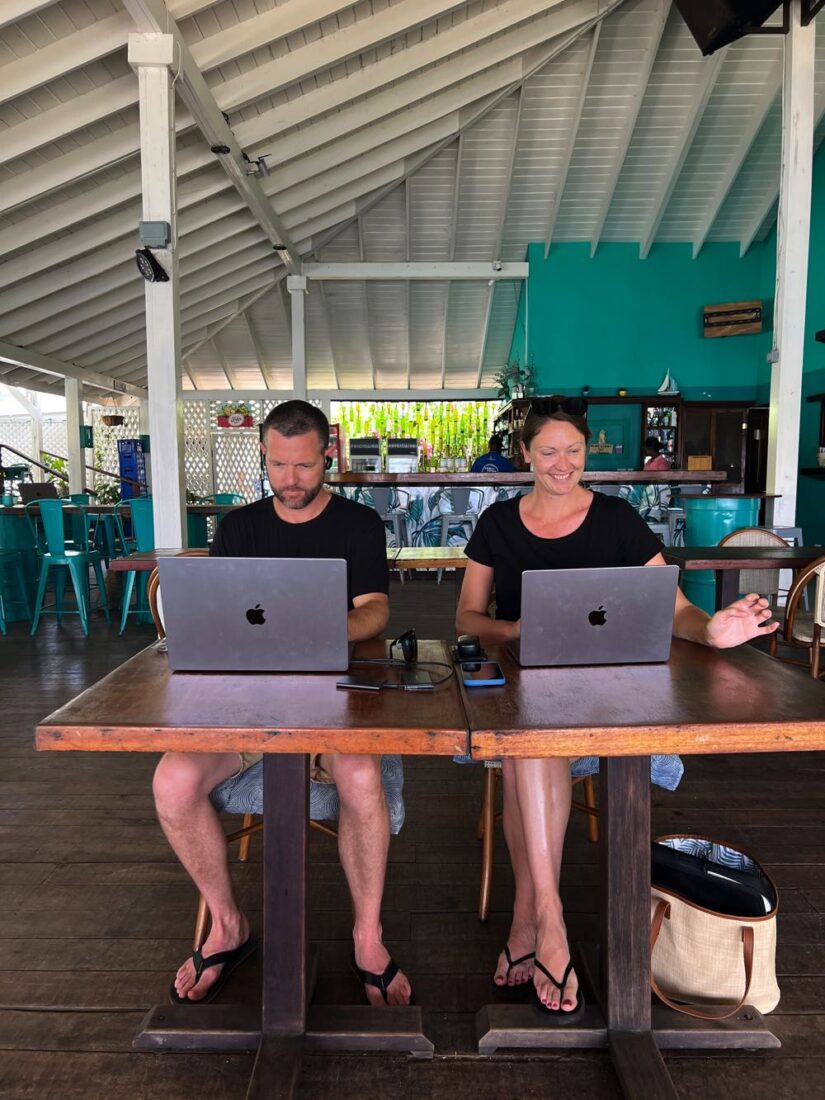
Whatever skill you had, you packaged it up, found clients, and tried to make enough money to keep the travel dream going.
We started working online back in 2012, and for years, our income came from running our own travel blog, working with brands, building online businesses, and creating different offers around the skills we had developed along the way.
That lifestyle gave us a level of freedom that I still don’t take for granted.
We’ve worked from beach towns, mountain villages, tiny apartments, cafés with spotty Wi-Fi, airports, guesthouses, coworking spaces, and more countries than I can list off the top of my head.
But after more than a decade of doing this, I can also tell you something that doesn’t always get talked about enough in the digital nomad world:
Freelancing is not the only way to live and work internationally.
And actually, for a lot of digital nomads, it might not even be the best way.
The Typical Digital Nomad Path
The classic digital nomad dream usually looks something like this:
Quit your job.
Start freelancing.
Get a few clients.
Book a one-way ticket.
Work from wherever you want.
On paper, it sounds amazing, and it can be. But there’s another side to freelancing that a lot of people only figure out once they’re already in it.

You’re not just doing the work. You’re also finding the work.
You’re pitching, selling, invoicing, following up, handling annoying payment conversations, managing contracts, replacing clients who disappear, and constantly trying to keep an income coming in…
…some months are great, while other months are stressful.
One client leaves and suddenly your “freedom lifestyle” feels a lot less free…this has happened to us more than once during our online journey.
That’s not to say freelancing is bad. It can be an incredible way to build location-independent income. But it’s not the only option anymore.
The remote work world has changed.
Today, more international companies are open to hiring people across borders, and more professionals want to live abroad while keeping stable employment.
And more businesses are realizing that the best person for the job might not live in the same city, country, or even continent as the company itself.
That creates a great opportunity for digital nomads – you can be location independent without necessarily becoming a freelancer.
The New Path: Become Globally Employed
This is where things get interesting. A lot of digital nomads assume there are only two choices:
- You can either have a traditional job and stay in one place.
- You can travel and work for yourself.
But there’s a third option: You can be hired as an employee by an international company while living and working abroad.
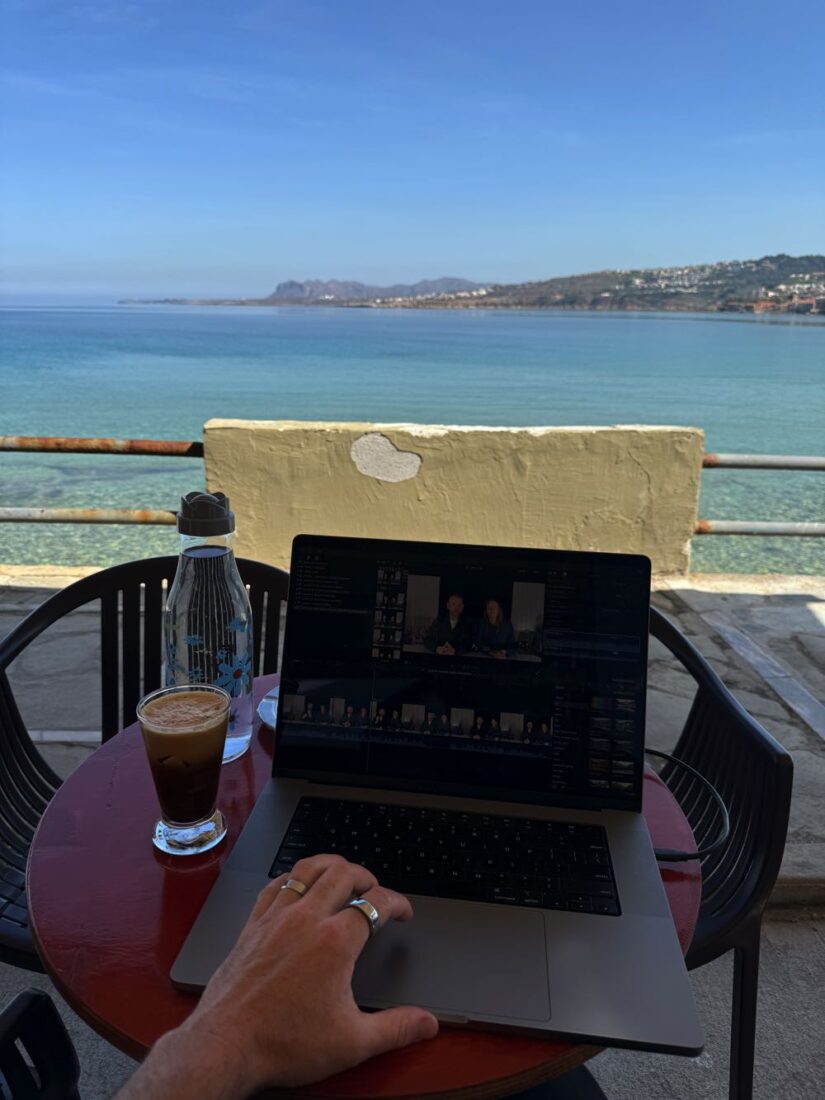
This means you may be able to have the stability of employment, the structure of a real role, and in many cases, access to proper payroll, benefits, and protections, while still living a location-independent lifestyle.
For a lot of people, that’s the dream!
Not everyone wants to build their own agency. Not everyone wants to sell coaching. Not everyone wants to constantly chase freelance clients.
Some people are really good at what they do and would happily work for one great company, as long as they don’t have to give up the freedom to live internationally.
That could mean a Canadian marketer working for a Dutch company while living in Portugal.
A British developer working for a US startup while based in Thailand.
A South African customer success manager working for a German company while spending part of the year in Spain.
A designer, operations manager, copywriter, sales rep, accountant, project manager, product specialist, or software engineer working for a company that values their skills more than where they live.
Freelancing vs. Employment
Freelancing can be great when you want full independence.
You choose your clients, set your rates, and decide how much work you want to take on. You can build your own brand, create your own offers, and eventually turn it into something bigger.
But freelancing also means you are responsible for pretty much everything…and I mean everything. Take it from me!
You’re the marketing department, sales department, finance department, admin department, and delivery team. You do it all.
Employment is different.
With employment, you usually have more structure.
You have a defined role, regular salary, clear set of responsibilities, and potential benefits. Plus, paid time off, local employment protections…and ideally, less time spent constantly trying to sell yourself.
For digital nomads who are tired of the feast-or-famine cycle, this can be a much better fit.
I’ve met a lot of people over the years who love the travel side of the nomad lifestyle, but don’t actually love being self-employed.
They just want meaningful work, stable income, and the ability to live somewhere that fits their lifestyle, and there’s nothing wrong with that. In fact, I think it’s one of the most underrated paths in the digital nomad world.
Can You Be Legally Employed While Living Abroad?
The answer is yes, but the setup matters.
This is where an Employer of Record, or EOR, can come in. An Employer of Record helps companies hire employees in countries where they do not have their own local entity.
Rivermate is an EOR that does this. Instead of the company needing to open a branch, register a business, learn the local employment system, and manage country-specific payroll and compliance, the EOR becomes the legal employer in that country.

The company still directs your day-to-day work. You still work with the same team, do the role you were hired to do, and you still report to the company hiring you.
But the EOR handles the local employment side.
That can include payroll, tax compliance, employment contracts, benefits, workers’ compensation, and making sure the employment relationship follows local laws.
For companies, this makes international hiring much easier, and for digital nomads, it can make global employment feel much more realistic.
What if You Already Have a Job, but Want to Work Abroad?
Maybe you work for a company in your home country, but you want to spend six months in Spain.
Maybe you’re based in Canada, but you want to live in Portugal.
Maybe you have a remote role in the UK, but you want to move somewhere warmer, cheaper, or just more aligned with the life you actually want to build.
This is where things can get a little tricky. Just because your job is remote does not always mean you can work from anywhere in the world.
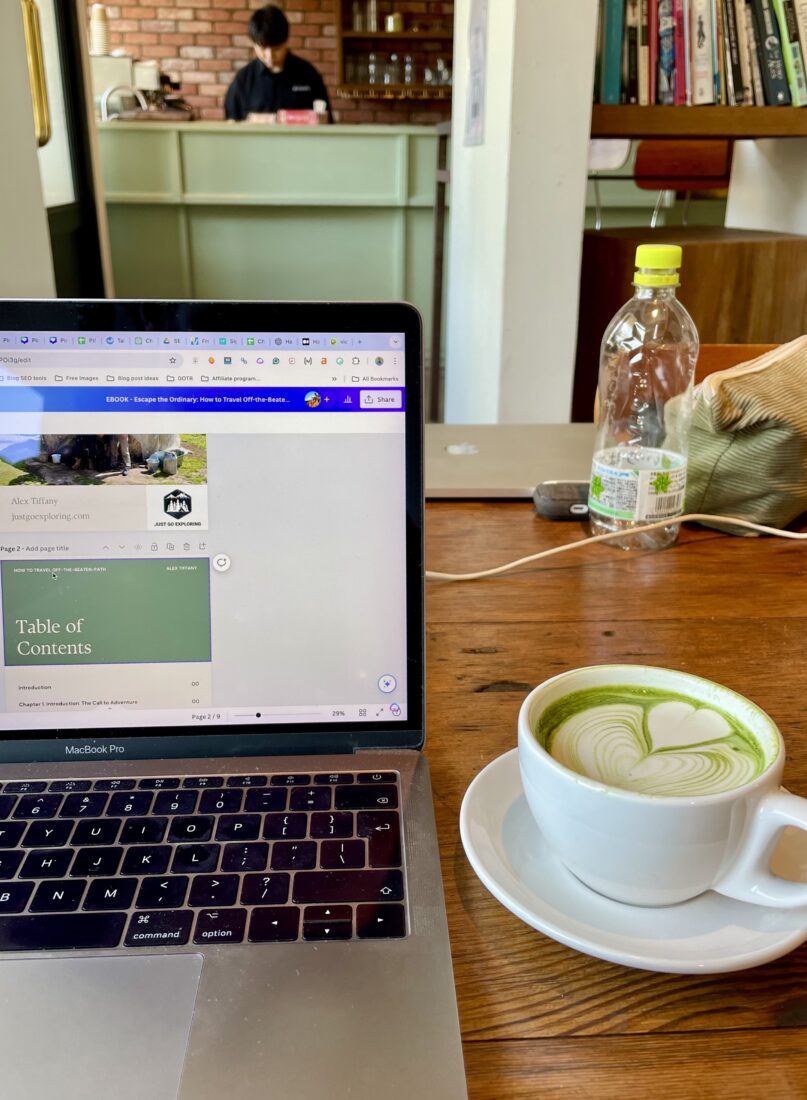
A company might be totally fine with you working from home in your own country, but that does not automatically mean they can legally employ you while you are living abroad.
The issue usually isn’t whether they trust you – it’s more about whether they can legally support the arrangement.
If you move to another country, your employer may have to think about local employment laws, payroll, taxes, social security, benefits, insurance, and whether your presence creates any compliance issues for the business.
That’s why some companies say no to international remote work, even though the work itself could easily be done from anywhere.
It’s not always a remote work problem. It’s often a compliance problem.
This is another place where an Employer of Record can help. Instead of your employer having to open a local entity or figure out the employment laws in your new country, an EOR may be able to legally employ you there on the company’s behalf.
How to Position Yourself for International Employment
If you’re a digital nomad who wants to get hired by an international company without becoming a freelancer, the first step is to shift how you present yourself.
Don’t just position yourself as “remote.” Position yourself as someone who can create a clear business outcome from anywhere.
Companies aren’t hiring you because you want to live in Lisbon, Chiang Mai, Mexico City, Bansko, or Bali.

They’re hiring you because you can help them solve a problem. So your application, profile, and interviews need to make that obvious.
Instead of leading with the lifestyle, lead with the result you can get them
Look for companies that are already comfortable with remote teams
Not every company is ready to hire internationally. Some still want people in the same city. Others say “remote” but really mean “remote within one country.” Some are open to international talent, but only in specific regions or time zones.
That’s why you want to pay close attention to the language in job descriptions.
Look for phrases like:
“Remote-first”, “Globally distributed team”, “Work from anywhere”, “International hiring”, “EOR-supported employment”, or
“Hiring globally”.
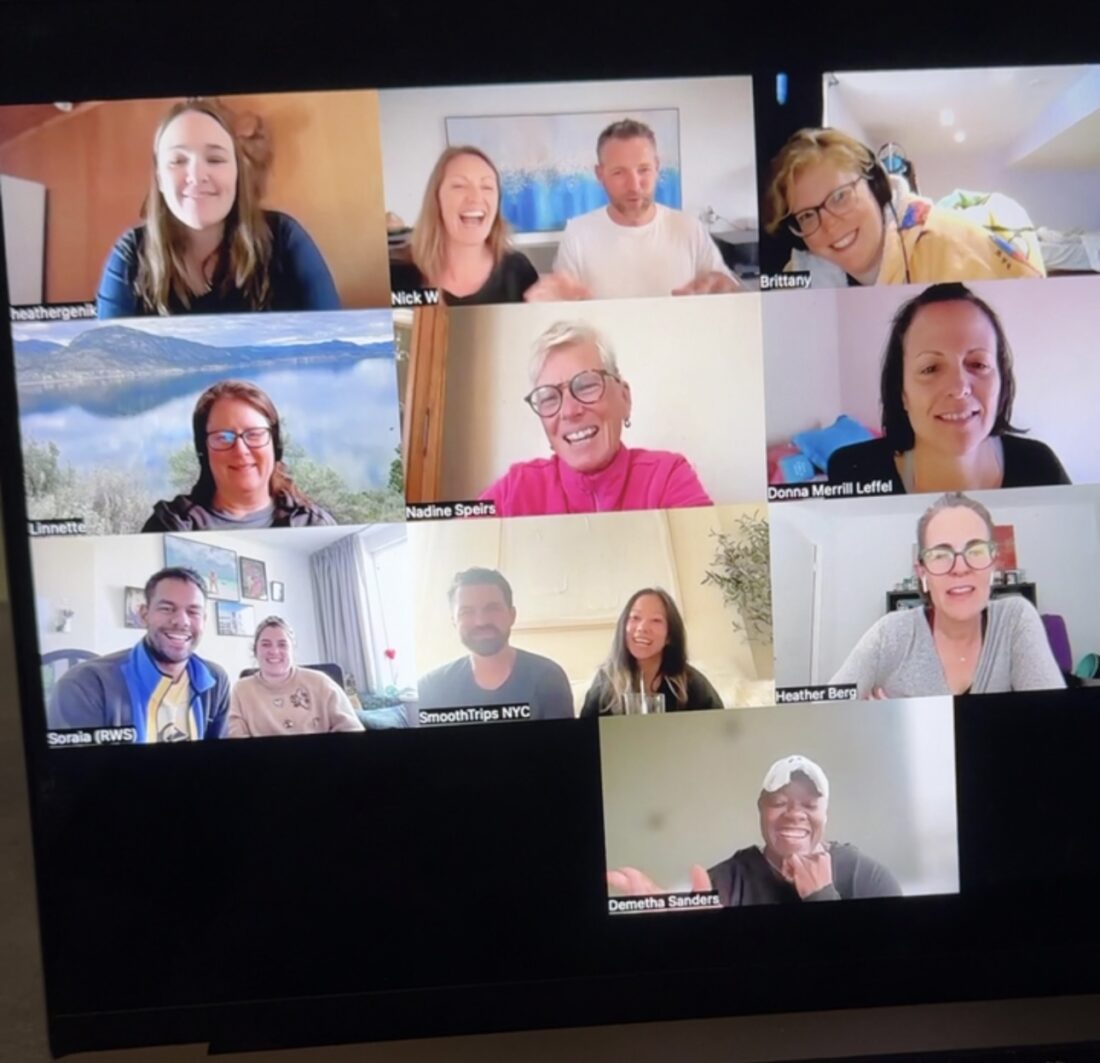
These are signs that the company may already understand the realities of international hiring. You can also take a look at the team page.
Are employees based in different countries? Does the company talk about remote culture? Do they have people working across time zones?
If yes, your chances are much better than applying to a company that has never hired outside its home market.
Be ready to talk about your location clearly
One mistake digital nomads make is being vague about where they are. They’ll say, “I’m flexible,” or “I travel around,” which can sound fun to other nomads but stressful to an employer.
Companies need clarity.
They need to know where you’re legally based, where you plan to work from, what time zone you’ll be in, and whether your setup creates any extra complexity.
That doesn’t mean you need to have your entire life mapped out forever. But you should be able to explain your situation professionally.

For example:
“I’m currently based in Bulgaria and plan to remain tax resident here for the foreseeable future. I travel occasionally, but my main working location and time zone are stable.”
That sounds a lot more hireable than:
“I’m in South Africa for 2 months, and then I’m going to check out Tbilisi for a month, and I’m thinking of Bali after that.”
The more stable and clear you can make your setup sound, the easier it is for a company to say yes.
Ask the right questions before accepting a role
Before accepting an international remote job, you’ll want to understand the employment setup.
Some useful questions include:
- Will I be hired as an employee or contractor?
- Can the company employ people in my country?
- Does the company use an Employer of Record for international hires?
- Are there restrictions on where I can work from?
- How long can I work from another country while employed?
- Who handles payroll, taxes, and benefits?
- What time zone overlap is required?
- Are there any visa or work authorization requirements I need to be aware of?
- What happens if I move countries later?

A company may be happy for you to work remotely from your home country, but not from ten different countries throughout the year.
Another company may be fine with occasional travel, but need you to be officially employed in one specific location. Another may be able to hire you through an EOR in your country, but not in the country you want to move to next.
The more you know upfront, the better.
Don’t hide your digital nomad lifestyle, but don’t make it the whole pitch
There’s a balance here. You don’t need to pretend you’re not location-independent. But you also don’t want your entire professional identity to be “I travel.”
The best international remote employees make companies feel confident.
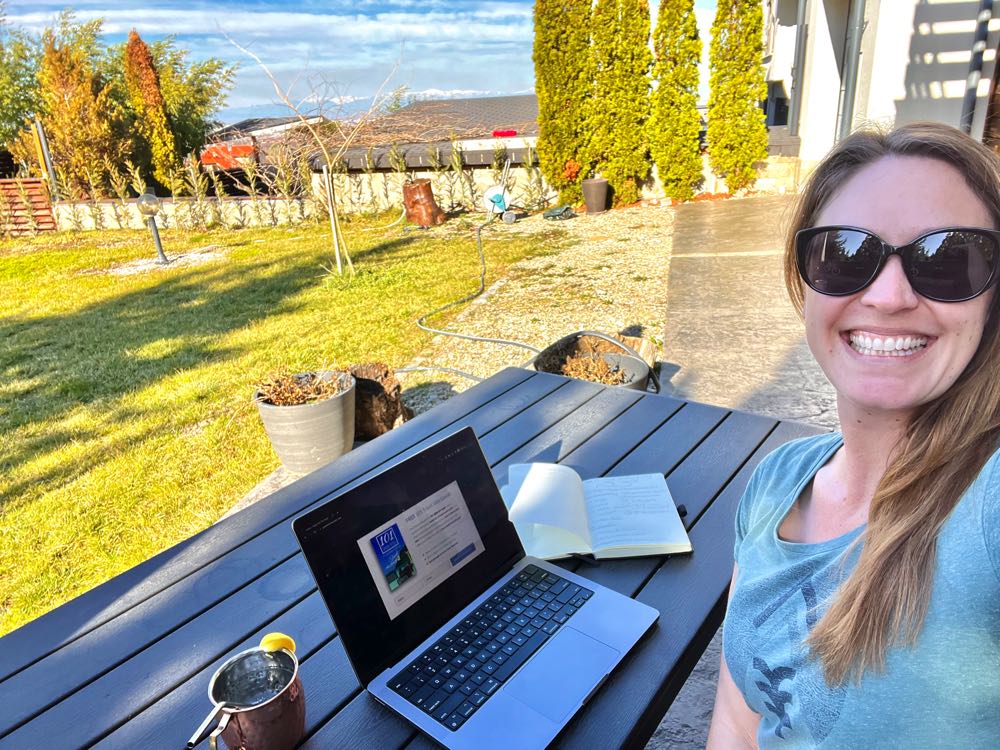
They communicate well. They are reliable. They understand time zones. They don’t disappear for three days because the Wi-Fi at their beach bungalow stopped working. They know how to work independently without needing constant supervision.
That’s the version of yourself you want to present.
Yes, you may be a digital nomad, but you’re also a professional.
You can meet deadlines. You can show up to calls. You can protect company data. You can work across cultures. You can manage your schedule. You can contribute to the team even if you’re not sitting in the same office.
That’s what makes you valuable.
The Future of Digital Nomad Work is More Professional
The early digital nomad movement was heavily tied to entrepreneurship, blogging, freelancing, and online business. And of course, that world still exists.
But it’s no longer the only version of the lifestyle.
The next version of digital nomadism is more professional, more structured, and more connected to global employment.
People want freedom, but they also want stability. They want to travel, but they also want a regular paycheck. They want location independence, but they don’t necessarily want to run a business.
And companies want access to the best talent, but they need ways to hire that talent legally and compliantly.
That’s where the opportunity is.

A digital nomad doesn’t have to be a freelancer.
They can be a full-time employee. They can work for an international company. They can have a stable role. They can be paid through compliant payroll. They can receive benefits. They can build a serious career while living abroad.
But the setup matters.
Final Thoughts
After years of working online and living internationally, I still believe location independence is one of the best ways to design a life with more freedom.
But I also think the conversation needs to evolve – maybe it’s because I’m older now than when I first started this lifestyle?!
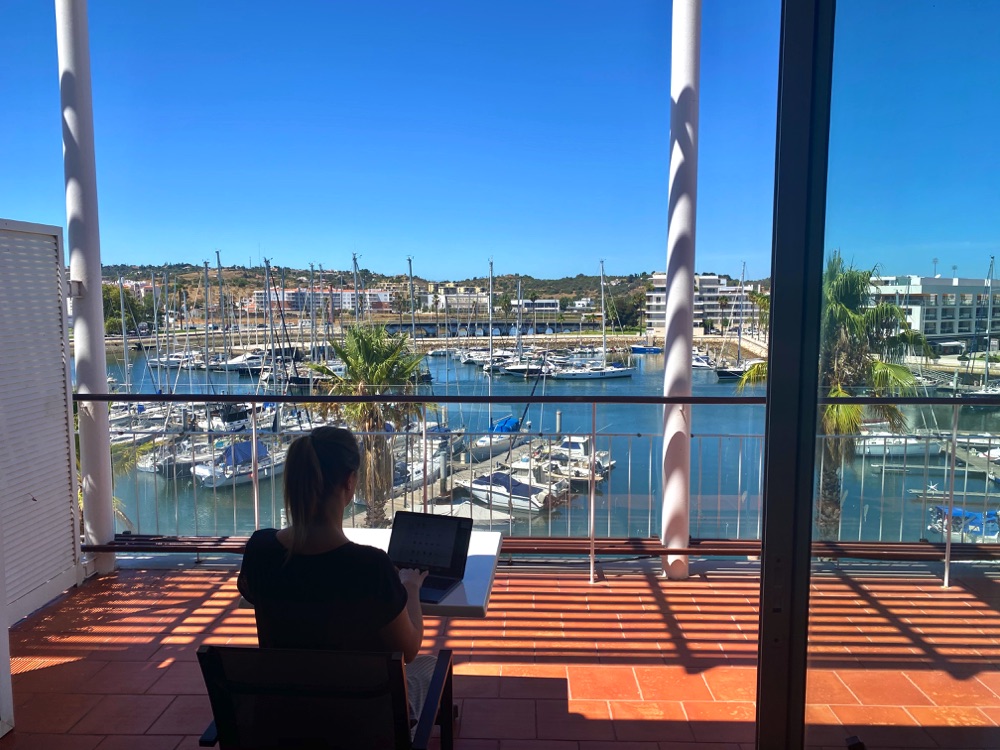
It’s not just about quitting your job and figuring it out as you go, and it’s not just about freelancing from a laptop.
And it’s definitely not just about sitting on a beach with a coconut while pretending that running a business from the road is always easy.
For some people, freelancing will be the right path. For others, building a business will be the dream.
But for a lot of digital nomads, the best path might be getting hired by an international company in a way that gives them both freedom and stability.
That is the real opportunity.
And today, with global hiring, remote-first companies, and Employer of Record solutions, there are more ways than ever to do just that.
