



86% of buyers will pay more for a great customer experience. Yet, many businesses leave these critical interactions to chance. Great customer journeys aren’t accidental but engineered.
They’re the result of paying attention to how customers interact with your brand, improving each touchpoint based on customer data, and measuring and iterating your efforts for higher customer satisfaction. This is customer journey optimization.
What Is Customer Journey Optimization?
Customer journey optimization (CJO) is the process of understanding and improving every stage of the customer journey. It begins with mapping key phases such as awareness, consideration, purchase, and post-purchase engagement. Then, using real customer data and analytics, businesses can use the process to identify points of confusion, friction, or delay that cause customer churn or revenue loss.
CJO optimizes every customer interaction — from browsing a website and reading an email to engaging on social media, using a mobile app, and contacting customer support. It helps you remove barriers, turn casual interest into compelling purchases, and first-time buyers into lasting advocates, and is the most reliable path to sustainable business growth.
Why Optimize Your Customer Journey (the Benefits)?
Every customer interaction is an opportunity to build or lose trust. Optimizing the customer journey is a step up from a simple marketing tactic to a growth driver. A well-optimized customer journey leads to the following measurable business benefits:
Improve customer satisfaction
Smooth, intuitive experiences make customers feel valued. This directly improves customer satisfaction score (CSAT) by up to 20%, according to McKinsey.
Strengthen customer loyalty and reduce churn
Meaningful interactions address pain points before they lead to abandonment. As Bain & Company notes, increasing customer loyalty by just 5% can increase profits by 25 to 95%.
Drive more revenue and retain more customers
Efficiently guiding customers from consideration to purchase, customer journey optimization impacts conversion rates and customer lifetime value (CLV). Businesses with strong omnichannel support strategies retain an average of 89% of their customers, compared to 33% for companies with weak omnichannel strategies.
Create more advocates and build brand reputation
Satisfied customers become your most effective marketing channel. Nielsen reports that 92% of consumers trust recommendations from friends and family more than any other advertising, which reduces your customer acquisition cost (CAC).
Stages of Your Customer Journey to Optimize
The customer journey unfolds in five stages, taking a customer from initial awareness to loyal customer. Understanding the customer’s mindset and behavior at each of the following stages helps design interactions that smoothly transition them to the next.
1. Awareness
The journey begins when a potential customer identifies a problem or need and seeks answers. At this point, they may not know your brand. Their activities focus on research: using search engines to understand their problem, reading informative articles, and watching informative videos.
Your brand’s role is to be a visible and credible resource. This means creating SEO-optimized content that directly addresses their pain points, running targeted awareness campaigns on social platforms, and taking a leading role through webinars and reports to make a compelling first impression, especially since roughly 90% of customers use search for initial product research.
2. Consideration
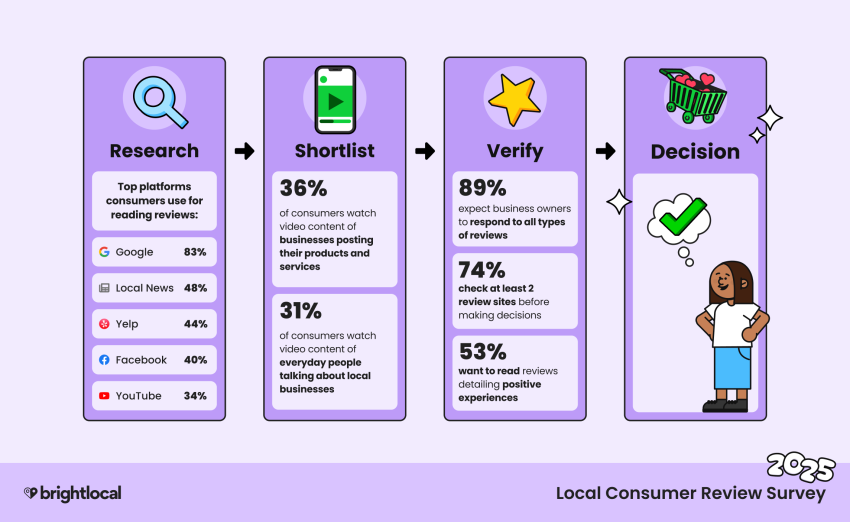
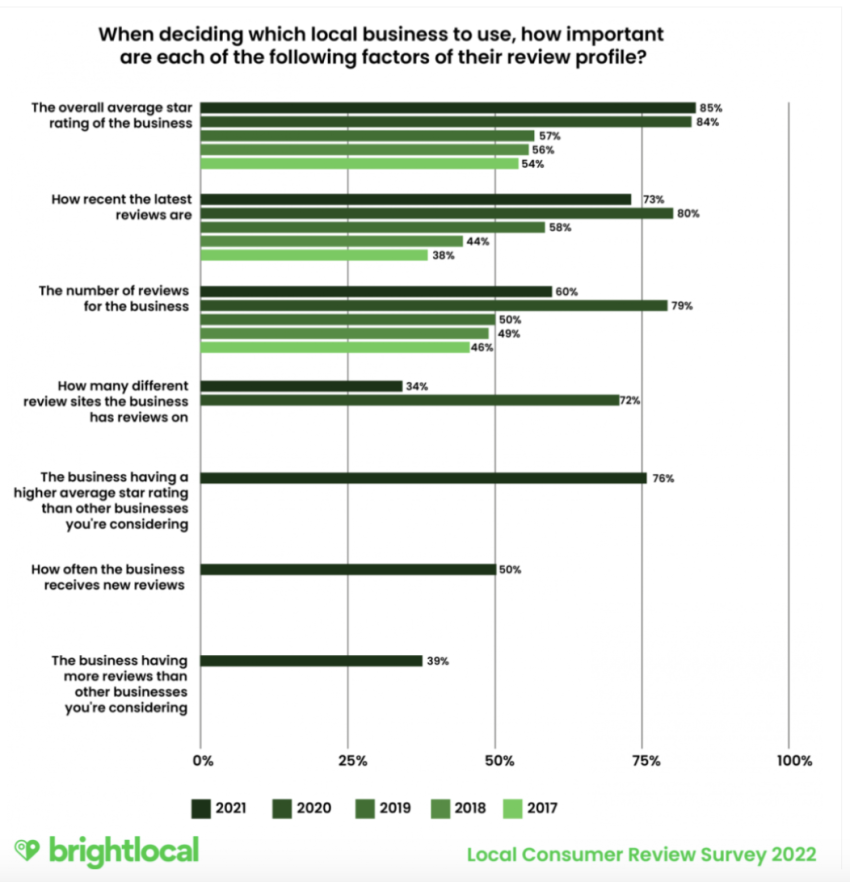
Once customers clearly define their problem, they enter the consideration phase, where they actively consider different solutions. They compare brands, read in-depth product reviews, and contact businesses directly for information.
Since 88% of customers trust online reviews as much as personal recommendations, you need to build credibility and stand out from the crowd. You can achieve this by providing detailed product specifications, comparison guides, compelling case studies, and offering free trials or personalized demos.
Retargeting ads and automated email sequences keep your brand top of mind as customers approach a decision.
3. Purchase/conversion
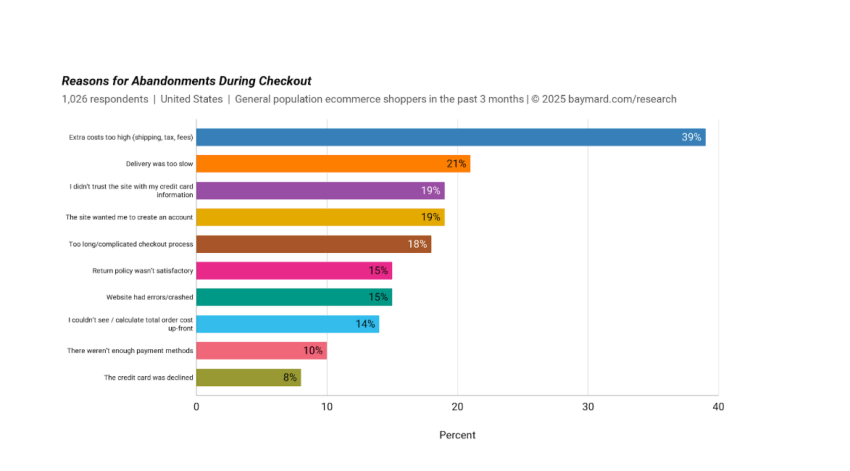
This is the moment a potential customer makes a decision. The focus is on the transaction itself — adding items to the cart, reviewing shipping details and return policies, and providing payment information.
With an average cart abandonment rate for online retailers of nearly 70%, you need to make this process as simple and transparent as possible. Offer a streamlined, frictionless checkout process, offer multiple and localized payment options, use live chat for last-minute questions, and build trust with security badges and clear guarantees to prevent abandonment.
4. Retention/loyalty
The journey doesn’t end with the sale but keeps evolving. Since acquiring a new customer can be five times more expensive than retaining an existing one, this phase is crucial for sustainable growth.
After the purchase, the customer uses the product, tracks their order, or contacts support. Your brand’s focus must shift to delivering on your promise and investing in your business’ success.
You can achieve this through structured onboarding guides, personalized post-purchase messages, proactive and cross-channel customer service, and exclusive reward programs that encourage repeat business and strengthen customer relationships.
5. Advocacy
In the final step, satisfied customers turn into active brand advocates. They voluntarily share their experience with others by leaving positive reviews, recommending friends and colleagues, and posting their own content about your product on social media.
Make sure to amplify this powerful word-of-mouth marketing. Launch referral programs with attractive rewards, actively collect and present customer reviews, and develop reward programs that turn your most loyal customers into voluntary marketing forces.
How Can You Optimize Your Customer Journey?
Optimization is a systematic process. Here’s how to achieve it effectively:
1. Set a specific goal
Before making any changes, know what you want to achieve. First, set a specific, measurable goal to guide all decisions in the optimization process. Link this goal directly with a core business objective so your efforts have a meaningful impact.
For example, if your business goal is to increase online sales by 20%, a high-impact journey goal would be to reduce shopping cart abandonment from 70% to 55% within the next six months.
2. Create customer personas
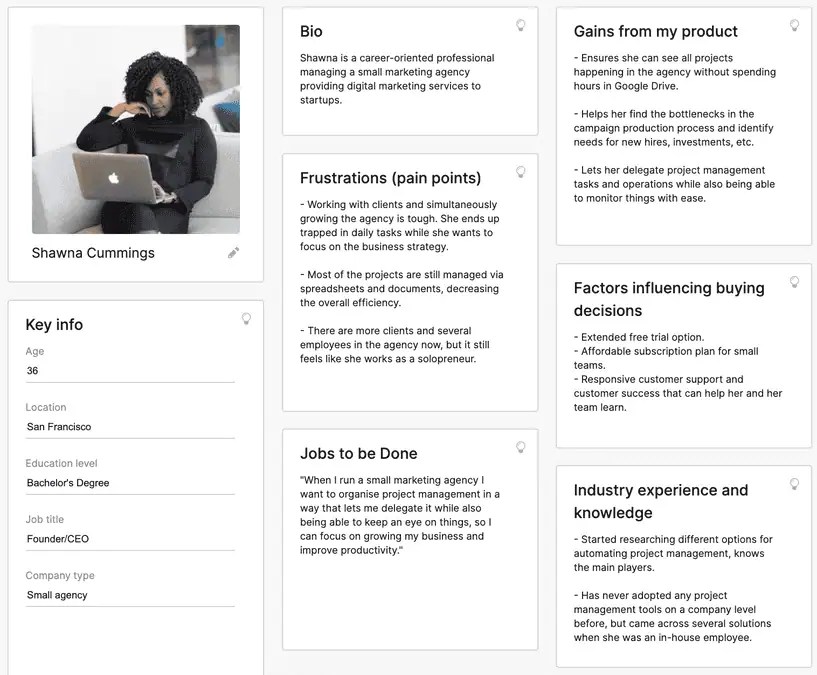
You can’t design a great customer journey without knowing who you’re designing it for. Develop customer personas — semi-fictional representations of your ideal customers based on real data.
Analyze your existing customer base, carry out surveys, and conduct market research to create detailed customer profiles beyond demographics — consider motivations, goals, and pain points. Customer personas help you avoid designing for a generic “average user” and tailor touchpoints to the expectations of your most valuable customer segments.
3. Map the customer journey
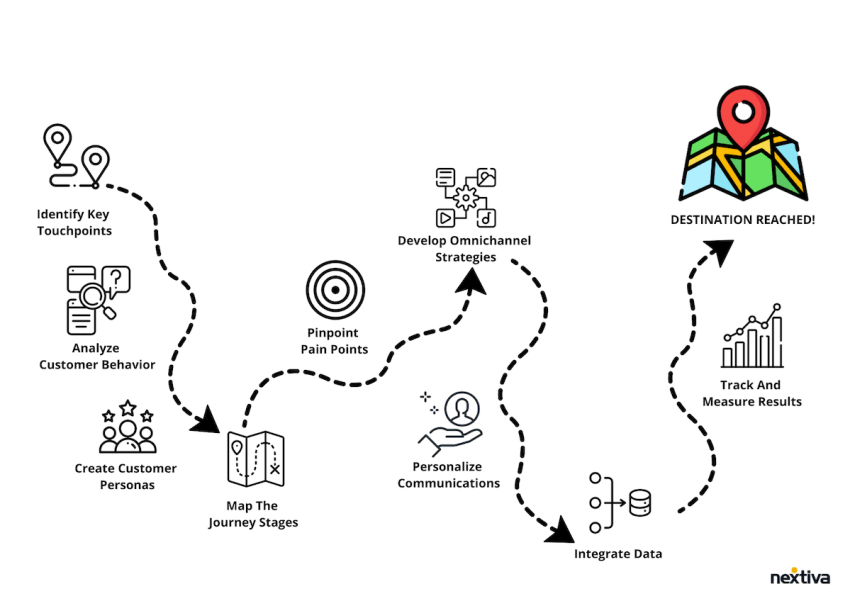
A customer journey map is a visual representation of the entire process your persona goes through — from initial contact to becoming a loyal advocate. Journey mapping enables you to see the experience from your customers’ perspective about your process. Map each stage to the corresponding touchpoints (e.g., awareness → social media ad; consideration → website product page; support → live chat) to get a complete picture of each interaction.
4. Pinpoint friction with data
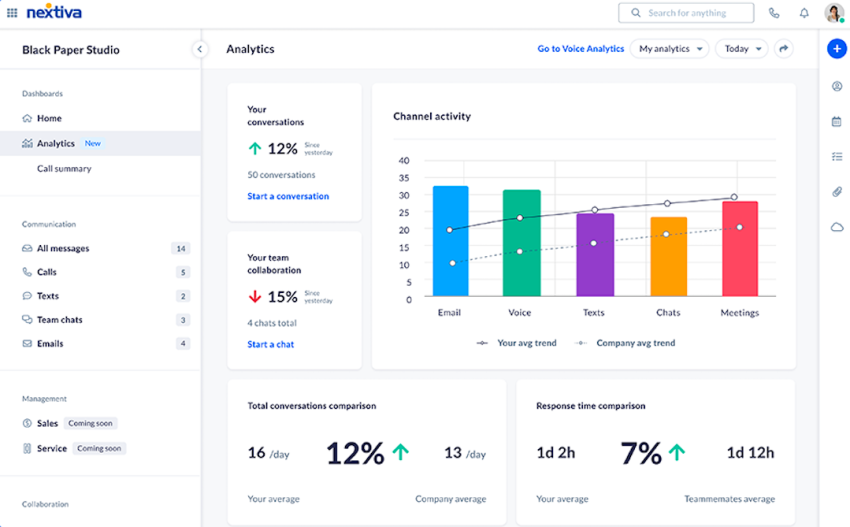
Your journey map provides the structure; data provides the truth. Now, analyze the existing journey to find the friction points that cause frustration and abandonment.
- Identify the “what” and “where”: Use quantitative data from conversation analytics tools to identify problems. Metrics such as high bounce rates, conversion abandonment between certain steps, or low feature adoption show exactly where users are struggling.
- Understand the “why”: Use qualitative tools to understand the causes behind the numbers. Heatmaps and session recordings show you how users click and scroll on a page. Don’t underestimate the importance of a “journey guide” — experiencing each step yourself will uncover obvious problems that metrics alone don’t cover.
5. Collect customer feedback
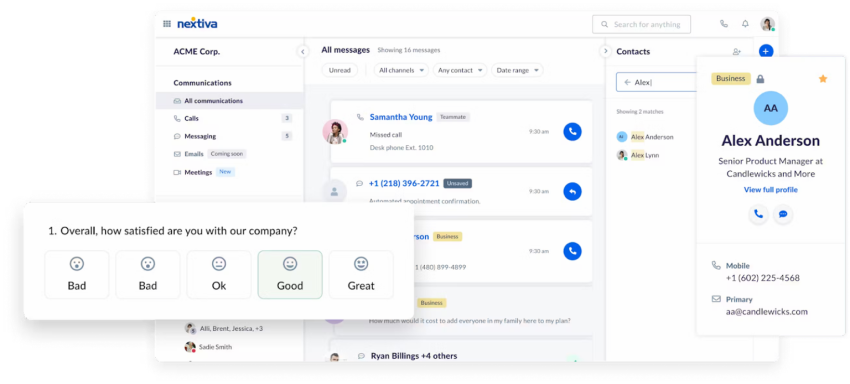
Customer journey analytics provides you with direct feedback, root causes, and customer sentiment. Use concise surveys at key moments (e.g., after a purchase or support interaction) to capture sentiment in real time.
Gartner studies show that systematic feedback can increase upselling and cross-selling success rates by 15–20%. Ask simple, direct questions to get actionable insights.
6. Implement and test changes
This is where insights turn into action. Based on your analysis and customer feedback, build a hypothesis and implement targeted improvements. Instead of making changes based on gut feeling, use A/B testing.
For example, if your data shows a high abandonment rate after shipping costs are disclosed, your hypothesis could be: “A banner saying ‘Free shipping on orders over $250’ at the beginning of the process will reduce the abandonment rate.” You can then A/B test this change to see if it gets you closer to your goal.
7. Personalize the customer experience
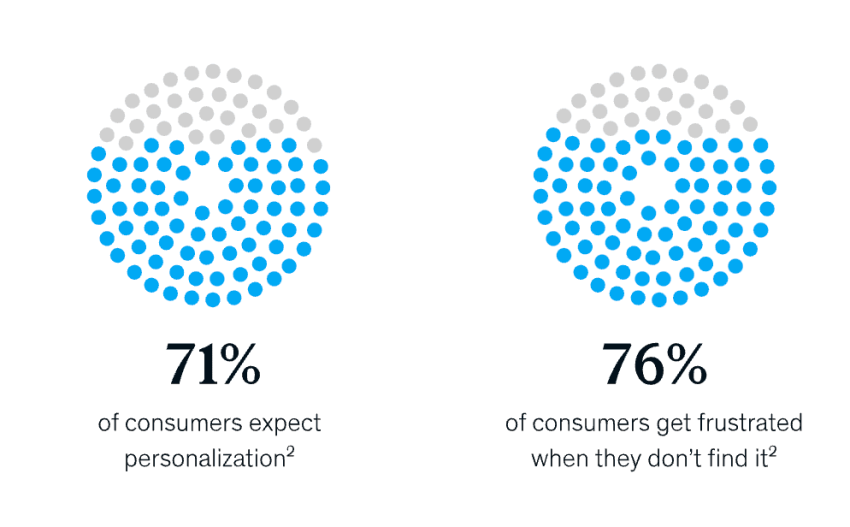
McKinsey reports 71% of consumers expect companies to deliver personalized interactions. You need to use the data and insights gathered throughout your optimization process to make each customer feel seen.
Start by segmenting your audience for more relevant messaging. Then, use customer experience technology to implement more advanced tactics, like product recommendation engines based on browsing history or proactive support that acknowledges a customer’s previous interactions to better optimize the customer journey.
Best Practices for Effective Customer Journey Optimization
Beyond the step-by-step process, incorporate these best practices into your company culture to optimize your customer journey from the get-go:
Break down silos
Customers don’t see departments, they see a brand. A fragmented experience where marketing, sales, and support don’t share information is disruptive and undermines trust.
The most important best practice is to break down these internal silos. Use a unified communications platform to create a single source of truth for all customer data and give every team the right context to deliver an intelligent and supportive experience.
Offer an omnichannel experience
Your customers interact with you across your website, social media, email, and phone. Experience should naturally be consistent across the board.
According to Digiday, strong omnichannel strategies contribute greatly to revenue growth. A unified contact center platform is key here to help customers transition from live chat to follow-up calls without losing context. Omnichannel customer experience makes customers feel heard and valued at every touchpoint.
Provide easy support access
Customers shouldn’t have to struggle to find help. Make getting in touch with your support as easy as possible.
Provide clear, accessible, and responsive contact options at every stage of your customer journey. Offer different channels for different needs — live chat for quick questions, email for detailed inquiries, and phone support for complex issues. Also, show these options clearly and respond swiftly to prevent minor issues from becoming major frustrations.
Keep adapting your customer journey map
Customer expectations, technologies, and market trends change. Your customer journey map isn’t a static document, but a living one. Schedule regular reviews — at least quarterly or semi-annually — to analyze team performance, incorporate customer feedback, and adapt to new behaviors. This iterative process aligns your customer experience strategy with your customers’ actual wants and needs and allows you to improve.

With the right tools, it’s easy to understand customer behavior, improve engagement, and optimize your customer journey. A mix of the following technologies provides a clearer picture of your customers and enables better optimization.
Analytics tools
They’re your eyes and ears, helping you track customer behavior, website traffic, and conversion data. Customer analytics tools enable you to identify drop-off points, spot trends, and make data-driven decisions.
Examples: Nextiva, Google Analytics, Mixpanel, Hotjar
CRM software
Customer relationship management (CRM) software stores customer data and tracks interactions across all channels. They help personalize communications and manage relationships throughout the customer lifecycle.
Examples: Salesforce, HubSpot CRM, Zoho CRM
User experience (UX) tools
UX tools provide insights into how customers interact with digital platforms. They highlight usability issues and help you optimize interfaces for better navigation, increased engagement, and greater satisfaction.
Examples: Crazy Egg, FullStory, Adobe XD
Survey and feedback tools
Survey tools let you easily understand your customers’ needs, preferences, and frustrations, helping you identify pain points and areas for improvement.
Examples: SurveyMonkey, Typeform, Qualtrics
Contact center software
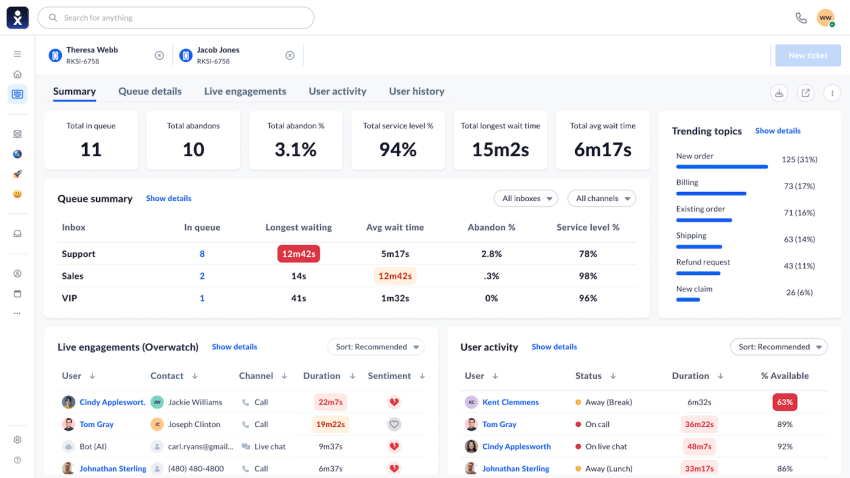
Contact center software supports customer service by optimizing communication via phone, chat, and email. Advanced contact center providers offer AI capabilities too to automate repetitive tasks, monitor service quality, and offer timely support.
Examples: Nextiva, Zendesk, Five9
Where Do You Rank on the AI Maturity Curve?
Take the 5-minute assessment and get a personalized score and recommended next steps.
Optimize Your Customer Journey with Nextiva
Creating an outstanding customer experience means delivering a product or service while understanding the entire customer journey. This includes identifying customer challenges and optimizing each step to meet their needs.
You’ve explored the key stages of the customer journey, how to identify and address pain points, the importance of feedback, and the tools for effective customer journey optimization. You’ve also seen how aligning teams, personalizing experiences, and regularly reviewing the customer journey build stronger customer relationships and long-term business growth.
Optimization is a commitment to learning, improvement, and adaptation. Brands that put the customer at the center of everything they do succeed. Start today and make your customer journey your greatest competitive advantage.
Nextiva streamlines customer journey management through proactive, AI-powered workflows, unified customer communication, and reliable customer journey tracking. It’s never been easier to personalize customer engagement and deliver intelligent, intuitive experiences at every interaction.
Stay a step ahead of customers’ needs.
See Nextiva’s customer journey capabilities in action.
Customer Journey Optimization FAQs
Customer journey mapping is like drawing a detailed route. It visually depicts every step a customer takes in their interaction with your brand, from the initial touchpoint to post-purchase. Customer journey optimization, on the other hand, is about refining that route. Using the journey map, you identify pain points, close gaps, improve the experience, and align each touchpoint with customer expectations.
Review and update your journey map at least once or twice a year. However, you should review it again sooner if there are bigger changes, such as the launch of new products or services, the adoption of new technologies (like a new CRM or support platform), or if you notice shifts in customer behavior or market trends.
Track a mix of qualitative and quantitative metrics, including customer satisfaction scores (CSAT), Net Promoter Score (NPS), conversion rates, abandonment points, retention rates, and the Customer Effort Score (CES).
Common missteps include focusing too much on internal goals rather than customer needs, ignoring feedback, making assumptions without data, and treating the journey as a one-time project rather than an ongoing process.
