



Outbound teams face growing digital fatigue and must adapt to maintain engagement. In 2026, a productive outbound call center operates as a proactive growth engine instead of a simple calling floor. Teams synchronize outreach across channels and connect with customers during peak engagement windows to support strong business communication.
To stay competitive, your call center operation must combine automated digital journeys with high-value human interaction. This article shows how current outbound frameworks focus on quality over raw volume and highlights the features you need to build a business that drives measurable revenue.
Evaluating contact centers? Get the buyer’s guide.
This guide reveals the five pillars of a modern platform, key questions to ask, and red flags to avoid.
What Is an Outbound Call Center?
An outbound call center is a contact center operation where agents proactively initiate contact by making outbound calls to prospective clients and target customers within strict regulatory and consent-based frameworks.
Unlike inbound call centers, which primarily handle incoming calls and only incoming customer inquiries, outbound call centers focus on generating leads, appointment setting, telemarketing, making sales, conducting surveys, and providing proactive customer service.
Outbound call centers typically employ teams of agents who use specialized software and dialing systems to manage high call volume. Integrated with customer relationship management (CRM) tools, predictive dialers, and performance analytics, these contact centers optimize business operations and help achieve specific goals across ongoing outreach efforts.
Modern outbound centers are now employing teams of human agents supported by agentic AI workflows. These AI agents manage low-complexity tasks such as initial qualification, automated notifications, and data verification. This support allows human agents to concentrate on high-value conversations and negotiations.

Why is the Outbound Call Center Important in 2026
Some people assume outbound calling has declined due to digital channels. In reality, it has advanced.
Modern sales and customer engagement strategies use phone outreach with email, messaging, and social media. This multichannel approach has improved response rates and helped companies connect with customers during peak engagement windows.
Phone calls are relevant because they offer:
- Real-time conversation: Agents can immediately address questions, objections, and concerns.
- Higher engagement: Voice conversations often produce stronger engagement compared with asynchronous communication.
- Personalized communication: Agents can adapt messaging based on customer responses.
- Faster deal cycles: Outbound calls accelerate sales and shorten decision-making timelines.
Because of these benefits, companies treat outbound call centers as revenue-driving growth engines rather than simple calling operations that support outbound sales calls and relationship development.
How Does an Outbound Call Center Work?
An outbound call center actively reaches out to prospects or customers instead of waiting for incoming inquiries.
In 2026, outbound call centers combine traditional human persuasion with algorithmic precision. Instead of depending on large call volumes, modern systems guide agents through a structured workflow that prioritizes the right prospects and automates administrative tasks.
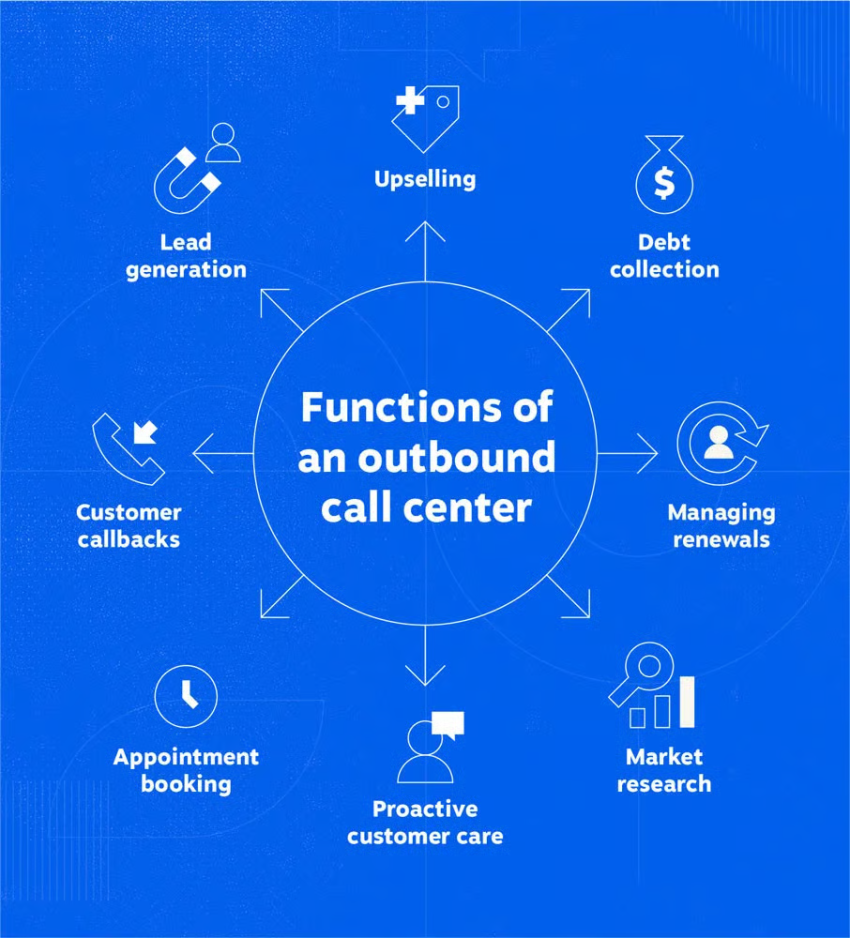
Most outbound call centers operate through a structured process of customer engagement:
1. Lead sourcing and campaign strategy
Every outbound campaign starts with a contact list. The quality of this list determines how successful the campaign will be.
Traditional outbound call centers depend on static contact lists, but modern systems work with continuously updated pipelines that prioritize prospects based on real-time signals.
Traditional lead sourcing methods
Many outbound teams still build contact lists using established data sources:
- CRM exports containing previous leads or customers
- Purchased lead databases from third-party vendors
- Existing client directories or partner referrals
- Marketing campaign sign-ups and website form submissions
Campaign managers typically segment these lists manually by industry, region, customer type, or purchase history.
Modern signal-based selling
In 2026, outbound call centers depend on dynamic lead pipelines rather than static spreadsheets. Instead of compiling lead lists, the system continuously analyzes behavioral signals such as:
- Previous interaction history with sales teams
- Email engagement and marketing activity
- Website visits to pricing or product pages
- Contract renewal timelines
- Intent signals from third-party platforms
When a prospect shows buying intent, such as visiting a pricing page or researching competitors, the system automatically moves that lead to the top of the dialing queue. This prioritization helps agents focus on prospects with the highest probability of conversion.
Compliance screening
Before agents begin communication, the system verifies all phone numbers against compliance databases. These checks include:
- National Do Not Call (DNC) registries
- Internal suppression lists
- Customer opt-out records
This compliance process protects companies from regulatory violations and ensures legally compliant customer contact through trusted outbound call center services.
2. Technical connection
After identifying the right prospects, the outbound platform establishes the connection between the business and the customer’s phone.
This stage acts as the technical handshake between the call center and the telecom network. Modern infrastructure focuses on improving answer rates and preventing calls from being labeled as spam.
Traditional vs modern connection infrastructure
| Approach | Caller ID | Verification | Connectivity | Channel | Impact |
|---|---|---|---|---|---|
| Traditional Outbound Call Centers | Random or static local numbers | Limited or no formal authentication | Manual dialing or basic autodialers | Voice calls only | Lower answer rates and a higher risk of calls being ignored or flagged |
| Modern Outbound Call Centers (2026) | Branded calling with rich call data (RCD) showing company name and logo | STIR/SHAKEN level A carrier verification | Ultra-low latency dialing (<100 ms) that connects agents instantly | Optichannel engagement, including voice, SMS, and LinkedIn follow-ups | Higher trust, improved answer rates, and better engagement across multiple channels |
A contact list only works when calls successfully reach customers. Modern outbound platforms focus on call authentication, recognizable caller identity, and fast connection speeds to ensure calls reach their intended recipients regardless of the type of call being placed.
3. Engagement and active calling
Once a prospect answers the phone, the conversation begins. At this stage, outbound call centers combine structured sales frameworks with real-time technology that helps agents navigate the discussion.
Core dialing methods used in outbound call centers
Different dialing methods help agents manage outreach with better productivity.
- High-touch preview dialing: Agents review a prospect’s information before placing the call. This approach works best for complex B2B sales where preparation improves conversation quality.
- Momentum-based power dialing: The system automatically dials contacts sequentially from the list. When one call ends, the platform immediately places the next call, helping agents maintain momentum.
- Algorithmic predictive dialing: Predictive dialers use algorithms to estimate when agents will become available. The system places calls in advance and connects answered calls to the next available agent.
This method maximizes talk time and minimizes idle periods between calls.
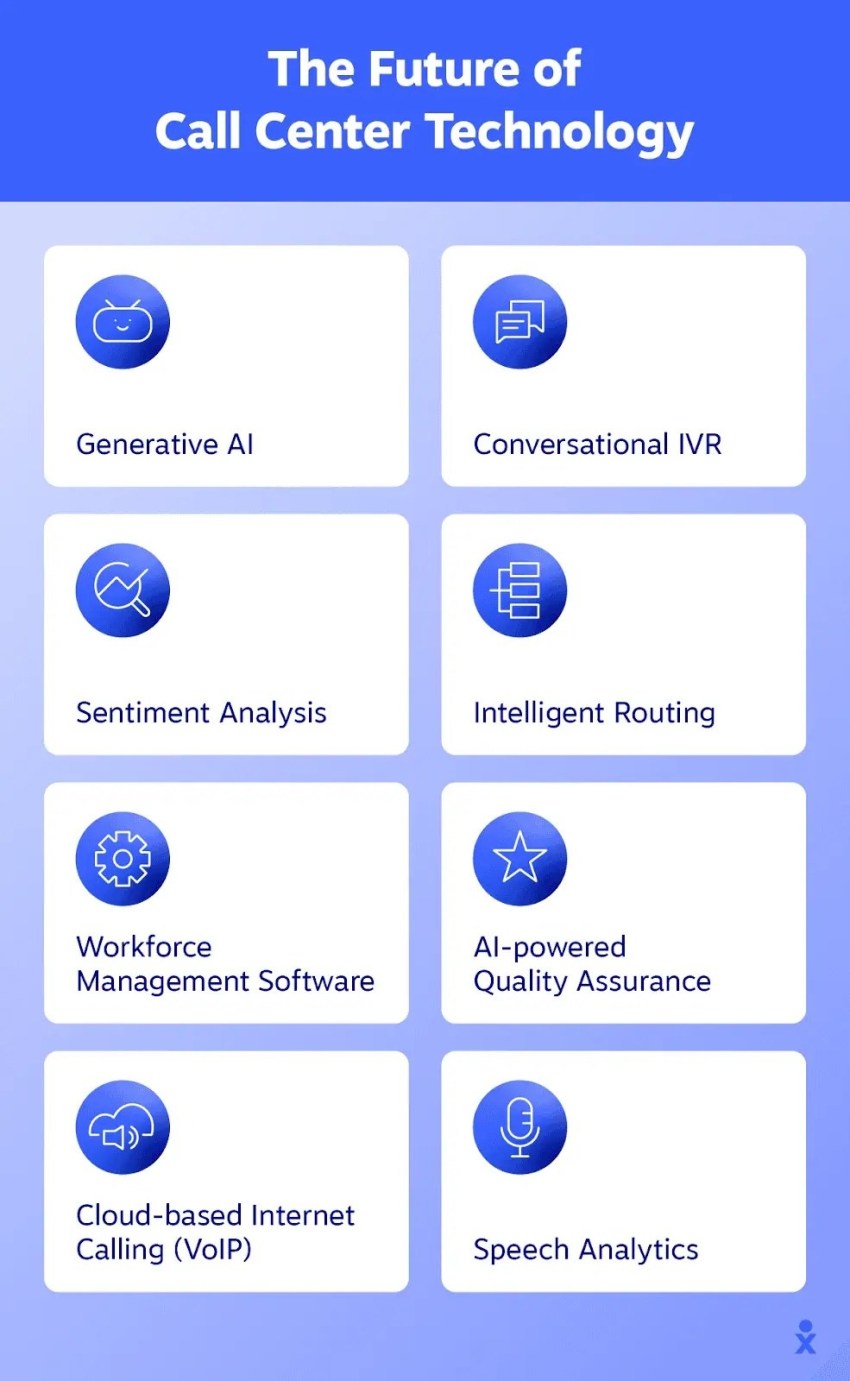
AI-powered call assistance
Modern outbound call centers enhance these traditional dialing methods with AI-driven assistance.
- Real-time whisper prompts: AI monitors the conversation and detects keywords or topics. If the prospect mentions a competitor or pricing concern, the system instantly displays relevant talking points on the agent’s screen. These prompts help agents respond confidently without searching for information during the call.
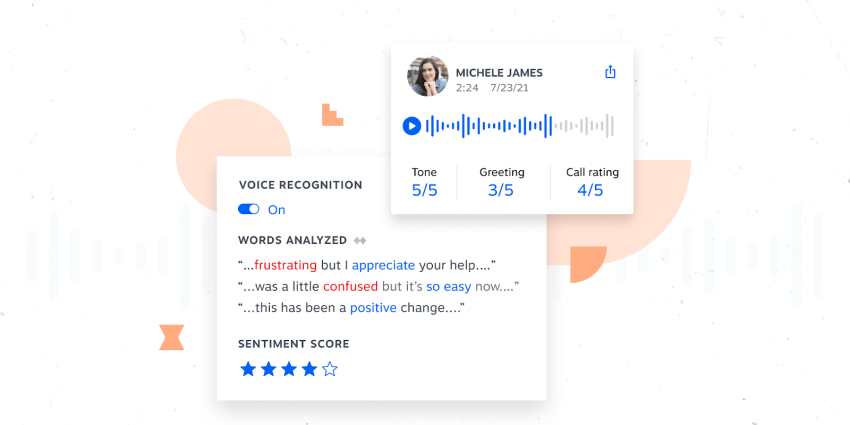
- Live sentiment analysis: Advanced dashboards track the emotional tone of the conversation. If the system detects frustration or hesitation, it can suggest alternate responses, escalation options, or promotional offers to improve the outcome. This real-time feedback helps agents adjust their approach while the call is still in progress.
4. Post-call orchestration
The outbound workflow continues even after the call ends. This phase determines whether the conversation leads to meaningful continued engagement.
Traditional post-call workflow
In traditional call centers, agents manually record the outcome of each call by selecting a disposition such as interested, not interested, left voicemail, or call back later. Agents also schedule post-call contact tasks or send emails manually.
Modern automated post-call processes
In many current outbound operations, AI automates these administrative tasks. Modern systems can:
- Generate call summaries and log them directly into the CRM
- Update lead scores based on the outcome of the conversation
- Schedule follow-up reminders or meetings
- Send product information or brochures automatically
Zero-touch follow-up
If an agent promises to send additional information during the call, the platform automatically delivers the relevant email or document immediately after the conversation ends. This zero-touch workflow removes manual data entry and allows agents to move quickly to the next call while maintaining a scalable outreach process.
Types of Outbound Call Centers
Outbound call centers support different business goals depending on their primary function. Each type focuses on a specific objective, such as generating revenue, qualifying prospects, strengthening customer relationships, or gathering business insights.
Sales call centers
Sales call centers generate revenue by converting prospects into paying customers. Using telesales strategies, agents contact leads directly and guide them through the buying process by introducing products or services, answering questions, and addressing objections.
Outbound sales teams depend on customer data and analytics to identify high-value prospects. Predictive dialers and CRM platforms help agents manage a large call load while maintaining personalized conversations.
Key activities include:
- Contacting prospects to introduce products or services
- Addressing objections and guiding prospects toward a purchase decision
- Closing deals with new customers
- Upselling and cross-selling to existing customers
- Using predictive dialers and CRM insights to prioritize high-value leads
As customer attention becomes harder to capture, sales call centers combine phone calls with emails and messaging to maintain engagement and improve conversion rates.
Lead generation call centers
Lead generation call centers identify potential buyers and qualify prospects for the sales team. Agents use different tools to collect contact details, evaluate interest levels, and schedule follow-up conversations or product demonstrations.
These teams keep the sales pipeline active by delivering qualified prospects. Data segmentation and analytics help agents focus on leads with the strongest buying signals.
Typical responsibilities include:
- Identifying potential customers and verifying contact information
- Qualifying prospects based on interest, budget, or need
- Scheduling appointments or demos for sales representatives
- Updating prospect profiles in CRM systems
- Using AI-powered lead scoring to prioritize outreach
By supplying well-qualified opportunities, lead generation call centers allow sales teams to concentrate on closing deals rather than searching for prospects.
Customer retention call centers
Customer retention call centers focus on maintaining long-term relationships with existing customers. Agents reach out to clients to ensure satisfaction, resolve emerging issues, and encourage contract renewals or subscription upgrades.
These centers are important for industries that depend on recurring revenue, such as telecom, SaaS, and insurance.
Key retention activities include:
- Contacting customers to measure satisfaction and engagement
- Addressing concerns before they lead to cancellations
- Encouraging contract renewals or service upgrades
- Recommending relevant products based on customer history
- Following up through calls, chat, or email to maintain engagement
These proactive conversations help companies improve retention and strengthen customer loyalty in the long run.
Market research call centers
Market research call centers gather insights that guide strategic decisions. Agents conduct surveys, interviews, and feedback calls to understand customer opinions about products, services, and brand perception.
Organizations use this information to identify trends, evaluate marketing campaigns, and test new offerings before launching them at scale.
Typical research activities include:
- Conducting customer surveys and structured interviews
- Collecting feedback on products, services, or brand perception
- Testing reactions to new ideas or marketing campaigns
- Following up on automated survey responses for deeper insights
- Recording and analyzing customer responses for strategic planning
After collecting accurate feedback, market research call centers help organizations align their offerings with real customer needs.
Debt collection call centers
Debt collection call centers recover overdue payments by contacting customers directly. Agents remind customers about outstanding balances, explain repayment options, and negotiate payment arrangements when necessary.
Well-trained collection teams maintain a professional tone and follow legal guidelines while working toward recovery goals.
Core activities include:
- Contacting customers about overdue balances
- Explaining payment options and settlement plans
- Sending reminders and payment confirmations
- Negotiating repayment schedules with customers
- Using predictive analytics to prioritize accounts with higher recovery potential
These collection centers also combine automation, payment portals, and analytics to improve recovery rates while maintaining respectful communication.
Fundraising call centers
Fundraising call centers secure donations for nonprofits, charities, and political campaigns. Agents contact potential donors to explain the organization’s mission, answer questions, and encourage financial contributions.
Successful fundraising calls combine persuasive communication with empathy and transparency about how donations support the cause.
Common fundraising activities include:
- Contacting potential donors and explaining the organization’s mission
- Requesting donations or pledge commitments
- Answering donor questions and providing campaign details
- Tracking donation pledges and donor interactions in CRM systems
- Following up with supporters through calls, email, or messages
With targeted outreach and personalized communication, fundraising call centers increase donor participation and build lasting supporter relationships.
Outbound vs. Inbound Call Center
Both outbound and inbound call centers connect businesses with their customers, but they do it in opposite ways, as you may have guessed:
- Inbound call centers focus on handling incoming calls. Customer calls for support, has billing questions, or wants to place an order. The goal is to provide fast service that resolves issues and builds loyalty.
- Outbound call centers, as the name suggests, focus on outgoing calls. Here, agents are the ones proactively reaching out to customers or prospects to generate sales, conduct surveys, or follow up on service. The goal is to engage, inform, and drive business growth.
In terms of similarities, both types depend on skilled call center agents, call management tools, and performance metrics like call quality, resolution rates, and customer satisfaction.
But where they differ is that inbound responds to customer needs, while outbound initiates contact with the customer or prospective customer.
And, of course, there are also hybrid (or blended) call centers, which handle both inbound and outbound calls. This type is used by businesses that both serve and sell to customers by phone, most notably: e-commerce/retail, financial services, and healthcare providers.
Inbound vs. outbound contact center comparison
| Feature | Inbound contact center | Outbound contact center |
|---|---|---|
| Primary trigger | Customer-initiated (Reactive) | Business-initiated (Proactive) |
| Core goal | Problem resolution and support | Growth, sales, and retention |
| Key metric | First contact resolution (FCR) | Connection quality, sentiment swing, and conversion. |
| Tech priority | Intelligent IVR and call routing | Branded/verified caller ID, predictive AI, and agentic AI |
| Agent skillset | Empathy and technical knowledge | Persuasion and objection handling |
Benefits of Outbound Call Centers
Outbound call centers are essential to modern business operations for many reasons:
Proactive customer engagement
As opposed to inbound centers that have to wait for customers to reach out (if they even do), outbound call centers allow businesses to take the initiative. By calling their customers first, agents can give them special offers or important reminders that they might otherwise miss.
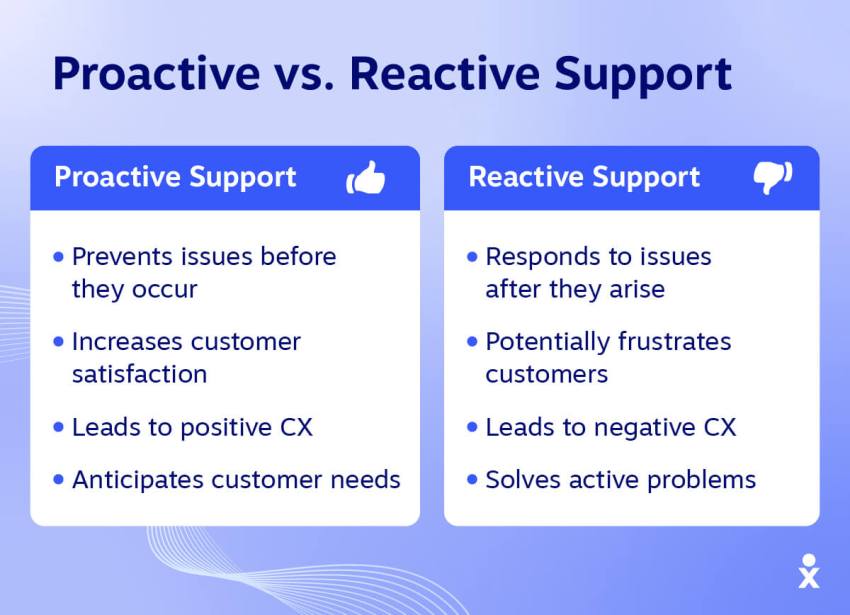
This proactive approach strengthens client relationships and presents the brand as attentive and engaged, at a time when automation dominates many interactions. When teams reach out before a need becomes urgent, they improve satisfaction, build long-term loyalty, and increase the likelihood of 5-star ratings and positive customer reviews.
Personalize customer interactions
An outbound contact center connects your company directly with your audience and enables personalized interactions that build trust and loyalty. Teams initiate conversations, understand customer needs, and offer tailored solutions, something a website or email alone cannot replicate.
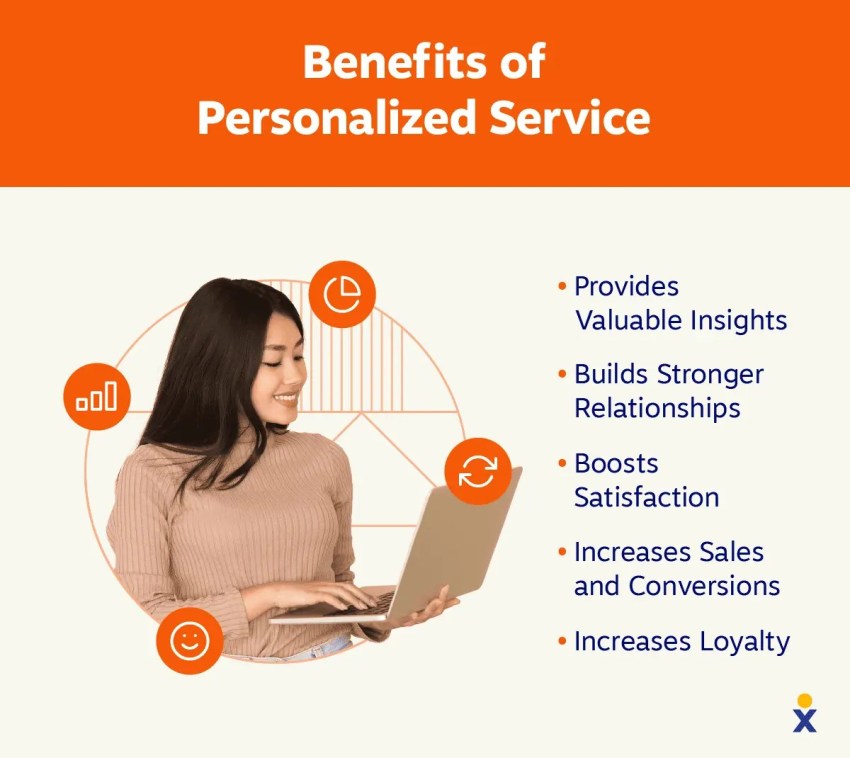
The right tools and technologies empower agents to deliver exceptional customer service. Call recording, real-time analytics, and smart dialing software enable efficient communication, agent performance monitoring, and data-driven insights to constantly improve customer interactions.
Drive revenue growth
Outbound calling is a proven method for generating leads, conducting market research, and sales. Actively reaching out to potential customers means you’re not just waiting for them to find you; you’re taking charge of your sales pipeline and creating opportunities.
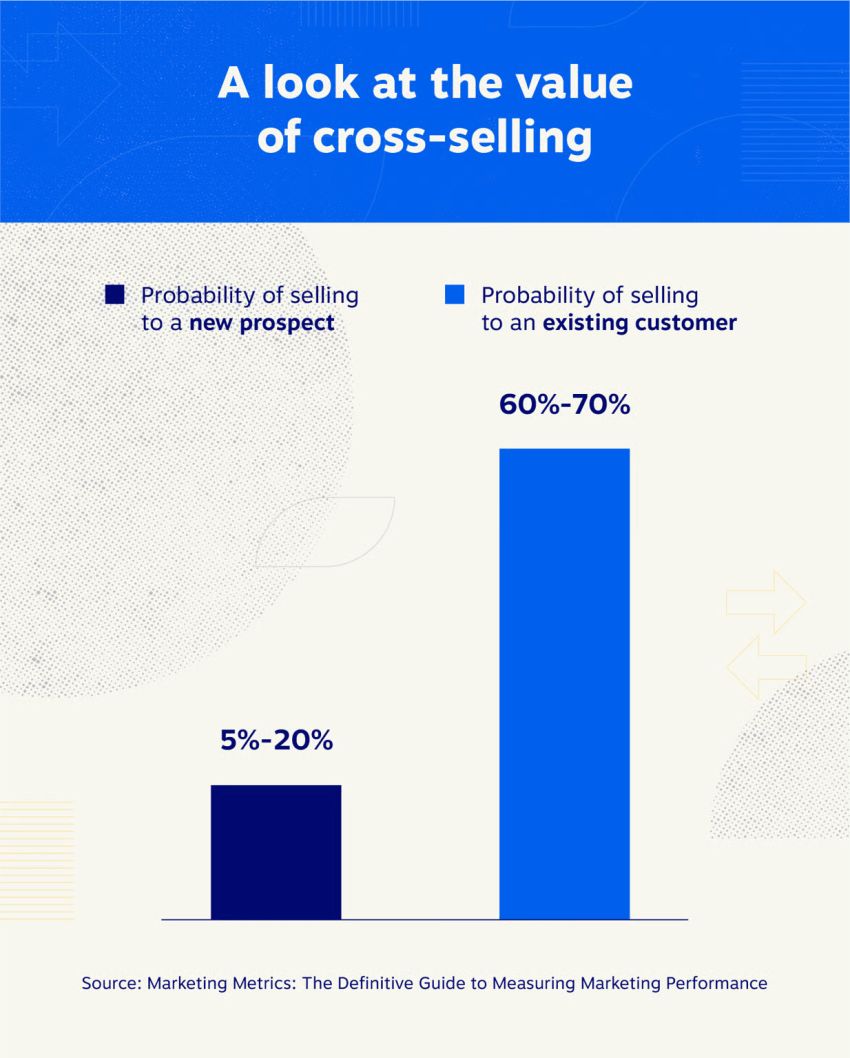
You can reach many potential customers quickly and efficiently with outbound call centers. Automated outbound dialing methods let call center managers maximize their phone time and increase success rates.
Increase agent productivity
With contact center software and integrations, call agents streamline their workflow and spend more time on phone calls. Business process outsourcing (BPO) firms can handle new deals and route the info to your sales reps when a prospect is ready for a sales discussion.
Support strategic initiatives
Outbound call centers are versatile. They support various campaigns and functions like lead qualification, customer feedback collection, and customer service, keeping you ahead of the curve.
Businesses can access valuable data on customer preferences, buying behavior, and pain points to inform product development, marketing strategies, and customer service initiatives.
An outbound call center isn’t just a cost center; it’s an investment in growth, customer partnership, and better business strategy.
Features of Outbound Call Center Software
Here are a few key features to consider when looking for an outbound contact center provider.
Dialer tools
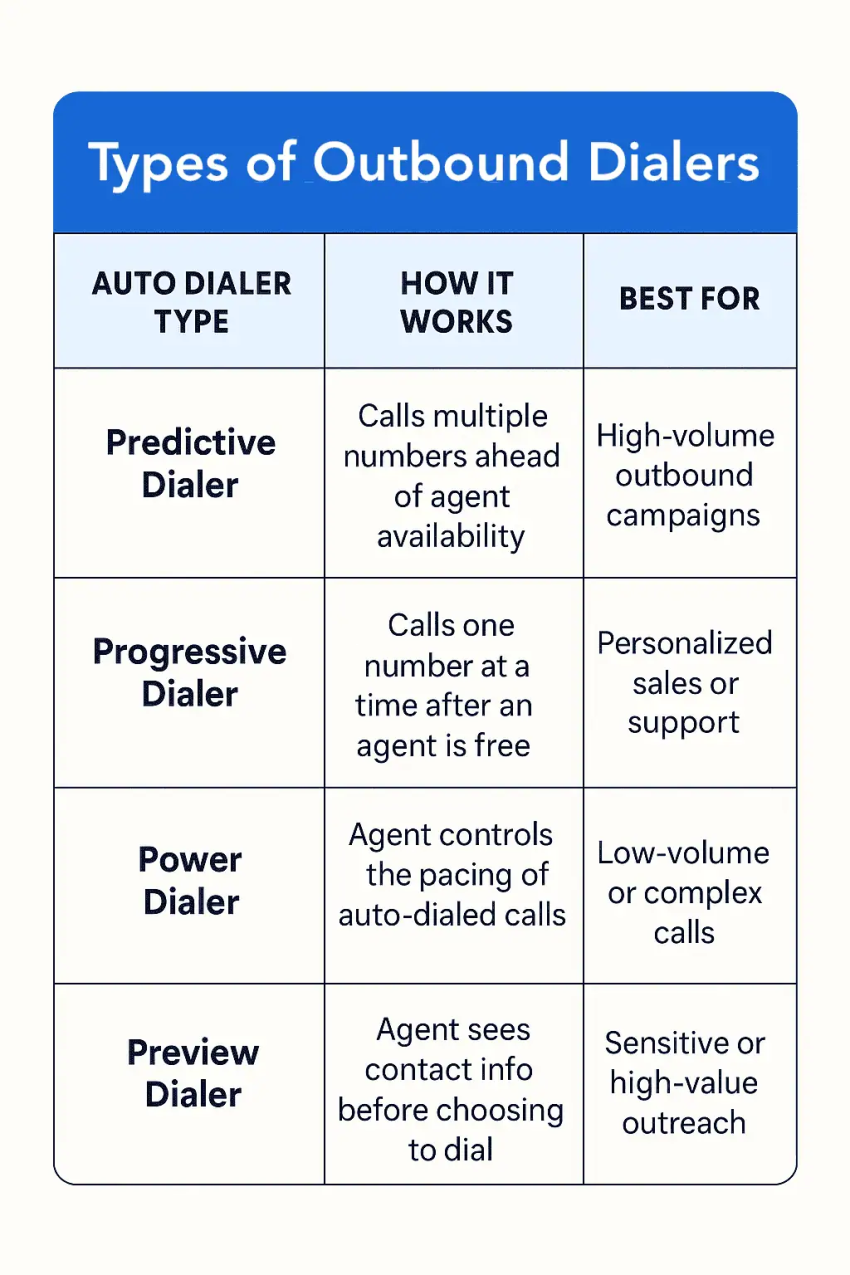
Sales dialers help call center representatives work faster and handle a higher number of calls. The types of dialer tools differ within outbound call center software, but here are a few of the most common:
- Predictive dialer: A predictive dialer tool automatically dials numbers for agents. Nextiva prohibits the use of an auto/ predictive dialer for high-value outbound calls.
- Power dialer: This dialer automatically dials through a contact list sequentially, moving to the next number as soon as a call ends or goes unanswered.
- Progressive dialer: Dials numbers one at a time as agents become available, which helps balance speed and efficiency with a personal touch.
- Business phone calls: With VoIP phone service, agents can make calls anywhere there’s an internet connection. This lets them work remotely and eliminates the need for a phone line.
- SMS reminders: Send a short SMS reminder from your outbound contact center before a meeting. A reschedule is better than a no-show.
Custom caller ID
If a caller ID phone number is local to the customer, they’re more likely to answer the call. That’s why a modifiable caller ID is essential in outbound communication.
The agent’s desktop can see only the customer’s number entered by the agent. The incoming call at the customer’s end shows up with a phone number belonging to their area.
Click-to-call capability
Click-to-call is sometimes referred to as a click-to-dial or one-click calling. It’s a phone system feature that connects phone calls using VoIP.
Call recording
The ability to record phone conversations with customers can greatly improve agent success. This feature is also used to track agent performance to help them improve.
With VoIP call recording, companies can offer quality call assurance, minimize legal risks, and increase accountability.

Key Performance Indicators (KPIs) for Outbound Call Centers
Success in outbound operations depends on how well teams convert high-intent signals into revenue while protecting the company’s brand reputation. Tracking the right performance metrics helps leaders understand call quality, agent productivity, and overall campaign results.
The table below highlights the key metrics used to measure a high-performance outbound call center.
Outbound Call Center KPIs
| KPI name | What it measures | Typical industry benchmark |
|---|---|---|
| Answer success rate | The percentage of outbound calls answered by a live person. | 5% – 30% depending on campaign type |
| Sentiment improvement | The percentage of calls that move from negative to positive sentiment. | Varies by analytics platform |
| Lead conversion rate | The percentage of connected calls that lead to a sale or appointment. | 2.5% – 5% |
| First call close (FCC) | The percentage of deals completed during the first interaction. | 15% – 30%, depending on lead quality |
| Cost per acquisition (CPA) | Total operational cost divided by the number of successful conversions. | Varies by customer lifetime value |
| Agent occupancy | The percentage of time agents spend handling calls compared with idle time. | 75% – 85% |
Challenges With Outbound Call Centers (+Best Practices)
Outbound call centers help make dedicated outgoing calls to achieve various business goals. It’s not just about picking up a phone and making calls; several key components work together to make it successful. And they come with their own challenges, too.
Understanding these components and following some best practices will help you make headway in your call center services and improve your contact center experience.
High call rejection rates and negative customer perception
An unsolicited outgoing call (or cold call) can be perceived as intrusive and lead to high rejection rates.
Best practice: To address this, centers can adopt a more personalized and targeted approach, ensuring that calls are relevant and valuable to the recipient.
Agent attrition and turnover
The demanding nature of outbound calling can lead to high outbound call center agent turnover.
Best practice: Investing in comprehensive training, providing competitive compensation and benefits, and creating a positive work environment can help retain talented agents.

Maintaining data privacy and security
Handling sensitive customer data requires robust security measures to prevent breaches and protect privacy.
Best practice: Compliance with data protection regulations is not only the answer to this issue, but it’s also essential.
Adapting to evolving technologies and customer expectations
Outbound call centers need to stay abreast of new technologies and customer preferences.
Best practice: Embracing omnichannel communication and AI-powered tools can enhance the customer experience and improve outcomes.
Agent burnout and high turnover
Constant rejection increases stress in outbound roles and drives high attrition.
Best practice: Use AI-powered post-call automation. Let AI handle summaries and CRM logging to reduce manual workload and allow agents to focus on meaningful conversations.

High call rejection and carrier filtering
Carrier blocks and silence unknown callers features reduce your ability to reach leads.
Best practice: Implement branded communication with rich call data. In 2026, displaying your logo and a verified badge helps you maintain consistent answer rates.
Nextiva’s Proven Call Center Software
Nextiva is the final dial tone on your search for the perfect call center software. Our intuitive interface and automation tools streamline workflows, so agents spend less time navigating menus and more time engaging with customers.
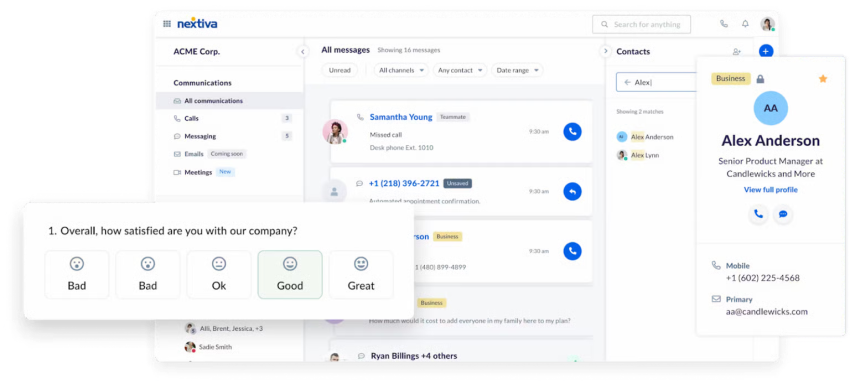
Predictive dialing, voicemail, call recording, and advanced analytics provide valuable insights to optimize call strategies, maximize productivity, and gain better competitive intelligence.
It’s cloud-based and doesn’t need you to install costly on-premise infrastructure, which makes it a cost-effective and flexible solution for businesses of all sizes. Scale your call center operations up or down with ease. Your call center will always meet your growing needs.
Nextiva’s omnichannel capabilities let you easily transition between voice calls, social media, emails, and even text messages. You meet your customers where they are and never miss an outreach.
Connect, convert and close.
Sales and support teams use Nextiva to deliver a better customer experience. Every time.
Outbound Call Center FAQs
Below, we’ll answer a few commonly asked questions about outbound call centers to determine if one is right for you.
Companies often add an outbound for business development and proactive customer support. Industries that use this software include nonprofits, healthcare, insurance, hospitality, retail, and telecom companies.
If you’re looking to grow your business, outbound call centers can help. Agents can generate leads to grow sales and cut down long wait times for customers with call queues.
But if your focus is to help customers contact you, then an inbound contact center is the right option. You could also combine the two with a hybrid call center.
And if you want a hybrid approach, Nextiva’s VoIP call center will help your business strike a balance between the two call types. Our software will help you deliver personalized service, communicate with customers, and track real-time analytics to help your agents and business grow.
Here are the basic steps to set up an effective outbound call center:
– Determine your goals and objectives. Decide whether you want to focus on sales, lead generation, customer retention, or other outbound activities.
– Assemble a team of skilled and trained agents who have excellent communication and sales skills. Provide them with thorough training on your products/services, sales techniques, and customer service.
– Invest in the right technology, such as a cloud-based outbound contact center software with features like auto-dialing, CRM integration, and call recording. This will streamline your outbound call center operations and improve agent productivity.
– Develop well-crafted call scripts that maintain consistency and professionalism. Scripts should cover greetings, key talking points, and handling objections.
– Set up clear performance metrics and KPIs to monitor the success of your outbound campaigns, such as call conversion rates, average call duration, and lead quality.
– Ensure compliance with relevant regulations like the Telephone Consumer Protection Act (TCPA) to build trust with customers and avoid legal issues.
– Use data and analytics to gain insights into customer behavior, refine your sales strategies, and identify target markets.
An outbound call center solution typically includes:
– Services – Customer support, chat support, and email support alongside outbound calling.
– Tools – Auto-dialers, CRM integrations, call recording, analytics dashboards, campaign management features, and outbound calling software.
Outbound contact center solutions also integrates with existing sales tools, CRMs, helpdesk IVRs, and email services for superior outbound communication.
Nextiva provides a complete business communications solution that brings every customer interaction into one interface for a better customer experience.
– A call center focuses mainly on voice calls, handling inbound and outbound phone interactions with customers.
– A contact center handles more than just calls; it manages communication across multiple channels such as phone, email, chat, SMS, and social media.
