



Using artificial intelligence (AI) for customer experience (CX) sounds like a promising solution, often positioned as a silver bullet that would solve customers’ pain points while helping organizations grow. But many AI initiatives don’t work the way companies expect — mostly because they typically miss the mark on what makes customer service human.
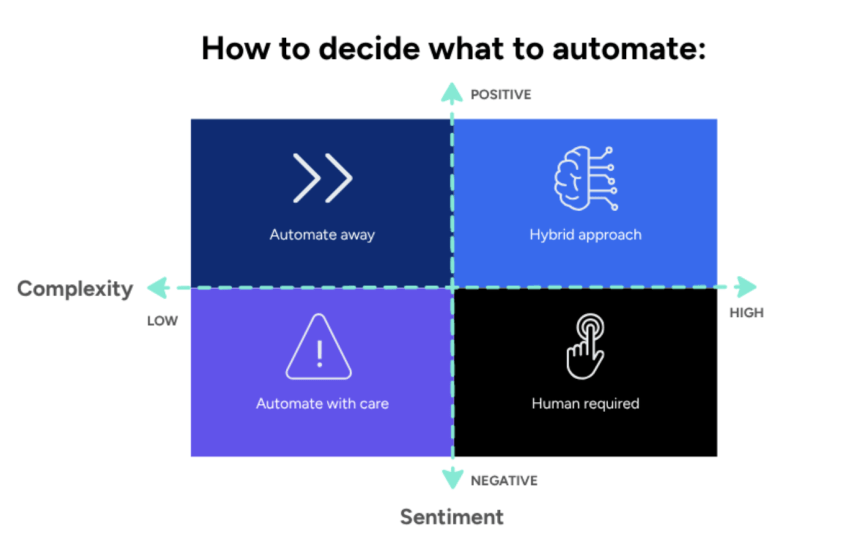
Companies automate the wrong workflows and measure the wrong metrics, amplifying friction instead of reducing it. Then there’s the issue with AI hallucinations and how these impact real customers.
In Air Canada’s case, an AI chatbot provided inaccurate information on the airline’s bereavement fare policy. This resulted in a civil tribunal that held the airline responsible for the misinformation and required it to honor the quoted price.
Meanwhile, Telstra built Gen AI solutions, Ask Telstra and One Sentence Summary, to support its customer service agents. Around 90% of agents reported increased effectiveness, which helped reduce follow-ups by 20%, and 84% using Ask Telstra said it made a positive impact on customer interactions.

Both organizations invested in AI but got opposite outcomes. The difference lies in treating AI as an amplifier of human judgment and not as a substitute for it.
What AI-Enhanced CX Actually Means
In 2025, organizations invested billions in AI projects, yet many are seeing minimal returns. A clear pattern has emerged: the organizations excelling are the ones that picked specific friction points to solve, while the rest are stuck in a learning gap, deploying generic models that don”t adapt to their specific customer workflows.
The problem isn’t technical but strategic. Overlooking the complexity of real-life human interactions while attempting to fully automate customer service can expose organizations to operational and reputational risk.
AI for CX isn’t one feature or tool. It’s about capabilities that run across every touchpoint. AI succeeds when it augments human decision-making, anticipates customer needs, personalizes interactions or product recommendations, and drives meaningful improvements across the customer journey.
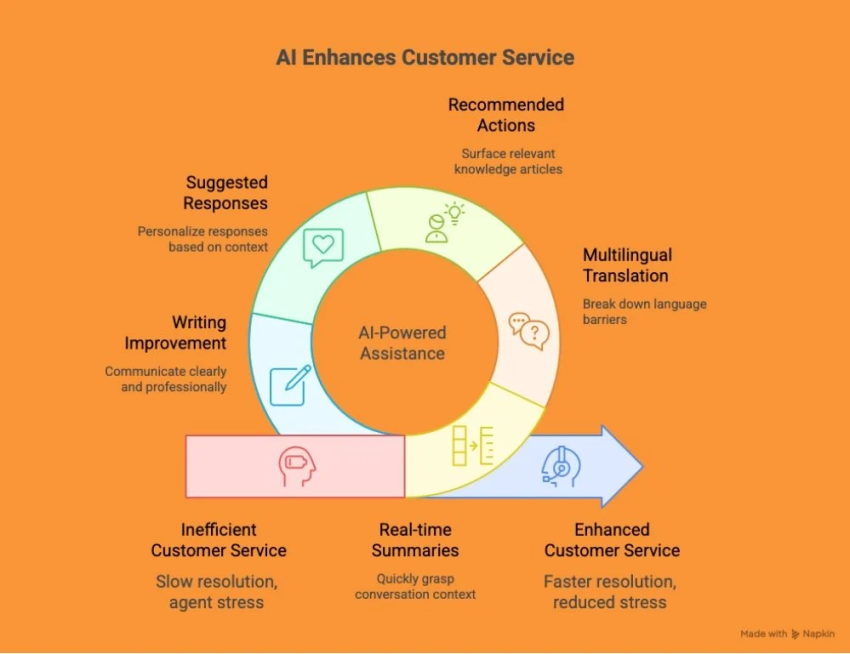
The best implementations put AI technology and humans in complementary roles. AI handles pattern recognition at scale, surfaces insights into customer behaviors, routes issues to the right specialists, and flags churn risks before they happen. Humans bring empathy, navigate exceptions, make your audience feel understood, and make judgment calls when the stakes are high.
That partnership matters because, per Qualtrics, almost one in five consumers who used AI for customer service saw no benefit. That’s nearly quadruple the failure rate compared to AI use overall. The difference is not the sophistication of the AI but rather how it aligns with customer needs and expectations, compounded by concerns about how customer data is used by AI models.
According to IBM, mature AI adopters get 17% higher customer satisfaction scores. And that’s not because they’ve deployed chatbots but because they use AI to make every interaction, automated or human, more contextual, more timely, and less frustrating.
Where AI Improves CX Across the Customer Journey
AI in CX delivers the most value when it’s mapped to real customer moments instead of abstract capabilities.
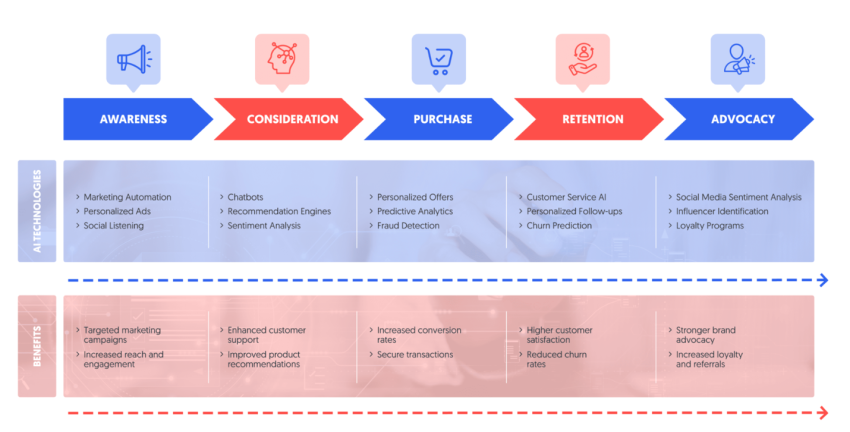
Here’s where it moves the needle across the customer journey, from first click to retention.
Before purchase: Reduce friction and increase confidence
Buyers don’t want to talk to sales before they’re ready. They want clarity instead because they’re flooded with information, per sales trainer and Cerebral Selling founder David Priemer.
AI in CX improves the prepurchase experience by guiding discovery instead of forcing forms or dead ends. Conversational AI search helps visitors articulate what they’re trying to solve and surfaces relevant answers, content, or comparisons in real time.
Intent signals and shapes routing. High-intent visitors move directly to the right human agent, cutting down on multiple, annoying transfers, while early-stage researchers can access self-serve paths that educate without pressure.
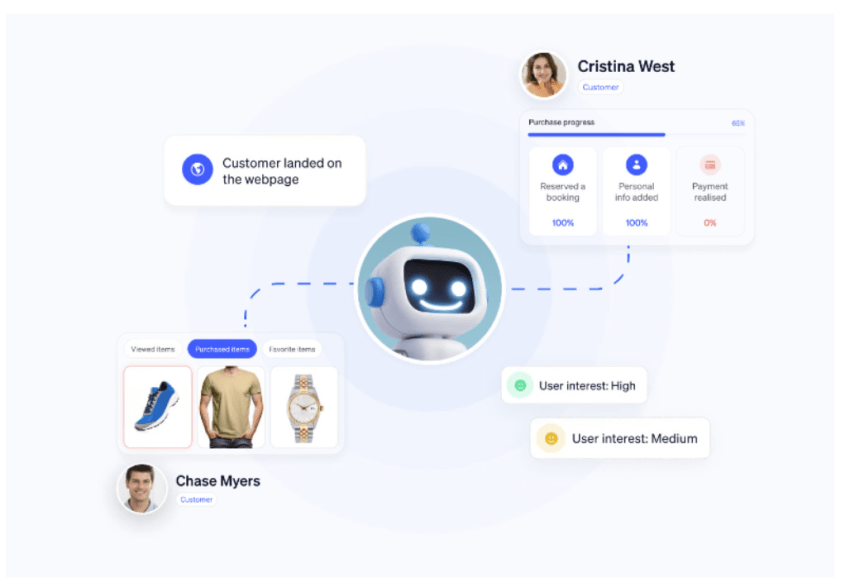
Behavioral clues also trigger personalized nudges like a discount, proof point, or reminder based on what stalled the decision. Customer confidence increases when friction disappears, not when pressure ramps up.
During purchase: Faster answers, fewer drop-offs
Purchase hesitation usually comes from unanswered questions or unnecessary friction. AI reduces both by delivering immediate, context-aware answers about pricing, compatibility, policies, and delivery without forcing customers into email threads or holding queues, thanks to natural language processing capabilities.
Automation also handles policy-driven actions like returns, refunds, or eligibility checks cleanly, preventing handoffs that derail momentum.
Risk and fraud checks benefit as well. Instead of rigid rules that block legitimate buyers, AI evaluates behavioral signals and explains decisions when intervention is needed. The result is fewer false declines, fewer abandoned transactions, and a buying experience that feels responsive rather than suspicious.
Onboarding: Get customers to value faster
Early experience determines whether customers adopt or disengage. AI accelerates onboarding by adopting setup flows to customer type, role, and complexity, avoiding one-size-fits-all walkthroughs that overwhelm or underserve.
Usage signals then reveal when customers get stuck. Missed steps, repeated errors, or stalled activity trigger contextual guidance before frustration builds. In-app copilots keep help inside the workflow, answering “How do I…?” questions at the moment of need.
When customer onboarding removes confusion instead of adding steps, time to value shortens, and early churn risk drops significantly.
Support: Better self-service and better human service
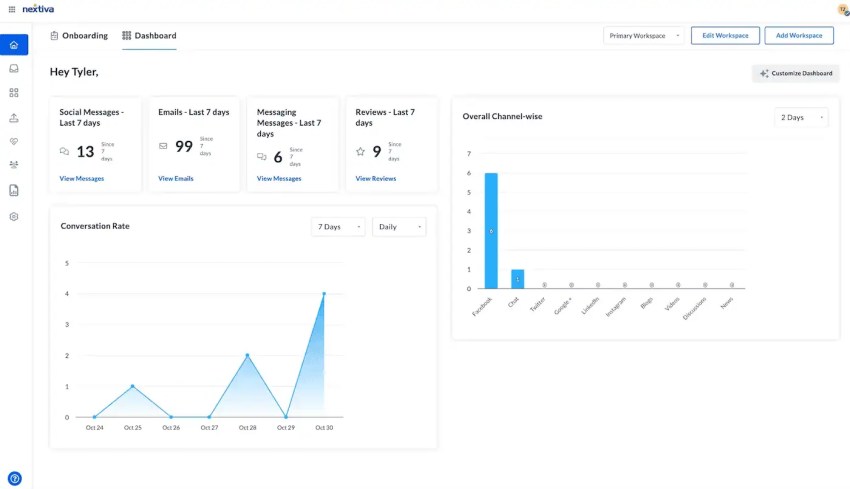
Effective customer support automation solves problems. AI handles common requests 24/7 and instantly, like password resets or order status, while keeping escalation paths clear when issues exceed automation’s limits.
For agent-assisted support, AI works best as a copilot: surfacing relevant knowledge, suggesting responses, adjusting tone, and generating auto-summaries that reduce after-call work.
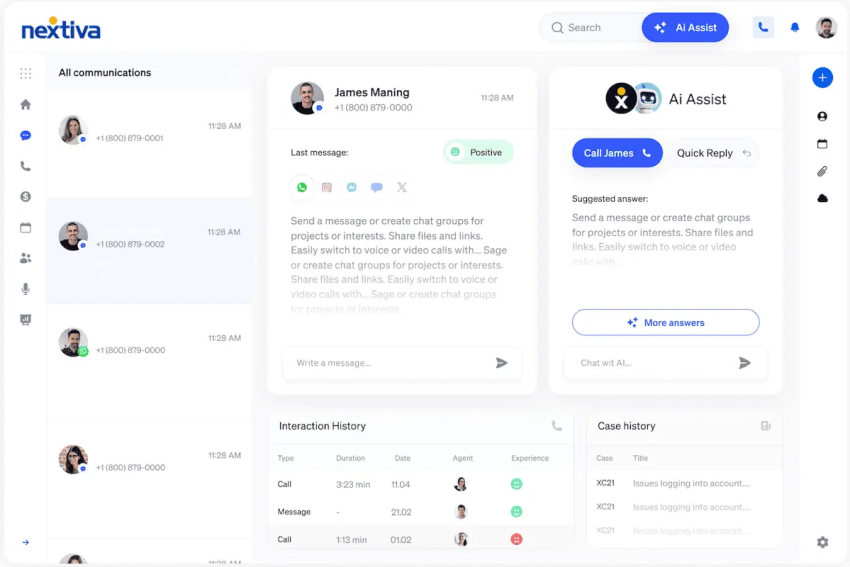
Smarter routing ensures customers reach agents with the right skills, language, and context. Quality assurance (QA) scales as well, analyzing more interactions to provide coaching insights.
Retention: Predict issues and trigger the right intervention
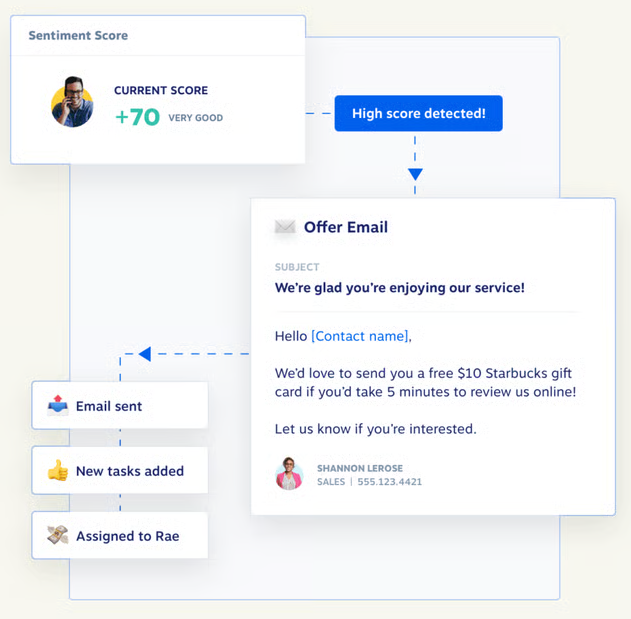
Churn rarely starts with a cancellation request. It starts with patterns: worsening sentiment across interactions, repeat contacts for unresolved issues, and escalating handoffs between teams. Using sentiment analysis and predictive analytics, AI surfaces these signals early.
What matters next is coordination. When risk appears, outreach should shift. Marketing pauses. Sales stay quiet, and service leads. Sequencing touchpoints based on context prevents tone-deaf experiences that accelerate churn.
The most effective save plays feel helpful, not reactive. Think proactive service recovery that strengthens customer loyalty, targeted education when usage drops, or right-sized incentives or interventions that directly address the specific reason a customer is struggling.
10 High-Impact AI CX Use Cases
These 10 AI use cases help streamline processes, deliver measurable ROI quickly, and compound over time.
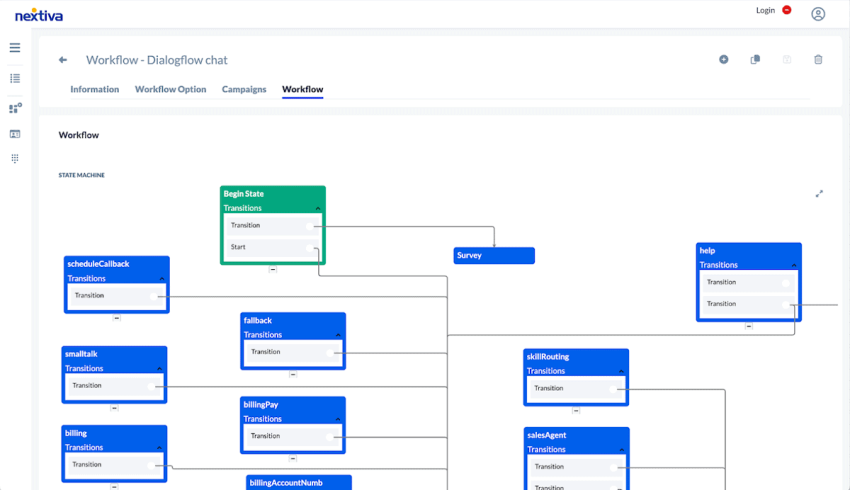
Automated intent and sentiment triage
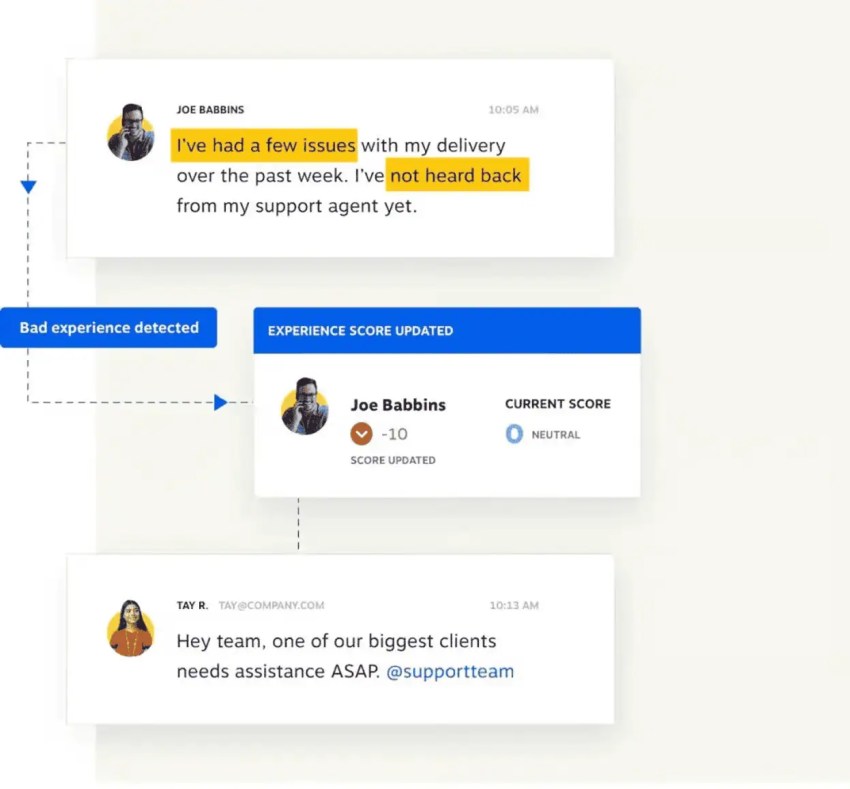
As AI becomes table stakes — with Zendesk reporting that 65% of CX leaders now view AI as a strategic necessity — the differentiator is how intelligently it’s applied. Intent and sentiment triage goes beyond keyword detection to assess urgency, emotion, and context in real time. That means a billing question from a frustrated customer routes differently than the same request from someone calmly seeking clarification.
When requests land with the right team the first time, transfers drop, resolution speeds up, and escalation becomes the exception instead of the norm.
Always-on support for repetitive issues
Always-on AI is about speed and availability when customers want quick answers. Zendesk research shows that 51% of consumers prefer bots when they need immediate service, especially for straightforward tasks like order status, password resets, or scheduling.
Effective always-on support resolves the issue end-to-end and makes human help easy to reach when complex issues arise.
Agent response copilots
AI tools like agent copilots improve consistency and confidence under pressure. AI suggests responses in real time, surfaces relevant context, and aligns language with brand standards without taking control away from the agent.
This reduces cognitive load, shortens wait times, and helps newer agents ramp faster. Experienced agents benefit too, handling higher volumes and high-value interactions without sacrificing quality.
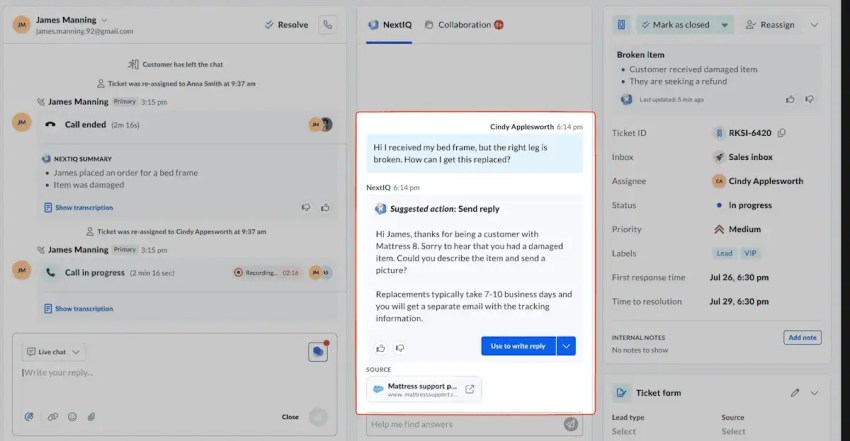
Knowledge surfacing
Searching for answers mid-conversation is a hidden tax on both agents and customers. An AI-powered knowledge base can automatically pull the most relevant policy, article, or troubleshooting step based on the customer’s issue and history. That reduces incorrect responses and shortens time to resolution.
The caveat is governance: AI can’t fix an outdated or fragmented knowledge base. Teams that treat content hygiene as foundational see faster answers and fewer repeat contacts.
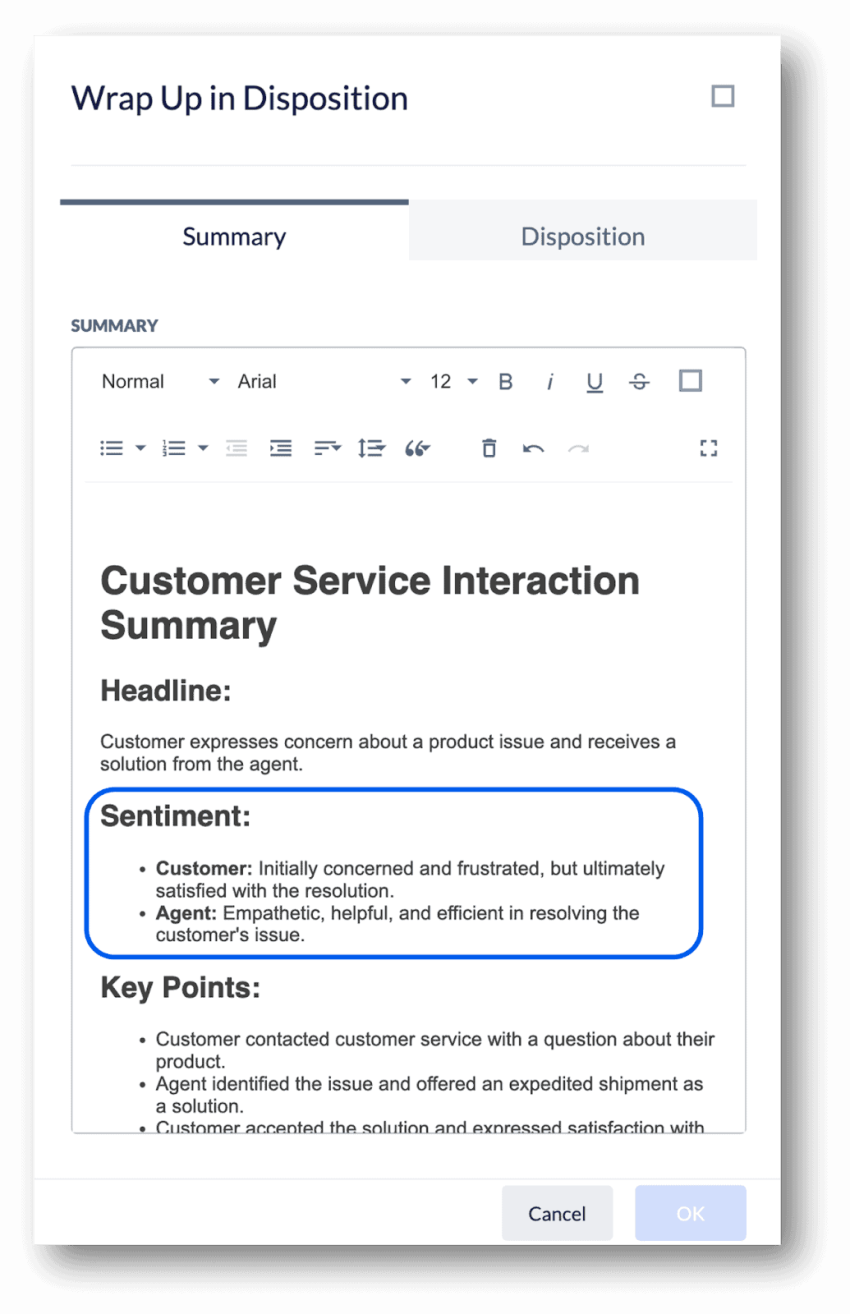
Auto-summaries and disposition notes
After-call work is one of the fastest ways to burn out agents. AI-generated summaries capture outcomes, next steps, and key context automatically, freeing agents to move on to the next customer.
Consistent summaries also improve handoffs, searchability, and quality reviews. Over time, this creates cleaner data for coaching and analysis without relying on agents to document everything manually.
AI QA scoring at scale
Manual QA only scratches the surface. AI can analyze far more interactions across channels, flagging trends in resolution quality, tone, and policy adherence.
Managers still apply judgment, but AI shows where coaching will have the most impact. This shifts QA from reactive scorekeeping to proactive improvement, helping teams fix systemic issues.

Proactive issue prediction from behavior and history
AI algorithms can detect early warning signs by analyzing usage patterns, unresolved issues, repeat contacts, reduced engagement, and sentiment shifts. That creates a window for support agents to proactively intervene with education, service recovery, or targeted outreach.
Workforce forecasting and scheduling
AI-driven forecasting incorporates historical demand and real-time signals to predict staffing needs more accurately. This helps teams manage spikes without overstaffing or exhausting agents. The impact shows up in reduced downtimes, steadier service levels, and more sustainable workloads.
Consistent brand voice across channels
Inconsistency creates confusion, and customers tend to lose confidence when answers vary by channel. AI helps maintain consistency by aligning responses with approved language and policies across omnichannel avenues like chat, email, messaging, and voice.
Consequently, accuracy and tone don’t depend on who or where the customer reaches out to. This consistency reassures customers that they’re getting reliable information and the same experience every time.
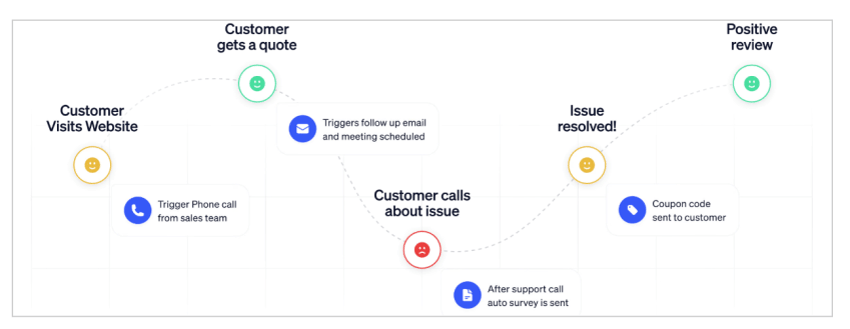
Journey orchestration
Journey orchestration connects signals across marketing, sales, and service to determine the next bestexperience without interfering with customer preferences. That might mean pausing promotions when a support issue is open or sequencing outreach after onboarding milestones. McKinsey reports that these AI-powered next best experience approaches can improve satisfaction by up to 20%, increase revenue by up to 8%, and reduce cost to serve by as much as 30%.
Metrics to Measure if AI Is Actually Improving CX
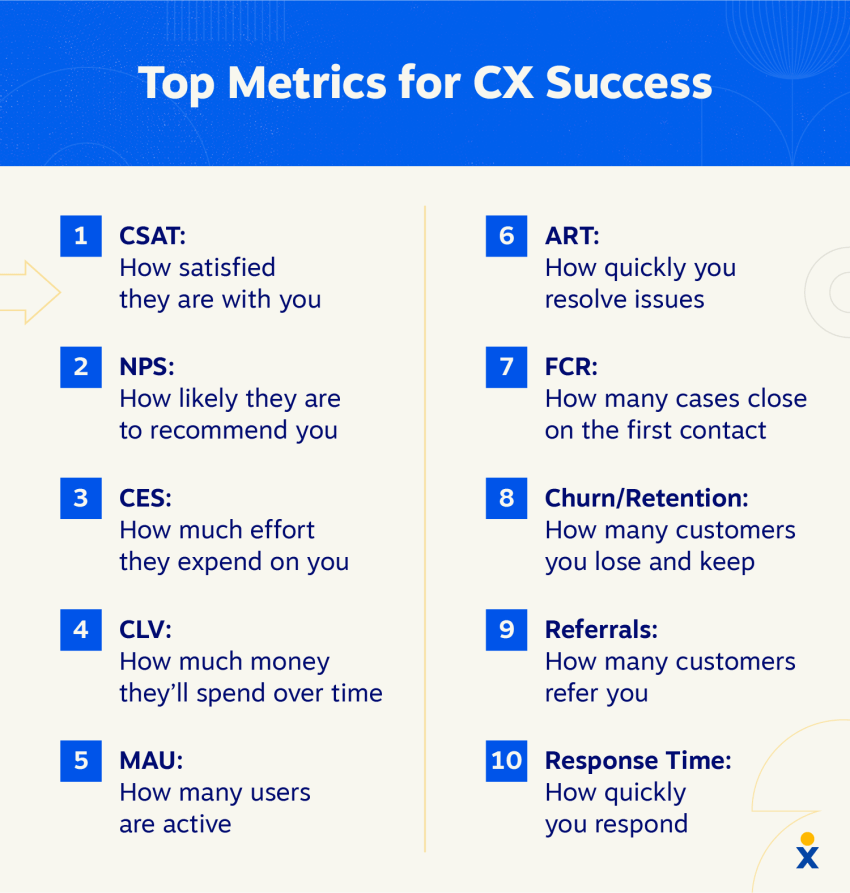
Deploying AI without measuring its impact is equivalent to organizational theater. The right metrics tell you whether AI is solving real problems or just creating new ones.
Customer metrics
If automation drives customer satisfaction scores (CSAT) down, you’ve probably automated the wrong thing.
CSAT, Net Promoter Score, customer effort score, complaint rate, and repeat contact rates reveal whether AI is solving problems or just reshuffling them and adding friction. Repeat contact and complaint rates are especially revealing. High automation with high recontact usually signals unresolved issues.
Operational metrics
First response time and resolution speed matter, but after-call work and handle time reveal whether agents are gaining leverage. Deflection without resolution quality often hides downstream costs, and improvements in operational efficiency only count when customers don’t pay the price.
Quality and trust metrics
QA scores, escalation rates, hallucination or error rates, and recontact within seven days expose reliability issues. Trust erodes quickly when AI gives incorrect or inconsistent answers, making these metrics critical guardrails.
Business metrics
Retention, churn, expansion, and cost to serve connect CX improvements to outcomes leaders care about. Cost reduction only matters if experience holds steady or improves. Strong AI programs show impact across all four and let you leverage data insights to improve decision-making.
Common Mistakes That Make AI CX Feel Worse
The companies that fail with AI aren’t making technical mistakes but strategic missteps. Here are the patterns that turn promising implementations into customer satisfaction disasters.
Bot as a wall
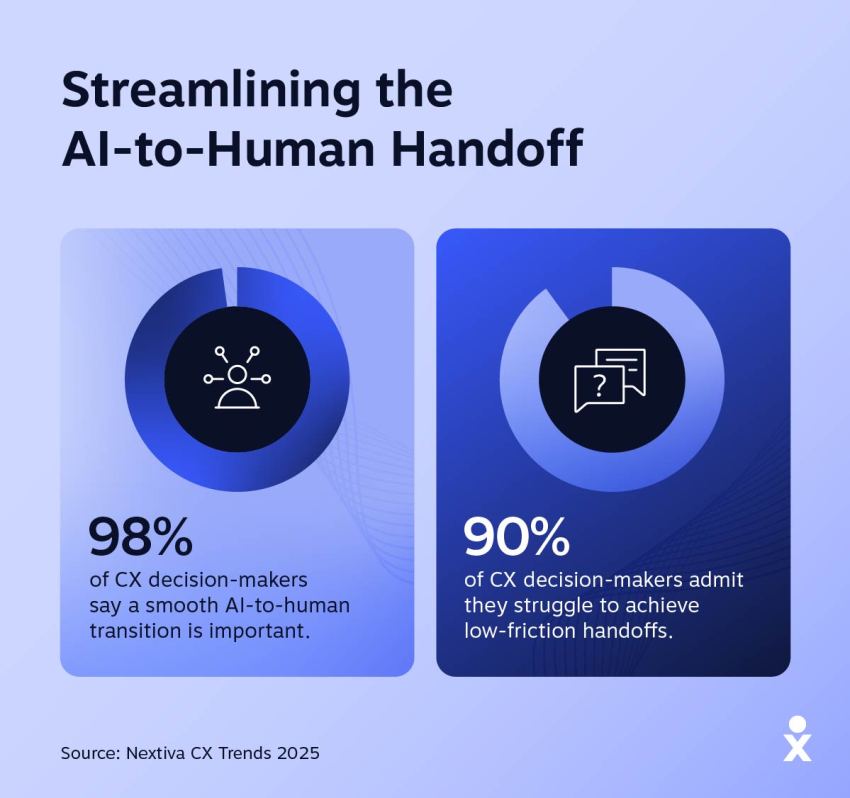
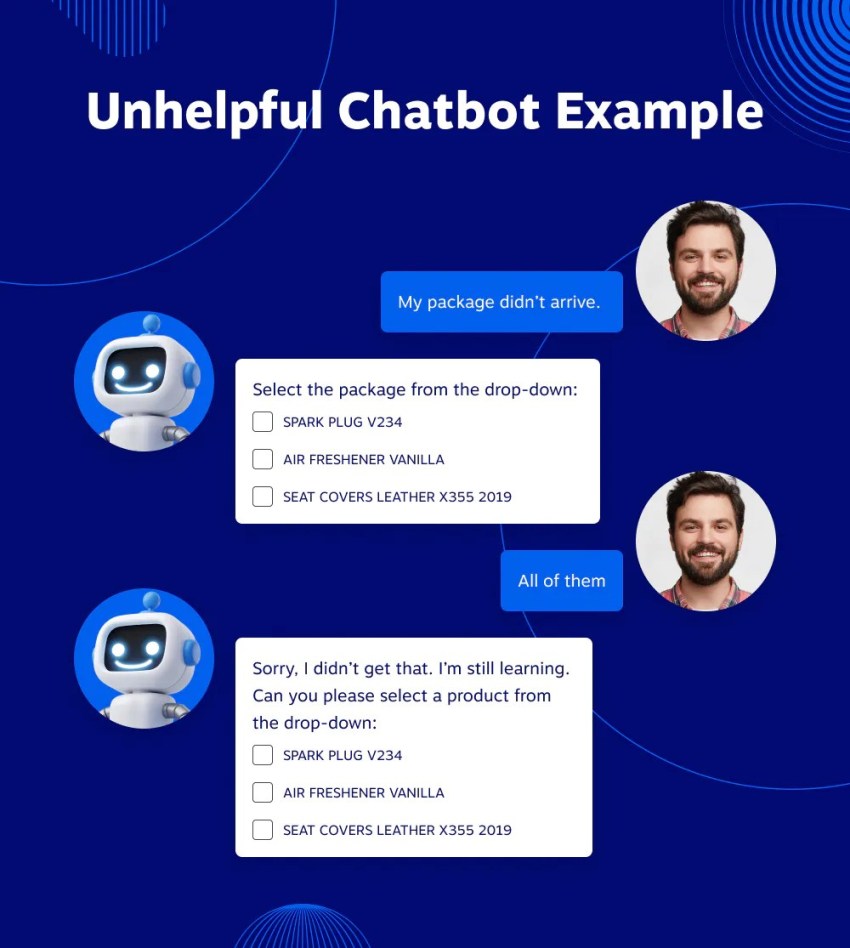
Treat AI as a door, not a wall. When confidence is low, or frustration is high, as detected via sentiment analysis, the AI should immediately offer a human handoff. Companies that make escalation easy actually see higher AI adoption because customers trust the system won’t trap them.
Routing that optimizes speed but breaks ownership
Speed to answer matters only when paired with the right expertise. Customer satisfaction correlates more strongly with “one person solved my entire issue” than with “someone answered in 30 seconds.” To make handoffs easier for your team, design AI to fit your existing workflows by integrating it into the systems you’re already using, whether it’s Salesforce or Zendesk.
Automation without context
If your chatbot doesn’t know what your email team said, your phone agent can’t see the chat conversation, requiring customers to repeat themselves across channels. If the process has too many steps, you’re creating work instead of eliminating it. This can trigger resistance.
No guardrails
One AI chatbot launched in South Korea as a friendly conversationalist started spewing offensive comments after learning from trolls because developers failed to implement content filters, mirroring an earlier incident that involved Microsoft’s Tay AI chatbot.
Guardrails protect both customers and brand reputation. These serve as boundaries and rules guiding AI projects, ensuring that organizations using AI for CX deliver responses that comply with company policies, legal requirements, and ethical guidelines.
Measuring only deflection
The real metric is resolved at first contact without escalation or repeat contact within seven days. That reduces total cost because it eliminates customers contacting you multiple times for the same issue.
Level Up Your CX With XBert AI
AI wins because it reduces effort, improves consistency, and enables proactive service at the right moments. If you’re deciding where to start, focus on one or two workflows that create immediate relief for your team and measurable value for customers.
With XBert AI, those workflows live in one platform — voice, messaging, AI routing, and agent assist working together — so you can improve CX without stitching together more tools.
Start small with use cases that matter most to your customers and team. Move fast by deploying in controlled environments where you can measure impact. Scale as patterns prove out, and confidence builds.
The companies that win with AI aren’t deploying the most features or spending the most money. They’re solving real problems with the right capabilities at the right time and avoiding the mistakes that turn AI investments into expensive failures.
Use Nextiva’s AI Receptionist ROI Calculator to see how much your organization could save with an AI receptionist like XBert.
AI Receptionist ROI Calculator
See how much your business could save with the XBert® AI Receptionist ROI Calculator. Just enter your call volume and staffing costs to find out how quickly an AI assistant can pay for itself and start freeing up your time.
