


![How to Create an AI-Powered Wellness App? [2025 Guide]](https://i2.wp.com/theninehertz.com/wp-content/uploads/2025/11/how-to-create-an-ai-powered-wellness-app.webp?ssl=1 "How to Create an AI-Powered Wellness App? [2025 Guide]")
Picture having a wellness coach in your pocket that monitors your sleep, uses your voice tone to detect stress, suggests healthy meals, and inspires you with personalized insights. This previously imagined future is now an incredibly fast-growing reality through Artificial Intelligence (AI). As businesses and startups are trying to create an AI-powered wellness app, the collaboration of technology and wellbeing is changing how people see and take care of their mental and physical health.
According to Statista (USA), the digital health market is expected to exceed $650 billion by 2025, with many apps supporting that growth through their AI-powered wellness. AI is transforming the user experience, personalization, and health outcomes for every aspect of physical fitness and wellness, and will be an important trend for the wellness sector in the future.
Consumers today are not satisfied with a basic step counter or a log for their calories; they expect smart apps that “know” what their habits and goals are, and also how they might be feeling today or yesterday. Whether that be AI chatbots that offer mindfulness sessions or machine learning algorithms predicting your level of stress, wellness apps are becoming more human in their engagement.
Pro tip: Before diving into wellness app development, define the core problem your app will solve, whether it’s mental fitness, nutrition, or lifestyle balance. A focused vision helps align your AI features effectively.
In this Guide, we will discuss how AI is changing the wellness sector, the types of applications with the most to gain, the best AI-based features to consider adding to your application, how to integrate these features and functionality into your application and how much it may cost, and why healthcare app development company is the partner you would want for you to create a wellness app that fits your business use case.
How Artificial Intelligence is Changing the Wellness Industry?
The wellness space has experienced a gargantuan transformation in the last 10 years, and artificial intelligence (AI) is at the heart of this digital transformation. From customized workout schedules to predictive health data analytics, AI is now influencing how consumers engage with their wellness in everyday life.
In the US alone, nearly 48% of adults have at least one wellness application, and that number will likely rise as AI technologies become more widely used. Companies such as Fitbit, Noom and Headspace are using AI to deliver personalized recommendations to consumers to make fitness and mindfulness easier for most consumers.
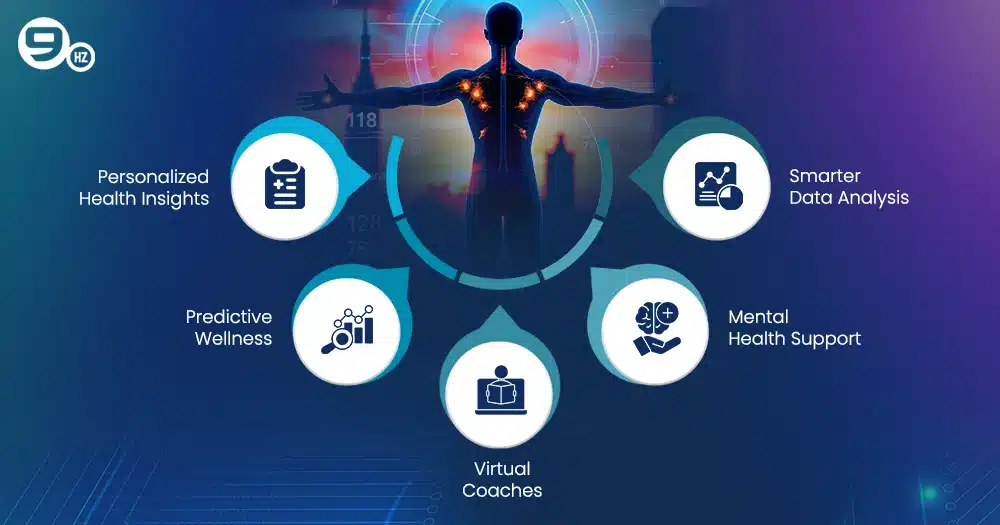
AI is making wellness smarter, more personalized, and data-driven. Here’s how:
1. Personalized Health Insights
AI algorithms use user data such as activity levels, sleep cycles, heart rate, and nutrition to curate user-specific health recommendations. This type of recommendation will empower users to make better choices and more effectively track long-term progress toward their wellness goals.
Pro tip: Integrating wearable device data into your wellness app can enhance personalization and user engagement by up to 40%.
2. Predictive Wellness and Early Detection
Machine learning models can detect the early signs of burnout, stress, or physical fatigue before they escalate. For instance, when engaging in conversational engagements, AI-based stress detection systems can identify emotional tension in real time using clues from voice, typing patterns, or facial expressions.
3. AI-Powered Virtual Coaches
Virtual wellness coaches are changing how individuals interact with health programs. These digital assistants utilize Natural Language Processing (NLP) to help users track their goals and provide motivation through the medium of conversation. Applications such as MyFitnessPal and Wysa are examples of AI coaches focusing on building accountability and habit formation.
4. Emotional and Mental Health Support
By using conversational chatbots to monitor mood or offer therapy on demand, AI is also altering the nature of mental well-being. Applications that mimic sympathetic conversation, such as Woebot or Replika, are designed to help users who are experiencing anxiety, loneliness, or depression.
5. Smarter Data Analysis for Businesses
By supporting user engagement and retention tactics and offering comprehensive insights into behaviour trends, AI offers businesses and wellness organizations more than just an improved user experience. It provides brands the ability to adapt and update their products to user journeys based on deep insights into behaviour patterns.
In summary, AI is not taking the place of human empathy in wellness – it is augmenting it. AI technology helps bridge the gap between real-world health issues to accessible solutions in a digital format when presented in a holistic ecosystem of care.
Pro tip: Use AI responsibly by prioritizing data privacy and transparent consent mechanisms; users are more likely to trust apps that respect their information.
Types of Wellness Apps that Can Benefit from AI
The wellness sector is quite expansive, covering everything from physical health to emotional wellness. However, not all apps are built on AI in the same way. When you create a wellness app that integrates AI strategically, it personalizes the experience, predicts user needs, and continues to engage the user for the long term.
Let’s explore the major categories of wellness apps that gain the most from AI integration:
Comparison Table: AI Impact on Different Wellness App Types
| App Type | AI Functionality | Primary Benefit |
|---|---|---|
| Fitness Tracking | Activity recognition, posture correction | Personalized workout optimization |
| Nutrition | Image-based food analysis, diet recommendations | Smarter calorie tracking and meal suggestions |
| Mental Health App | Sentiment analysis, chatbot therapy | Emotional support and stress reduction |
| Sleep | Sleep cycle prediction, environment analysis | Better sleep patterns and recovery tracking |
| Women’s Health | Cycle prediction, hormonal pattern recognition | Holistic reproductive and mood management |
| Corporate Wellness | Employee analytics, adaptive content delivery | Enhanced engagement and productivity |
1. Fitness and Activity Tracking Apps
In these apps, AI is used to track workouts, analyze movement patterns, and generate or suggest an individualized fitness plan. With AI, it can also recommend the best exercise intensity based on, in real time, performance and recovery history.
Examples: Fitbod, Freeletics, and Nike Training Club
Pro tip: Incorporate computer vision to help users maintain correct posture during home workouts; it’s a game-changer for accuracy and engagement.
2. Nutrition and Diet Planning Apps
AI apps, particularly nutrition-based, do more than just count calories – they utilize data to understand eating behaviour. These apps can analyze photos taken of meals, suggest a well-balanced diet, and assist in recommending favourite recipes based on fitness goals or allergies.
Examples: Lumen, MyFitnessPal, and YAZIO
3. Mental Health App and Meditation Apps
AI can also be used to establish emotional intelligence in well-being apps. AI can accurately detect whether or not a user is experiencing stress through tone of voice, text sentiment analysis, or input from the user indicating they are stressed. Upon determining any emotional concerns, the apps can implement mindfulness exercises or CBT instruction.
Examples: Headspace, Calm, and Wysa
Pro tip: Emotion-recognition models help improve user retention by offering precisely-timed mindfulness nudges.
4. Sleep Tracking and Recovery Apps
To recommend the best sleep cycles, AI in sleep apps can analyse respiratory patterns, sleep stages, and background noise. To improve overall sleep quality, some sophisticated sleep applications even recommend breathing techniques or music with a relaxing atmosphere.
Examples: Sleep Cycle, Oura, and Pillow
5. Women’s Health and Hormonal Wellness Apps
AI health apps for women’s wellness can monitor cycles and use predictive analytics to indicate where hormonal changes may occur and provide health metrics to assist in lifestyle changes for fertility or mood management.
Examples: Flo, Clue, and Natural Cycles
6. Corporate and Lifestyle Wellness Platforms
These apps use AI to create individualized plans for workers that address nutrition, exercise, and stress management. To improve workplace wellbeing, they gather input, assess impact, and modify material.
Examples: Wellable, Virgin Pulse, and Sprout
AI transforms static data into meaningful insights, giving each wellness app category a distinct advantage. Whether you want to create a wellness app for corporate wellbeing, fitness, or mindfulness, using AI guarantees that your product feels relevant, personal, and constantly adjusts to user behaviour.
Pro tip: Start with a minimum viable product (MVP) focused on one wellness niche before scaling AI functionalities across categories.
Top AI-based Features for a Wellness App
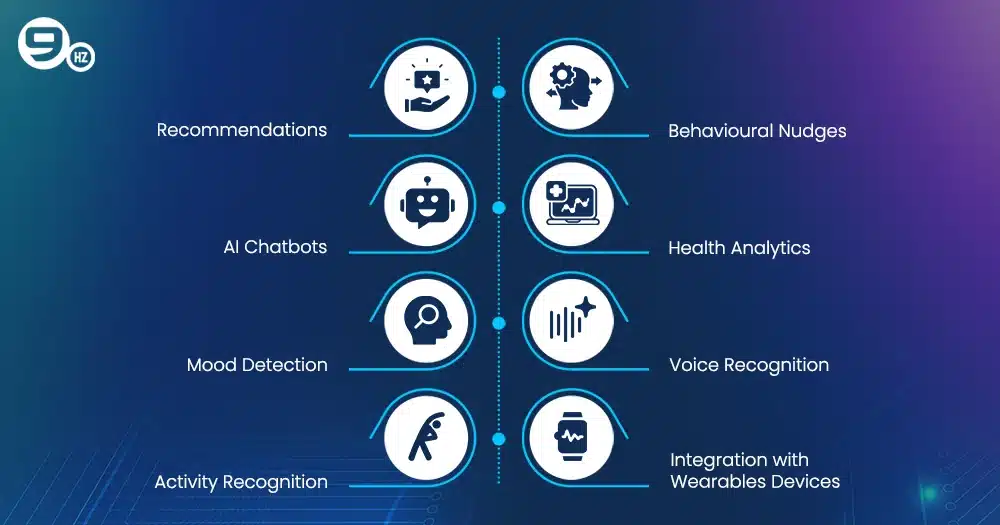
When you create an AI-powered wellness app, the goal is more than just data collection and analysis; it’s whether AI can take that data and leverage it to create meaningful, real-time insights for users to build towards their overall wellness. AI improved this by recognizing the user’s behaviour to provide smart, personalized, and predictive solutions.
Here are some of the key features that can make your wellness mobile app more engaging and impactful:
1. Personalized Recommendations
AI reviews a user’s activity level, sleep data, mood inputs, and nutrition log, all to create personalized suggestions for the user. It could even trigger reminders related to breaks, hydration, or meditating at the best time of day, according to the user’s prior knowledge.
Example: Fitbit’s AI engine suggests activity intensity based on past performance.
Pro tip: Combine behavioural and contextual data (like location and weather) for hyper-personalized insights.
2. AI Chatbots and Virtual Wellness Coaches
A suggested AI-influenced approach with wellness applications is to have a chatbot that would keep in contact with the user, offering reminders and motivation, as well as coaching the user on how to start a guided meditation, or possibly a stress management task. Through NLP, these chatbots can effectively replicate the sense of empathy that is naturally present in human-to-human encounters.
Example: Wysa uses conversational AI for mental wellness therapy and mood tracking.
3. Emotion and Mood Detection
In addition to user chatting, the AI can also utilize facial recognition, sentiment analysis, and tone of voice to evaluate the user’s emotional status, thus being able to recommend changes in the follow-up task or some sort of coping strategy.
Example: Woebot identifies emotional distress through text patterns and provides CBT-based advice.
4. Activity and Posture Recognition
AI can also use computer vision to analyze user movement while completing exercises and give feedback in real-time to correct posture as well as improve form, giving safety and efficiency when working out with an app at home.
Pro tip: Integrating smartphone camera-based motion tracking reduces dependency on wearables, making your app more accessible.
5. Predictive Health Analytics
AI is able to use predictive modeling to assess previous task data to prepare users for when they may be approaching outcomes of dehydration, burnout, or stress. By providing this alert before a user experiences the event, wellness applications would shift from reactive to preventative.
Example: Apple’s Health app uses predictive models to monitor cardiac and stress patterns.
6. Voice and Speech Recognition
Using voice interactions makes wellness apps accessible and easy to use. Users can log meals, check in on how they are feeling, and start a workout, all just by speaking a few commands.
Example: Amazon Halo allows voice tone analysis to detect stress and emotional states.
7. Smart Notifications and Behavioural Nudges
AI can see patterns in behaviour (for example, inactivity or irregular sleep) and send messages to encourage better habits at the proper times, without inundating users.
Pro tip: Use reinforcement learning to optimize nudge timing and reduce notification fatigue.
8. Integration with Wearables and IoT Devices
AI can also work smoothly with devices like smartwatches, fitness bands, and home assistants, for deeper health data. The more connected data the app can pull together, the more calibrated the recommendations become.
AI features add even more value to the fitness app development process, to be more than functional, but to be innovative. When AI features initiate needs, personalize routines, and inspire behaviour change, it provides a wellness app experience that converts a chore into a daily habit and serves as an intuitive, interactive, and inspirational experience for the user.
How to Integrate AI Functionality into a Wellness App?
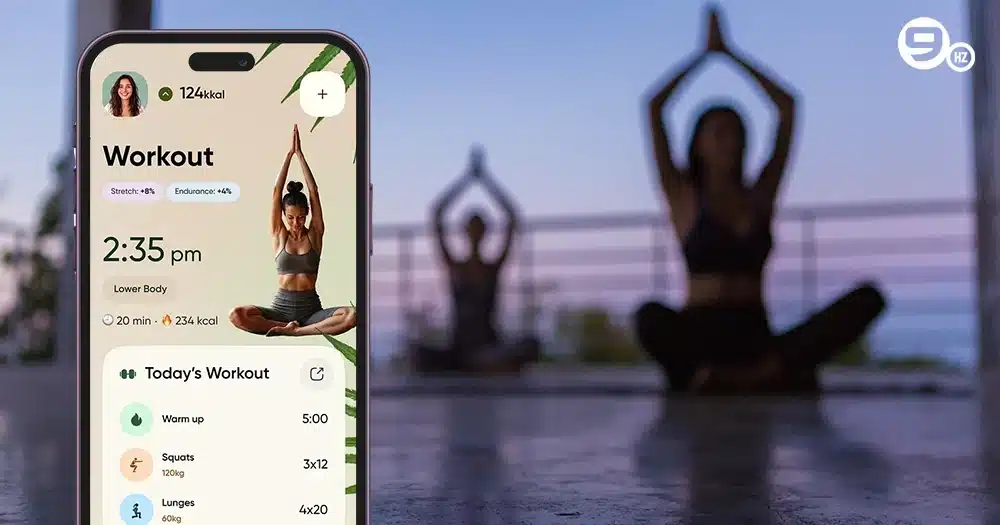
After determining to create an AI-powered wellness app, the next important question you may be asking is: how do you embed AI in the application? Integrating Artificial Intelligence goes beyond coding; it involves creating an alignment between your data, algorithms, and user tactics to create a personalized wellness experience and low friction to interacting with the app.
Let’s break down the process step by step:
1. Identify the Core Wellness Objective
Before you go into implementing AI into the application process, you will need to identify what you want your app to achieve. Will you help users manage stress, track fitness activities, or improve the quality of sleep? Each type of wellness activity will require a different way to approach the AI implementation.
Pro tip: Begin with a single, clear goal and expand features later; it keeps your MVP lean and cost-effective.
2. Collect and Structure Data
The data used is the most important part of AI at work. Wellness applications collect a lot of data from wearables, user input, voice recording or even images. You will want to ensure your data is laid out in a usable way to train the algorithms.
3. Choose the Right AI Technology Stack
Selecting the right tools and frameworks is crucial for effective AI integration.
Here’s a quick reference table:
| AI Component | Popular Technologies | Use Case in Wellness Apps |
|---|---|---|
| Machine Learning | TensorFlow, PyTorch | Personalized recommendations, predictive insights |
| NLP | spaCy, Dialogflow, GPT APIs | Chatbots and voice assistants |
| Computer Vision | OpenCV, MediaPipe | Posture and activity tracking |
| Data Storage | Firebase, AWS, MongoDB | Secure user data handling |
| Cloud AI APIs | Google Cloud AI, AWS AI | Ready-to-use AI services for rapid integration |
Pro tip: For startups, cloud-based AI APIs can dramatically reduce development time and cost.
4. Build AI Models and Train Them
Once the data pipeline is set up, your team can work on training the AI algorithms. For instance, a fitness-based wellness app will train a model to detect certain types of movements, while a meditation-based wellness app would train a model to detect emotions to ascertain the user’s mood states.
You should continually iterate on using refinements based on feedback loops to get your app more intelligent and improve user experience with every interaction between the user and app.
5. Integrate AI APIs and SDKs
Rather than implementing everything from scratch, developers will typically adopt a pre-trained API or SDK that enables their project to move faster. These pre-built tools enable you to be able to do some things without deep-diving into complex concepts behind AI, including image detection, voice function, or emotion, further improving user action.
6. Prioritize Data Security and Compliance
Health and wellness applications often handle sensitive data. Following GDPR and HIPAA compliance standards is needed to ensure transparency and privacy. Encrypt user data, anonymize personally identifiable data, and create direct consent forms.
7. Test, Optimize, and Scale
AI integration is an ongoing effort. Conducting frequent testing helps improve prediction accuracy and user satisfaction. If you see similar results with real users, add more robust AI capabilities (e.g., notifications that recognize user emotions, or wellness plans that adjust to user inputs, etc.) to scale your app with AI.
AI integration isn’t just about adding technology; the goal is to develop user experience with smart, predictive, and personalized interactions. If used correctly, an AI-enhanced wellness tracker might be a complete digital health companion.
How Much Does It Cost to Build an AI Wellness App?
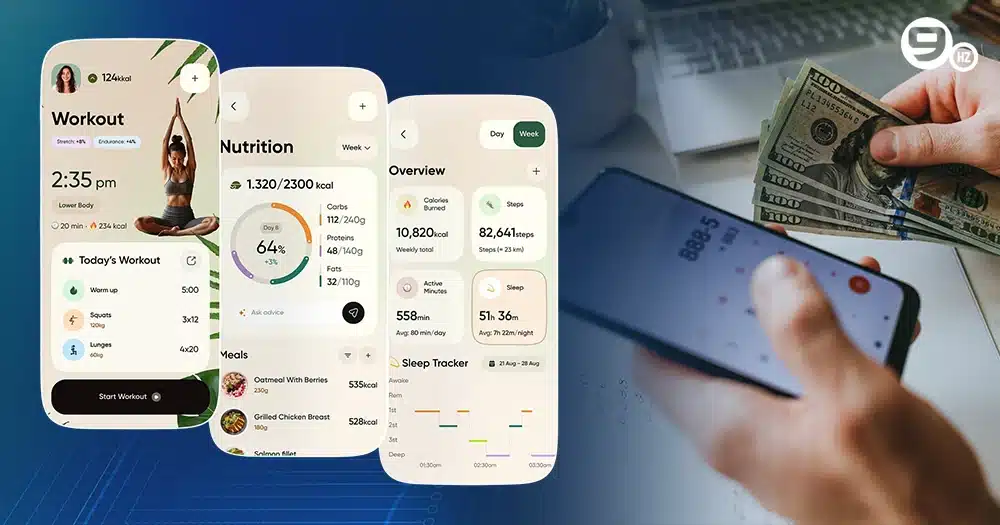
The cost of developing an AI-powered wellness app will depend on its complexity, features, tech stack, design, and development location. On average, the cost to create an AI-powered wellness app ranges from $40,000 to $180,000, depending on features and scale.
Let’s break it down for clarity:
Average AI Wellness App Development Cost (2025 Estimates)
| App Type | Development Complexity | Estimated Cost (USD) |
|---|---|---|
| Basic wellness tracker (AI-powered recommendations) | Low | $40,000 – $60,000 |
| Fitness/nutrition app with AI chatbots | Medium | $60,000 – $100,000 |
| Advanced AI app (emotion tracking, computer vision, wearables integration) | High | $120,000 – $180,000 |
Key Cost Factors
- AI Features: Development expenses may increase if a model is trained for character-based chat treatment or emotion recognition, or if an existing health data API is used.
- UI/UX Design: Calm and user-friendly UI/UX designs are necessary for wellness applications. In addition to improving user experience, investing time and resources in UI/UX would raise development costs by 15% to 20%.
- Data Integration: Linking and getting HIPAA/GDPR compliant with wearables can increase development time.
- Team Location: $120-$150/hr, Eastern Europe: $50-$80/hr, India: $25-$50/hr
Pro tip: Outsourcing your wellness app development to experienced companies like The NineHertz can reduce costs by nearly 40% without compromising quality.
Cost-Saving Strategy
Start with a minimum viable product (MVP) utilizing the core AI capability you want, for example, personalized recommendations or a limited chatbot experience. Once you have a growing user base and the user engagement to support growth, you can add additional features like emotion detection or AI-enabled coaching.
Developing a richer AI-enriched wellness application is an investment: one that should result in greater user engagement, subscription-based monetization, and more loyal users.
You might be interested to read ultimate guides on healthcare app development cost and cost to build a fitness app.
Why Choose The NineHertz for Wellness App?
As your team develops an AI-based wellness and fitness app, selecting the right fitness app development company is critical. The NineHertz has over 15 years of experience designing and developing AI applications specific to health, wellness, and well-being clients globally.
Here’s why The NineHertz is trusted by startups and enterprises alike:
1. Expertise in AI & Machine Learning
We build AI technologies such as predictive analytics, emotional detection, and chatbots using tech stack tools that include TensorFlow, Pytorch, and Google Cloud AI. Our applications learn from the use behaviour to provide increasingly personalized and adaptive wellness experiences.
2. End-to-End Development
We manage each step of the process from concept to deployment, such as research, design, and AI integration, ensuring seamless development and timely delivery.
Pro tip: Choose a development partner experienced in both AI and healthcare compliance to keep your app scalable and secure.
3. Data Privacy & Compliance
Our wellness apps are designed and built in accordance with HIPAA and GDPR compliance standards, so user data is private, encrypted, and protected.
4. Proven Global Success
With 1800+ projects to completion in 15+ countries, The NineHertz has empowered numerous brands in healthcare, fitness, and lifestyle to innovate and engage with smart user-centric digital products.
If your goal is to build a wellness app that inspires healthier habits and delivers measurable impact, The NineHertz offers the perfect blend of AI innovation, user experience, and technical precision.
Conclusion
The potential for a growing opportunity to build an AI-powered wellness app is stronger now than it’s ever been, as AI shifts the wellness industry and the capabilities your app can offer. The addition of personalization of health insights, predictive analytics based on continuous data, and virtual emotional support creates a whole new dynamic of intelligence and empathy to digital wellbeing.
Companies that prioritize wellness app development right now are taking their part in a worldwide movement for more intelligent, healthier living.
Pro tip: Focus on solving one core wellness problem through AI – excellence in a niche builds stronger user trust and retention.
By aligning yourself with The NineHertz as a development partner, you can convert your idealization of an AI wellness app into an AI-powered wellbeing solution that will elevate the lives of individuals, while innovating the future of digital health.
Frequently Asked Questions
Let us discuss some of the commonly asked questions regarding AI-Powered Wellness app development:
1. How do I create an AI-powered wellness app?
You can do this by deciding on the goals of your wellness app, utilizing AI technologies in your idea (such as machine learning, NLP, etc.), and advocating with an expert partner like The NineHertz to develop your wellness app effectively.
2. How much does it cost to build an AI wellness app?
The costs typically range from $40,000 to $180,000 (or more), depending on features, the complexity of the design, and the AI capabilities you choose to implement.
3. What AI features are most useful in wellness apps?
Personalization of recommendations, emotion detection, virtual coaching, and predictive analytics are among the most impactful features that users found impactful to their health and wellness.
4. How long does it take to develop a wellness app with AI?
A fully developed feature list for your AI wellness app that will truly be user-friendly will take 4 to 8 months. It can vary slightly based on the scope of your idea and integrations.
5. Why choose The NineHertz for wellness app development?
When you partner with The NineHertz, you will have a team of developers that prioritizes your performance and design parameters, in addition to trusted development security.
