



From production to final consumption, logistics management becomes the centre of global commerce, encompassing the easy movement of goods. Regardless of geographical complexities, a SAP-like logistics system helps to upgrade supply chain management based on today’s customer preferences for fast and safe delivery of goods. For instance, Flexport has integrated cloud-based logistics software to manage its global trade with customized inventory, warehousing, customs, and freight. It has witnessed immense growth in 2016, from $860 million to over $3 billion over 3 years. As a result, it can reduce shipping times and costs for 20 to 30% of clients.
In this blog, let’s understand logistics software development, key features, cost of building software, challenges, and how it can benefit businesses.
What is Logistics Software Like SAP?
Logistics management is an integral part of the supply chain to handle inbound and outbound transportation and warehouse management. This logistics software has a broader scope and functionalities, from handling customer requests, purchase orders, inventory management, supplier management, to sales and distribution.
Unlike conventional approaches like spreadsheets and paperwork, these logistics software like SAP can effectively handle order management, CRM, inventory and logistics, warehouse, supply chain management, demand forecasting, transportation management, and real-time visibility. With rising concerns about transportation costs, warehouse errors, and delivery delays, it is ideal to operate the supply chain through automation.
Real-World Examples of SAP in Logistics
Similar to SAP, we have good examples of brands turning their manual operation into automation through investing in logistics software. Let’s shed light on how this can transform their logistics operations and supply chain management.
Nestle (Warehouse Distribution)
Nestle, the biggest food and beverage company, has implemented SAP (Extended Warehouse Management) EWM software that helps them to manage their complex operations, exploring inbound and outbound logistics, shelf-life tracking, and real-time inventory updates. Through automated inventory control, Nestle has saved manual handling time by 25% and achieved an inventory accuracy of 98% with faster delivery, customer satisfaction for the global supply chain.
BMW Group (Smart Logistics)
Automobile giant BMW has chosen smart logistics by integrating the SAP digital supply chain solution and SAP integrated business planning to handle production planning and logistics. It helps to minimise their inventory holding costs with real-time demand forecasting and using Just-in-time logistics to deliver exactly where they are required. This supports the company with the production process, limited downtime, and supply chain resilience for manufacturing plants.
Unilever (Digitalisation of Supply Chain System)
Unilever has deployed multiple logistics software for management, like SAP Transportation Management (TM) for freight logistics, SAP Ariba for procurement, and SAP EWM for warehousing. This end-to-end SAP ecosystem helps Unilever to regulate its warehouse inventory and track goods movement, and integrate an automated procurement process. By adding SAP, Unilever can reduce manual errors, logistics costs, and supplier collaborations by 15%.
DHL (Global Supply Chain)
One of the global logistics leaders that integrates transportation management and SAP S/4HANA to manage their freight operations and extensive logistics. DHL can easily handle through route optimisation, real-time shipment tracking, and freight planning based on locations. This digital upgrade allows DHL to significantly reduce delivery delays by 20%, provide accurate delivery ETAs, and optimise fuel usage.
Why Build Your Own Logistics Software?
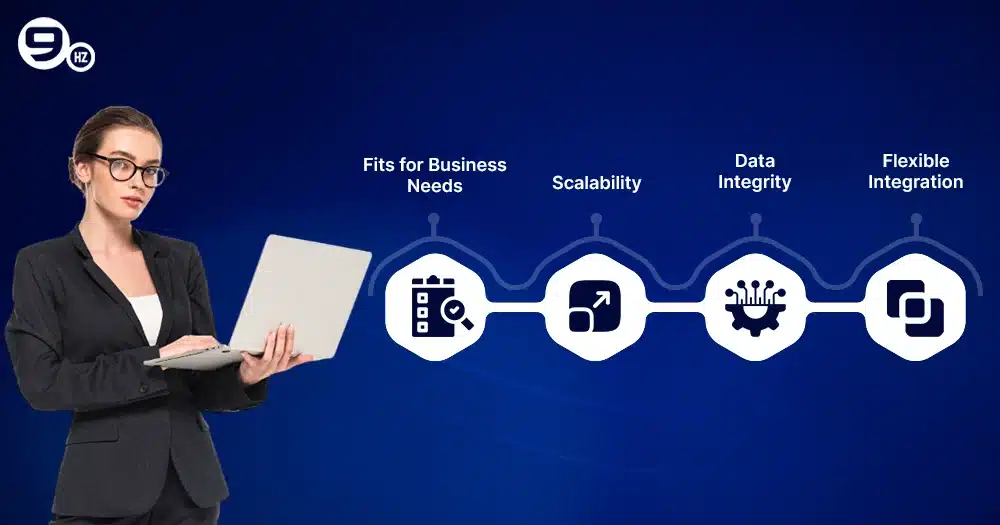
Companies can have a wide variety of choices for logistics software; however, if you are operating on a large scale with complex supply chain arrangements, it is advisable to build custom logistics software like SAP. Depending on the requirements, you can choose from off-the-shelf logistics solutions or custom-built software that provides more flexibility and offers business control.
Fits for Business Needs
Due to fast delivery and changing business requirements, your own logistics software will cater to the company’s workflows through warehouse inventory, niche shipping, and regulatory needs. While off-the-shelf software lacks flexibility, a tailored solution gives control of logistics operations to improve efficiencies.
Scalability
With business expansion, logistics operations can be more complex with shipment volume, real-time fleet tracking, and innovative logistics strategies. Having your own customised software will allow you to scale faster with new added features, automate processes, and infrastructure. Unlike third-party platforms that might limit software capabilities, you can create a responsive system for logistics.
Data Integrity
While using SAP-like logistics systems, businesses are concerned about data integrity due to third-party control issues. To protect sensitive business data that includes operational costs, shipment volume, or customer address, it is advisable to deploy your own logistics software. It can reduce dependency for vendors, data breach risks and compliance.
Flexible Integration
Logistics software development allows for customisation with other integrated systems, including warehouse management, ERP (Enterprise Resource Planning), CRM software, or financial systems. This minimises data flow for the department, reducing manual work and improving efficiency. It helps to track real-time logistics workflows and inventory changes.
Key Features of Logistics Software Like SAP
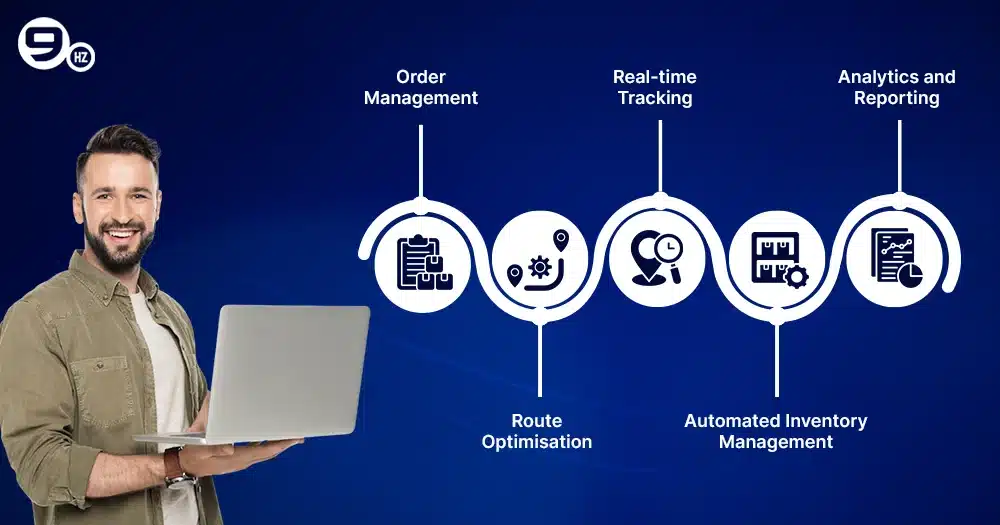
Overall, the logistics industry is getting more complex to ensure faster delivery to end customers. Logistics software development has unlocked features based on target services, including return processing, order fulfilment, return processings, packaging design, and customer assistance.
So, for finding the right logistics software, it is essential to look for the right features that support an eCommerce business to deliver products on time and safely across the globe. Here are the features to look for:
Order Management
Logistics software effectively supports managing key functions like planning, procurement, and distribution of products. While handling a high volume of orders for inventory management, it can integrate processes, including orders, processing, scheduling, storage, shipping, and deliveries. Automated ordering simplifies the process and supports real-time inventory optimisation.
Route Optimisation
One of the crucial features of logistics software is that it reduces transportation costs while improving delivery times. It can track a range of data comprising vehicle capacity, fuel consumption, traffic conditions, and customer delivery windows. Also, this can enhance delivery time estimates through minimised fuel usage and travel times.
Real-time Tracking
For better control over logistics operations, these features help to target the real-time status and shipment locations to extract the right supply chain insights. In case of any delays, the system can automatically send alerts through GPS and IoT sensors. Operators can proactively manage their delivery schedules without any breakdowns.
Automated Inventory Management
For successful logistics operations, it is crucial to manage inventory through automated schedules that keep track of stock, product shipments, and the automatic reorder process. This prevents both conditions of overstocking and understocking, also operators can customize it based on inventory types and complexities.
Analytics and Reporting
In today’s data-driven world, logistics software can help to access advanced analytics and reporting to gain deep insights for performance, cost analysis, and customer satisfaction rate. Businesses can use this data to monitor for inefficiencies, optimize processes, and forecast future trends.
Step-by-Step Guide to Building Logistics Software
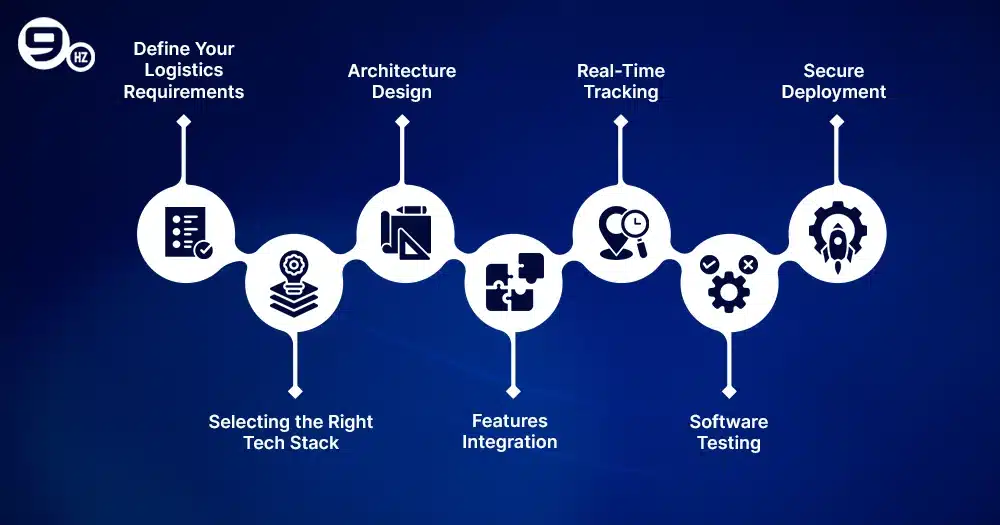
As the logistics software development creates strategic advantages, here is a step-by-step guide for building software specific for startups, companies, or enterprises. It is aimed at streamlining transportation and supply chain management. Here are the following steps:
Step 1: Define Your Logistics Requirements
Whether you are required to develop logistics software focusing on delivery optimisation, warehouse tracking, and fleet management. Warehouse managers and delivery partners put down all the listed features like order tracking or real-time updates to deploy the software that fits their business needs.
Step 2: Selecting the Right Tech Stack
Next, the steps move to selecting the right technologies for logistics software. From basic to advanced versions, you can pick preferred tech including React, Angular, Node.js, Django, PostgreSQL, MongoDB, MySQL, Flutter, and React Native. Also, cloud integration using APIs through Google Cloud, Azure, and AWS.
Step 3: Architecture Design
You can establish a scalable and modular software architecture with specific functions like route optimisation and order management. Based on multiple warehouse and client interactions, it helps to use data for building architecture for logistics software with user roles, access control, and audit logs.
Step 4: Features Integration
Here, the core SAP-like logistics system development starts with integrating smart features that can scale logistics and supply chain operations. It includes AI-based route optimisation, Delivery Time Estimate, Barcode/QR code scanning, Digital delivery, or multi-language support. Altogether, this will support the need to streamline logistics systems.
Step 5: Real-Time Tracking
Integrating the component for real-time visibility for logistics operations helps businesses set up a supply chain system. You can connect elements like Firebase, MQTT, WebSockets, or GPS for live vehicle and shipment tracking. It benefits both operators and end customers to view live tracking to gain trust and experience.
Step 6: Software Testing
Once you finalise your logistics software, it is required to perform extensive testing to check for quality features, performance, and usability. You can select from a range of testing before going live, which comprises integration, unit, performance, and User Acceptance testing to monitor and observe for different scenarios.
Step 7: Secure Deployment
Lastly, you can deploy logistics software in a scalable and secure cloud environment like Azure and AWS. By setting up CI/CD pipelines for regular updates and using monitoring tools, you can run a soft launch and beta version to track feedback and iterations.
Challenges and How to Overcome Them
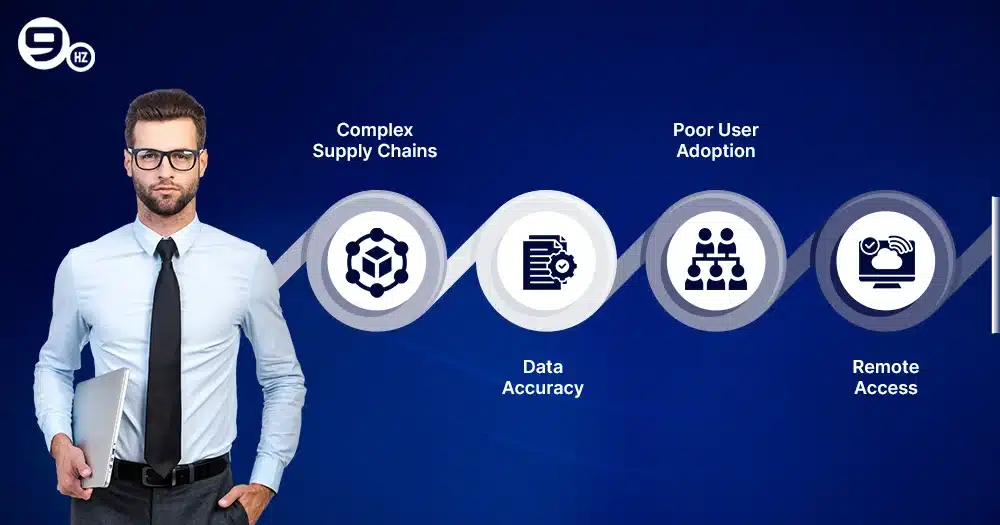
To develop logistics management software, it is essential to address challenges that might hinder the development process of the software. Here we are listing some common challenges and practical strategies to overcome:
Complex Supply Chains
Logistics operations are governed by multiple stakeholders, including drivers, suppliers, warehouse, and customers with their own specific systems and workflows. So, multiple times, it is difficult to integrate these complex features into a single software.
Solution: Make use of modular architecture, custom APIs with third-party systems, and workflow mapping tools.
Data Accuracy
If the system is not regularly updated, data extracted from GPS and IoT devices might be delayed, inconsistent, and incomplete. For better inventory control, it is essential to track for accurate real-time tracking for shipments and vehicles.
Solution: Use tools like Firebase, MQTT, and Websocket, implementing a data algorithm, and adding elements for offline sync.
Poor User Adoption
If the interface is not user-friendly, this might create challenges for logistics operations. It is advisable to develop an intuitive and easy-to-use interface that aligns with warehouse operators and drivers.
Solution: Develop a minimal UI/UX design with offline capabilities, multilingual support with voice instruction, and upload training videos and tutorials.
Remote Access
In the absence of stable internet, it might affect software usage and online tracking vehicles. Field staff working in remote areas might face challenges while collaborating with warehouse operators.
Solution: Design an offline-based software that allows automatic sync, stores critical data through local APIs, and enables SMS fallback systems.
Best Practices for Building Scalable Logistics Software
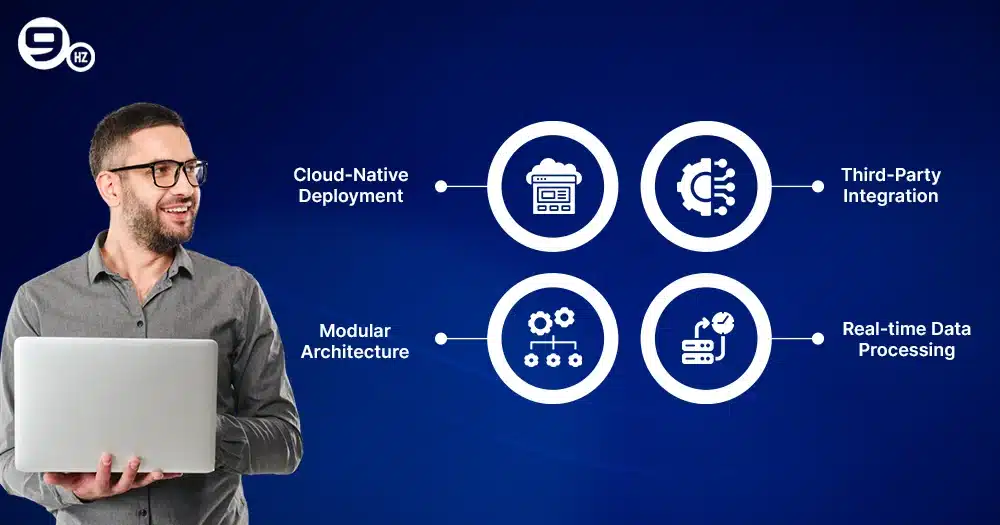
To consider the best performance, flexibility, and long-term stability, businesses should follow the best practices while developing logistics software like SAP to guide them through the entire development phase:
Cloud-Native Deployment
For flexibility, you can build scalable logistics software using cloud-based platforms like GCP, Azure, and AWS. It provides the benefits of auto scaling, global CDN support, and load balancing.
Modular Architecture
Following the modular deployment approach and breaking down the software into independent deployable services, this improves maintainability and upgrade cycles. It allows for horizontal scaling and helps the team to work on features.
Third-Party Integration
A logistics system can’t operate standalone, it should be connected with other systems like customs portals, Transport Management Systems (TMS), and ERP systems. This allows for scalability, system design, standard APIs, and integrates webhooks for communication.
Real-time Data Processing
For logistics, real-time data tracking is critical to establish efficient logistics and supply chain systems that sync to monitor vehicle location, inventory control, and customer updates. Avoiding this can result in incorrect ETAs, disrupted schedules, and misplaced assets.
Why Choose Ninehertz to Build a Logistics Software like SAP?
When it comes to logistics software development, every business will set high benchmarks for performance, features, technology stack, and predict delays. NineHertz is your one-stop destination to develop AI-driven logistics software like SAP, that can manage warehouse operators for inventory control, freight transportation, and order processing. Our experts can help you with developing warehouse management software, fleet management software, transportation software, logistics analytics, telematics, asset tracking, and freight management.
NineHertz can support you with integrated features, including customisable dashboards, data security and compliance, inventory management, automated dispatching, and real-time tracking. We have crossed over 1300+ projects serving 100+ industries with over 15+ years of experience.
Conclusion
Every other business requires logistics management and inventory control systems to manage supply chain management, an automated warehouse, and optimised resources. Unlike the traditional system, automated logistics software like SAP will help achieve faster delivery times, get rid of manual processes, and track the best route. There will be more technology upgrades with AI, IoT, and cloud computing to deploy logistics software like SAP to get a competitive advantage for fast delivery innovations.
Frequently Asked Questions
How long does it take to build logistics software like SAP?
Building logistics software like SAP might take around 12 to 24 months, depending on customisation and complexities.
Is it better to buy or build logistics software?
Building logistics software like SAP might be expensive, but it adds the benefits of full customisation and scalability. Buying logistics software is cost-effective with ready-to-use features and simple integration.
Can a small business afford custom logistics software?
Yes, it is affordable to develop custom logistics software using open-source tools, cloud services, and phased development that can significantly reduce overall development costs.
How is SAP different from a custom-built solution?
SAP offers more standardised modules ideal for large-scale operations, while the custom-built solution is tailored to business needs with more flexibility and lower long-term costs.
