



Our daily lives revolve around connecting to IoT technologies, which may include connected headphones, car systems, GPS trackers, and smartwatches. IoT application development emerges as a smart technology that integrates with devices, offering enhanced efficiencies, improved user experience, and increased automation. Every other sector is introducing IoT platforms for logistics, smart homes, retail, finance, and healthcare. According to the reports, there are estimates of around 27 billion IoT devices to be deployed in the market by 2025. Also, the global IoT market will reach upto to $3.3 trillion by 2030.
Internet of Things (IoT) app development can be more complex, whether it involves consumer, commercial, industrial, or infrastructure IoT solutions. This comprehensive blog serves as an IoT app development guide, providing you with a strategic approach and a structured development process. Partnering with a reliable IoT app development company can simplify the journey and ensure your solution is scalable, secure, and future-ready.
What is an IoT App?
IoT apps are designed to connect devices that allow for streamlined data flow through devices or sensors, connectivity, data processing, and front-end frameworks. IoT app development implies creating software solutions that enable better communication through different IoT devices. From data analysis to hardware integration, this development denotes an interconnected ecosystem for businesses to improve user experience and business operations.
We can have multiple industry-specific examples for IoT apps, including a smart home app like Alexa and Google Home, industrial apps monitoring temperature, fitness trackers, automated agriculture apps, and fleet management IoT apps checking for vehicle locations. Unlike basic mobile apps, the IoT app development process has more layers, as it is connected with other devices and sensors. It comprises device layers, connectivity, cloud layer, backend, frontend, and security layers.
Why Should You Build an IoT App?
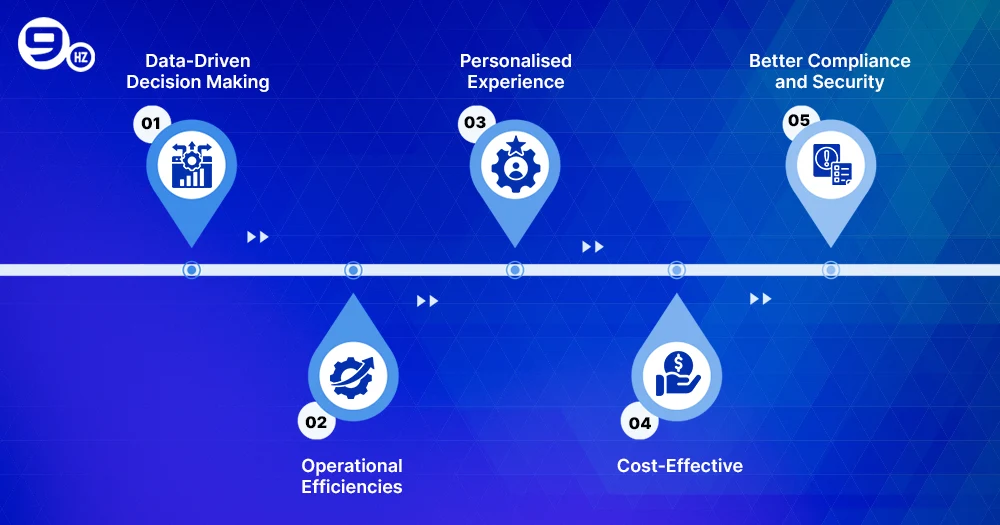
Companies are inclined towards building more IoT apps, as this represents a transformative network of physical objects. It comprises devices or vehicles embedded with the right sensor-based technologies to share data over the internet. It becomes a valuable asset investment in the tech space due to its benefits for automation, data-driven insights, high convenience, safety, and security.
Here are the top reasons why businesses are building more IoT apps:
Data-Driven Decision Making
IoT apps are based on a structured data transfer system that allows for the development of real-time data insights. With IoT app development, businesses can focus on collecting and analysing valuable data, forecasting trends, and making more smart strategic decisions.
Operational Efficiencies
IoT becomes a compatible tech that boosts productivity through automation, minimizes human errors, and streamlines workflows. Real-time monitoring helps to target specific efficacies like temperature checking, traffic signals, smart parking, or road safety.
Personalised Experience
IoT app development helps businesses to deliver a more personalised and intuitive customer experience. Users can connect with devices and respond promptly through data to deliver smart solutions that align with preferences.
Cost-Effective
IoT apps can be a cost-saving alternative with less wastage, automated development, and energy efficiencies. Smart solutions significantly reduce operational costs, while predictive maintenance can cut down crucial repair expenses.
Better Compliance and Security
Many sectors like healthcare, manufacturing, or automotive need to comply for industry safety standards and guidelines. IoT applications are trained to track for any risk, incidence tracking and audit legal issues.Embedding these technologies into operations will help to avoid penalties and reduce legal exposure.
Step-by-Step Guide to Building an IoT App
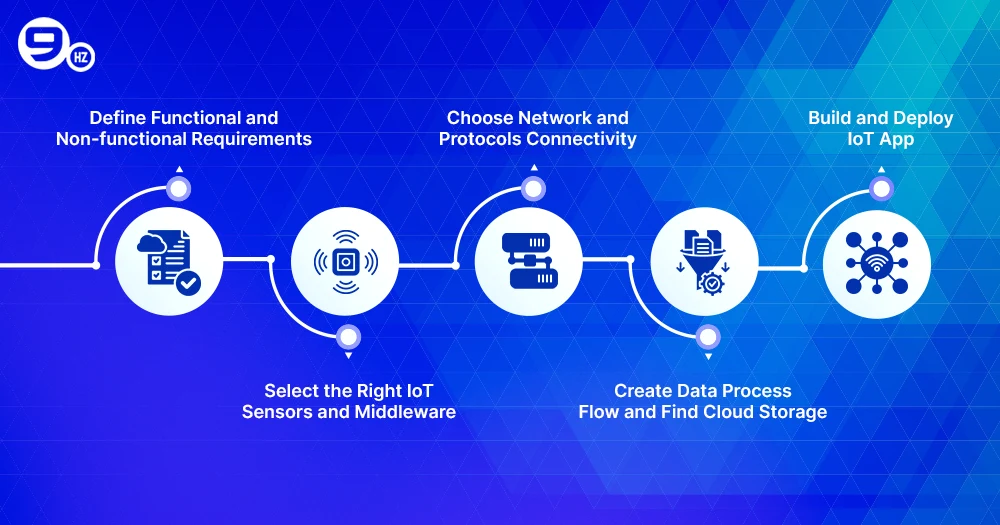
IoT app development sounds like an interesting idea! Now, the real question arises: how to build an IoT app? From writing code for software requirements to designing an intuitive UI/UX, there are multiple steps in the IoT app development process:
Step 1: Define Functional and Non-functional Requirements
Firstly, before the actual development, the technical team should understand the IoT app requirements and finalise its interface, function, and feature variations. Documenting all the functional and non-functional requirements, like performance, scalability, and usability, will help to deploy the right product that fits into the market.
Step 2: Select the Right IoT Sensors and Middleware
Depending on your specific requirements for IoT app development, you can select the right sensors for collecting data. Also, it should be compatible with an IoT platform and the cloud service provider to communicate through the right data formats. While choosing firmware, you can check for reliability factors and security features.
Step 3: Choose Network and Protocols Connectivity
After deciding on hardware choices, you can choose from multiple networks that include Bluetooth, cellular networks, Wi-Fi, and other options. It might depend on the device’s proximity and suitable connectivity to collect the right amount of data from sensors.
Step 4: Create Data Process Flow and Find Cloud Storage
The next crucial step in IoT app development is establishing the data process flow with the right cloud storage solutions from IBM Cloud, Microsoft Azure, or Amazon Web Services (AWS). Firstly, the team will collect the key data points through APIs, filter information, analysing, and proceed with the batch reporting.
Step 5: Build and Deploy IoT App
The final step for building the IoT app development process is to gather requirements, collect design elements, and integrate features for improved user experience. You can choose for preferred platforms, iOS or Android, and cross frameworks between Flutter and React Native, which turns into an effortless development process.
Top Tools & Technologies for IoT App Development
Under the IoT app development procedure, the important step is to choose the right tech and tools that help build a secure, efficient, and scalable application. As there are multiple options available for tech and tools to integrate based on their effective use cases, it is difficult to find the ideal one that complies with the requirements. Here is the list of top tech and tools used in IoT app development:
| Category | Tool/Technology | Purpose / Use Case |
|---|---|---|
| Programming Languages | C / C++ | Used for low-level embedded systems programming on IoT devices |
| Python | Widely used for prototyping, scripting, and AI/ML integration in IoT. | |
| JavaScript (Node.js) | Ideal for backend services, lightweight APIs, and real-time apps | |
| IoT Platforms | AWS IoT Core | Cloud platform for device management, data routing, and analytics |
| Google Cloud IoT | Offers scalable data ingestion and device connectivity | |
| Microsoft Azure IoT Hub | Secure device communication and data analysis at scale | |
| IBM Watson IoT | Enterprise-grade platform with AI-powered insights and device connectivity | |
| Protocols | MQTT (Message Queuing) | Lightweight messaging protocol for low-bandwidth, high-latency networks |
| CoAP (Constrained App Prot.) | Efficient protocol for constrained devices and networks | |
| HTTP/HTTPS | Standard web protocols for API communication | |
| Bluetooth Low Energy (BLE) | Short-range wireless communication for sensors and wearables | |
| Zigbee / Z-Wave | Mesh network protocols for home automation and industrial IoT | |
| Hardware & Boards | Raspberry Pi | Affordable and flexible development board for IoT prototyping |
| Arduino | Open-source microcontroller for basic IoT applications | |
| ESP8266 / ESP32 | Low-cost Wi-Fi-enabled microchips for IoT projects | |
| Databases | InfluxDB | A time-series database is ideal for storing sensor data |
| Firebase Realtime DB | Cloud-hosted NoSQL database for real-time sync | |
| MongoDB | Scalable NoSQL database for semi-structured IoT data | |
| Analytics & Visualization | Grafana | Data visualization platform for real-time dashboards |
| Power BI / Tableau | Business intelligence tools to analyze and present IoT data insights | |
| Security Tools | TLS/SSL Encryption | Secures communication between IoT devices and servers |
| Azure Sphere / ARM TrustZone | Hardware-level IoT security solutions | |
| Mobile App Frameworks | Flutter / React Native | For building cross-platform mobile apps that interact with IoT devices |
Cost to Build an IoT App
An IoT app development guide would be incomplete without any mention of the estimated cost to build an IoT app. It can range between $30,000-$2,00,000 based on project complexities, features, and device connectivity. With the trend for no-code or low-code development, open source tech frameworks, it is easier to optimise for development costs to build the right product within the budget.
Here is the table representing for cost to build an IoT app at each stage of the development process:
| Cost Factor | Estimated Cost Range (USD) | Details |
|---|---|---|
| Discovery & Planning | $3,000 – $8,000 | Research, requirements gathering, prototyping, and architecture planning. |
| UI/UX Design | $2,000 – $10,000 | App wireframing, responsive design, and user experience optimization. |
| Frontend Development | $5,000 – $20,000 | Mobile/web interface based on complexity (React Native, Flutter, etc.). |
| Backend Development | $10,000 – $40,000 | APIs, database, server logic, cloud integration (AWS, Azure, etc.). |
| IoT Device Integration | $8,000 – $25,000 | Connecting sensors, data syncing, firmware/API integration. |
| Cloud Infrastructure | $3,000 – $15,000 (yearly) | Hosting, data storage, and real-time processing (AWS IoT, Google Cloud IoT). |
| Security Implementation | $2,000 – $10,000 | End-to-end encryption, authentication, and device security protocols. |
| Testing & QA | $3,000 – $8,000 | Functional, performance, and device compatibility testing. |
| App Maintenance | $2,000 – $10,000 (yearly) | Updates, bug fixes, and performance optimization. |
| Total Estimated Cost | $40,000 – $150,000+ | Varies with app complexity, number of devices, and third-party services. |
Challenges in IoT App Development
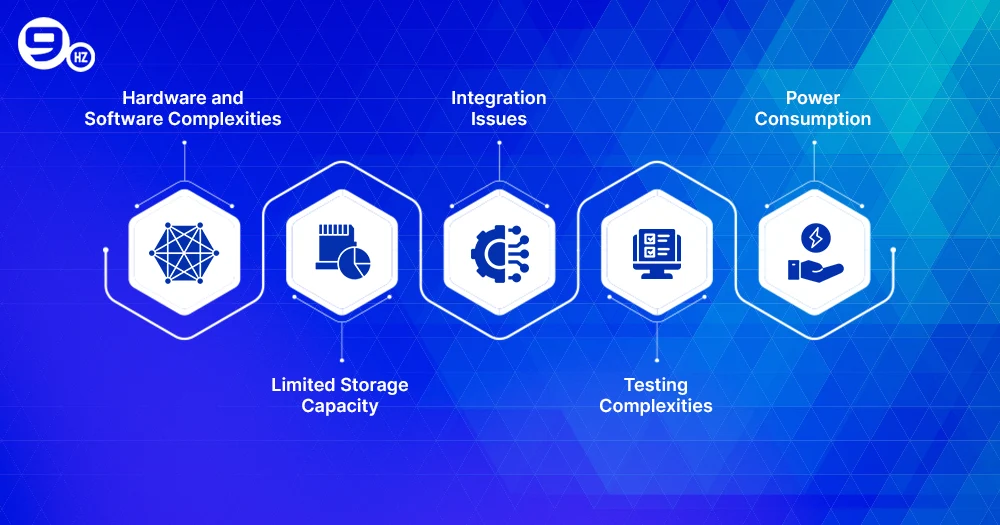
Building an IoT app with customised features can be more challenging to align with industry specifications and requirements. IoT systems work under a complex ecosystem with hardware choices, cloud infrastructure, communication networks, and user interface. So, developers often face hurdles relating to hardware integration, features, or network issues. Let’s understand this: these are common challenges for IoT app development:
Hardware and Software Complexities
IoT hardware includes a range of sensors, microcontrollers, actuators, and gateways. Each of these devices comes with different capabilities, communication protocols, and operating systems, which poses a challenge to understand which is the right fit.
Limited Storage Capacity
Most IoT apps have constraints for data storage and CPU memory that make it difficult to run for complex operations. So, this comes out as a challenge due to limited resources, and developers write optimised code and build cloud infrastructure to overcome this.
Integration Issues
Many industries have older tech infrastructure, and integrating with outdated systems might require more time and resources to build a custom middleware. Businesses are using security adaptation, data translations, and hardware interface redesign to avoid these developing hurdles.
Testing Complexities
Testing for an IoT app is not just limited to coding; this revolves around checking the quality of sensors, hardware, or software interactions under different scenarios. The QA team should assess for multiple conditions, such as sync with different devices, battery failure, and weak networks.
Power Consumption
Multiple IoT devices are charged through battery power, and once it is deployed to remote locations, this creates issues of limited data sync, lightweight protocols, and active sleep modes. Sudden shutdown or failure might lead to reduced lifespan and high maintenance costs.
Best Tips for Successful IoT App Development
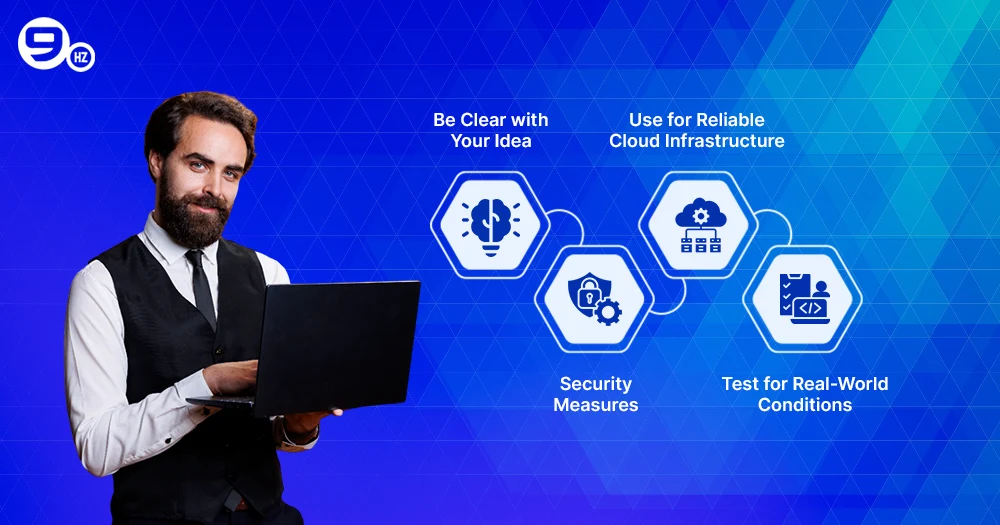
Every developer follows the same IoT app development process, but they might not get the same result. To target the right potential for IoT, decision-makers and tech leaders build for IoT strategy to ease the Internet of Things app development process. Here are the following effective tips to follow for successful development:
Be Clear with Your Idea
Before you start IoT app development, it is essential to define your idea clearly, whether you are targeting tracking, automation, monitoring, or analytics. For better integration, you should have a clear goal for hardware selection, UI/UX design, and cloud services.
Security Measures
IoT app development should comprise embedded security measures that ease its functionalities. It uses secure authentication, regular security audits, encrypted communication, credentials, and security updates.
Use for Reliable Cloud Infrastructure
You can choose popular IoT platforms like Google Cloud, Azure IoT Hub, or AWS IoT for improved analytics and better scalability. You can manage your IoT devices effectively through a microservices architecture and serverless to scale efficiently.
Test for Real-World Conditions
IoT application development should follow testing in real-world conditions under different networks, locations, and tech. It evaluates for risk and errors beforehand and ensures app stability through sensor malfunctions, low power, and hardware failures.
Why Should You Choose Ninehertz to Build an IoT App?
NineHertz is your go-to development partner for building an IoT app aligned with diverse industries and across the globe. We are specialised in offering diverse services, including IoT device development, cloud integration, sensor data analytics, device testing, and security implementation. Our company focuses on building industry-specific requirements and versatile tech frameworks, including Android, iOS, Flutter, React Native, Ionic, PWA, and Cordova.
You can connect with experts to discuss how to build an IoT app and share your requirements, development methodologies, and testing tools like Selenium, Appium, Protractor, XCtest, or Postman. From ideation, designing, to final deployment, NineHertz will deliver a quality IoT app within budget and the right timeframe.
Conclusion
IoT app development would be a great strategy to support your business, aiming for a user-friendly interface, automation, and enhanced security. As the world is heading for hyperconnectivity, building IoT apps is no longer an alternative; from smart home appliances to wearables, it creates improved interaction for physical devices and digital intelligence. Businesses can use this for monitoring real-time data, automated processes, lessening human errors, and building faster data-driven decisions. For diversified industries, it offers a strategic advantage with IoT app development to provide a better customer experience, predictive maintenance, and operational efficiencies.
Frequently Asked Questions
How long does it take to build an IoT app?
It might take around 3 to 6 months to develop an IoT app, while a complex IoT app may take 6 months to 1 year, depending on app complexities, feature integration, and testing.
What is the best platform for IoT development?
Some of the popular platforms are Google Cloud, Microsoft Azure IoT Hub, AWS IoT, IBM Watson, and Oracle IoT.
Is IoT app development expensive?
Yes, IoT app development can be expensive, ranging between $40,000-$1,00,000 depending on features, cloud infrastructure, hardware, and multi-layer development.
Can I build an IoT app without hardware knowledge?
Yes, you can start building an IoT app without any hardware knowledge through low or no-code development, a cloud-based IoT platform, and simplified tools.
