



Have you ever imagined a world where consulting a doctor, scheduling medical tests, or even managing a chronic condition can all be done in your pyjamas on a smartphone app?
Seems like science fiction, but this is the world we live in today! The healthcare industry is being reshaped digitally, and healthcare mobile app development is leading the charge. Telemedicine, fitness, wellness, and so on, medical apps are changing how we interact with the healthcare system and making healthcare more accessible, convenient, and personalized.
In a report cited by Grand View Research, the mHealth (mobile health) market is expected to reach $243.57 billion globally by the year 2030, growing at a compound annual growth rate (CAGR) of 11.6% from 2023 and thereafter. The staggering growth substantiates the increasing demand for mobile health solutions that improve care for patients and enhance healthcare delivery.
If you’re looking to develop a healthcare mobile app to promote telemedicine, fitness tracking, or hospital management, knowing the process, necessary requirements, features and costs required to build a healthcare app can help you build a successful app. This comprehensive guide will walk you through everything you need to know to create a healthcare app that stands out in the competitive health tech market. If you are looking for a custom mobile app development, The NineHertz is the leading healthcare app development company.
What is a Healthcare App?
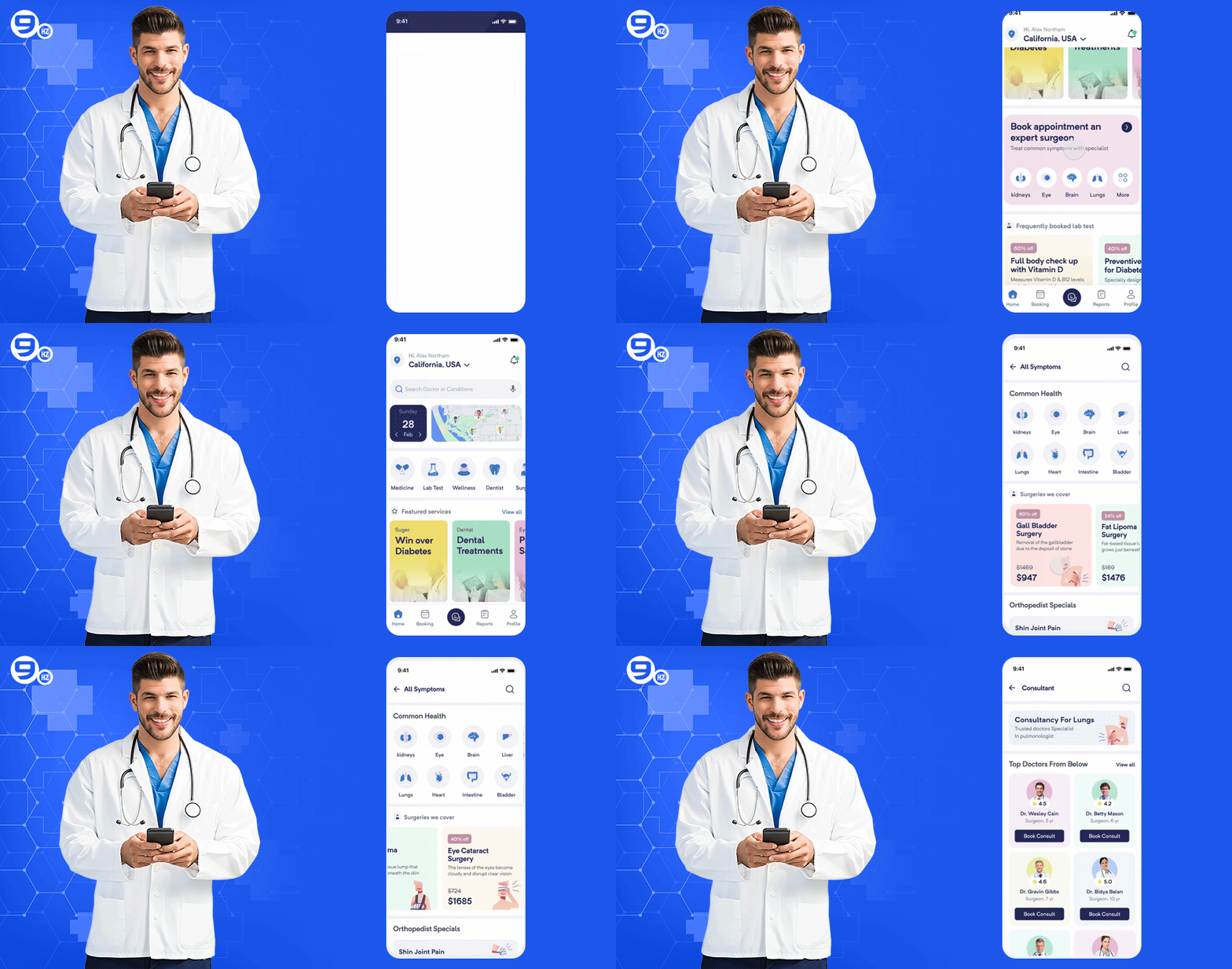
A health care app is a smartphone application for the consumer to use to manage their health, access their medical providers, and access healthcare easily. Health care apps utilize technology to allow people to have access to critical health-care services, such as tele-consultations with health care providers, prescription management, fitness tracking, and maintaining and managing personal health records, at their fingertips.
The purpose of the app is to enhance the quality of service and facilitation of health management by making it easier for the patient, doctor, and health care provider at large. The health care app provides a systematic, methodical way to deliver health services to users, while providing an option to in-person health care forms of delivery.
Each health care app can be placed into three categories, each serving different needs:
- Patient-Centric Apps: Patient-centric apps are designed to assist individual users in managing their health, their fitness goals, and facilitate remote consultation with doctors and health care providers.
- Doctor-Centric Apps: Doctor-centric apps are designed to help healthcare professionals improve the quality of care, maintain patient medical records and plan appointments.
- Institution-Centric Apps: Institutional apps are designed specifically to manage the operations of the hospital or clinic, by managing patient flow, and the infrastructure to deliver health care.
In the following sections, we’ll delve deeper into the various types of healthcare apps and the distinct advantages they provide to various stakeholders in the healthcare ecosystem.
Benefits of Healthcare App Development
The rise of healthcare app development has brought many new positive features to the healthcare landscape that are advantageous to patients, doctors, and institutions in easily obtaining, tracking, and administering medical services. Let’s look at the advantages for each group:
1. Benefits for Patients
Convenience and Accessibility
Healthcare mobile apps allow patients to consult doctors, set up video appointments, order prescriptions and medications, and even track their health concerns from home. This convenience, especially important to individuals with mobility concerns or who live in remote areas of a country, provides valuable access that patients may have never had.
Improved Health Monitoring
With healthcare tracking apps, patients can manage their vital signs, track fitness levels or progress, keep track of medication schedules, and even manage chronic conditions and illnesses like diabetes and hypertension. This use of real-time data translates into actionable insight as users can approach and decide on the right actions for better health.
Instant Access to Medical Information
Patients who have healthcare apps that allow patient-centric health information can access their medical records, lab results, and documentation of medication wherever and whenever they choose. Their access to this information helps individuals make informed decisions and remain on top of their health.
Cost Savings
Virtual consultations and remote monitoring can save money from in-person visits that are often costly and take time. Additionally, preventative care provided by health monitoring apps can result in fewer emergencies, saving the emergency healthcare costs altogether.
2. Benefits for Doctors
Streamlined Communication with Patients
Healthcare app development provides doctors with more advanced options to communicate with patients. With in-app messaging, video consultations, and appointment reminders, doctors can communicate in real-time with patients, reducing potential delays and improving patient care.
Access to Comprehensive Medical Data
Doctors now have access to a patient’s entire medical history, including health data, lab results, and lists of medications with EHR (Electronic Health Records) apps. Access to patient data enables doctors to make better diagnoses and more appropriate treatment plans.
Time Efficiency
Doctors can save more time with the automatic scheduling, reminders, and patient intake forms on their healthcare apps so that they can spend time focusing on patients instead of administrative duties.
Enhanced Decision-Making
Some healthcare apps use AI and data analytics to help doctors’ predictive capabilities and provide better decision-making tools. These functions could potentially help healthcare providers diagnose conditions sooner and suggest more relevant treatment options.
3. Benefits for Healthcare Institutions
Operational Efficiency
Mobile healthcare applications can enhance a hospital or clinic’s internal operations, from patient scheduling to staff utilization. With features like app check-ins, real-time availability of rooms, and electronic information, the administrivia is reduced, and the workflow becomes more efficient.
Better Patient Care
Utilizing better communication tools, remote patient monitoring, and real-time updates allows hospitals to create better care coordination around their patients. Being able to measure a patient’s condition in a non-traditional manner allows for better outcomes and quicker intervention, if necessary.
Cost Efficiency
Healthcare applications permit institutions to be more cost-effective by minimizing administrative manual handling, reducing in-person patient visits, and allowing better resource allocation. Institutions can also reach more patients through telemedicine services with no added cost to physical infrastructure.
Data Analytics and Reporting
Healthcare applications will provide institutions with actionable data analytics that can be leveraged to increase operations, patient satisfaction and clinical outcomes. Observing patient interactions and care patterns leads to better identification of practices that can be fine-tuned to higher care delivery.
Types of Healthcare Mobile Apps
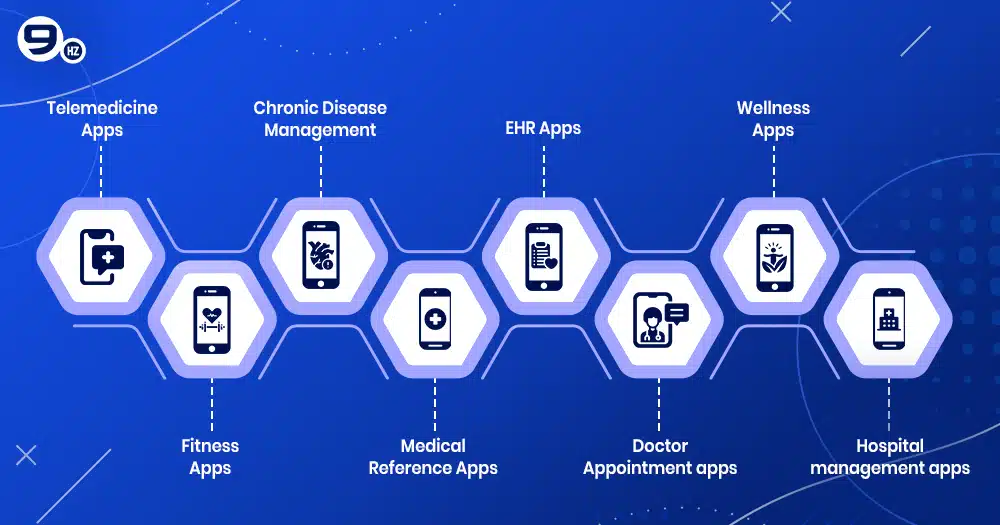
With healthcare mobile app development, the opportunities are numerous, as there are so many different types of apps that meet different needs for patients, doctors, and healthcare institutions. Below, we discuss the main categories of healthcare apps and what they do.
| Healthcare App Type | Target Users | Main Features |
|---|---|---|
| Telemedicine Apps | Patients, Doctors | Virtual consultations, medical advice, prescription refills |
| Fitness and Wellness Apps | General Public, Patients | Activity tracking, nutrition logs, and workout plans |
| Chronic Disease Management | Patients with chronic conditions | Symptom tracking, medication reminders, and health monitoring |
| Medical Reference Apps | Doctors | Medical literature, drug references, and clinical guidelines |
| EHR Apps | Doctors, Hospitals | Patient records, medical history, and lab results |
| Appointment Scheduling Apps | Doctors, Patients | Appointment booking, reminders, and schedule management |
| Hospital Management Apps | Healthcare Institutions | Patient management, billing, staff scheduling, and inventory |
| Remote Monitoring Systems | Healthcare Institutions, Patients | Vital signs tracking, remote consultations |
1. Patient-Centric Apps
Patient-centric apps provide tools for the user to manage their health, as well as options for tracking wellness, remotely communicating with doctors, and managing their health records. Common uses of patient-facing apps include:
Telemedicine Apps
Telemedicine apps allow patients to have real-time virtual consultations with their healthcare provider. They may use this for a general consultation or a specialist appointment. Telemedicine apps allow healthcare to be more accessible for those who have difficulty traveling to a doctor’s office or need immediate advice.
Fitness and Wellness Apps
Fitness and wellness apps can be used by patients to track their physical activities, meals and general health. Some well-known brands such as MyFitnessPal and Fitbit allow patients to set fitness goals, track caloric intake and facilitate workout logging. If you want to launch your own fitness application, The NineHertz is the best fitness app development company.
Chronic Disease Management Apps
Management apps are developed with a specific need. They are generally designed for patients with a chronic condition like diabetes, high blood pressure, or asthma. They allow the patient to track symptoms, medications and doctor visits, and send reminders for medication compliance.
2. Doctor-Centric Apps
Doctor-centric apps are specifically designed for healthcare professionals. These apps have tools to support patient information management, enhanced consultations, and continuing education. The major types include:
Medical Reference Apps
These apps provide doctors access to vast databases in medical literature, drug references, clinical or treatment guidelines, etc. These are super helpful apps to use for quick decision-making.
EHR (Electronic Health Record) Apps
EHR applications host patient health records in a digital format. These applications allow physicians to easily access patient histories, previous laboratory results, or other medical documentation. These applications make it easier for physicians to make clinical decisions and improve accuracy.
Appointment Scheduling Apps
Doctors can use mobile applications to view their calendars, and patients can use the applications to book, reschedule, or cancel an appointment. Some applications also send appointment reminders and reduce the level of missed appointments. We are the leading doctor appointment app development company to build such applications.
3. Institution-Centric Apps
Healthcare organisations also utilize mobile and web apps that aid in managing their activities, delivering care, and improving the patient experience. The most common types of institution-centered mobile apps include:
Hospital Management Apps
These apps allow hospitals to manage day-to-day activities, including patient admissions, patient billing, staffing and scheduling, and inventory management. They improve operational efficiency and ensure a better run of the healthcare organisation.
Remote Patient Monitoring Systems
These apps are used to monitor patients from a distance through updates on vitals, medication compliance, and progress. This is particularly helpful for patients with chronic comorbidities who need function checks regularly but are not always able to visit a clinic.
Features to Include in a Healthcare App
When you decide to develop a healthcare app, the app’s features will ultimately determine its success. An intuitive design with meaningful and usable functionalities improve patient engagement while allowing healthcare staff to operate effectively. Let’s break this down into must-have, advanced, and admin-side features.
I. Must-Have Features
When you start to build a healthcare app, these core features are non-negotiable. They form the foundation of any functional healthcare mobile solution.
1. User Registration & Profile Management
Your app must provide an easy and secure login. Both patients and doctors should be able to register or log in via email or phone numbers, social login options and access and manage their personal login data, health history, and preferences within the app.
2. Appointment Booking
An appointment system built within your application makes it easy for users to check doctor availability and to book, reschedule, and cancel consultations.
3. Video Consultation
This is a must-have feature for telehealth or a patient and doctor app. Video consultation enables healthcare providers and patients to engage virtually, in real time, eliminating the need for in-person visits when they’re not necessary.
4. Secure Messaging
Secure message exchange between patients and doctors adds to patient engagement while providing another avenue for communication, while protecting secure information.
II. Advanced Features
While you create a healthcare app, you can add the following advanced features to gain a competitive presence in the marketplace.
1. AI Symptom Checker
An AI-enabled symptom checker can provide users with preliminary insight regarding their health based on the data they enter. A symptom checker does not replace a doctor, it helps triage the patient’s concerns.
2. Integration with Wearables
Today’s healthcare depends on real-time health data. Integrating applications with user apps such as Fitbit, Apple Watch, or medical-grade wearables allows patients and doctors to monitor heart rate, sleep, activity levels, and other health metrics from the app.
3. Real-Time Analytics
Real-time health analytics enable users to monitor trends, identify patterns, and make informed assessments, whether for patient health monitoring or institutional use.
III. Admin Panel Features
When you develop a healthcare app, you cannot ignore the admin side. A well-designed admin panel will streamline administration and management.
1. User Management
Admins should be able to verify, edit or deactivate user accounts, as well as manage roles, whether it be as a patient, doctor or support staff.
2. Doctor Onboarding
Allow healthcare admins to onboard verified doctors! The admin panel should allow credential validation, as well as approvals and profile management.
3. Analytics Dashboard
The admin panel must offer a bird’s-eye view of user activity, consultations, revenue flow, and app performance, helping institutions optimize services and ensure regulatory compliance.
Pro Tip: Focus on creating an intuitive user experience while balancing security, especially in healthcare, where sensitive patient data is involved.
How to Develop a Healthcare App?- Healthcare App Development Process
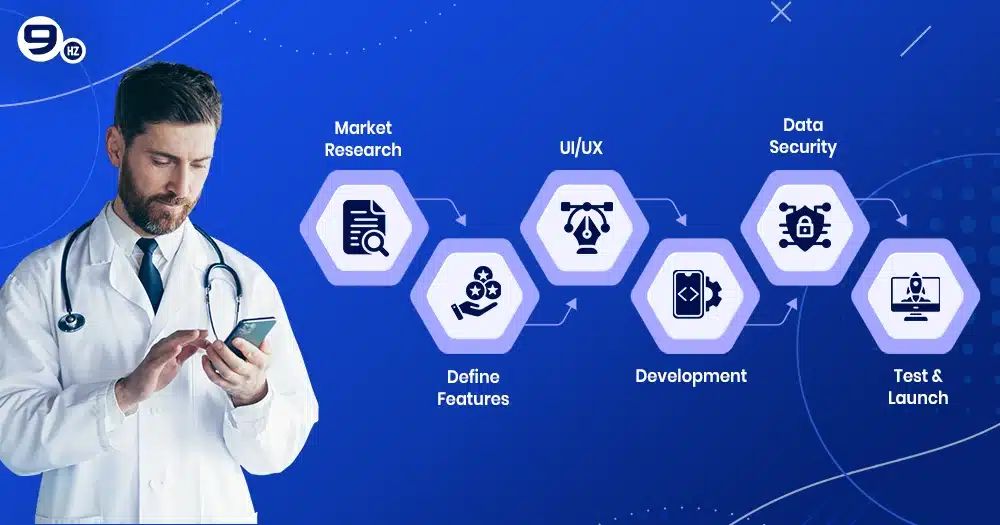
Are you planning to build a healthcare app that stands out in today’s competitive market? Whether you are an entrepreneur, a hospital, or a healthcare startup, the best way to ensure that you will be successful in app development is to follow a proven, strategic development plan. Here is a step-by-step process for your healthcare app that will satisfy both user and industry standards.
Step 1: Conduct Market Research & Identify User Needs
Thorough user research is critical before you create a healthcare app. You must understand the target audience- patients, healthcare providers, or institutions. You also should define which specific problems your app will eliminate. Conduct interviews, surveys, and competitors’ research to validate your concept.
Step 2: Define Features and Technical Specifications
Once the core problem is understood, create a detailed list of features and functionalities for your app. This is also where you determine whether you want a healthcare mobile app development for iOS or Android, or both. You need to document your tech requirements so that the business and development teams can work more seamlessly.
Step 3: Design User-Centric UI/UX
A user-friendly design is mandatory when you develop a healthcare app. The user experience must be simple, smooth, and accessible for all users of different ages and backgrounds who may not be familiar with technology. Mockups and prototypes at this stage help stakeholders and users visualize the final product.
Step 4: Develop the App (Front-end & Back-end)
This is where you’ll start to code, and your app will come to life. Trust the frameworks that are established and use secure coding practices. Your healthcare mobile app development team should make sure that the front-end (user-facing) and the back-end (server, database, APIs) are well integrated and working accordingly.
Step 5: Ensure Regulatory Compliance & Data Security
Healthcare apps have access to sensitive information, so there are rules and regulations that you must follow. It is important to ensure that your app observes the regulations set out for data protection. Whether you are designing it for the U.S., EU, or globally, standards like HIPAA, GDPR, and HL7 must be followed.
Step 6: Test, Launch, and Iterate
Before launching your app, thoroughly test it — usability tests, security tests, performance tests– to ensure that your mobile app runs smoothly. Once the app has been launched, you should continually review user feedback and push out updates to improve the user experience.
Pro Tip: Agile methodology is highly effective in healthcare app projects, as it allows room for feedback, regulatory updates, and iterative improvement.
After completing these six phases, your journey to create a healthcare app moves from idea to reality, ready to influence lives and revolutionize healthcare delivery.
Tech Stacks for Healthcare Mobile App Development
Choosing the ideal tech stack is the backbone of a successful healthcare app development. The technologies that you use will dictate the application’s performance, scalability, and security. Let’s break down the relevant tools and frameworks to build a healthcare app that is valid and future-proof.
| App Component | Recommended Technologies | Description |
|---|---|---|
| Front-end Development | React Native, Flutter, Swift (iOS), Kotlin (Android) | These frameworks help create smooth, user-friendly interfaces for both Android and iOS platforms. |
| Back-end Development | Node.js, Django, Ruby on Rails | Handles the server-side logic, database operations, and API integrations of your healthcare app. |
| Database | MongoDB, PostgreSQL, MySQL | Securely stores patient records, appointment details, medical histories, and other essential data. |
| Cloud Infrastructure | AWS, Microsoft Azure, Google Cloud | Provides scalable storage, security, and computational resources for real-time healthcare operations. |
| APIs and Integrations | FHIR, HL7, Apple HealthKit, Google Fit | Enables your app to exchange data securely with wearables, EHR systems, and external platforms. |
| Security Tools | SSL/TLS Encryption, OAuth 2.0, JWT, Firebase Authentication | Ensures safe transmission, user authentication, and data protection against cyber threats. |
Pro Tip: When you develop a healthcare app, make sure the chosen tech stack can scale as your user base grows and handle sensitive patient data securely.
Why Choosing the Right Tech Stack Matters?
Performance & Scalability:
Your tech stack should be equipped to handle massive volumes of users without experiencing any decline in performance; this is particularly important for telemedicine apps and real-time health management apps.
Security Compliance:
The serious nature of patient data should not be taken lightly, and you should use security tools and encryption libraries.
Third-Party Integration:
From wearables like Fitbit to insurance and hospital databases, a versatile tech stack enables your app to integrate smoothly with other systems.
Faster Development:
Leveraging frameworks, such as React Native or Flutter, can help develop a healthcare app for both Android and iOS with a single code base, therefore reducing the time and duration involved in the development process.
Regulatory Compliance and Security Standards
When you develop a healthcare app, meeting global and local security regulations is not optional; it’s a legal and ethical necessity. Since healthcare apps handle sensitive personal health information (PHI), maintaining privacy and security must be a top priority throughout the healthcare mobile app development process.
Why is Regulatory Compliance essential?
Healthcare apps handle sensitive personal data such as medical history, prescriptions, diagnosis reports, and real-time health vitals. Any breach or mishandling can lead to serious financial, legal, and reputational consequences. Thus, compliance ensures:
- Data Integrity
- Patient Confidentiality
- Legal Safeguarding
- System Interoperability
Conclusion
Healthcare is no longer confined to physical clinics and hospitals — it’s becoming digital, accessible, and patient-centred, all thanks to healthcare mobile apps. From offering telemedicine consultations and remote patient monitoring to streamlining administrative workflows for healthcare providers, apps are reshaping the future of medical care.
If you’re pondering whether to develop a healthcare app, there hasn’t been a better time for that decision. Advancements in technology, increasing patient expectations and the global shift towards digital transformation are allowing more opportunities for significant impact.
But building a healthcare app involves more than amazing code- it involves the inherent understanding of healthcare workflows, strict compliance with regulations such as HIPAA and GDPR, a seamless user experience, and ongoing support.
Well, this is why NineHertz can help you. We are a trusted healthcare mobile app development company. We help you with your idea – from concept through design to launch, and beyond.
Let’s talk and get started developing your healthcare app!
FAQ’s
Q1: What is the cost to develop a healthcare app?
Healthcare app development typically costs between $40,000 and $250,000, depending on complexity, features, design, and compliance needs.
Q2: How long does it take to develop a healthcare mobile app?
The medical app developers can take 3 to 12 months, based on features, platform (iOS, Android, cross-platform), integrations, and regulatory requirements to build a fully functional healthcare app.
Q3: Which is the best tech stack for healthcare app development?
Popular tech stack choices for mobile medical app development include React Native or Flutter for front-end, Node.js or .NET for backend, AWS or Google Cloud for hosting, plus strong encryption for security and compliance.
